Carbon Steel Wok: Why It Matters for Modern Cooks

Over 60 percent of British and European home cooks now seek alternatives to traditional nonstick pans for healthier high-heat cooking. Making the switch from nonstick to carbon steel cookware feels daunting, but this shift brings both durability and improved flavour to your kitchen. If you want resilient pans that excel in high-temperature cooking and support health-conscious choices, understanding the real story behind the carbon steel wok will change your approach to everyday meals.
Table of Contents
- Carbon Steel Wok Explained: Definition And Myths
- Types Of Carbon Steel Woks And Distinctions
- Unique Features And Cooking Advantages
- Seasoning, Maintenance, And Care Essentials
- Comparing Carbon Steel With Alternatives
- Common Pitfalls And Mistakes To Avoid
Key Takeaways
| Point | Details |
|---|---|
| Carbon Steel Wok Versatility | Carbon steel woks excel in high-heat cooking and are suitable for various styles, from stir-frying to steaming. Proper seasoning enhances their natural non-stick properties and flavour development. |
| Types of Woks | Choose between round-bottom for traditional stir-frying and flat-bottom for stability on electric cooktops. Hand-hammered woks offer unique characteristics, while machine-pressed woks provide consistency. |
| Maintenance Importance | Proper seasoning and maintenance are essential to preserve the wok’s quality and prevent rust. Rinse without soap, dry immediately, and apply a light oil coat after each use. |
| Material Advantages | Carbon steel provides superior heat conductivity compared to alternatives like stainless steel and cast iron, enabling better flavour development and cooking efficiency. |
Carbon steel wok explained: Definition and myths
A carbon steel wok represents more than just a cooking utensil; it’s a culinary heritage passed down through generations of Asian cooking traditions. Originating in China, these remarkable pans have become essential tools for home and professional chefs worldwide.
Carbon steel woks are characterised by their unique composition, combining iron and carbon to create a lightweight yet incredibly durable cooking surface. Unlike other cookware materials, carbon steel offers exceptional heat conductivity and rapid temperature responsiveness. Professional chefs appreciate these woks for their ability to achieve high temperatures quickly, enabling perfect stir-frying techniques that seal in flavours and maintain ingredient textures.
Several persistent myths surround carbon steel woks, often discouraging home cooks from exploring this versatile cookware. Some believe these woks are fragile, difficult to maintain, or exclusively meant for professional kitchens. In reality, carbon steel woks are remarkably robust, develop natural non-stick properties through seasoning, and adapt beautifully to various cooking styles from delicate steaming to aggressive high-heat searing.
Pro tip: Season your carbon steel wok thoroughly before first use by heating it with a thin layer of high smoke-point oil to create a protective, non-stick patina that improves with each cooking session.
Types of carbon steel woks and distinctions
Carbon steel woks come in diverse variations, each designed for specific cooking needs. The primary distinctions revolve around their bottom configuration, manufacturing technique, and surface preparation, which significantly impact their performance and versatility in the kitchen.
Traditionally, woks are classified into two primary bottom types: round and flat. Round-bottom woks remain the classic design, offering optimal heat circulation and traditional stir-frying capabilities. However, flat-bottom woks have gained popularity among home cooks with electric and induction cooktops, providing enhanced stability and direct heat contact. Manufacturers also differentiate woks by their production method: hand-hammered woks represent artisanal craftsmanship, featuring unique textural characteristics and improved heat distribution, while machine-pressed woks offer consistent quality and more affordable pricing.
Another crucial distinction lies in the wok’s seasoning status. Unseasoned woks require initial preparation by home cooks, involving multiple seasoning layers to develop a natural non-stick surface. Conversely, pre-seasoned woks come ready for immediate use, featuring a protective layer that jumpstarts the patina development process. Professional chefs and cooking enthusiasts often prefer hand-hammered, unseasoned woks, valuing the opportunity to develop their pan’s unique character through careful seasoning and repeated use.
Pro tip: Select a wok that matches your specific cooktop and cooking style, considering factors like bottom shape, weight, and initial seasoning to ensure optimal cooking performance.
Here is a summary of the main types of carbon steel woks and their defining characteristics:
| Wok Type | Key Features | Typical Users |
|---|---|---|
| Round-bottom | Optimal heat circulation | Professional chefs |
| Flat-bottom | Stability on flat cooktops | Home cooks with electric hobs |
| Hand-hammered | Unique texture, artisan craft | Enthusiasts and professionals |
| Machine-pressed | Consistent quality, affordable | General consumers |
| Unseasoned | Requires initial preparation | Seasoning purists |
| Pre-seasoned | Ready to use immediately | Beginners and busy cooks |
Unique features and cooking advantages
Carbon steel woks represent a pinnacle of culinary engineering, offering extraordinary heat performance that transforms cooking techniques. Their remarkable heat conductivity allows chefs to achieve rapid temperature changes, creating perfectly seared dishes with minimal cooking time and maximum flavour preservation.
The lightweight design of carbon steel woks enables exceptional manoeuvrability, a critical advantage for executing traditional stir-frying techniques. Skilled cooks can effortlessly toss ingredients, ensuring even heat distribution and preventing overcooking. When properly seasoned, these woks develop a natural non-stick surface that enhances flavour development through the Maillard reaction, creating the legendary wok hei - a smoky, complex taste characteristic of authentic Asian cuisine.

Beyond their cooking performance, carbon steel woks offer remarkable nutritional benefits. Their quick cooking times help retain ingredient nutrients, while the minimal oil requirements support healthier meal preparation. The pan’s ability to reach and maintain high temperatures rapidly means vegetables retain their vibrant colours, meats develop perfect caramelisation, and delicate proteins remain tender and succulent.
Pro tip: Invest time in properly seasoning your carbon steel wok, as this transforms it from a simple cooking tool into a flavour-enhancing culinary companion that improves with every use.
Seasoning, maintenance, and care essentials
Preparing a carbon steel wok for long-term use requires understanding the critical process of seasoning. This transformative technique involves creating a polymerised oil layer that not only provides a natural non-stick surface but also protects the wok from potential rust and corrosion.
The initial seasoning process demands careful attention. Begin by thoroughly cleaning the wok to remove any factory protective coatings. Heat the wok until it starts smoking, then apply a thin, even layer of high smoke-point oil like grapeseed or sunflower oil. Repeat this process multiple times, allowing each layer to bond with the metal surface. This creates a durable, protective patina that enhances cooking performance and prevents food from sticking.
Ongoing maintenance is equally crucial for preserving your carbon steel wok’s quality. After each use, rinse the wok with hot water and use a soft brush or sponge to remove food residue. Avoid using soap, which can strip away the carefully developed seasoning. Dry the wok completely on the stovetop to prevent moisture-related rusting, then apply a light coat of oil to maintain the protective layer. Periodic reseasoning helps restore and strengthen the wok’s non-stick surface, ensuring its longevity and continued excellent cooking performance.
Pro tip: Always store your carbon steel wok in a dry place and hang it if possible to prevent moisture accumulation and maintain its seasoned surface.
Comparing carbon steel with alternatives
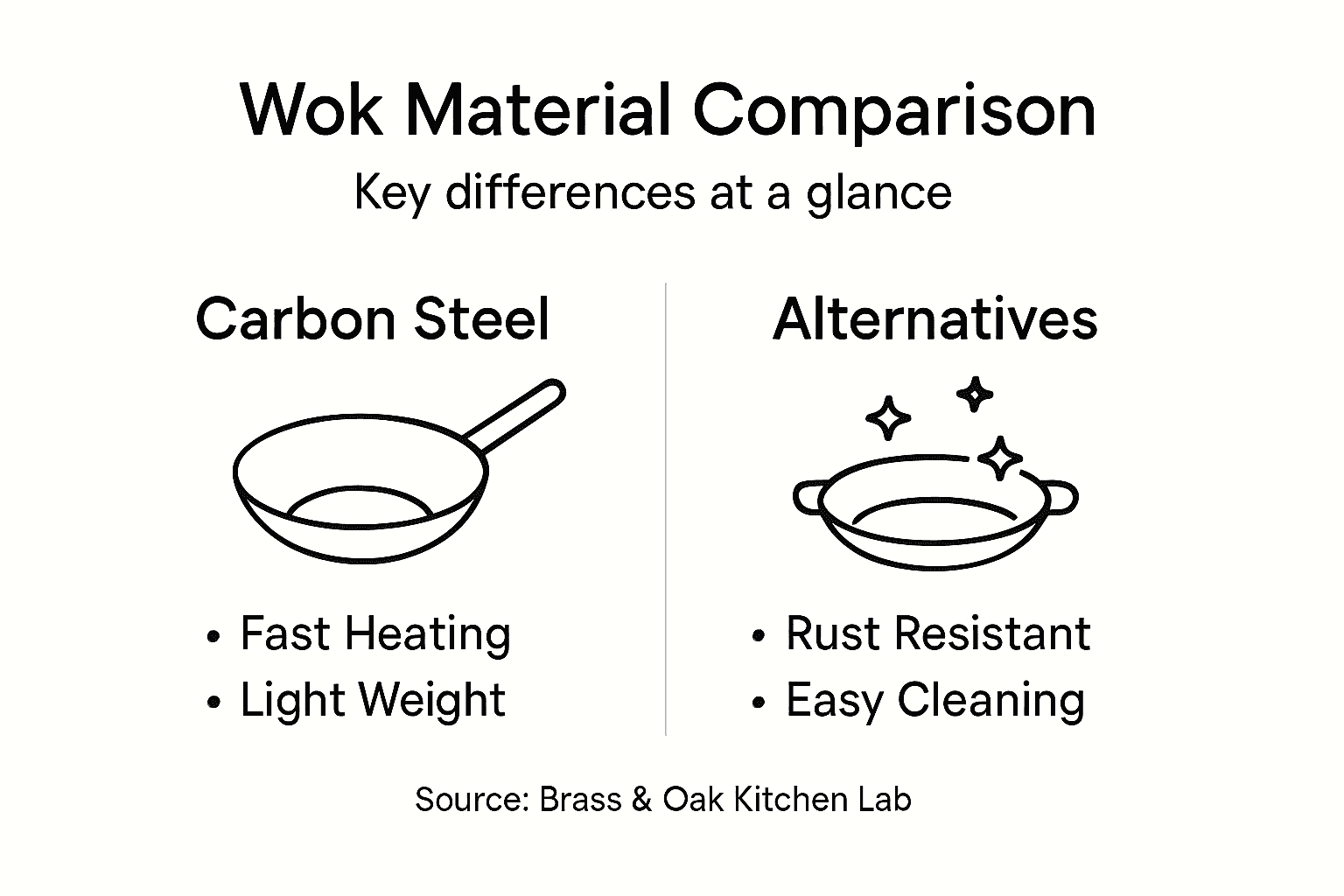
Carbon steel woks offer distinct advantages over alternative cookware materials, particularly in heat conductivity and flavour development. Unlike stainless steel or aluminium alternatives, carbon steel creates a natural non-stick surface through seasoning, developing a unique patina that enhances cooking performance with each use.
Stainless steel woks provide corrosion resistance and easier cleaning, but they lack the heat responsiveness and flavour-building capabilities of carbon steel. Aluminium woks distribute heat quickly but fail to develop the same depth of flavour and cannot withstand high-temperature cooking techniques. Cast iron woks, while similar to carbon steel, are significantly heavier and slower to heat, making carbon steel the preferred choice for professional and home chefs seeking precision and agility in cooking.
The most significant difference lies in thermal properties and cooking dynamics. Carbon steel woks heat rapidly and evenly, allowing cooks to achieve the perfect sear and maintain the coveted wok hei - a smoky essence characteristic of authentic Asian cuisine. Other materials simply cannot replicate this complex flavour development, making carbon steel the ultimate choice for serious culinary enthusiasts who value both performance and traditional cooking techniques.
Pro tip: When comparing cookware, prioritise heat conductivity, weight, and potential for flavour development over simple maintenance considerations.
This table compares carbon steel woks to other common materials, highlighting their culinary implications:
| Material | Heat Conductivity | Weight | Flavour Development |
|---|---|---|---|
| Carbon Steel | High, rapid | Light | Creates wok hei easily |
| Stainless Steel | Medium, less responsive | Moderate | Less ability for wok hei |
| Aluminium | Very fast, uneven | Very light | Limited flavour depth |
| Cast Iron | Slow, retains heat | Very heavy | Good, but slow to heat |
Common pitfalls and mistakes to avoid
Carbon steel wok maintenance requires careful attention to prevent common errors that can compromise its performance and longevity. Many home cooks unknowingly damage their woks through improper handling, scratching, and neglectful cleaning practices that can rapidly degrade the carefully developed seasoning.
One of the most frequent mistakes involves using metal utensils that scrape and damage the delicate seasoned surface. Aggressive scrubbing with steel wool or harsh abrasive cleaning materials can strip away the protective patina, exposing the underlying metal to potential rusting. Equally problematic is storing the wok in damp environments or failing to thoroughly dry it after washing, which creates ideal conditions for corrosion and potential bacterial growth.
Misunderstanding the seasoning process represents another significant pitfall for carbon steel wok owners. Inexperienced cooks often apply too much oil during seasoning, resulting in a sticky, uneven surface that attracts debris and prevents proper non-stick performance. Conversely, some individuals completely neglect reseasoning, allowing the protective layer to deteriorate and compromising the wok’s cooking capabilities. Proper technique involves applying extremely thin, uniform oil layers and maintaining consistent care to preserve the wok’s exceptional cooking properties.
Pro tip: Invest in wooden or silicone utensils and always dry your carbon steel wok immediately after washing to maintain its pristine condition.
Discover the Perfect Carbon Steel Pan for Your Cooking Journey
Many home cooks face challenges mastering the art of wok cooking due to cookware that does not respond quickly or season properly. If you want to achieve that authentic wok hei and enjoy high-heat cooking without the frustration of sticky surfaces or fragile pans our Carbon Steel Collection | Brass&Steel offers a premium solution. Crafted as a single piece of carbon steel these pans deliver exceptional heat conduction and develop a natural nonstick patina that intensifies with use.
Elevate your culinary skills today with heirloom-quality cookware built for responsiveness and durability. Visit Brass & Steel now to explore pans designed for modern cooks who desire performance without compromise. Start seasoning your pan correctly and enjoy cooking with a healthier non-toxic surface that works beautifully on induction and all cooktops. Don’t wait – experience the perfect blend of tradition and innovation in one pan.
Frequently Asked Questions
What is a carbon steel wok?
A carbon steel wok is a cooking utensil made from a blend of iron and carbon, known for its lightweight design and excellent heat conductivity, ideal for stir-frying and other cooking techniques.
How do I season a carbon steel wok?
To season a carbon steel wok, first clean it thoroughly to remove any factory coatings. Then heat the wok until it smokes and apply a thin layer of high smoke-point oil. Repeat this process multiple times to build a protective, non-stick patina.
What are the differences between round-bottom and flat-bottom woks?
Round-bottom woks provide optimal heat circulation for traditional stir-frying, while flat-bottom woks offer stability and are better suited for use on electric and induction cooktops.
How do I maintain a carbon steel wok?
After each use, rinse the wok with hot water and use a soft brush to remove food residue. Avoid soap and ensure to dry it thoroughly. Regularly reseason your wok to maintain the protective layer and enhance its non-stick properties.