Nonstick without coatings: how it works and why it matters
TL;DR:
- Nonstick cookware without coatings relies on surface microstructure and seasoned patinas to minimize food adhesion naturally. These materials, such as carbon steel, cast iron, and titanium, develop effective nonstick properties through oil microtraps, polymerized fats, and the Leidenfrost effect without synthetic chemicals. They offer safer, more durable, and environmentally friendly alternatives with proper maintenance and seasoning practices.
Nonstick without coatings is defined as cookware that achieves low food adhesion through surface texture and naturally formed patinas rather than synthetic polymer layers like PTFE or ceramic. The industry term for this approach is “uncoated nonstick” or “coating-free cookware,” and it covers materials including seasoned carbon steel, cast iron, and microstructured titanium. Health-conscious cooks are increasingly moving away from PFAS and PTFE-coated pans after studies linked damaged coatings to chemical exposure. Understanding how coating-free surfaces actually work gives you the confidence to cook with them properly from day one.
What is nonstick without coatings and how does it work?
Uncoated nonstick means the pan’s low-sticking behaviour comes from physics and chemistry rather than a synthetic polymer layer. Two main mechanisms make this possible: engineered surface microstructure and polymerised oil patinas.
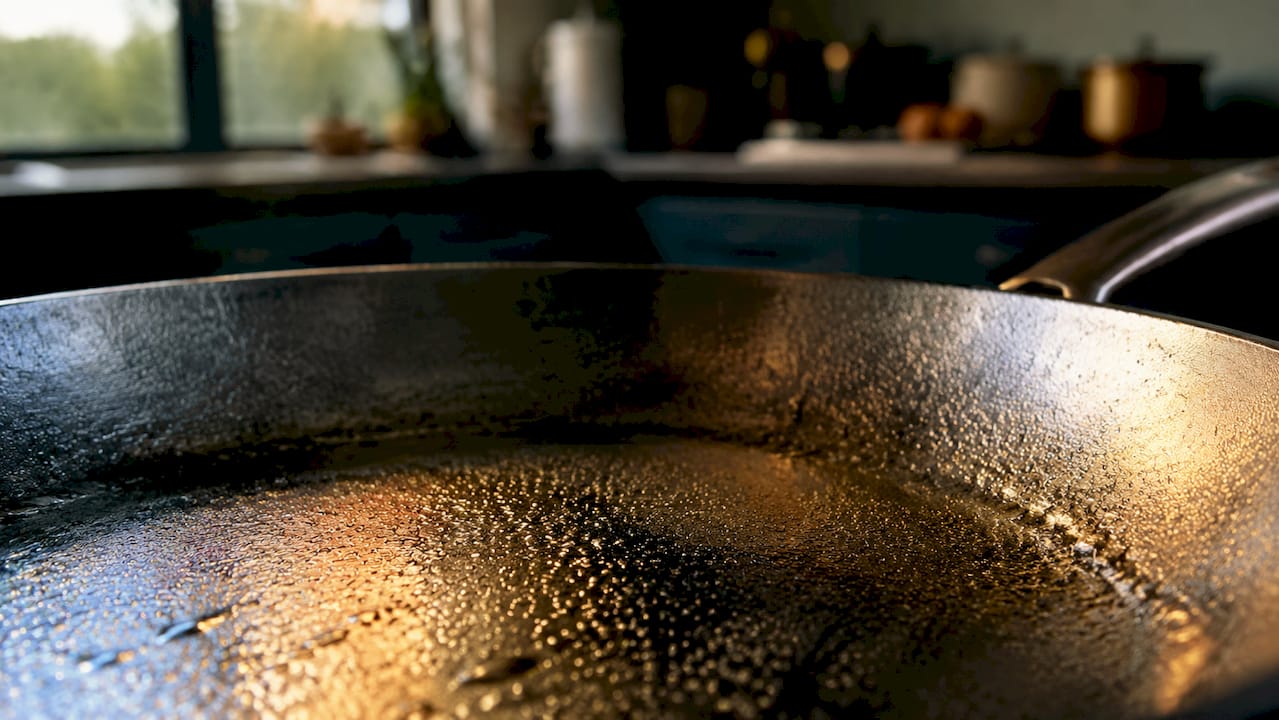
Surface microstructure works by trapping a thin film of cooking oil inside microscopic pores or ridges on the pan’s surface. A bioinspired titanium pan, for example, uses microporous architecture to anchor oil between the pan and food, reducing contact area and preventing adhesion. This oil film acts as a self-healing lubricant. When the pan is scratched, fresh oil fills the gap and restores performance.
Seasoning works differently. On ferrous metals like cast iron and carbon steel, repeated oil and heat cycles polymerise fats into a hard, hydrophobic organic layer bonded directly to the metal. This patina repels water and reduces the surface energy that causes food to stick. The more you cook, the stronger it becomes.
Temperature also plays a direct role. Heating a coating-free pan to around 160 to 180°C triggers the Leidenfrost effect, where moisture in food vaporises on contact and creates a thin steam barrier between the food and the surface. This momentary cushion of vapour reduces sticking significantly. It is why a properly preheated carbon steel pan releases a steak far more cleanly than a cold one.
- Surface microstructure traps oil to reduce food contact area
- Seasoning creates a hydrophobic polymer layer through repeated heat and oil cycles
- The Leidenfrost effect uses steam to cushion food at high temperatures
- All three mechanisms work without any synthetic chemical coating
Pro Tip: Drop a few water droplets onto your preheated carbon steel pan. If they bead up and skitter across the surface, the pan is at the right temperature for the Leidenfrost effect to work. Add your oil at that point, not before.
Coating-free cookware types compared: which material suits you?
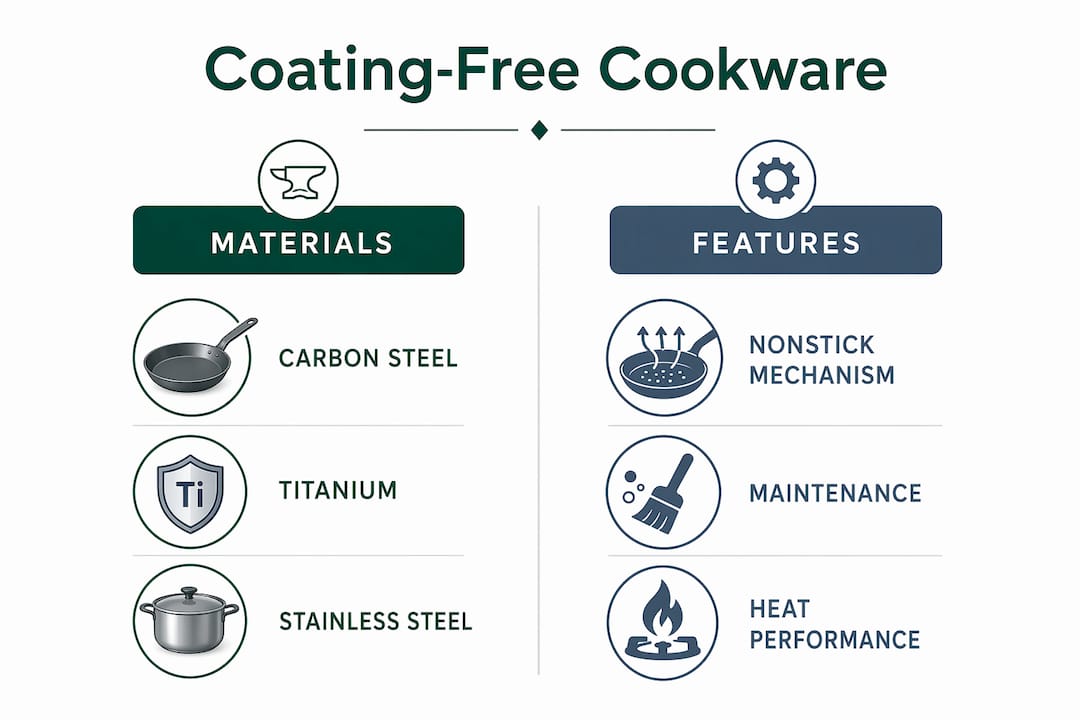
Not all coating-free cookware works the same way. The nonstick mechanism, weight, heat performance, and maintenance needs vary considerably between materials.
| Material | Nonstick mechanism | Weight | Maintenance | Best for |
|---|---|---|---|---|
| Carbon steel | Seasoned patina | Medium (2 to 3 kg) | Regular oiling, re-season as needed | Searing, sautéing, high-heat cooking |
| Cast iron | Seasoned patina | Heavy (4 to 6 kg) | Less frequent re-seasoning | Slow cooking, oven use, frying |
| Titanium (microstructured) | Engineered micropores and oil film | Light | Condition with oil, no seasoning cycle | Everyday cooking, lightweight use |
| Stainless steel | Preheating and oil only | Medium | Minimal | Browning, deglazing, acidic foods |
Carbon steel sits in a sweet spot between cast iron and stainless steel. It heats faster than cast iron and holds heat better than stainless. Seasoning carbon steel requires thinner oil layers than cast iron because its smoother surface needs careful technique to avoid peeling. Done correctly, the patina becomes genuinely slick within a few weeks of regular cooking.
Titanium microstructured pans are the newest category. They do not require seasoning in the traditional sense. Instead, you condition the surface with oil before first use and allow the micropores to build up a stable film over time. The result is a self-healing nonstick surface that improves with use and can last decades without any synthetic coating.
Stainless steel is the most forgiving in terms of cleaning but demands the most attention to preheating and oil management. It does not develop a patina, so the cook’s technique carries all the weight. Consumer Reports recommends stainless steel, cast iron, and carbon steel as the most durable PFAS-free alternatives available today.
Is nonstick safe without coating? Health and environmental benefits
Damaged PTFE and PFAS coatings increase the risk of toxic chemical migration into food. A 2025 UNC study confirmed that cookware contributes to PFAS exposure, particularly when coatings are scratched or worn. This finding has accelerated consumer interest in coating-free alternatives across Europe and North America.
The durability gap between coated and uncoated pans is significant. Traditional nonstick coatings typically last only a few years before they degrade and require replacement. Coating-free pans made from carbon steel, cast iron, or titanium can last decades with basic care. That longer lifespan also means less waste and lower long-term cost per use.
The environmental case is equally clear. PFAS compounds are persistent in the environment and have been detected in water supplies and soil near manufacturing sites. Choosing coating-free cookware removes your household from that supply chain entirely.
From a cooking perspective, the benefits of no coating extend beyond safety:
- No risk of flaking or chipping into food
- Compatible with metal utensils without surface damage
- Handles oven temperatures well above what coated pans can tolerate
- Patina and oil film improve with use rather than degrading
Bon Appétit’s editors note that ceramic nonstick pans, while closer to traditional nonstick in feel, lose their effectiveness within one to three years. Seasoned metal pans, by contrast, build performance over time. That is a fundamental difference in how these surfaces age.
How to cook and maintain coating-free cookware properly
Getting the best from a coating-free pan comes down to three habits: seasoning correctly, preheating consistently, and cleaning gently.
Seasoning step by step
- Wash the pan with warm soapy water to remove any factory oil or residue
- Dry it completely, either with a cloth or briefly on the hob over low heat
- Preheat your oven to 250°C
- Bake the empty pan for 10 minutes to drive out all moisture
- Apply a very thin coat of a high-smoke-point oil such as grapeseed, avocado, or sunflower
- Wipe off nearly all of the oil so the pan looks almost dry, not wet
- Bake upside down for 30 minutes
- Repeat the process two to three times to build a strong base layer
The most common mistake is using too much oil. A thick layer does not polymerise evenly. It turns sticky and gummy instead of forming a hard, slick patina. Thin layers, applied repeatedly, produce a far more durable result. You can follow a detailed oven seasoning guide to get this right the first time.
Everyday cooking and cleaning
Preheat the pan before adding oil. This is not optional. A cold pan with oil added too early creates uneven heating and increases sticking. Once the pan is hot and the oil shimmers, you are ready to cook.
After cooking, clean with warm water and a soft brush or cloth. Avoid soaking the pan or leaving it wet. Dry it immediately on the hob over low heat, then apply a very light coat of oil before storing. This single habit prevents rust and keeps the patina in good condition.
If the surface becomes sticky or dull, it needs re-seasoning. Scrub off the old layer with a stiff brush, dry the pan thoroughly, and run through the seasoning process again. A full re-seasoning guide walks you through restoring a pan that has been neglected or damaged.
Pro Tip: Cook bacon, sausages, or other fatty foods in your newly seasoned pan for the first few weeks. The fat from these foods strengthens the patina faster than any other method.
Key takeaways
Coating-free cookware achieves genuine nonstick performance through surface microstructure, polymerised oil patinas, and temperature management rather than synthetic polymer layers.
| Point | Details |
|---|---|
| Uncoated nonstick mechanism | Surface texture and seasoned patina replace synthetic coatings to reduce food adhesion. |
| Temperature matters | Preheating to 160 to 180°C activates the Leidenfrost effect, the key to preventing sticking. |
| Health advantage | Coating-free pans eliminate PFAS and PTFE exposure risks from damaged or worn surfaces. |
| Durability gap | Traditional nonstick coatings last a few years; carbon steel and cast iron last decades. |
| Seasoning technique | Thin oil layers applied repeatedly build a stronger, more durable patina than thick single coats. |
Why I stopped trusting coated pans years ago
I used to keep a coated pan in the kitchen because it felt safe and easy. Then I noticed the surface starting to flake after about 18 months of regular use. I replaced it, and the same thing happened again. That cycle of replacement started to feel like a design flaw, not a coincidence.
Switching to carbon steel felt like a step backwards at first. Eggs stuck. I questioned the decision. But within three weeks of cooking regularly, the patina had developed enough that I could cook a fried egg with a tiny amount of butter and slide it straight onto a plate. That moment genuinely surprised me.
The learning curve is real but short. The bigger shift is mental. You stop treating the pan as a disposable item and start treating it as something you maintain and improve. That relationship with your cookware changes how you cook. You pay more attention to heat, to oil, to timing. Those habits make you a better cook, not just a safer one.
The myth I hear most often is that coating-free pans are only for professionals or enthusiasts. That is not true. A well-seasoned carbon steel pan is forgiving, fast, and genuinely nonstick for everyday tasks. The science behind it is solid, and the results speak for themselves.
— Davide
Try Brass-steel carbon steel pans for coating-free cooking
If you are ready to move away from coated cookware, Brass-steel makes it straightforward.
Brass-steel carbon steel pans are forged from a single sheet of steel with no rivets, no welds, and no synthetic coatings of any kind. The 27 cm sauté pan at €99 handles everyday searing and sautéing with 3mm carbon steel, while the 30 cm version at €119 suits larger meals and professional kitchens with 4mm thickness. Both work on all cooktops including induction, and both develop a natural nonstick patina that improves with every use. Explore the full range of carbon steel pans at Brass-steel and find the right fit for your kitchen.
FAQ
What does nonstick without coatings actually mean?
It means the pan reduces food adhesion through surface texture, seasoned patina, or engineered micropores rather than a synthetic polymer layer like PTFE or ceramic. No chemical coating is applied to the cooking surface.
Is coating-free cookware safe to use every day?
Yes. Carbon steel, cast iron, and titanium pans contain no PFAS or PTFE, so there is no risk of chemical migration from a damaged coating. They are considered among the safest options available for daily cooking.
How long does it take to season a carbon steel pan?
The initial seasoning takes around two hours including oven time, repeated two to three times. A functional nonstick patina typically develops after two to four weeks of regular cooking, strengthening with each use.
Can I use metal utensils on a coating-free pan?
Yes. Carbon steel and cast iron are not damaged by metal spatulas or spoons. This is one of the practical advantages over coated pans, which scratch and degrade with metal contact.
What oils work best for seasoning carbon steel?
Grapeseed, avocado, sunflower, and canola oils all work well because of their high smoke points. Avoid olive oil and animal fats for the initial seasoning, as they do not polymerise as cleanly and can turn rancid in the patina.