Must have cookware: the essential guide for home cooks
TL;DR:
- A well-rounded core cookware collection includes a stainless steel skillet, a carbon steel or cast iron pan, a medium saucepan, a Dutch oven, and a stockpot. Matching material to cooking tasks is essential, with stainless steel for acids, carbon steel or cast iron for high heat, and nonstick for delicate foods. Building a deliberate set and maintaining it properly extends cookware lifespan and enhances cooking skills.
Must-have cookware is the curated set of pots and pans that professional chefs and culinary experts agree equips every home kitchen for nearly all cooking needs. The industry term for this is a “core cookware collection,” and building one well means choosing material, size, and function before price. Most home cooks buy too much and use too little. A stainless steel skillet, a carbon steel or cast iron pan, a saucepan, a Dutch oven, and one nonstick pan cover the vast majority of everyday cooking tasks. Get those five right, and you rarely need anything else.
What is the best material for must have cookware?
Matching material to cooking task is the single most important principle in building a core collection. Use the wrong material and you fight your food rather than cook it.
Here is how the main materials break down:
- Stainless steel handles acidic ingredients, sauces, and anything that needs fond (the brown bits that make pan sauces). It is non-reactive, dishwasher-safe, and lasts decades.
- Carbon steel and cast iron excel at high-heat searing, frying, and oven work. Both build a natural seasoned surface over time that becomes genuinely nonstick without any chemical coating.
- Nonstick is best limited to one pan for delicate foods like eggs and fish. Limit nonstick to one pan to maximise its lifespan and reduce exposure to degraded coatings.
Budget guidance follows the same logic. Splurge on stainless steel skillets and Dutch ovens, where quality directly affects performance and longevity. Save on nonstick, since even a well-maintained nonstick coating lasts only 2–3 years before it needs replacing.
Pro Tip: Season your carbon steel or cast iron pan with a high-smoke-point oil such as grapeseed or avocado oil. Apply a very thin coat, wipe off the excess until the pan looks almost dry, then bake it upside down at 250°C for 30 minutes. Repeat two or three times for a strong base.
The 6 essential kitchen pots and pans every cook needs
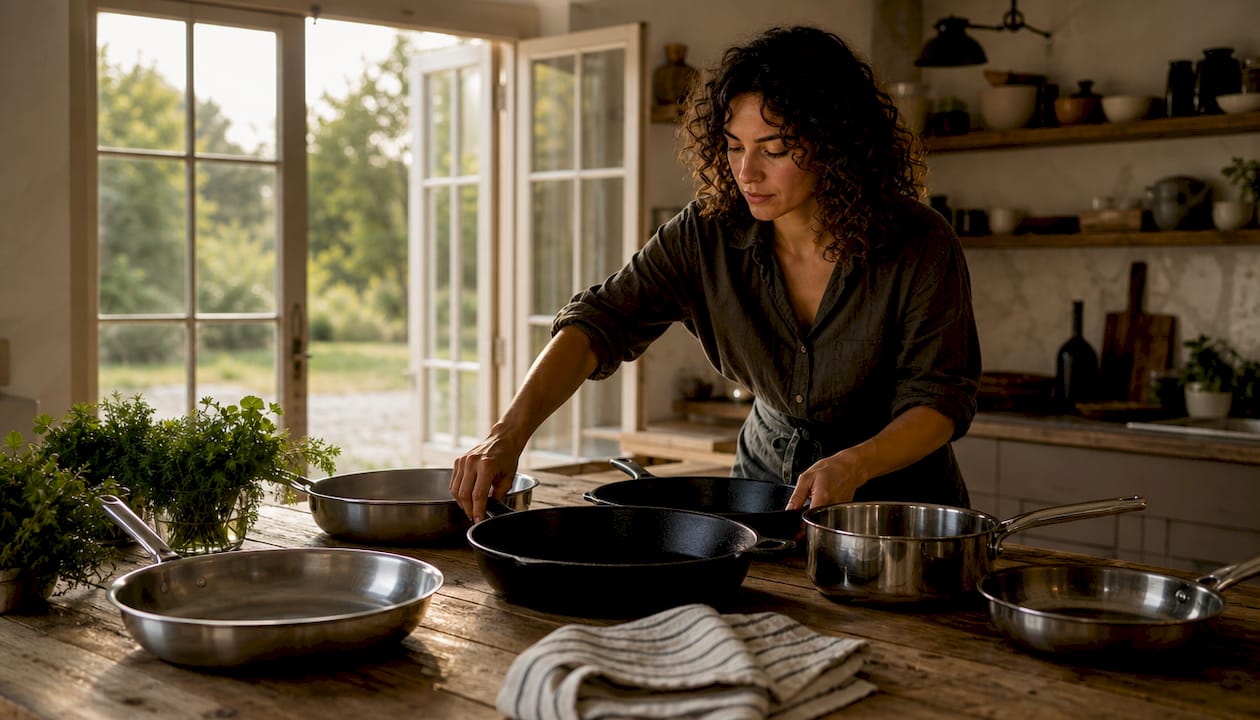
A hybrid collection mixing stainless steel, carbon steel or cast iron, and one nonstick pan gives the best coverage of cooking techniques without clutter.
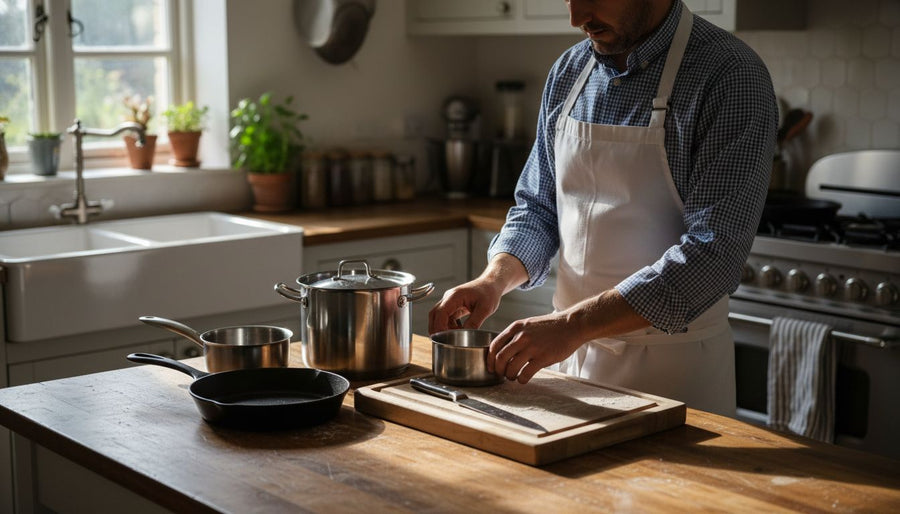
1. Stainless steel skillet (25–30 cm)
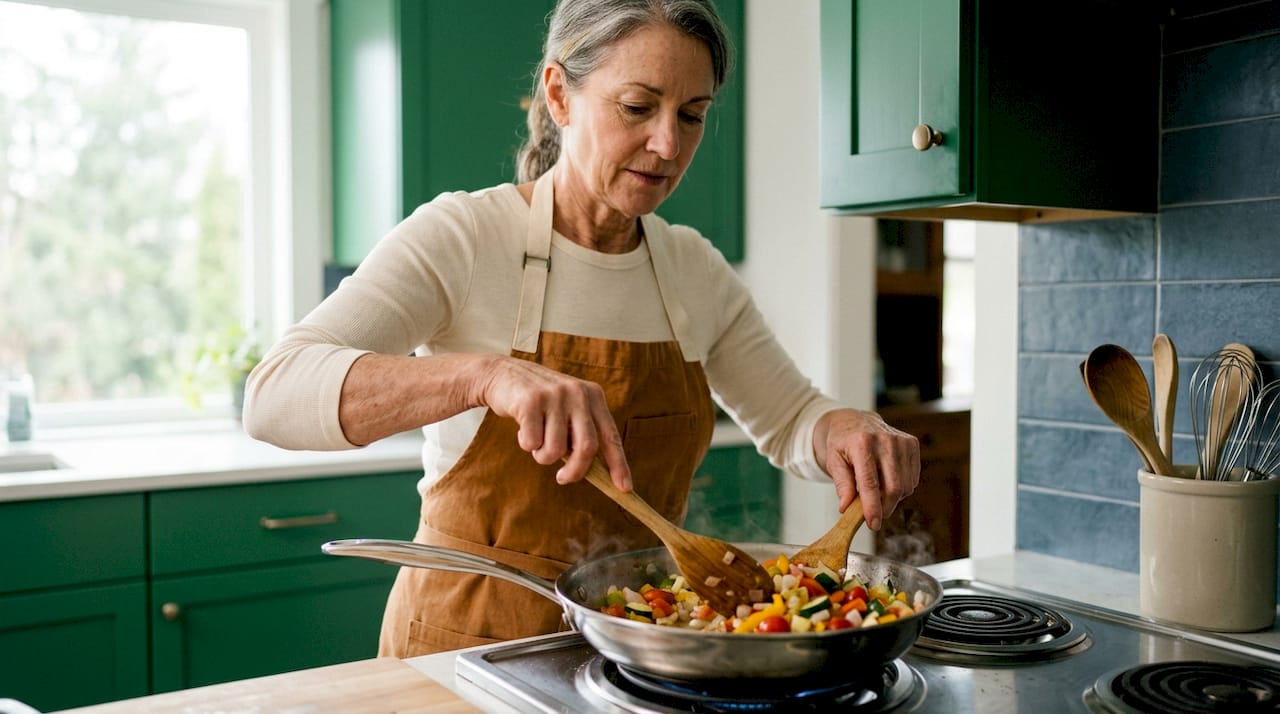
The stainless steel skillet is the workhorse of any kitchen. Use it for sautéing vegetables, building pan sauces, searing chicken breasts, and cooking anything acidic like tomatoes or wine-based dishes. A 25–30 cm size handles most portions for two to four people. This is the piece worth spending more on. A quality stainless skillet, cared for properly, will outlast everything else in your kitchen.
2. Carbon steel or cast iron skillet
Carbon steel and cast iron are the go-to materials for high-heat searing. Both retain heat exceptionally well and move from hob to oven without complaint. Carbon steel heats up faster and is lighter than cast iron, making it the preferred choice for everyday use. The Brass-steel 27 cm Carbon Steel Sauté Pan (€99.00) is forged from a single 3mm sheet with no rivets or welds, which means no weak points and easy cleaning. It works on all cooktops, including induction, and is free from PTFE and PFOA.
3. Medium saucepan (2–3 litre)
A medium saucepan covers sauces, reheating soups, cooking grains, and boiling eggs. Stainless steel is the right material here. It will not react with acidic ingredients and cleans easily. A 2–3 litre capacity handles most everyday tasks without taking up excessive hob space.
4. Large Dutch oven (5–7 litre)
The Dutch oven is the most versatile single piece of cookware you can own. Use it for braising, slow cooking, making stock, baking bread, and deep frying. A 5–7 litre enamelled cast iron Dutch oven retains heat evenly and goes from hob to oven to table. This is another piece worth investing in. A good Dutch oven lasts a lifetime.
5. Stockpot (6–8 litre)
A stockpot handles large-batch cooking: soups, stocks, pasta, and preserving. Stainless steel is the standard choice. You do not need to spend heavily here. A solid, mid-range stainless stockpot does the job reliably for years.
6. Nonstick pan (20–25 cm)
One nonstick pan earns its place in any kitchen, specifically for eggs, crêpes, and delicate fish. Keep it for those tasks only. Avoid high heat and metal utensils to extend its life. Replace it when the coating shows wear.
| Piece | Best material | Size | Priority |
|---|---|---|---|
| Skillet | Stainless steel | 25–30 cm | High |
| Searing pan | Carbon steel or cast iron | 27–30 cm | High |
| Saucepan | Stainless steel | 2–3 litre | High |
| Dutch oven | Enamelled cast iron | 5–7 litre | High |
| Stockpot | Stainless steel | 6–8 litre | Medium |
| Nonstick pan | PTFE nonstick | 20–25 cm | Medium |
How to build your essential kitchen cookware without overspending
Most home cooks waste money on large sets with pans they rarely touch. Editors consistently recommend starting with a focused core and expanding only when a specific cooking need arises.
Start with these three pieces before anything else:
- A stainless steel skillet
- A carbon steel or cast iron searing pan
- A medium saucepan
Add a Dutch oven next, then a stockpot when you start making soups or stocks regularly. The nonstick pan comes last, because a well-seasoned carbon steel pan handles eggs better than most people expect.
Maintenance is where most cooks lose money. Nonstick coatings degrade in 2–3 years even with careful use. Carbon steel and stainless steel, by contrast, can last a lifetime with basic care. For carbon steel, dry it immediately after washing, apply a light coat of oil after each use, and avoid soaking it in water. For stainless steel, a paste of bicarbonate of soda and water removes stubborn stains without scratching.
Pro Tip: Avoid buying a full cookware set. Editors warn that sets of more than seven pieces almost always include pans you will never use. Buy individual pieces and choose each one deliberately.
Cookware needs also shift with life stage. A single person cooking for one needs smaller, lighter pans. A family cooking for four or five needs larger capacity and more durable materials. Buy for where you are now, not for a kitchen you imagine having in ten years.
How size and material combinations improve cooking flexibility
Owning two sizes in key categories, such as two skillets or two saucepans, is more practical than owning many single-purpose specialty pans. A 20 cm saucepan handles a single portion of sauce or reheating leftovers. A 3 litre saucepan handles stock, pasta water, or a family-sized batch of soup. Both earn their place.
The same logic applies to skillets. A smaller 20–22 cm skillet works for one or two portions. A 27–30 cm pan handles family meals and large sears. The Brass-steel 30 cm Carbon Steel Sauté Pan (€119.00) at 4mm thickness is built for exactly this: larger meals, batch cooking, and professional-level heat retention.
Mixing materials is not complicated. Think of it as task allocation:
- Stainless steel for anything acidic, liquid-based, or requiring fond
- Carbon steel or cast iron for anything needing high heat, a crust, or oven finishing
- Nonstick for eggs, delicate fish, and crêpes only
| Material | Best for | Avoid |
|---|---|---|
| Stainless steel | Sauces, sautéing, acidic dishes | Sticky foods without fat |
| Carbon steel | Searing, frying, oven work | Prolonged acidic cooking |
| Cast iron | Slow cooking, bread, deep heat | Quick, high-acid dishes |
| Nonstick | Eggs, fish, crêpes | High heat, metal utensils |
Choosing pieces that do not overlap keeps your kitchen clear and your cooking focused. When every pan has a distinct role, you reach for the right one instinctively. That is when cooking becomes genuinely easier.
Key takeaways
A core cookware collection built around material, size, and function outperforms any large set bought for convenience.
| Point | Details |
|---|---|
| Match material to task | Use stainless steel for acidic dishes, carbon steel for searing, nonstick only for eggs and delicate foods. |
| Start small, expand deliberately | Begin with three core pieces and add only when a specific cooking need demands it. |
| Invest where it counts | Spend more on stainless steel and carbon steel pans that last a lifetime; replace nonstick every 2–3 years. |
| Two sizes beat many specialties | Owning two skillets and two saucepans covers more recipes than a drawer full of single-use pans. |
| Maintenance extends lifespan | Dry carbon steel immediately, oil it after use, and season regularly to build a natural nonstick surface. |
Why I stopped buying sets and started cooking better
I spent years buying cookware sets. Every time I moved flat, I convinced myself a new set would fix whatever felt wrong in the kitchen. It never did. The pans I actually used were always the same three or four pieces. The rest gathered dust in a cupboard.
The shift happened when I started cooking with a carbon steel pan for the first time. The difference between carbon steel and cast iron is real: carbon steel heats faster, responds to temperature changes more quickly, and is light enough to use every day without thinking about it. Once I understood that, I stopped looking for the perfect set and started choosing individual pieces with a clear purpose.
Minimalism in cookware is not about having less. It is about using everything you own. When your kitchen has six well-chosen pieces, you know each one intimately. You know how your carbon steel pan behaves at high heat, how long your stainless skillet takes to reach the right temperature, and exactly when to pull your Dutch oven from the oven. That knowledge makes you a better cook faster than any gadget or gimmick.
My honest advice: buy one great carbon steel pan before anything else. Learn it properly. Season it, cook with it daily, and let it build its patina. By the time you add the next piece, you will know exactly what you need.
— Davide
Where to find quality cookware worth keeping
Building a core collection means choosing pieces that will still perform in ten years. That rules out most budget sets and anything with a coating that degrades under regular use.
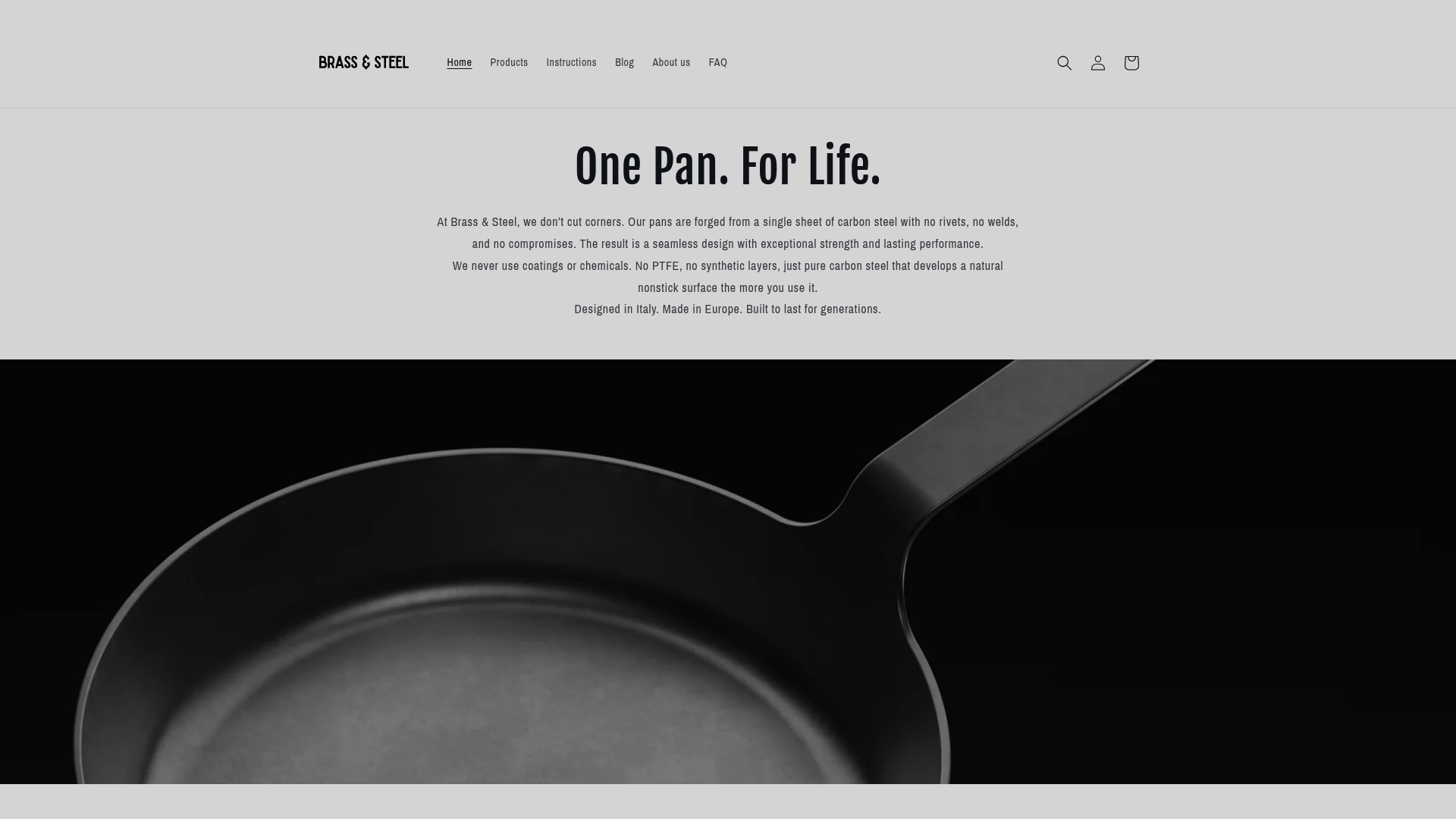
Brass-steel makes carbon steel sauté pans forged from a single sheet of steel, with no rivets, no welds, and no synthetic coatings. The 27 cm pan at €99.00 and the 30 cm pan at €119.00 are both free from PTFE and PFOA, work on all cooktops including induction, and build a natural nonstick surface through seasoning. For home cooks who want a high-quality carbon steel pan that improves with every use, these are the right starting point. Visit the Brass-steel website to see the full range and find the size that fits your kitchen.
FAQ
What is the minimum cookware a home cook needs?
Three pieces cover most cooking needs: a stainless steel skillet, a carbon steel or cast iron searing pan, and a medium saucepan. Add a Dutch oven and a stockpot as your cooking expands.
Is carbon steel better than nonstick for everyday cooking?
Carbon steel outlasts nonstick by decades. Nonstick coatings last only 2–3 years, while a seasoned carbon steel pan builds a natural nonstick surface that improves with use and contains no synthetic coatings.
How do I choose between carbon steel and cast iron?
Carbon steel heats faster and is lighter, making it better for everyday cooking. Cast iron retains heat longer and suits slow cooking and bread baking. Read the full comparison to decide which fits your cooking style.
Should I buy a cookware set or individual pieces?
Buy individual pieces. Editors consistently warn that sets beyond seven pieces include pans you will rarely use. Choosing each piece deliberately gives you a collection you actually cook with.
What oil should I use to season a carbon steel pan?
Use a high-smoke-point oil such as grapeseed, avocado, sunflower, or canola. Apply a very thin coat, wipe off the excess, and bake the pan upside down at 250°C for 30 minutes. Repeat two or three times for a solid base seasoning.
Recommended
- Essential kitchen pots and pans: your practical guide – Brass & Steel
- Healthy Cookware Explained: Essential Guide to Safe Choices – Brass & Steel
- 10 Essential Items for Your Professional Kitchen Cookware List – Brass & Steel
- Professional Cookware Checklist for Chefs: The Complete Guide – Brass & Steel