How to remove rust from a carbon steel pan
TL;DR:
- Rust on a carbon steel pan results from moisture reacting with bare metal, but it is fully reversible with proper cleaning. Removing rust involves vinegar soaking, scrubbing with salt or steel wool, thorough drying, and re-seasoning to restore the protective surface. Consistent care, including immediate drying and light oiling after each use, prevents rust from returning and maintains pan performance.
Rust on a carbon steel pan is surface oxidation caused by moisture reacting with bare metal, and it is fully reversible with the right technique. Knowing how to remove rust from a carbon steel pan takes nothing more than white vinegar, coarse salt, steel wool, and a little patience. The process involves scrubbing away the rust, neutralising any acid residue, drying the pan thoroughly, and re-seasoning to rebuild the protective patina. Get these steps right and your pan will cook better than before. Skip the drying or the re-seasoning and the rust will be back within days.
What causes rust on carbon steel pans?
Carbon steel is an alloy with very little chromium, which means it lacks the passive oxide layer that makes stainless steel rust-resistant. Expose it to moisture for even a short time and oxidation begins. Moisture is the primary cause of rust on carbon steel, and even a damp cloth left resting on the surface overnight is enough to trigger it.
Several habits accelerate rust formation:
- Leaving the pan wet after washing, even for a few minutes
- Storing the pan in a humid cupboard or near a sink
- Stacking pans without any barrier between them
- Washing with harsh detergent that strips the seasoning and leaves bare metal exposed
- Cooking acidic foods like tomatoes or citrus on an under-seasoned pan
Rust does more than look unpleasant. It pits the cooking surface, weakens the seasoning bond, and can transfer a metallic taste to food. A pan with deep pitting is harder to season evenly, which means hot spots and uneven cooking. Catching rust early and removing it properly protects both the pan’s performance and its lifespan.
What tools do you need for rust removal?
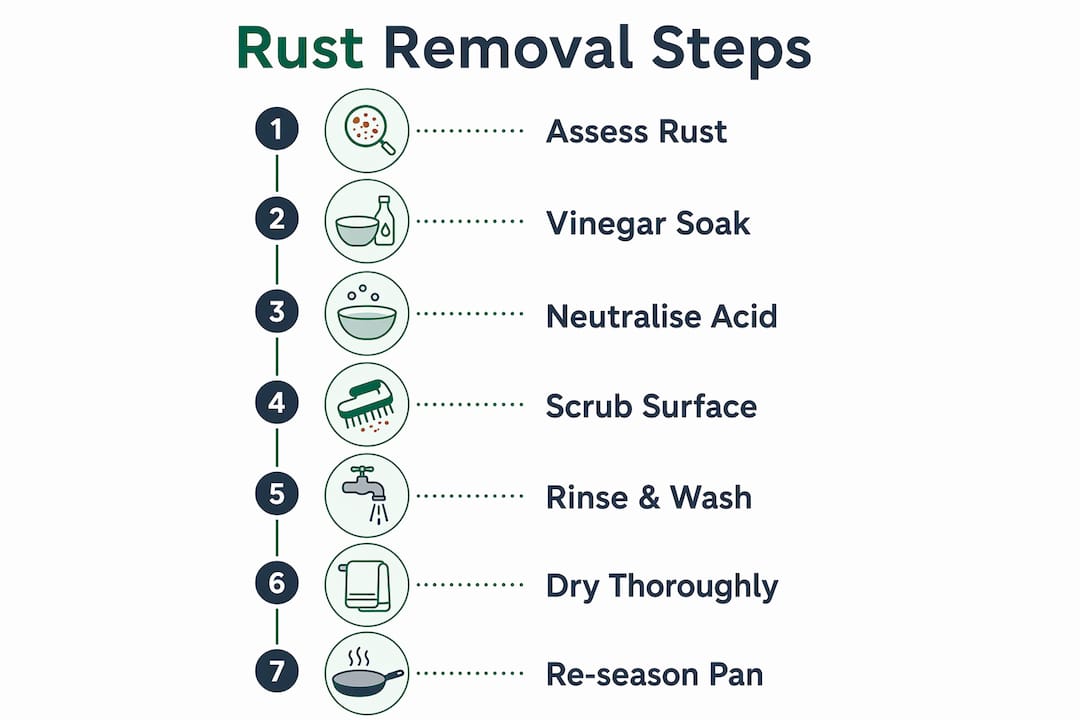
You do not need specialist products. Everything required is likely already in your kitchen.
| Tool | Best use |
|---|---|
| Steel wool (#0000 grade) or Scotch-Brite pad | Light to moderate rust on flat surfaces |
| Coarse salt paste with water or oil | Gentle abrasive scrub for surface rust |
| White vinegar and water (1:1) | Soaking to dissolve stubborn or widespread rust |
| Baking soda | Neutralising vinegar acid after soaking |
| High-smoke-point oil (grapeseed, avocado, canola) | Re-seasoning after cleaning |
| Cleaning cloths or paper towels | Drying and applying oil |
Steel wool and abrasive pads remove rust effectively, but the grade matters. Use #0000 fine steel wool for light surface rust to avoid scratching the metal unnecessarily. For heavier rust, a coarser pad or standard steel wool is fine because you will be re-seasoning the entire surface anyway.
A few safety points worth noting:
- Wear rubber gloves when using vinegar soaks to protect your skin
- Work in a ventilated area if using vinegar, as the smell is strong
- Never use bleach or abrasive chemical cleaners on carbon steel
Pro Tip: Avoid steel wool with soap built in, such as Brillo pads. The soap residue interferes with re-seasoning and is very difficult to rinse out completely.
How to remove rust from your carbon steel pan step by step
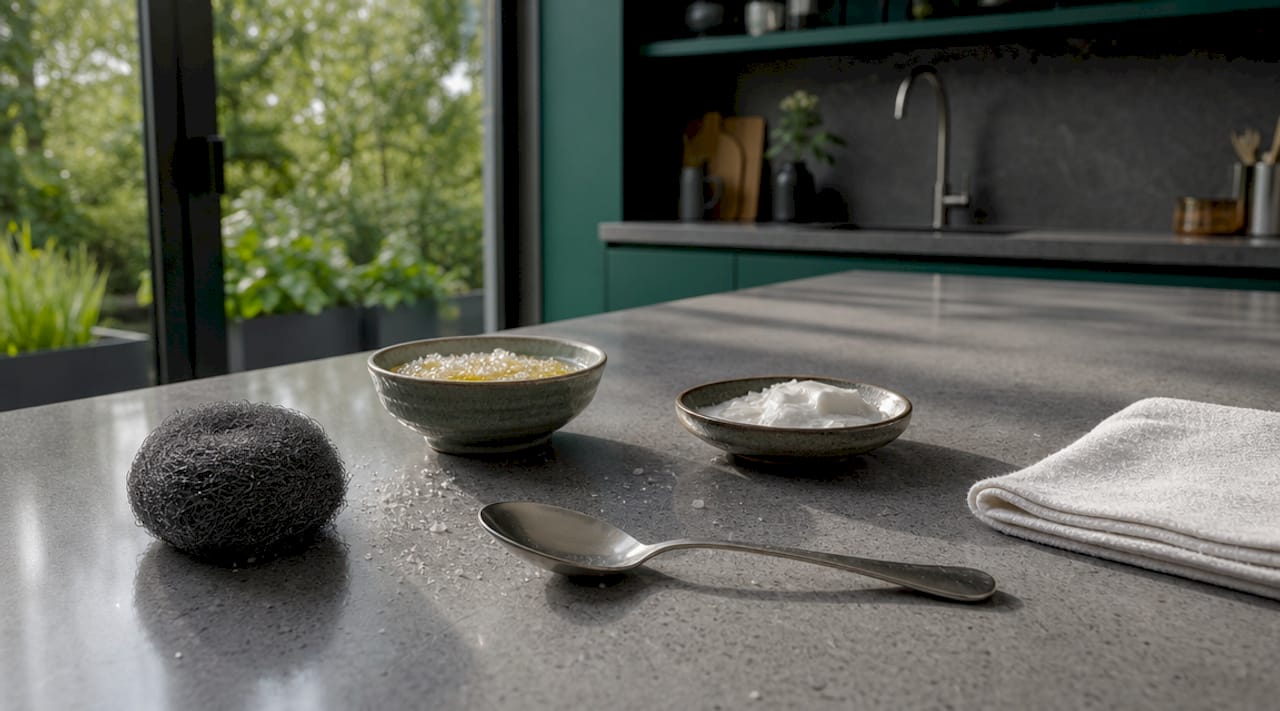
This process works for everything from light surface spotting to more widespread rust. Follow the steps in order and do not skip the drying stage.
Step 1: assess the rust
Look at the pan in good light. Light rust appears as orange or brown spots on the surface. Heavy rust looks darker, feels rough, and may have pitting underneath. Light rust responds to a salt scrub alone. Heavy rust needs a vinegar soak first.
Step 2: vinegar soak for heavy rust
Mix white vinegar and water in equal parts and submerge the rusted areas. Soak for one to four hours, checking every 30 minutes. You will see small bubbles forming where the acid is dissolving the rust. Do not exceed four hours. Over-soaking etches the metal itself, creating pitting that is harder to season over.
Step 3: neutralise the acid
After soaking, do not rinse with water alone. Apply a baking soda paste to the surface and scrub gently. Baking soda neutralises the vinegar acid and stops the chemical reaction. Rinse thoroughly with warm water afterwards.
Step 4: scrub with salt or steel wool
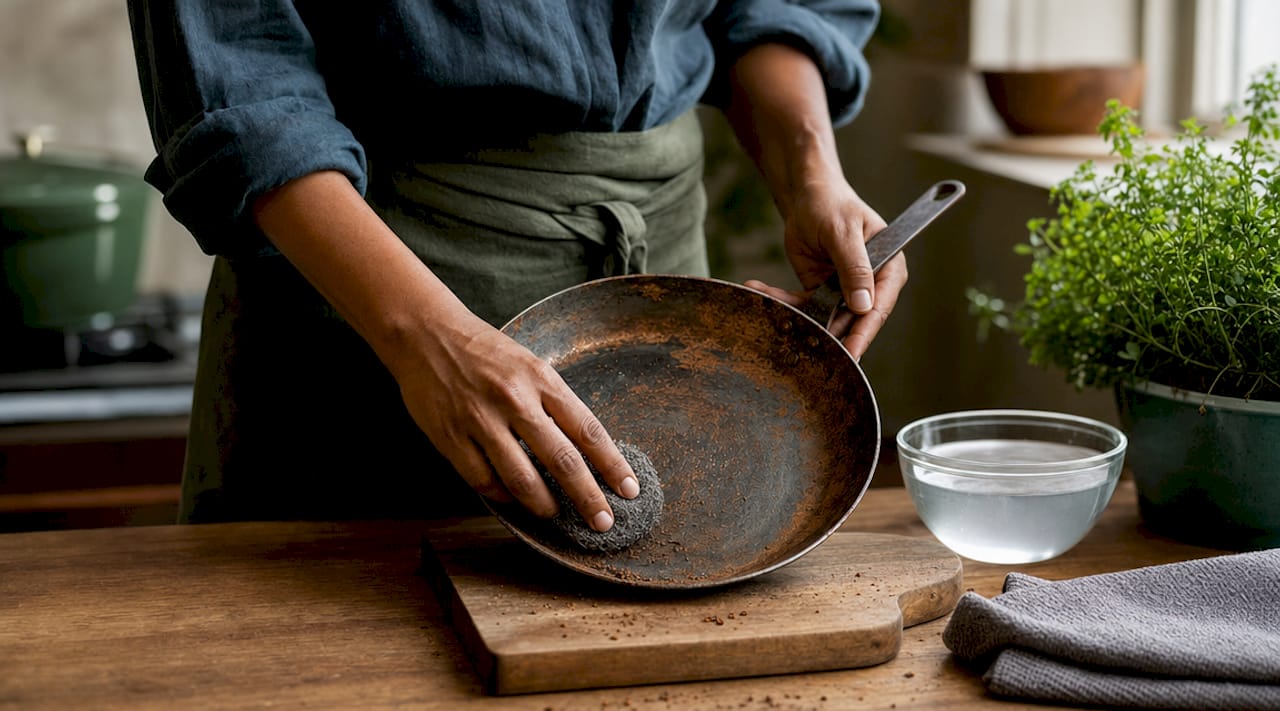
For light rust, skip the vinegar and go straight here. Coarse salt combined with a little water or oil makes an effective abrasive paste that lifts rust without damaging the metal. Scrub in circular motions, applying firm pressure over rusted spots. For stubborn patches, switch to fine steel wool and scrub until the surface looks uniformly grey and metallic.
Pro Tip: Add a few drops of canola oil to your salt paste. The oil lubricates the scrub, reduces the risk of scratching, and starts the re-seasoning process at the same time.
Step 5: rinse and wash
Rinse the pan under hot running water. Use a small amount of washing-up liquid at this stage only. Soap breaks down seasoning and should be avoided in routine cleaning, but after rust removal you want a clean, grease-free surface to season onto. Rinse thoroughly so no soap residue remains.
Step 6: dry completely
This step is non-negotiable. Wipe the pan dry with a clean cloth, then place it on the hob over low heat for one to two minutes. Stovetop drying evaporates moisture trapped in micro-pores and handle joints that a cloth cannot reach. The pan is ready when you can see no steam rising and the surface looks completely dry. Skipping this step causes flash rust within hours.
Step 7: apply oil and re-season
While the pan is still warm, apply a very thin coat of high-smoke-point oil. Grapeseed, avocado, sunflower, and canola all work well. Wipe off the excess with a paper towel until the pan looks almost dry, not greasy. A thick oil coat will turn sticky and gummy rather than polymerising into a hard seasoning layer.
For a full re-seasoning after rust removal, follow these steps:
- Preheat your oven to 250°C (480°F)
- Place the oiled pan upside down on the middle rack
- Bake for 30 minutes, then allow to cool in the oven
- Repeat two to three times for a solid base layer
You can find a detailed walkthrough in the Brass-steel guide on re-seasoning your pan for a full recovery after rust removal.
Common mistakes to avoid
- Over-soaking in vinegar beyond four hours
- Rinsing with cold water straight after stovetop heating, which can warp the pan
- Applying too much oil before seasoning, which creates a sticky, uneven surface
- Putting the pan away while still slightly damp
How to prevent rust from coming back
Removing rust is satisfying. Not having to do it again is better. The following habits keep carbon steel rust-free between uses.
- Dry immediately after washing. Do not leave the pan to air dry. Wipe it, then heat it on the hob for one to two minutes to drive out any remaining moisture.
- Oil lightly before storage. A thin oil layer before storing creates a barrier between the metal and ambient humidity. Use grapeseed or canola and wipe off any excess.
- Store in a dry place. Avoid storing carbon steel near the sink or in a damp cupboard. A dry drawer or hanging rack is ideal.
- Use paper towels between stacked pans. Paper towels between stacked pans absorb moisture and prevent rust transfer from one surface to another.
- Cook regularly. Frequent use builds up the seasoning layer naturally. A well-used pan develops a dark, almost black patina that resists moisture far better than a lightly seasoned one.
- Avoid prolonged soaking. Never leave a carbon steel pan sitting in water. Even five minutes is enough to start surface rust on bare or lightly seasoned areas.
Pro Tip: After cooking, while the pan is still warm, wipe it with a paper towel and a few drops of oil. This takes ten seconds and is the single most effective habit for preventing rust carbon steel pan owners deal with repeatedly.
For a deeper look at long-term care, the Brass-steel guide on preventing rust on carbon steel covers storage and seasoning cycles in detail.
Troubleshooting: when rust keeps coming back
If rust returns within a day or two of cleaning, the pan was not dried thoroughly enough. Incomplete drying in handle junctions and crevices is the most common cause of persistent rust despite careful cleaning. Heat the pan on the hob for longer, at least three minutes, and pay attention to the area where the handle meets the pan body.
For stubborn rust spots that resist scrubbing, return to the vinegar soak but check every 20 minutes rather than waiting the full hour. Once the rust lifts, neutralise with baking soda immediately.
| Problem | Likely cause | Fix |
|---|---|---|
| Rust returns within 48 hours | Incomplete drying | Extend stovetop drying to 3 minutes |
| Sticky surface after re-seasoning | Too much oil applied | Scrub off, apply thinner coat, re-season |
| Rust only in one spot | Seasoning worn thin in that area | Spot re-season with oil and hob heat |
| Pan smells metallic when cooking | Rust not fully removed | Repeat scrub and full re-season cycle |
Signs that seasoning has failed completely include a dull grey surface, food sticking across the whole pan, and rust appearing in multiple places at once. At this point, strip the pan back to bare metal with steel wool, wash with soap, dry fully, and start a fresh seasoning cycle from scratch. It sounds drastic but takes less than an hour and gives you a pan that performs like new.
Avoid the dishwasher entirely. The combination of prolonged heat, water, and detergent strips seasoning completely and causes immediate, widespread rust.
Key takeaways
Removing rust from a carbon steel pan requires scrubbing, acid neutralisation, thorough drying, and immediate re-seasoning. Skipping any one step, particularly the drying, causes the rust to return within hours.
| Point | Details |
|---|---|
| Vinegar soak timing | Soak rusted areas in 1:1 vinegar and water for one to four hours, checking regularly. |
| Neutralise after soaking | Apply baking soda paste after vinegar to stop acid etching the metal. |
| Drying is non-negotiable | Heat the pan on the hob for one to two minutes to remove moisture from micro-pores. |
| Re-season immediately | Apply a thin oil coat and bake at 250°C twice to restore the protective patina. |
| Prevention beats cure | Oil lightly and dry thoroughly after every use to stop rust forming in the first place. |
Why I stopped fearing rust on carbon steel
The first time I found rust on a carbon steel pan, I assumed the pan was ruined. It had been sitting in the back of a cupboard for three weeks after a camping trip, slightly damp, and the surface had turned a deep orange-brown. I nearly threw it away.
What I learned is that rust on carbon steel is almost never terminal. The metal is thick, the damage is almost always surface-level, and the fix is genuinely simple. The vinegar soak method felt counterintuitive at first. Putting acid on a pan seemed like it would make things worse. But watching the rust bubble off during that first soak was genuinely satisfying.
The mistake most people make is rushing the drying step. I did it myself for months. You wipe the pan, it feels dry, you put it away. But moisture hides in the joint where the handle meets the pan body, and that is where rust starts again. Two minutes on the hob after every wash changed everything.
My honest advice: cook with your carbon steel pan as often as possible. A pan that gets used three or four times a week builds seasoning faster than any oven cycle. The more you cook, particularly with fats like butter or olive oil, the darker and more resilient the surface becomes. A well-seasoned pan is genuinely difficult to rust. The maintenance feels like effort at the start, but after a few months it becomes second nature, and the cooking results are worth every second of it.
— Davide
Restore your pan and keep it cooking
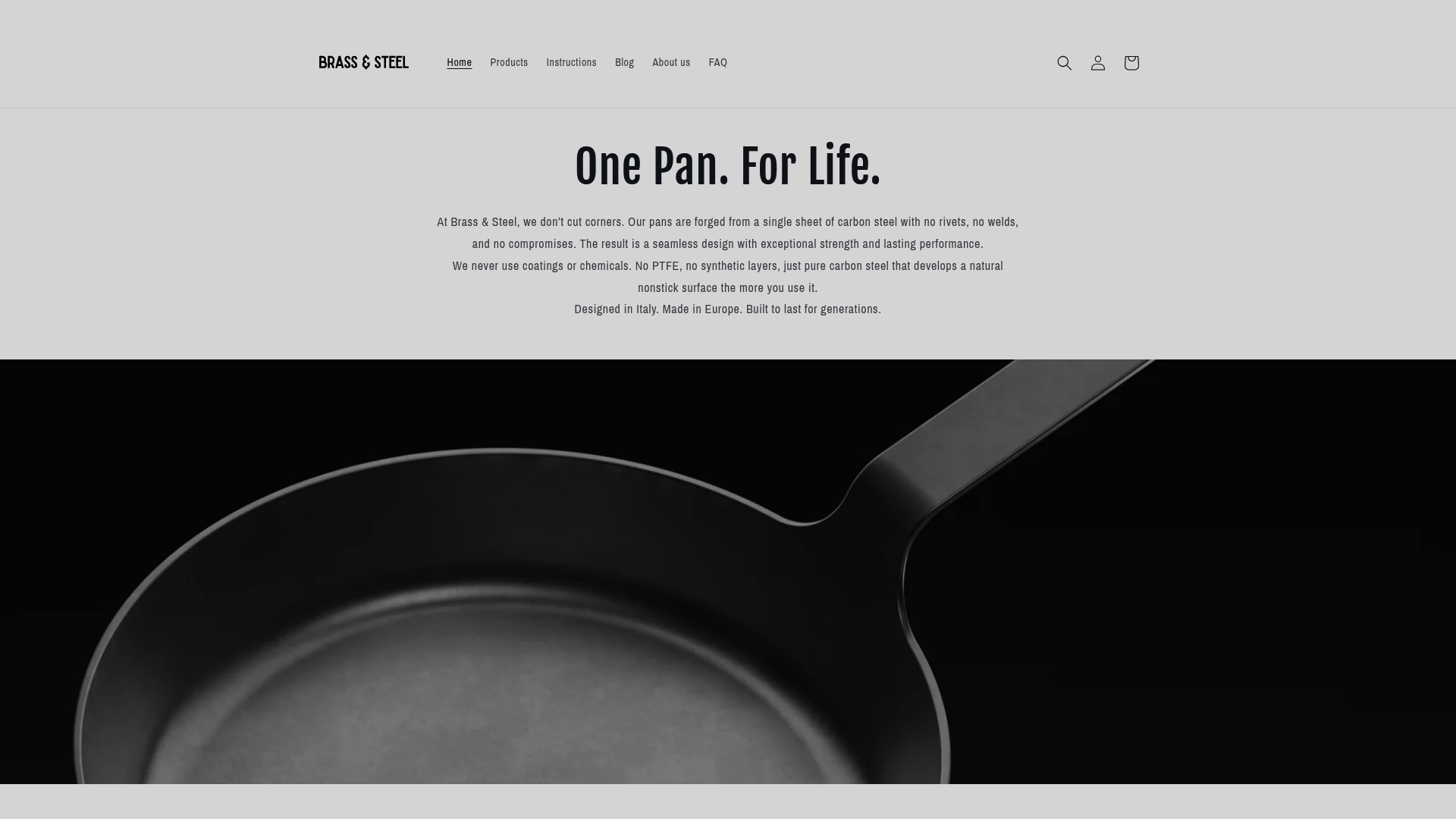
A rusted pan is not a lost pan. With the right technique, you can clean rust from carbon steel and have it back in service the same day. Brass-steel pans are forged from a single piece of carbon steel with no rivets or welds, which means fewer crevices for moisture to hide in and a surface that seasons evenly and holds up for years. If you are ready to invest in a pan that rewards proper care, explore the Brass-steel carbon steel range and find the right size for your kitchen. For everything you need to know about building and maintaining a strong seasoning layer, the Brass-steel guide on seasoning your carbon steel pan is the best place to start.
FAQ
Can I use steel wool on a carbon steel pan?
Yes. Use #0000 fine steel wool for light rust and standard steel wool for heavier rust. Re-season the pan immediately afterwards to restore the protective surface.
How long should I soak a carbon steel pan in vinegar?
Soak in a 1:1 mix of white vinegar and water for one to four hours, checking every 30 minutes. Do not exceed four hours, as prolonged soaking etches the metal.
Why does rust keep coming back after I clean my pan?
The most common cause is incomplete drying. Heat the pan on the hob for at least two minutes after washing to evaporate moisture from micro-pores and handle joints before storing.
Is it safe to cook on a slightly rusty carbon steel pan?
Light surface rust is not harmful in small amounts, but it affects flavour and seasoning. Remove rust before cooking and re-season to restore a clean, non-reactive surface.
What oil is best for re-seasoning after rust removal?
Grapeseed, avocado, sunflower, and canola oils all work well. They have high smoke points and polymerise into a hard, durable layer. Avoid olive oil and animal fats for seasoning.