Durable cookware criteria: what actually lasts
TL;DR:
- Durable cookware mainly depends on high-quality materials like stainless steel, cast iron, and carbon steel, which last decades with proper care. Proper construction, such as thick bases and single-piece handles, combined with good maintenance habits, significantly extends a pan’s lifespan. Most coatings and riveted handles are points of failure, making uncoated, well-constructed cookware the best long-term investment.
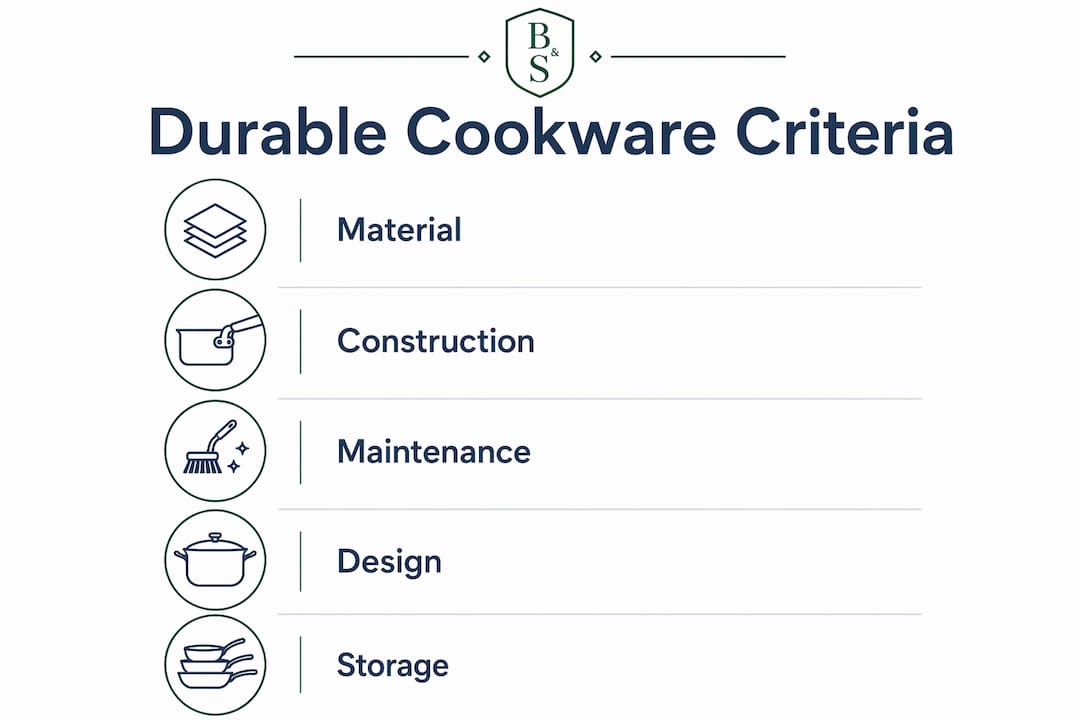
Durable cookware is defined as pots and pans that maintain structural integrity and cooking performance over many years, provided they receive the right care. The durable cookware criteria that matter most are material quality, construction method, and maintenance tolerance. Stainless steel, cast iron, and carbon steel are the three materials that consistently meet these standards. Popular nonstick coatings, by contrast, degrade within 3–10 years, making them a poor long-term investment for anyone serious about their kitchen.
What material properties define durable cookware?
The material your pan is made from determines almost everything: how long it lasts, how safely it behaves at high heat, and how predictably it ages. Not all metals are equal, and understanding the differences will save you money and frustration.
Uncoated metals vs coated surfaces
Uncoated metals like cast iron, carbon steel, and stainless steel are the gold standard for longevity. Chemically inert materials such as these do not leach harmful compounds into food, even at high temperatures. Coated surfaces, including PTFE-based nonstick and ceramic, offer convenience early on but begin to degrade with regular use. Once a coating scratches or flakes, the pan loses both its function and its safety margin.
Carbon steel deserves particular attention here. It is lighter than cast iron, heats up faster, and builds a natural nonstick patina through seasoning. Brass-steel forges its carbon steel pans from a single sheet of metal, which means there are no coatings to chip and no weak points to fail over time.
Why gauge and base flatness matter
- Heavy gauge construction resists denting, scratching, and deformation under repeated thermal stress.
- Flat-bottomed bases maintain full contact with induction and smooth-top hobs, which prevents warping and uneven heating.
- Thin-gauge pans warp easily, creating hot spots that ruin cooking results and shorten the pan’s useful life.
- Stainless steel grades vary widely. Look for 18/10 stainless, which contains 10% nickel for corrosion resistance. Lower grades pit and discolour faster.
The Brass-steel 30 cm sauté pan uses 4mm carbon steel. That thickness is not accidental. It gives the pan enough mass to hold heat steadily and enough rigidity to resist warping on any hob type.
Pro Tip: When shopping in person, press your palm flat against the base of a pan. Any flex or wobble under light pressure is a sign the gauge is too thin for long-term use.
Safety and predictable degradation
Materials that degrade slowly and predictably are safer than those that fail suddenly or release chemicals without visible warning. Cast iron develops surface rust when neglected, which is visible and fixable. A scratched nonstick pan, by contrast, may release particles without any obvious sign of damage. For home cooks who want to understand what is happening to their cookware over time, uncoated metals offer far greater transparency.
How does construction and design affect cookware durability?
Material choice sets the ceiling for durability, but construction determines whether a pan actually reaches it. Two pans made from identical steel can have very different lifespans depending on how they are put together.
-
Handle attachment method. Riveted handles are the most common failure point in cookware. Over years of use, rivets loosen, trap grease, and eventually allow the handle to wobble. Single-piece or welded handles eliminate this risk entirely. Brass-steel pans are forged from one piece of carbon steel, so the handle is the pan. There is nothing to loosen, nothing to clean around, and no joint to fail.
-
Base thickness and warp resistance. Thin bases warp when exposed to rapid temperature changes or high heat on induction hobs. Heavy-gauge flat-bottomed pans resist this deformation and maintain full contact with the cooking surface throughout their life. The Brass-steel 27 cm pan at 3mm and the 30 cm pan at 4mm both sit firmly in this category.
-
Absence of coatings and adhesives. Every coating or adhesive layer is a potential failure point. Pans that rely on sprayed-on nonstick surfaces or bonded bases introduce materials with different thermal expansion rates. Over time, those layers separate, crack, or peel. A single-material pan avoids this problem completely.
-
Oven compatibility. Pans with plastic or composite handles cannot go in the oven, which limits their versatility and often means buying additional pieces. All-metal construction, as used by Brass-steel, means the pan moves freely from hob to oven without restriction.
Pro Tip: Before buying, check whether the handle is attached with visible rivets on the cooking surface. If it is, food and grease will collect around those rivets every time you cook. That is a hygiene issue as well as a durability one.
How do maintenance and storage practices influence cookware longevity?
Even the toughest pan will fail early if it is treated carelessly. Durability is a system outcome that depends on material strength and consistent maintenance in equal measure. The good news is that the right habits are simple once they become routine.
Daily care habits that protect your investment
- Dry immediately after washing. Leaving water on carbon steel or cast iron, even for a short time, starts surface oxidation. Wipe dry with a cloth straight after rinsing.
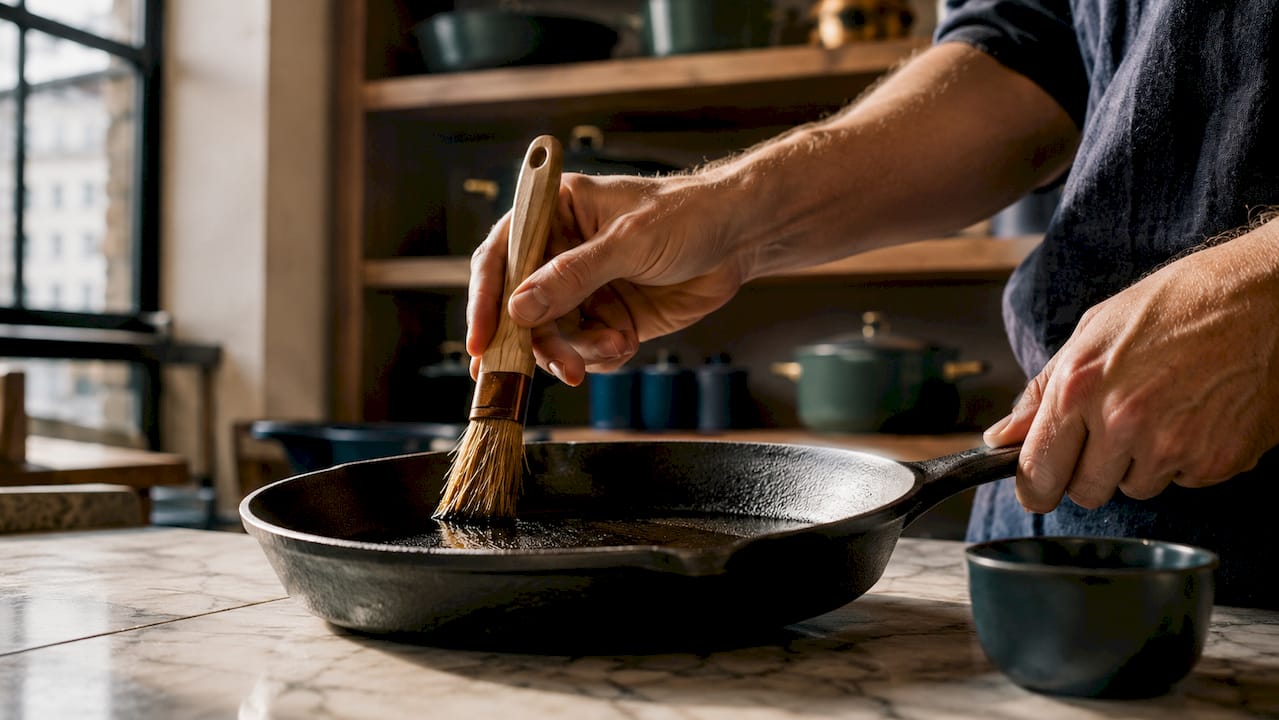
- Apply a thin coat of oil after each use. Grapeseed, avocado, sunflower, or canola oil all work well. This keeps the seasoning layer intact and prevents rust.
- Avoid soaking. Prolonged contact with water breaks down seasoning and encourages rust on uncoated metals.
- Never plunge a hot pan into cold water. Thermal shock causes warping and, in extreme cases, cracking. Let the pan cool naturally before washing.
- Use warm water and a soft brush for cleaning. Abrasive scourers strip seasoning from carbon steel and cast iron, forcing you to re-season more often than necessary.
Storage habits that prevent hidden damage
Improper stacking causes micro-abrasions and base deformation even when pans are sitting unused. Place a folded cloth or a dedicated pan protector between stacked pans. If you have the space, hang pans from a rail rather than stacking them. This protects both the cooking surface and the base, and it keeps your pans accessible without the risk of scratching.
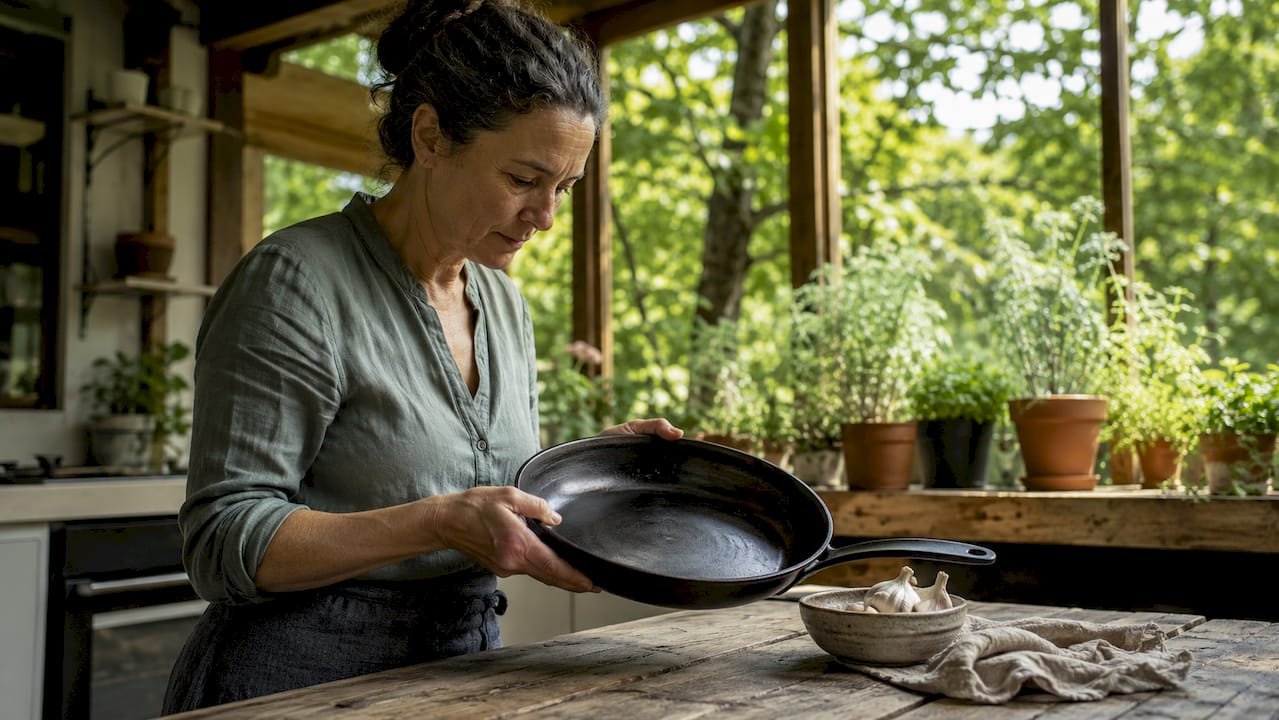
Cast iron and carbon steel require consistent seasoning and moisture control to achieve their long-lasting potential. Many cooks assume that because these materials are tough, they are also low-maintenance. They are not. The commitment is modest, but it is real. A well-seasoned carbon steel pan cared for properly will outlast any coated pan by decades.
Carbon steel, cast iron, and stainless steel: how do they compare?
Choosing between the main long-lasting cookware options comes down to understanding what each material offers and what it demands from you. The table below covers the four most common materials for home cooks.
| Material | Expected Lifespan | Maintenance Level | Key Strength | Main Limitation |
|---|---|---|---|---|
| Carbon steel | 20–50+ years | Moderate | Light, fast-heating, builds natural nonstick patina | Requires regular seasoning and drying |
| Cast iron | 20–50+ years | Moderate | Exceptional heat retention, virtually indestructible | Heavy, slow to heat, prone to rust if neglected |
| Stainless steel | 20–30+ years | Low to moderate | Corrosion-resistant, dishwasher-safe, versatile | Can stick without fat; quality varies by grade |
| Nonstick (PTFE/ceramic) | 3–10 years | Low initially | Easy release, beginner-friendly | Coating degrades, cannot use metal utensils, shorter life |
The contrast between uncoated metals and nonstick surfaces is stark. Cast iron and carbon steel last 20–50+ years, while nonstick coatings typically need replacing within a decade. That gap represents both a financial and an environmental argument for choosing uncoated metals.
Stainless steel sits in a comfortable middle ground. It does not require seasoning, tolerates dishwashers, and resists corrosion well. The trade-off is that it does not develop a natural nonstick surface and can be prone to sticking if you cook without sufficient fat or heat. For a deeper look at how these materials stack up, the aluminium vs stainless steel comparison from Brass-steel covers the nuances well.
Carbon steel occupies a unique position. It combines the heat responsiveness of stainless steel with the seasoning capability of cast iron, at a weight that is far more practical for daily cooking. For home cooks who want one pan that can sear, sauté, and go in the oven, carbon steel is the most versatile of the long-lasting options. You can read more about what makes cookware truly last in the Brass-steel guide to cookware longevity.
For anyone comparing materials from a manufacturing perspective, the material selection guide from Ufam Cooks offers a useful professional-level breakdown of how production choices affect real-world performance.
Key takeaways
The most durable cookware combines uncoated metal construction, heavy-gauge thickness, and a consistent care routine to deliver decades of safe, reliable performance.
| Point | Details |
|---|---|
| Material is the foundation | Carbon steel, cast iron, and stainless steel outlast coated surfaces by decades. |
| Construction determines lifespan | Single-piece or welded handles and thick bases prevent the most common failure points. |
| Maintenance is non-negotiable | Carbon steel and cast iron require regular seasoning and drying to reach their full lifespan. |
| Storage causes hidden damage | Stack pans with protectors or hang them to avoid micro-abrasions and base warping. |
| Avoid thermal shock | Let pans cool naturally before washing to prevent warping and structural damage. |
Why i think most cookware advice gets durability wrong
Most buying guides treat durability as a fixed property of a material. Cast iron is tough, so it lasts forever. Nonstick is delicate, so it does not. That framing is too simple, and it leads people to make poor decisions.
In my experience, durability is a relationship between the material, the cook, and the kitchen. A cast iron pan owned by someone who never dries it properly will rust within months. A nonstick pan owned by someone who never uses metal utensils and never overheats it might last eight years. The material sets the potential. The cook determines whether that potential is reached.
What I find more useful is thinking about maintenance tolerance. Ask yourself honestly how much care you are willing to give a pan. If the answer is “very little,” stainless steel is your best option. It forgives neglect better than carbon steel or cast iron. If you are willing to build a small habit around drying and oiling, carbon steel will reward you with a cooking surface that gets better every year.
The other thing most guides ignore is structural failure. People focus on coatings and surfaces, but the handle joint fails long before the metal does in most cheap pans. A pan that wobbles in your hand after two years is not durable, regardless of what the base is made from. Single-piece construction, as Brass-steel uses, removes that variable entirely.
My honest advice: buy less, buy better, and learn the maintenance habits for whatever material you choose. A €99 carbon steel pan that you care for properly will still be in your kitchen in 30 years. A €30 nonstick pan will be in a landfill in five.
— Davide
Brass-steel pans are built around these criteria
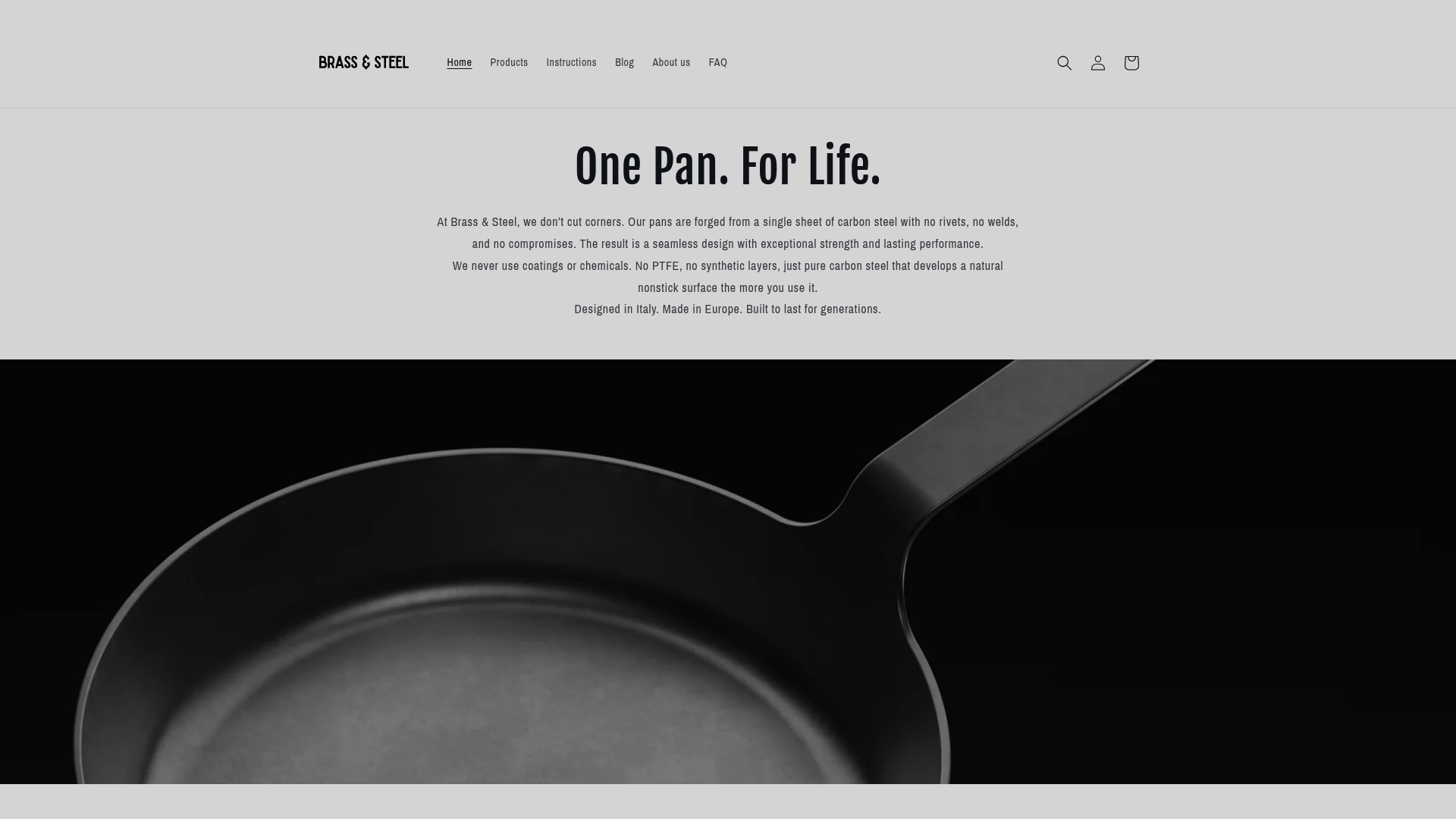
Brass-steel designs its carbon steel sauté pans specifically around the criteria that matter for long-term performance. Both the 27 cm and 30 cm pans are forged from a single piece of carbon steel, which means no rivets, no coatings, and no weak joints. The 4mm base on the 30 cm pan resists warping on induction hobs, and the natural seasoning surface builds over time rather than degrading. If you want to understand how to get the most from a carbon steel pan, the carbon steel care guide from Brass-steel covers every step from first seasoning to long-term maintenance. These are pans built to last decades, not seasons.
FAQ
What are the most important durable cookware criteria?
The three core criteria are material type, construction method, and maintenance tolerance. Uncoated metals like carbon steel, cast iron, and stainless steel consistently outperform coated surfaces on all three.
How long does carbon steel cookware last?
Carbon steel lasts 20–50+ years with proper care, including regular seasoning and immediate drying after washing. Neglect shortens that lifespan significantly.
Why do riveted handles reduce cookware durability?
Riveted handles loosen over time, trap grease, and create a structural weak point. Single-piece or welded construction eliminates this failure mode entirely.
Does thermal shock really damage good-quality pans?
Yes. Plunging a hot pan into cold water causes rapid contraction that warps the base, even in heavy-gauge pans. Always allow pans to cool before washing.
Is nonstick cookware ever a durable choice?
Nonstick coatings typically last 3–10 years before degrading, regardless of quality. For long-lasting cookware, uncoated carbon steel or stainless steel are more reliable options over a decade or more.