Carbon Steel vs Cast Iron vs Stainless Steel
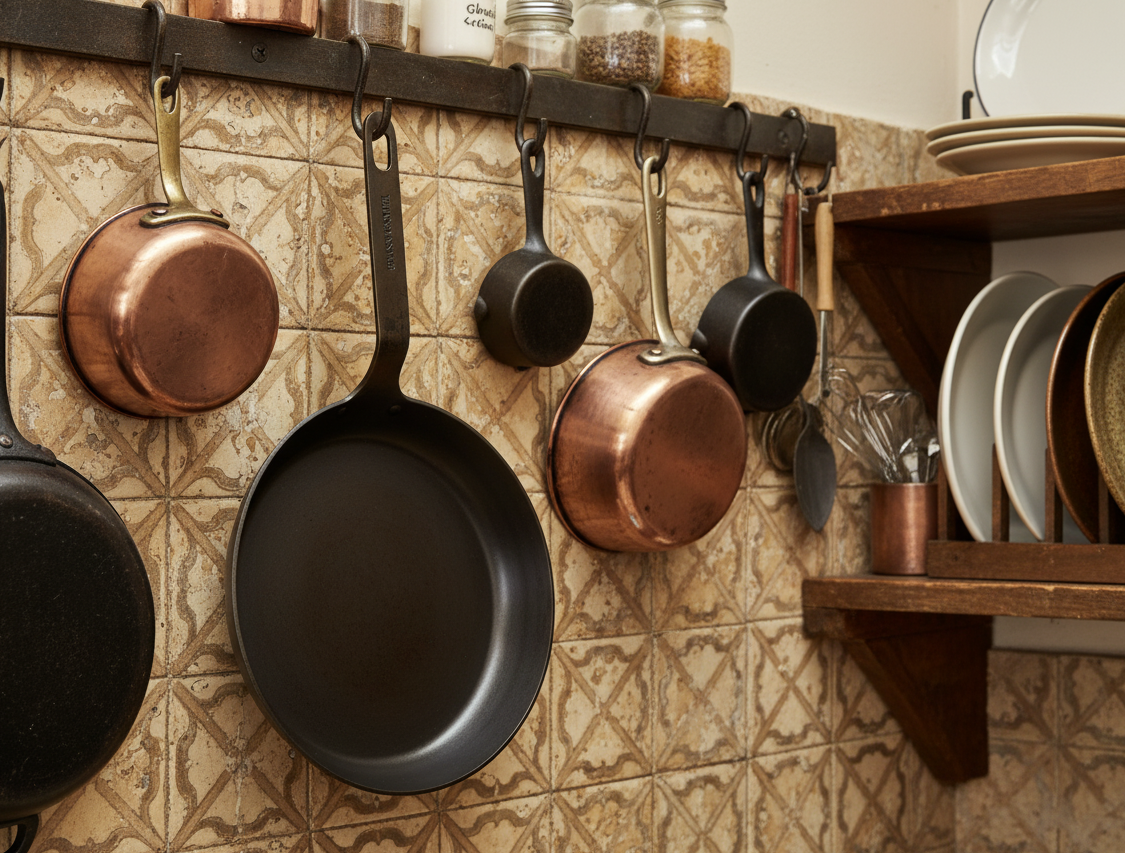
TL;DR: All three metals are excellent, but they solve different problems. Stainless steel is the easiest to live with and the safest bet for acidic sauces. Cast iron holds heat like nothing else, which makes it the king of the long, hard sear. Carbon steel splits the difference: it heats fast, responds instantly to the burner, weighs far less than cast iron, and takes a natural non-stick seasoning. If you want one pan that does the most, carbon steel is the professional's default, and a seamless single-piece pan gives you those strengths without rivets or coatings to fail.
Why this comparison actually matters
Walk into any serious kitchen and you will find all three metals in rotation. That is the first honest thing worth saying: there is no single "best pan." There is a best pan for a given job, and understanding why comes down to how each material is made and how it behaves on heat. The differences are not abstractions, you feel them when you lift the pan and taste them when a tomato sauce comes out bright instead of metallic. Let's go through the properties that matter, then look at a side-by-side table and an honest verdict.
How each pan is made
Stainless steel
Stainless steel pans are almost never solid stainless, because stainless on its own is a poor heat conductor. Good ones are "clad": a core of aluminium or copper is sandwiched between layers of stainless steel and bonded under heat and pressure. That core does the conducting; the stainless surface is there because it is inert, corrosion-resistant, and easy to clean. The trade-off is that a clad pan is a laminate of different metals, and quality varies with how evenly the core runs to the edges.
Cast iron
Cast iron is exactly what it sounds like: molten iron poured into a mould and left to set. That casting process gives it a thick, heavy body and a slightly rough surface that seasoning clings to well. It is ancient technology, and it works. The downside is inherent to the method: cast iron is brittle, so it can crack if dropped or thermally shocked, and it is heavy, because thickness is doing the work.
Carbon steel
Carbon steel sits chemically between the two. It is an iron-carbon alloy like cast iron, so it seasons and behaves similarly on the surface, but it is forged or pressed from sheet steel rather than cast. That means it can be made much thinner while staying strong, which is why it is lighter and more responsive than cast iron.
Here is where construction really diverges. Most carbon steel pans are stamped and then have a handle riveted or welded on, and those rivets are stress points, cleaning traps, and eventual failure points. Our approach at Brass & Steel is different: each pan is forged from a single sheet of carbon steel, handle included, with no rivets, no welds, and no coatings. The 27cm pan is 3mm thick and the 30cm is 4mm, and the body is fully seamless. On top of the raw steel we apply a proprietary Carbon Lock™ Surface, a heat-and-glass treatment that primes the metal to grip seasoning from the first layer, so the pan turns non-stick far faster than raw carbon steel usually does. For more on why single-piece construction changes how a pan feels and lasts, see why artisan pans matter for serious home cooks.
Heat-up speed and responsiveness
This is where thickness and mass tell the story. A pan that is thin and conductive heats quickly and, just as importantly, cools quickly when you turn the burner down. Chefs call this responsiveness, and it is the difference between saving a garlic clove and burning it.
- Stainless steel (clad): Heats reasonably fast thanks to the aluminium core and responds well, though hot spots can appear if the cladding is thin or uneven.
- Cast iron: Slow to heat and slow to react. You cannot quickly dial the temperature down; the mass ignores you for a while. That inertia is a feature for searing and a nuisance for anything delicate.
- Carbon steel: Heats fast and responds almost instantly. Because it is thinner than cast iron, a twist of the knob changes the pan within seconds, which is why professional kitchens reach for it for eggs, fish, and fast sautéing.
Heat retention and thermal mass
Responsiveness and retention are two sides of the same coin, and you cannot maximise both. The more mass a pan has, the more heat it stores and the more stubbornly it holds temperature when cold food lands on it.
Cast iron wins retention outright: drop a thick steak into a screaming cast iron pan and the surface barely dips, exactly what you want for a deep, even crust. Carbon steel, especially in thicker gauges like our 4mm 30cm pan, retains far more heat than people expect while staying nimble, so it sears seriously well without becoming a boat anchor. Stainless steel retains the least of the three, fine for most cooking but preheat properly before searing.
Weight and handling
Weight is not vanity. A pan you can lift, tilt, and toss one-handed is a pan you will actually use, and it changes technique. Cast iron is by far the heaviest, and a large skillet full of food can strain your wrist. Carbon steel gives you most of iron's cooking behaviour at a fraction of the weight, the single biggest reason it dominates professional line cooking, where a pan gets picked up hundreds of times a shift. Stainless clad sits in the middle. If handling and balance matter to you, read our practical guide to cookware weight and balance.
Non-stick behaviour and seasoning
None of these three is non-stick out of the box the way a coated pan is, and that is the point. Both America's Test Kitchen and de Buyer note that carbon steel and cast iron develop their non-stick qualities through seasoning: thin layers of oil polymerised onto the metal by heat, building up a slick, durable, food-safe patina.
- Cast iron seasons well and holds it thanks to its slightly textured surface, though the rougher finish is less ideal for delicate work like a folded omelette.
- Carbon steel seasons to a smoother, more refined non-stick surface, and with our Carbon Lock™ Surface priming the steel, it grips seasoning from the first layer instead of the tenth. Once it is in rhythm, eggs slide.
- Stainless steel does not season at all and will never be non-stick; you manage sticking with proper preheating, enough fat, and letting proteins release naturally. A skill, not a flaw, but a real difference.
Seasoning is the recurring commitment with iron-based pans, and it is easy once you understand it. If you are new to it, start with our care and seasoning guide, and to see what a mature, built-up surface should look and feel like, read seasoning build-up on cookware.
Performance with acidic foods
This is the one clear, honest weakness of the iron-based pans, and I won't dress it up. Long-simmered acidic foods, tomato sauces, wine reductions, citrus, vinegar, can strip seasoning and pick up a faint metallic taste from carbon steel or cast iron. A quick deglaze is fine; a 40-minute tomato braise is not the job for these pans.
Stainless steel is completely inert, so it shrugs off acid all day. If your cooking leans on bright, acidic, long-cooked sauces, that alone is a strong argument for keeping a stainless pan in the rotation. Most serious cooks do exactly that: carbon steel or cast iron for searing and sautéing, stainless for the acidic simmers. Not either-or.
Maintenance and durability
Stainless steel is the low-maintenance option: dishwasher-safe, no seasoning, no rust risk. The trade-off is that clad pans can, over many years, delaminate at the bonded layers, and cheaper ones warp.
Carbon steel and cast iron need hand-washing, drying, and a light oiling to protect the seasoning and prevent rust. In return they are close to indestructible. Cast iron's one real vulnerability is that it is brittle and can crack from a hard knock or thermal shock. Carbon steel is more forgiving, and a seamless single-piece pan removes the most common failure mode of all, the riveted handle working loose. With no rivets, welds, or coating to scratch or flake, there is less to go wrong, which is why we back ours with a lifetime guarantee.
Side-by-side comparison
| Property | Carbon steel | Cast iron | Stainless steel |
|---|---|---|---|
| Heats fast | Yes, very | No, slow | Yes, fairly |
| Heat retention | High | Highest | Lower |
| Weight | Light to medium | Heavy | Medium |
| Non-stick | Yes, via seasoning | Yes, via seasoning | No, never |
| Acidic foods | Avoid long simmers | Avoid long simmers | Excellent, inert |
| Maintenance | Hand-wash, oil | Hand-wash, oil | Easy, dishwasher-safe |
| Oven / open flame safe | Yes, both | Yes, both | Yes, oven (check handles) |
| Lifespan | Lifetime | Generations | Many years |
Best use-cases for each
Reach for stainless steel when
You are building a pan sauce, reducing wine, simmering tomatoes, or cooking anything acidic, or when you want a hands-off, no-seasoning pan for boiling, blanching, and one-pot cooking.
Reach for cast iron when
You want maximum, unwavering heat for a thick steak, cornbread, or a long shallow-fry, and you do not mind the weight. Its thermal mass is unmatched for a deep, even crust.
Reach for carbon steel when
You want one pan for the widest range of daily cooking: eggs, fish, vegetables, stir-fries, weeknight proteins, and a genuinely good sear. Fast heat, instant response, natural non-stick, and light enough to toss. This is the pan professionals keep on the pass, and the one most likely to become the pan you reach for without thinking.
The honest verdict
If I could keep only one, it would be carbon steel, and it is not close. Stainless steel is the easiest to own and the right tool for acidic cooking. Cast iron owns heat retention and the perfect sear. But carbon steel is the best all-rounder: the speed and control of a thin conductive pan, the non-stick and searing ability of an iron-based one, and a weight you can handle. That combination is why it is the professional's default.
The catch with most carbon steel is the construction, riveted handles and stamped seams that trap food and loosen, plus a slow break-in before seasoning takes. A seamless single-piece pan with a surface primed to season from day one removes those compromises. Carbon steel also works everywhere, so if induction is your setup, our 2026 guide to the best pans for induction cooking is worth a read.
Key takeaways
- No single winner: match the metal to the job, and most serious cooks own more than one.
- Stainless steel: easiest maintenance and the only choice for long acidic cooking, but never non-stick.
- Cast iron: unbeatable heat retention for searing, but heavy and slow to respond.
- Carbon steel: the best all-rounder, fast, responsive, lightweight, and naturally non-stick once seasoned.
- Construction matters: seamless single-piece carbon steel with no rivets, welds, or coatings avoids the usual failure points, and a primed surface seasons far faster.
Ready to cook on the pro's choice?
If this comparison points you toward carbon steel, get it in its best form: forged from a single sheet of steel, fully seamless, PFAS- and PTFE-free, with a Carbon Lock™ Surface that turns non-stick fast and a lifetime guarantee.
- The 27cm carbon steel sauté pan at €99 is 3mm thick and serves 2 to 3 people, the ideal everyday size.
- The 30cm carbon steel sauté pan at €119 is 4mm thick and serves 3 to 4 people, with more searing mass and room for bigger meals.
Both work on induction, gas, electric, in the oven, and over open flame, so however you cook, they are ready.
FAQ
Is carbon steel better than cast iron?
For most cooking, yes. Carbon steel heats faster, responds instantly, and weighs far less, while still seasoning to a natural non-stick surface and searing very well. Cast iron only clearly beats it on outright heat retention for the heaviest, longest sears. As an all-round pan, carbon steel is the more versatile choice.
Can I cook tomato sauce in a carbon steel pan?
A quick deglaze or a short simmer is fine. Avoid long, slow cooking of acidic foods like tomato sauces or wine reductions, which can strip seasoning and pick up a faint metallic taste. For those dishes, reach for stainless steel, which is completely inert.
Do I have to season a Brass & Steel carbon steel pan?
Yes, but it is quick and easy. Our Carbon Lock™ Surface primes the raw steel so it grips seasoning from the very first layer, meaning the pan turns non-stick far faster than typical carbon steel. Our care and seasoning guide walks you through it step by step.
Does carbon steel work on an induction hob?
Yes. Carbon steel is naturally magnetic, so it works perfectly on induction, as well as gas, electric, in the oven, and over an open flame. It is one of the most versatile materials for a mixed or induction kitchen.