Carbon steel artisan craftsmanship: a cook's guide
TL;DR:
- Artisan carbon steel cookware is handcrafted through controlled forging, heat treatment, and finishing, resulting in durable, high-performance pans. The nonstick patina develops naturally over time with proper care, building on a surface optimized by traditional techniques. Regular maintenance, including immediate drying and light oiling, is essential for long-term performance and rust prevention.
Carbon steel artisan craftsmanship is the expert process of hand forging, heat treating, and finishing carbon steel cookware to achieve superior durability, heat response, and a naturally developing nonstick surface. The industry term for this discipline is artisan metalwork, and it covers everything from shaping a raw steel blank to applying the first seasoning layer. What separates a handcrafted carbon steel pan from a mass-produced one is not just the material. It is the sequence of skilled decisions made at every stage of production, decisions that directly affect how your pan performs on the hob tonight and how it will cook for the next twenty years.
What are the key artisan forging and finishing techniques in carbon steel?
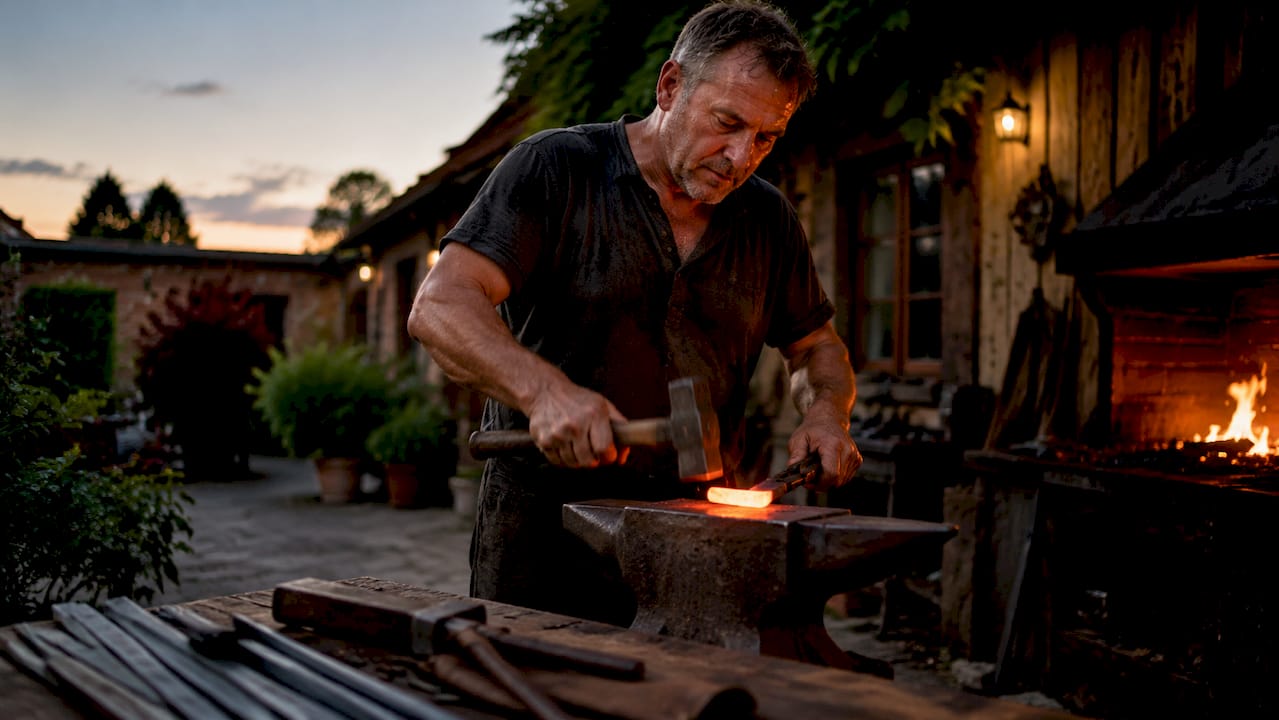
The process of crafting a carbon steel pan begins with a flat steel blank. From there, every step requires deliberate skill and controlled heat. Night Owl Iron Works describes a process of hand-hammering texture into the steel, shaping the pan body, and riveting hand-forged handles before moving on to heat colouring and seasoning. That sequence is not decorative. Each stage builds the structural and culinary character of the finished piece.
The forging and finishing process follows four broad stages:
- Blanking and shaping. The artisan cuts a carbon steel sheet to size and begins forming the pan body using hammers and press tools. Hand-hammering creates surface texture that helps the seasoning layer bond more effectively.
- Heat treatment. Multiple heat-treatment steps including forging, quenching, and tempering calibrate the steel’s hardness and toughness. This is where metallurgy and craftsmanship meet. Get the temperature wrong and the pan warps or becomes brittle.
- Heat colouring and surface finishing. The pan is brought to high temperature to create an oxide layer. This layer protects against rust and prepares the surface to accept seasoning. Robert Thomas Iron Design, documented by Eater, combines traditional forging with modern finishing technology to achieve this consistently.
- Initial seasoning application. A food-safe oil is applied in a very thin coat and baked in. This first layer is the foundation of the pan’s nonstick performance. Night Owl Iron Works ships pans ready for cooking use after this stage, though the seasoning continues to develop with every meal you cook.
One detail that surprises most buyers is that hand-hammered surface variations are not imperfections. They are evidence of the artisan’s individual workmanship and they give each pan its heirloom character.
Pro Tip: When assessing a handcrafted carbon steel pan, look for makers who describe their heat treatment process in detail. Vague marketing language about “hand-forged” without mention of quenching or tempering is a sign the metallurgy may not be as controlled as claimed.
How does artisan craftsmanship shape the natural nonstick patina?
The nonstick property of carbon steel cookware is not a coating. Patina is a thin, dark layer of polymerised oils bonded to the steel surface, developed through cooking and maintenance. Our Place describes it as the cooking surface itself, essential for both performance and flavour. This distinction matters because it means your pan’s nonstick quality is something you build and maintain, not something that wears off.
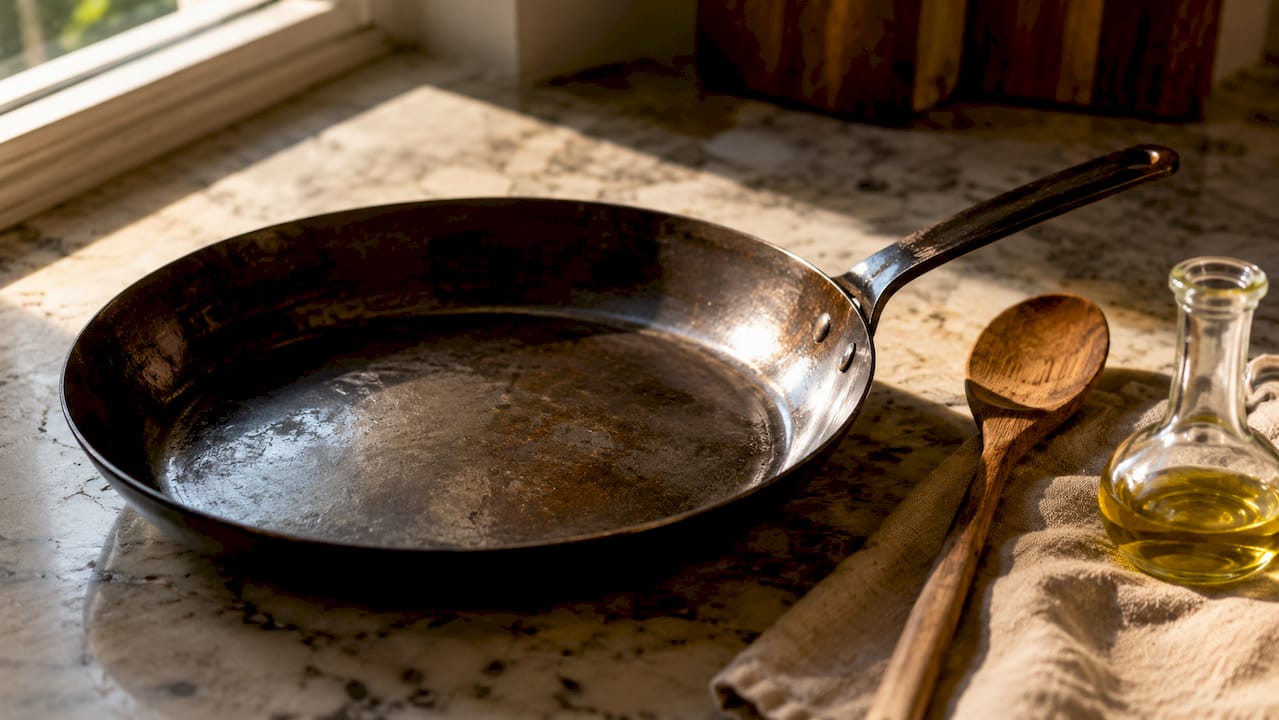
Artisan finishing methods support this process from the start. A well-executed heat colour treatment creates a receptive surface that bonds with oil more readily than bare, untreated steel. The hammer texture from hand forging adds microscopic surface area, giving the polymerised oil more to grip.
There are three approaches to seasoning that you will encounter when shopping for handcrafted carbon steel:
- Natural patina from use. The pan arrives with minimal treatment and you build the seasoning yourself through cooking. This takes patience but produces a surface perfectly tuned to your cooking style.
- Pre-seasoned by the maker. The artisan applies an initial seasoning layer before shipping. This reduces early sticking and gives you a head start, though the patina still develops further with use.
- Super-nitrided surfaces. Some cookware uses a nitrided carbon steel surface that is harder and more resistant to rust. This is an industrial surface treatment, not a coating, and it still requires ongoing seasoning care to preserve nonstick performance.
“The lasting performance of artisan carbon steel hinges on embracing seasoning as an evolving system, not a one-off treatment.” — Six North Designs
Understanding how patina develops over time is the single most useful thing you can learn before buying a carbon steel pan. It reframes the maintenance routine from a chore into a process you actively enjoy.
What practical care keeps artisan carbon steel performing long-term?
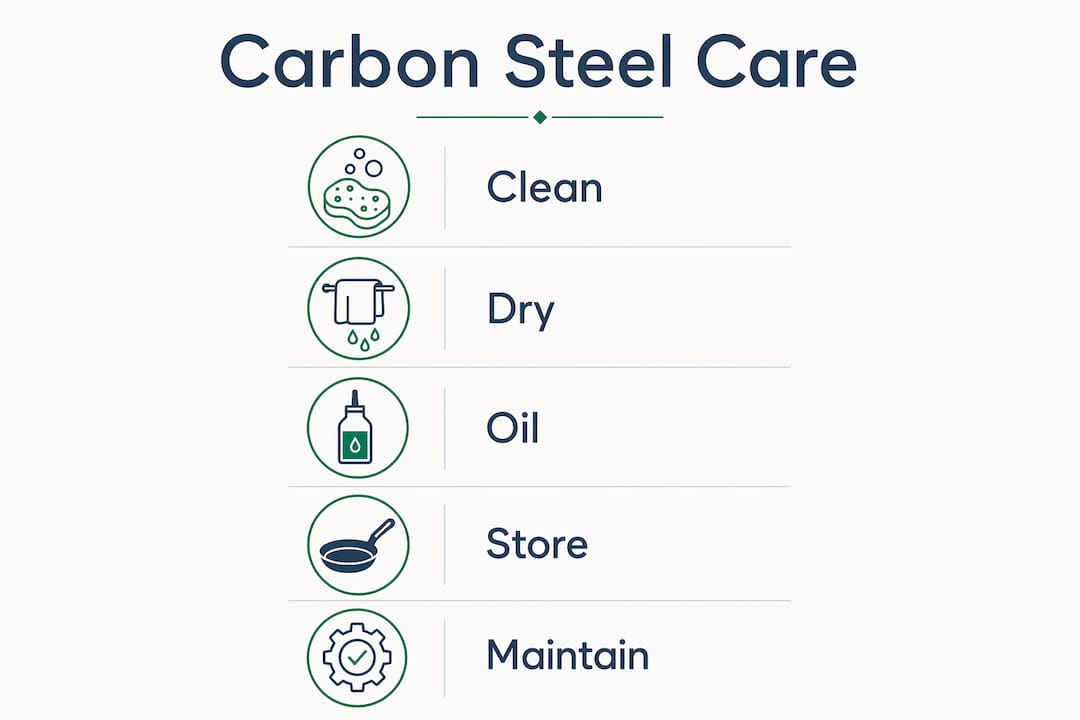
Artisan carbon steel cookware rewards consistent, simple care. The biggest long-term failure is patina stripping caused by soaking, abrasive cleaning, or inadequate drying. Rust prevention is not an occasional task. It is a core skill for anyone who owns a carbon steel pan.
Follow this routine after every cook:
- Rinse with warm water while the pan is still warm. Use a soft brush or cloth. Avoid soap unless you have cooked something particularly pungent, and never use steel wool.
- Dry immediately and completely. Place the pan on a low hob for one to two minutes to drive off all moisture. Water left on carbon steel will rust within hours.
- Apply a very thin coat of oil. Wipe a small amount of grapeseed, avocado, sunflower, or canola oil across the cooking surface. The pan should look almost dry, not greasy. Six North Designs recommends this step as the core of rust prevention and patina preservation.
- Cook fatty foods regularly. Bacon, sausages, and oily fish actively strengthen the seasoning layer. The first few weeks of ownership are the best time to cook these foods deliberately.
- Re-season if the surface looks dull or starts sticking. Scrub the affected area, dry thoroughly, apply a thin oil coat, and bake the pan upside down at 250°C for 30 minutes. Repeat two or three times for a strong base.
Pro Tip: If you spot surface rust, do not panic. Scrub it off with a coarse cloth and a little coarse salt, rinse, dry on the hob, and re-season. Rust on carbon steel is a surface issue, not structural damage. Your pan is not ruined.
Avoid soaking the pan in water and avoid the dishwasher entirely. Both strip the patina and leave bare steel exposed. The carbon steel seasoning checklist from Brass-steel covers every step in detail if you want a reference to keep nearby.
How does artisan carbon steel compare to cast iron and stainless steel?
Choosing between cookware materials comes down to how you cook and how much maintenance you are willing to commit to. Artisan carbon steel sits in a specific position in that comparison.
| Feature | Artisan Carbon Steel | Cast Iron | Stainless Steel |
|---|---|---|---|
| Weight | Lighter (2–3 kg for a 27–30 cm pan) | Heavier (4–6 kg typical) | Light to medium |
| Heat conduction | Fast response, excellent retention | Slow to heat, excellent retention | Fast response, less retention |
| Nonstick surface | Natural patina, builds with use | Natural patina, builds with use | None without coating |
| Maintenance | Regular oiling and drying required | Regular oiling and drying required | Minimal, dishwasher safe |
| Searing performance | Excellent | Excellent | Good with technique |
| Oven safe | Yes, all temperatures | Yes, all temperatures | Yes, check handle limits |
| Induction compatible | Yes | Yes | Yes |
| Heirloom quality | High, especially artisan forged | High | Moderate |
Carbon steel is lighter than cast iron while offering comparable heat control. That weight difference matters enormously when you are tossing vegetables or moving a hot pan from hob to oven. Stainless steel requires no seasoning but cannot match carbon steel for searing performance without careful technique and added fat.
The durability from artisan forging also sets handcrafted carbon steel apart from mass-produced options. A single-piece forged pan, like those made by Brass-steel in Jarocin, Poland, has no rivets or welds to fail over time. The pan is as strong at the handle joint as it is at the base.
Key takeaways
Artisan carbon steel cookware earns its reputation through controlled forging, precise heat treatment, and a seasoning system that improves with every use.
| Point | Details |
|---|---|
| Forging defines performance | Hand-hammering and heat treatment shape both the structure and the cooking surface of the pan. |
| Patina is the nonstick surface | Polymerised oil bonded to steel creates the nonstick layer. It builds with use, not from a factory coating. |
| Care is simple but non-negotiable | Dry immediately, oil lightly, and avoid soaking to preserve the patina and prevent rust. |
| Carbon steel beats cast iron on weight | Artisan carbon steel delivers comparable heat retention at roughly half the weight of cast iron. |
| Pre-seasoned does not mean maintenance-free | Surface treatments ease the start but ongoing seasoning care remains the key to long-term performance. |
Why i think most cooks underestimate the forging stage
People talk endlessly about seasoning carbon steel, and rightly so. But in my experience, the forging stage is where the real performance difference is made, and almost nobody discusses it when choosing a pan.
I have cooked on mass-produced carbon steel and on hand-forged pieces, and the difference in how the surface accepts and holds seasoning is noticeable within the first month. A pan that has been properly heat treated and hand-hammered builds patina faster and more evenly. The texture gives the oil somewhere to bond. A smooth, pressed pan takes longer to develop that same depth of seasoning, and it is more prone to patchy, uneven nonstick performance in the early weeks.
The mistake I see most often from new carbon steel owners is applying too much oil during seasoning. The pan looks dry before you bake it, and that is exactly right. A thick oil coat bakes into a sticky, gummy layer that is genuinely frustrating to fix. Thin coats, repeated two or three times, build a far more durable base.
My honest recommendation is to choose a pan from a maker who describes their heat treatment process clearly. If the product page only mentions “hand-forged” without any detail on quenching, tempering, or finishing, you are likely buying something closer to hand-shaped than truly artisan crafted. The care instructions matter too. A maker who provides detailed seasoning guidance is a maker who understands what their pan needs to perform well.
The care routine feels like effort at first. After a few weeks it becomes second nature, and the pan you end up with is genuinely irreplaceable.
— Davide
Brass-steel’s handcrafted carbon steel pans
Brass-steel makes carbon steel sauté pans forged from a single piece of steel in Jarocin, Poland, with no rivets or welds anywhere in the construction. The 27 cm pan at €99.00 and the 30 cm pan at €119.00 are both free from PTFE and PFOA, compatible with induction hobs, and built to develop a natural nonstick patina through use.
Every pan ships with clear seasoning guidance so you can build your patina correctly from the first cook. Brass-steel also publishes detailed care guides covering patina importance and the full seasoning process for cooks who want to go deeper. If you are ready to invest in cookware that improves with every meal, explore the full range at Brass-steel.
FAQ
What is carbon steel artisan craftsmanship in cookware?
Carbon steel artisan craftsmanship is the skilled process of hand forging, heat treating, and finishing carbon steel cookware to produce durable, high-performing pieces with a naturally developing nonstick surface. It combines controlled metallurgy with hands-on technique at every production stage.
How long does it take to build a proper patina on a carbon steel pan?
A usable patina typically develops within the first 4–6 weeks of regular cooking, with the surface improving noticeably after each use. Cooking fatty foods like bacon or sausages in the early weeks accelerates the process significantly.
What oils are best for seasoning a handcrafted carbon steel pan?
Grapeseed, avocado, sunflower, and canola oil are the best choices because of their high smoke points and neutral flavour. Avoid olive oil and animal fats, as they polymerise unevenly and can produce a sticky rather than smooth seasoning layer.
Can artisan carbon steel pans be used on induction hobs?
Yes. Carbon steel is magnetic and works on all hob types including induction. Use moderate power settings when the pan is cold and empty to avoid thermal shock and potential warping.
How is artisan carbon steel different from a standard pressed carbon steel pan?
An artisan carbon steel pan is hand-hammered and heat treated through multiple controlled stages, producing a surface texture and structural integrity that a pressed pan cannot replicate. Each piece carries subtle variations from the hand-finishing process, reflecting the individual workmanship of the maker.