What type of pans do chefs use: the 2026 guide
TL;DR:
- Professional chefs select cookware based on heat control, durability, and food interaction. They favor carbon steel, stainless steel, cast iron, and nonstick for specific tasks, not general use. Building a collection around these materials improves cooking technique and dish quality.
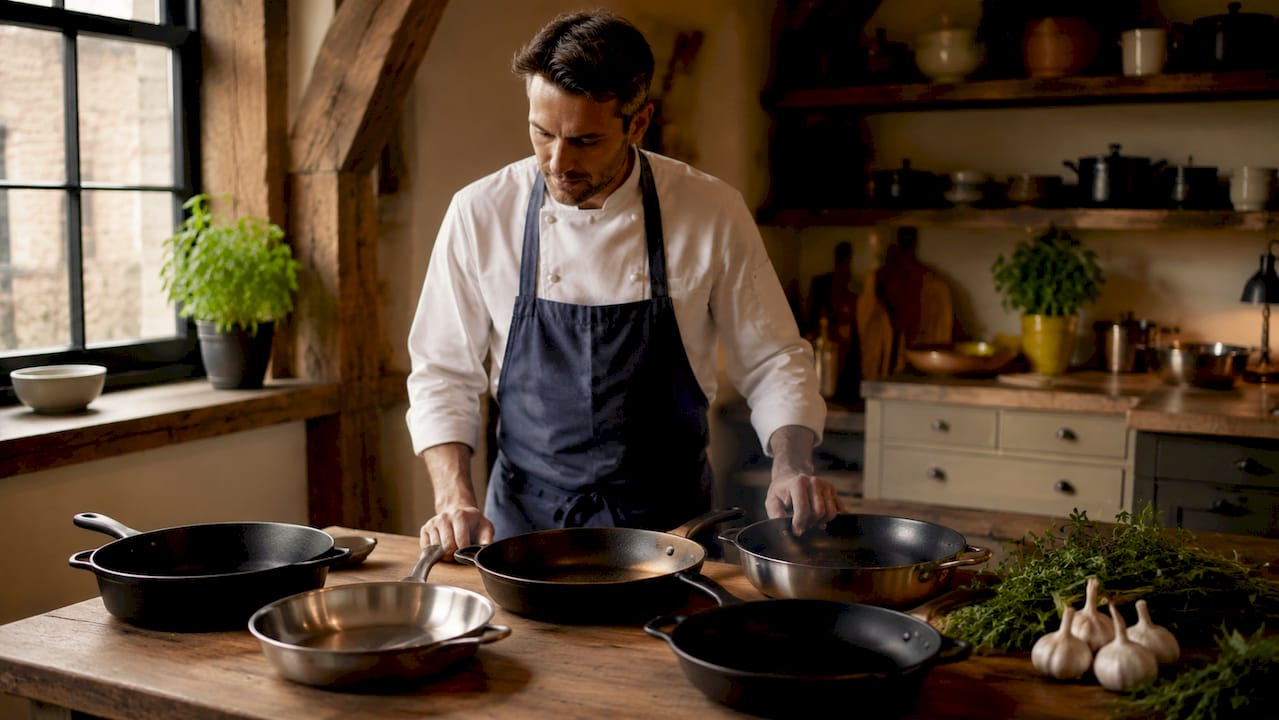
Professional chefs choose cookware based on three things: heat control, durability, and how the pan interacts with food. The types of pans chefs use most are carbon steel, stainless steel, cast iron, and nonstick, each selected for specific tasks rather than general use. Understanding why chefs choose each pan helps you make smarter decisions in your own kitchen, whether you cook for two or for a full restaurant service.
1. Carbon steel pans: the chef’s workhorse
Carbon steel is the pan type most closely associated with professional cooking. Michelin-starred chefs favour carbon steel for high-heat searing and sautéing because it heats up fast, responds immediately to temperature changes, and builds a natural nonstick surface over time. No other material offers that combination at a weight you can actually manoeuvre through a busy service.
The key benefits that make carbon steel a professional staple:
- Fast heat responsiveness. Carbon steel reacts to burner adjustments almost instantly, giving chefs precise control.
- Natural nonstick patina. Seasoning builds a safe, non-toxic surface that improves with every use.
- Versatility. The same pan works for stir-frying, pan-searing, oven finishing, and sautéing vegetables.
- Balance and handle design. Carbon steel is lighter than cast iron, which matters when you are tossing food repeatedly during a long shift.
- No synthetic coatings. Carbon steel is free from PTFE and PFOA, which matters for health-conscious kitchens.
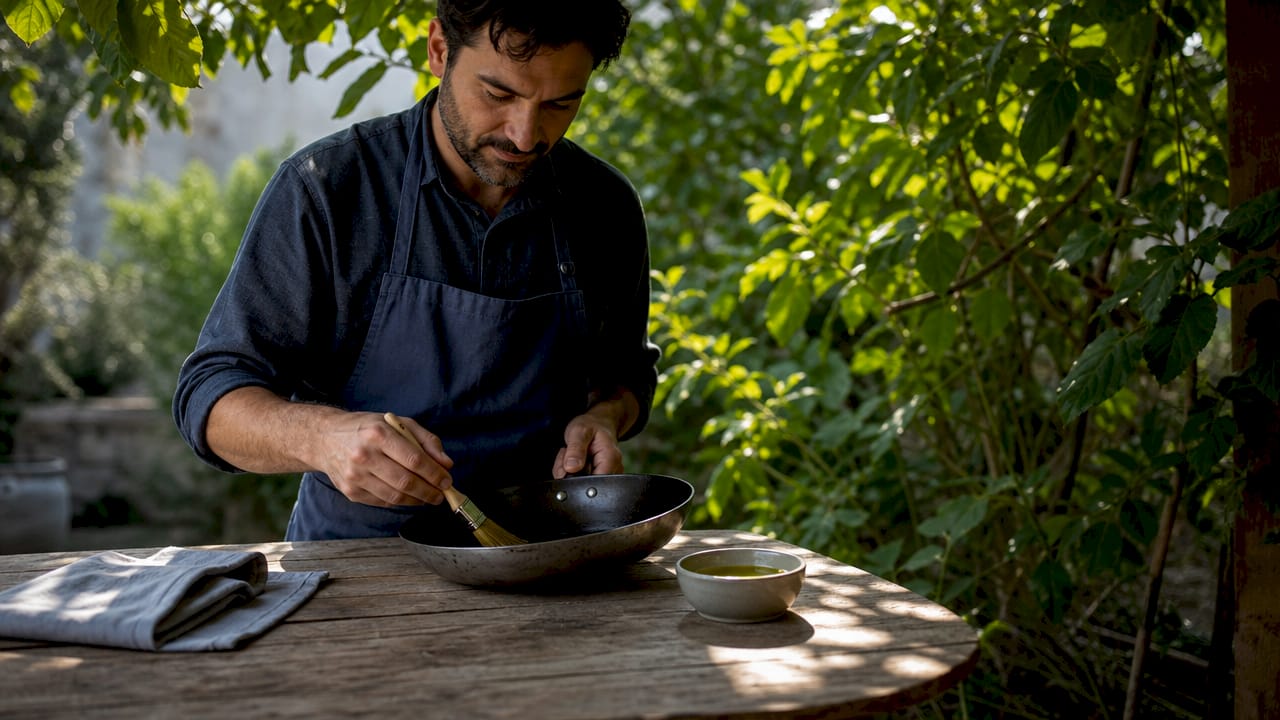
Pro Tip: Season your carbon steel pan with a high-smoke-point oil such as grapeseed or avocado oil. Apply a very thin coat, wipe off the excess until the pan looks almost dry, then bake it upside down at 250°C for 30 minutes. Repeat two or three times for a strong base.
Brass-steel produces carbon steel sauté pans forged from a single piece of steel, which eliminates rivets and welds. The 30 cm model uses 4mm steel and weighs around 3kg, making it well suited to professional kitchens and larger family meals.
2. Stainless steel pans: the precision choice
Stainless steel is the second most common pan type in professional kitchens. Multi-ply stainless steel combines an 18/10 stainless exterior with an aluminium core for even heating and non-reactivity. That non-reactive surface is critical when cooking acidic foods like tomatoes, wine reductions, or citrus-based sauces, where a reactive metal would alter the flavour.
Chefs value stainless steel for several practical reasons:
- Non-reactive surface. Safe for all food types, including acidic ingredients.
- Scratch and corrosion resistance. Stainless steel handles the abuse of a professional kitchen without degrading.
- Even heat distribution. Aluminium cores in multi-ply construction prevent hot spots.
- Oven-safe design. Chefs move stainless pans from hob to oven without changing cookware.
- Fond development. Stainless steel creates the browned bits at the bottom of the pan that form the base of great sauces.
Renowned chefs view professional-grade multi-ply stainless cookware as a lifelong investment. That perspective reflects the reality of professional kitchens, where replacing cheap pans every year costs more than buying quality once.
| Cooking task | Best pan material |
|---|---|
| Acidic sauces and reductions | Stainless steel |
| High-heat searing | Carbon steel or cast iron |
| Delicate eggs or fish | Nonstick |
| Braising and slow cooking | Cast iron |
| Stir-frying | Carbon steel |
3. Cast iron pans: unmatched heat retention
Cast iron is the oldest pan material on this list and still one of the most respected. Chefs regard cast iron as the best option for cooking tasks that require a stable, consistent temperature, such as searing thick steaks, baking cornbread, or slow-braising short ribs. Once cast iron reaches temperature, it holds it with a steadiness that no other material matches.
The properties that keep cast iron relevant in professional kitchens:
- Superior heat retention. Cast iron stays hot even when cold food hits the surface, which prevents temperature drops during searing.
- Seasoning layer. Like carbon steel, cast iron develops a nonstick patina that also adds depth of flavour over years of use.
- Durability. A well-maintained cast iron pan lasts decades and handles the thermal demands of professional cooking without warping.
- Oven and open-flame compatibility. Cast iron works on every heat source, including wood-fired ovens and outdoor grills.
The main trade-off is weight. Cast iron is significantly heavier than carbon steel, which makes it less practical for tasks that require constant movement or tossing. Chefs treat it as a specialist tool rather than an all-purpose pan.
4. Nonstick pans: a specialist tool, not a daily driver
Professional chefs use nonstick pans for a narrow set of tasks: eggs, delicate fish fillets, crêpes, and other foods that require gentle heat and a clean release. Nonstick speeds up service in high-volume kitchens because food slides out without sticking, reducing cleaning time between orders.
Where nonstick fits in a professional kitchen:
- Eggs in every form. Omelettes, fried eggs, and scrambled eggs cook cleanly on nonstick without added fat.
- Delicate fish. Thin fillets that would tear on stainless steel release easily from a nonstick surface.
- Quick-cook items. Foods that need speed and a clean finish benefit from nonstick’s low-friction surface.
- High-volume service. Nonstick reduces the time between dishes during a busy service period.
Chefs avoid nonstick when they need fond development. Fond is the caramelised residue left in the pan after searing, and it forms the base of most pan sauces. Nonstick surfaces prevent fond from forming, which makes them the wrong choice for any dish that relies on deglazing. The best pan depends entirely on the cooking task, and nonstick is strictly a specialist tool in professional kitchens.
Pro Tip: If you want to reduce your reliance on nonstick, a well-seasoned carbon steel pan handles eggs and fish just as well once the patina is established. The difference is that carbon steel improves with age, while nonstick degrades.
5. Specialised pans chefs use for specific tasks
Professional chefs do not rely on one pan type. They maintain a collection of specialist pans, each assigned to a specific workflow task. This is the pan mentality that separates professional kitchens from home setups.
- Hotel pans. Large, rectangular pans used for mass steaming, roasting, and holding food at temperature during service. Essential for catering and banquet cooking.
- Woks. The standard pan for stir-frying and high-heat Asian cooking. Professional kitchens use woks for Vietnamese, Chinese, and Thai dishes where rapid tossing over extreme heat is required.
- Saucier pans. A rounded-sided pan designed for sauce reduction and sautéing. The curved walls make it easy to whisk continuously without catching corners.
- Griddle pans. Flat or ridged pans for cooking pancakes, bacon, and grilled sandwiches. Ridged griddles add char marks without submerging food in fat.
- Braising pans. Wide, shallow pans with lids for slow-cooking proteins in liquid. Used for short ribs, lamb shanks, and similar dishes that need hours of gentle heat.
Chef selection of pans is guided by thermal properties: stainless steel for non-reactivity, cast iron and carbon steel for retention and durability. Choosing the right pan for the job is not a preference. It is a technique decision that directly affects the quality of the dish.
Key takeaways
Carbon steel, stainless steel, cast iron, and nonstick form the core cookware arsenal in professional kitchens, with each material selected for specific cooking tasks rather than general use.
| Point | Details |
|---|---|
| Carbon steel is the most versatile | It sears, sautés, and stir-fries while building a natural nonstick surface over time. |
| Stainless steel suits precision cooking | Multi-ply construction with aluminium cores delivers even heat and non-reactivity for acidic foods. |
| Cast iron excels at heat retention | Use it for searing and braising where stable, consistent temperature is critical. |
| Nonstick is a specialist tool | Reserve it for eggs, delicate fish, and quick-cook items where fond development is not needed. |
| Specialist pans serve specific tasks | Woks, sauciers, and griddles each fill a defined role that general pans cannot replicate. |
Why I always recommend starting with carbon steel
I have cooked in professional kitchens and tested a lot of cookware over the years. My honest view is that most home cooks buy too many pans and use too few of them well. The advice to build a large collection misses the point entirely.
If I had to choose one pan to start with, it would be carbon steel every time. It handles the tasks that matter most: searing, sautéing, and oven finishing. The seasoning process teaches you something about heat and fat that no recipe can. Once you understand how a carbon steel pan behaves, every other pan makes more sense.
The mistake I see most often is treating nonstick as a default pan. Nonstick is a crutch that prevents you from learning how to manage heat and fond. A well-seasoned carbon steel pan does everything nonstick does for eggs and fish, and it also sears a steak properly. Nonstick cannot do both.
Cast iron earns its place in any serious kitchen, but it is a second pan, not a first. Buy it when you need consistent heat retention for braises and thick cuts. Stainless steel comes third, for sauce work and acidic ingredients. Build the collection around technique, not trends.
— Davide
Brass-steel carbon steel pans for serious cooks
Brass-steel makes carbon steel sauté pans forged from a single piece of steel, with no rivets, no welds, and no synthetic coatings. The 27 cm model at €99 suits everyday cooking, while the 30 cm, 4mm pan at €119 handles larger meals and professional-level tasks.
Both pans work on all cooktops including induction, and they are free from PTFE and PFOA. The single-piece construction means there are no joints to trap food or weaken under heat. If you want to cook the way professional chefs do, explore the full range at Brass-steel and find the right pan for your kitchen.
FAQ
What type of pans do chefs use most often?
Carbon steel and stainless steel are the most commonly used pans in professional kitchens. Carbon steel is favoured for searing and sautéing, while stainless steel handles precision cooking and acidic sauces.
What pans do professional chefs use at home?
Most professional chefs use the same pan types at home as in the kitchen: carbon steel for everyday cooking, cast iron for searing and braising, and stainless steel for sauce work. Nonstick appears occasionally for eggs.
What saucepans do professional chefs use?
Chefs typically use stainless steel saucepans with aluminium cores for sauce work, as the non-reactive surface handles acidic ingredients without altering flavour. Saucier pans with rounded sides are preferred for reductions and whisked sauces.
Is carbon steel better than nonstick for professional cooking?
Carbon steel outperforms nonstick for most professional tasks because it builds a natural nonstick patina, tolerates high heat, and allows fond development for pan sauces. Nonstick is reserved for delicate foods like eggs and thin fish fillets.
How do chefs choose the right pan for a dish?
Chefs select pans based on thermal properties and food interaction. Carbon steel and cast iron suit high-heat tasks, stainless steel suits non-reactive cooking, and nonstick suits delicate, quick-cook foods.