

Top European cookware brands for performance and durability
TL;DR:
- Durable European cookware depends on materials, construction, and suitability for cooking habits.
- Carbon steel pans excel at high heat searing, browning, and develop a natural non-stick surface over time.
- Matching cookware type to cooking style, such as carbon steel for searing and enameled cast iron for stews, is essential.
Choosing cookware that genuinely lasts is harder than it looks. Walk into any kitchen shop across Europe and you will find shelves stacked with pots and pans making bold promises, yet most cooks eventually learn that branding alone does not guarantee performance. What separates truly reliable cookware from mediocre options comes down to materials, construction integrity, and how well each piece suits your actual cooking habits. This guide cuts through the noise by laying out what to look for, profiling the top European brands worth your money, and making a clear case for why carbon steel cookware has earned its place at the centre of the serious home kitchen.
Table of Contents
- How to assess European cookware: Key criteria
- Top European cookware brands: Detailed overview
- Why carbon steel pans stand out for home cooks
- Comparison of cookware materials from top European brands
- Our perspective: Choosing the best cookware for your kitchen
- Discover quality European cookware at Brass & Steel
- Frequently asked questions
Key Takeaways
| Point | Details |
|---|---|
| Choose by material | Carbon steel, enamelled cast iron, and multi-ply stainless each suit different cooking needs. |
| European brands excel | Brands like Le Creuset, Staub, Demeyere, and Fissler lead in construction and performance. |
| Carbon steel advantage | For high heat and searing, carbon steel is a top pick for serious home cooks. |
| Maintenance matters | Care and cleaning differ widely—understand this before investing in new cookware. |
How to assess European cookware: Key criteria
Before comparing brands, you need a clear framework for evaluation. Marketing language can make almost anything sound impressive, but the following criteria separate genuinely premium cookware from the rest.
Durability and construction are where most budget pans fall short.
Heat performance varies dramatically by material. Stainless steel is precise and responsive; enamelled cast iron holds heat long after the burner is off; carbon steel sits between the two, offering both responsiveness and excellent retention once at temperature.
For surface and health, consider what coatings or treatments are involved. Enamelled cast iron offers chip-resistant enamel, remains oven-safe to high temperatures, and distributes heat evenly for braises and slow cooks. Carbon steel and stainless steel, by contrast, are entirely free of synthetic coatings such as PTFE and PFOA.
Here is a quick checklist to guide your next purchase:
- Thickness and weight (heavier is usually more durable)
- Handle material and attachment method
- Induction and oven compatibility
- Surface type and coating safety
- Ease of cleaning and re-seasoning requirements
For a full breakdown of which pan shapes suit which techniques, the guide to essential pan types is a useful starting point.
Pro Tip: Always check the base thickness of any pan before buying. A base thinner than 3mm will warp on high-output induction hobs, no matter how respected the brand.
Top European cookware brands: Detailed overview
Europe produces some of the world’s most respected cookware, and each major name brings a distinct philosophy to the kitchen.
Le Creuset and Staub (France) are the benchmarks for enamelled cast iron. Both deliver chip-resistant enamel and even heat distribution that makes them ideal for long braises, stews, and bread baking. Le Creuset is known for its vibrant colourways and ergonomic lids; Staub favours a matte black interior that the brand claims improves seasoning over time.
Pros: Exceptional heat retention, oven-safe to over 260°C, long lifespan, beautiful presentation. Cons: Heavy, expensive, slow to heat up, not ideal for quick sautés.
Fissler and Zwilling (Germany) are the go-to names for multi-ply stainless steel. Their engineering is meticulous, with layered aluminium cores sandwiched between stainless for even, warp-resistant heat. Fissler’s Crispy Steelux range is particularly popular with enthusiasts who want professional performance without a high maintenance routine.
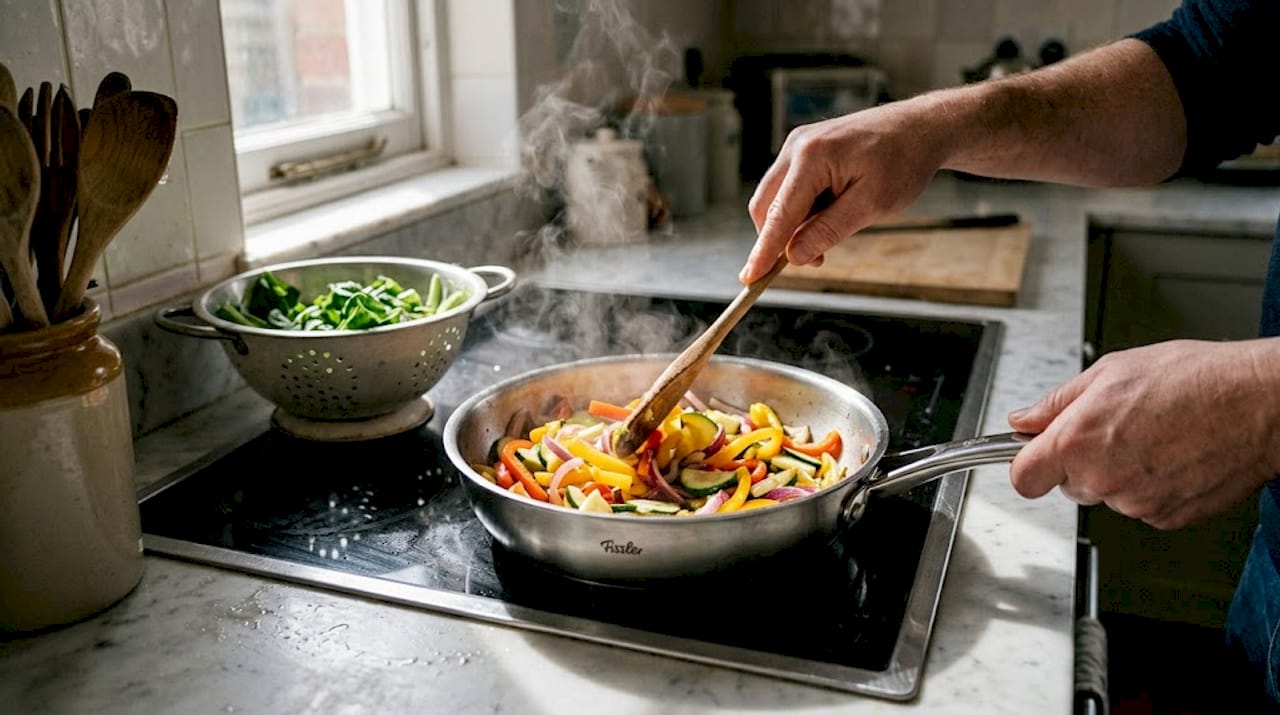
Pros: Dishwasher-safe, no seasoning required, precise heat control, very durable. Cons: Food can stick without adequate preheating and fat, higher price point for multi-ply.
Demeyere (Belgium) is arguably the most technically advanced stainless steel brand in Europe, with their Silvinox surface treatment offering a uniquely non-reactive cooking surface. Built for professional kitchens as much as domestic ones.
Pros: Industry-leading warp resistance, excellent for high-heat cooking. Cons: Premium pricing reflects the engineering quality.
For those drawn to a lighter, more responsive option, carbon steel expert picks offer a focused look at the best pans in that category.
Pro Tip: If you are torn between Le Creuset and Staub, consider your cooking frequency. Le Creuset suits occasional, showpiece cooking; Staub’s rougher interior tends to improve with daily use.
Why carbon steel pans stand out for home cooks
Carbon steel cookware has surged in popularity across European kitchens, and it is not hard to understand why once you have cooked on a well-seasoned pan.
The biggest advantage is how carbon steel handles high heat. When you sear a steak or fry skin-on fish, you want the Maillard reaction: the chemical process that produces golden-brown crusts, deep flavour compounds, and that satisfying caramelisation. Carbon steel edges out other materials for triggering this reaction in home cooking tests, largely because it heats quickly and maintains an intense, even surface temperature without creating hot spots.
Here is how to build a good relationship with your carbon steel pan:
- Season the pan correctly before the first use, applying thin coats of high-smoke-point oil baked at 250°C.
- Start cooking fatty foods such as bacon or sausages to strengthen the seasoning naturally.
- Avoid acidic ingredients (tomatoes, citrus) until the seasoning layer is well established.
- Dry the pan immediately after washing and apply a light oil coat before storing.
- Accept that the pan looks better and performs better with every month of use.
Compared to enamelled cast iron, carbon steel is significantly lighter. Compared to stainless, it builds a natural non-stick surface over time without any synthetic coating. The trade-off is the care routine, but for cooks who already enjoy healthy nonstick alternatives, that routine quickly becomes second nature.
A well-seasoned carbon steel pan performs like a nonstick, sears like cast iron, and responds to heat changes like stainless steel. It is the one pan that genuinely does it all.
For a deeper look at what sets these pans apart, the guide to best carbon steel pans covers every key consideration.
Comparison of cookware materials from top European brands
With the individual profiles covered, here is a side-by-side comparison to make the decision concrete.
| Feature | Carbon steel | Enamelled cast iron | Multi-ply stainless |
|---|---|---|---|
| Heat responsiveness | Excellent | Poor | Very good |
| Heat retention | Very good | Excellent | Good |
| Natural non-stick | Yes (seasoned) | Partial | No |
| Induction compatible | Yes | Yes | Yes |
| Oven-safe temp | Up to 300°C+ | Up to 260°C | Up to 260°C+ |
| Maintenance | Seasonal oiling | Low | Very low |
| Weight | Light to medium | Heavy | Medium |
| Price range | €99 to €130 | €150 to €350+ | €80 to €300+ |
| Warp resistance | Very good (3-4mm) | Excellent | Good to excellent |
A few quick takeaways based on cooking style:
For searing steak or frying fish: Carbon steel is the clear winner. Its rapid heat response and ability to reach very high surface temperatures produce precise temperature control without seasoning requirements when contrasting with stainless, whilst surpassing enamel for browning intensity.
For long braises or stews: Enamelled cast iron from Le Creuset or Staub wins on heat retention and even distribution, keeping liquid at a gentle simmer for hours without scorching.
For quick weeknight sautés: Multi-ply stainless from Fissler or Zwilling offers the fastest cleanup and no seasoning demands, making it the most convenient choice for busy evenings.
For a broader look at how these materials compare in daily use, the guide on nonstick vs stainless vs ceramic puts each option in practical context.
Our perspective: Choosing the best cookware for your kitchen
After years of working with and testing cookware, the most consistent finding is this: the pan that suits your cooking style outperforms the pan with the most impressive spec sheet every single time.
We see cooks spend €300 on a prestige enamelled Dutch oven that they use twice a year, whilst their €99 carbon steel pan sits on the hob every morning doing the real work. The hierarchy of brands matters far less than the match between material, technique, and daily routine.
Our honest advice is to start with one excellent carbon steel pan and one solid stainless sauté pan. Those two pieces will cover the vast majority of techniques you encounter. From searing and frying to sautéing and deglazing, this combination gives you precision and versatility without over-investing in pieces that will gather dust.
For those building out their kitchen with intention, the full overview of must-have pan types will help you identify exactly what to prioritise and what to leave on the shelf. Buy less, buy better, and cook more.
Discover quality European cookware at Brass & Steel
If this guide has given you clarity on what to look for in your next pan, the logical next step is finding cookware that actually delivers on those standards.
At Brass & Steel, we craft carbon steel pans from a single forged sheet, which means no rivets, no welds, and no weak points. Manufactured in Jarocin, Poland, with design roots in Italy, our 27 cm and 30 cm sauté pans are built to perform across every cooktop, including induction, and to last decades with proper care. Every pan is free from PTFE and PFOA coatings, building instead a natural, seasoned non-stick surface that improves with use. If you are ready to invest in cookware that works as hard as you do, explore the full range at Brass & Steel and find the right fit for your kitchen.
Frequently asked questions
What makes carbon steel cookware special for European kitchens?
Carbon steel pans deliver outstanding searing and browning because they heat rapidly and sustain the intense surface temperature needed for the Maillard reaction. Test results confirm that carbon steel edges out other materials for this reaction in home cooking conditions.
Is enamelled cast iron better than stainless steel?
Neither is universally better. Enamelled cast iron excels at retaining heat for even braises and is oven-safe to high temperatures, whilst stainless offers precise temperature control with zero seasoning requirement. Your cooking methods should drive the choice.
Are European cookware brands compatible with induction cooktops?
Yes, the leading European brands engineer their products with induction compatibility in mind. Multi-layer construction and induction compatibility are standard priorities for reputable European manufacturers, including carbon steel options.
What is the best way to care for carbon steel pans?
Wash by hand with warm water promptly after use, dry the pan immediately and thoroughly, then apply a very light coat of high-smoke-point oil before storing. This routine maintains and strengthens the seasoned surface with every use.