The role of carbon steel in Europe: kitchens and industry
TL;DR:
- Carbon steel is an essential alloy used in European kitchens and the continent’s steel industry. It provides fast heat responsiveness, builds a natural nonstick patina, and is favored for its light weight and safety. Europe’s steel sector relies heavily on carbon steel, which faces regulatory pressures to reduce emissions and adopt greener production methods.
Carbon steel is defined as an alloy of iron and carbon, and it sits at the heart of both European professional kitchens and the continent’s steel industry. Its importance spans two very different worlds: the sauté pan on a Parisian stove and the structural beams of a Warsaw warehouse. The role of carbon steel in Europe is hard to overstate. Culinary professionals prize it for its rapid heat response and natural nonstick surface. Industrially, the European steel sector generates 152 billion euros in annual economic activity, with carbon steel at its core.
Why is carbon steel cookware preferred by European culinary experts?
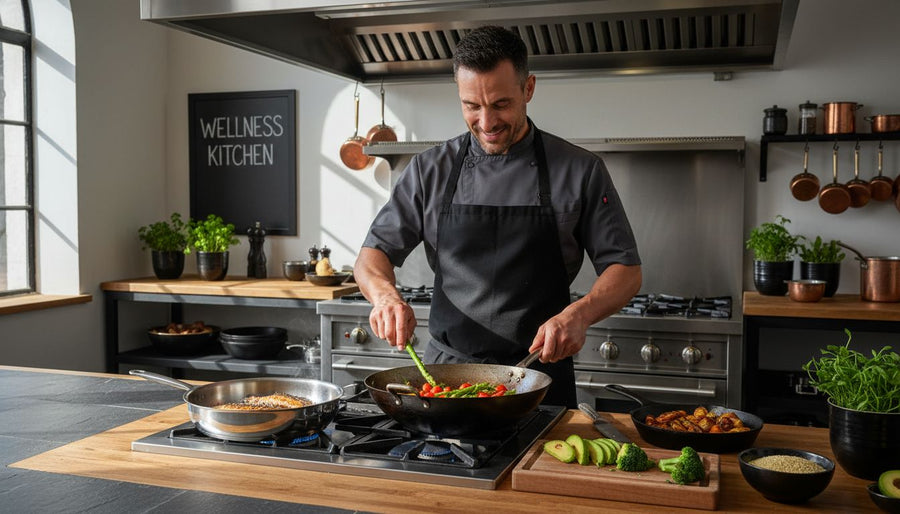
Carbon steel cookware reacts faster to temperature changes than stainless steel or cast iron. That speed matters enormously in a professional kitchen, where a chef needs to drop the heat instantly when a sauce threatens to break. Stainless steel holds heat stubbornly. Cast iron takes minutes to respond. Carbon steel does neither.
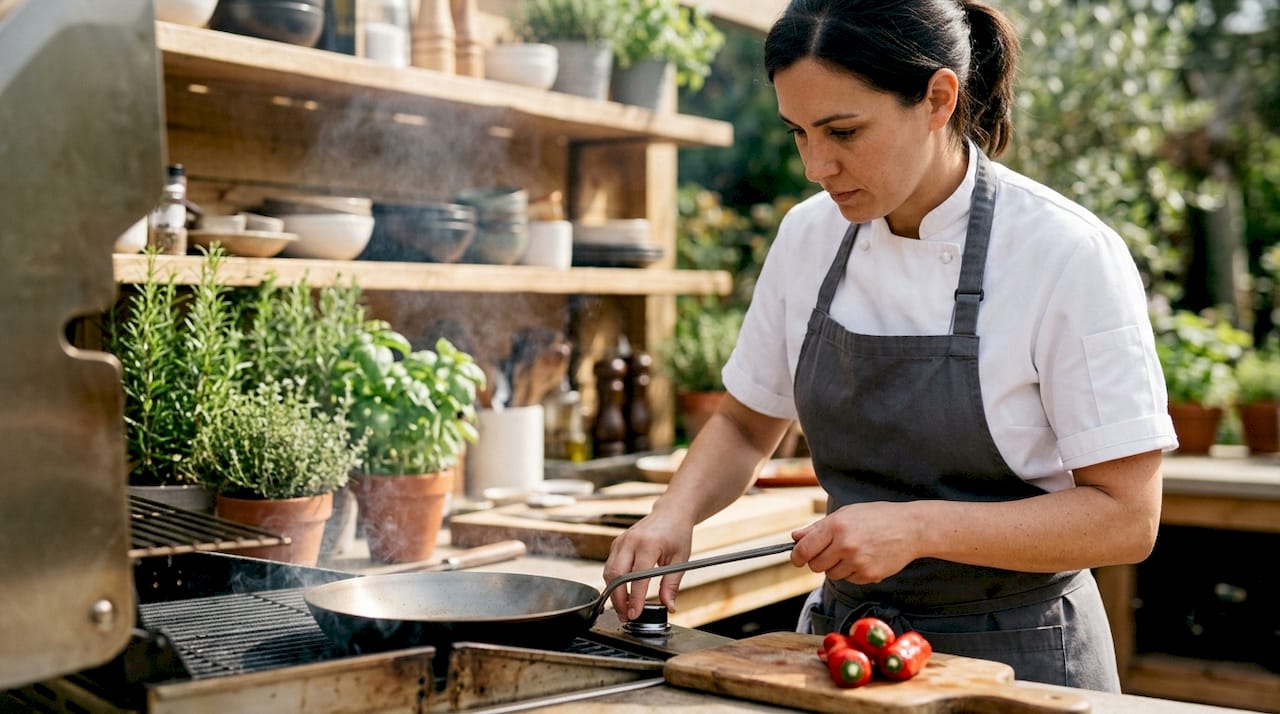
The other defining feature is the seasoning patina. Every time you cook with fat in a carbon steel pan, a thin layer of polymerised oil bonds to the surface. Over time, this builds into a natural nonstick surface that chefs consider superior to synthetic coatings, which degrade and flake. A PTFE coating has a lifespan. A well-kept carbon steel patina does not.
Carbon steel pans are also significantly lighter than cast iron equivalents of the same diameter. A 30 cm cast iron pan can weigh close to 5 kg. A 30 cm carbon steel pan, such as the Brass-steel sauté pan, weighs around 3 kg. Over a long service, that difference protects wrists and speeds up plating.
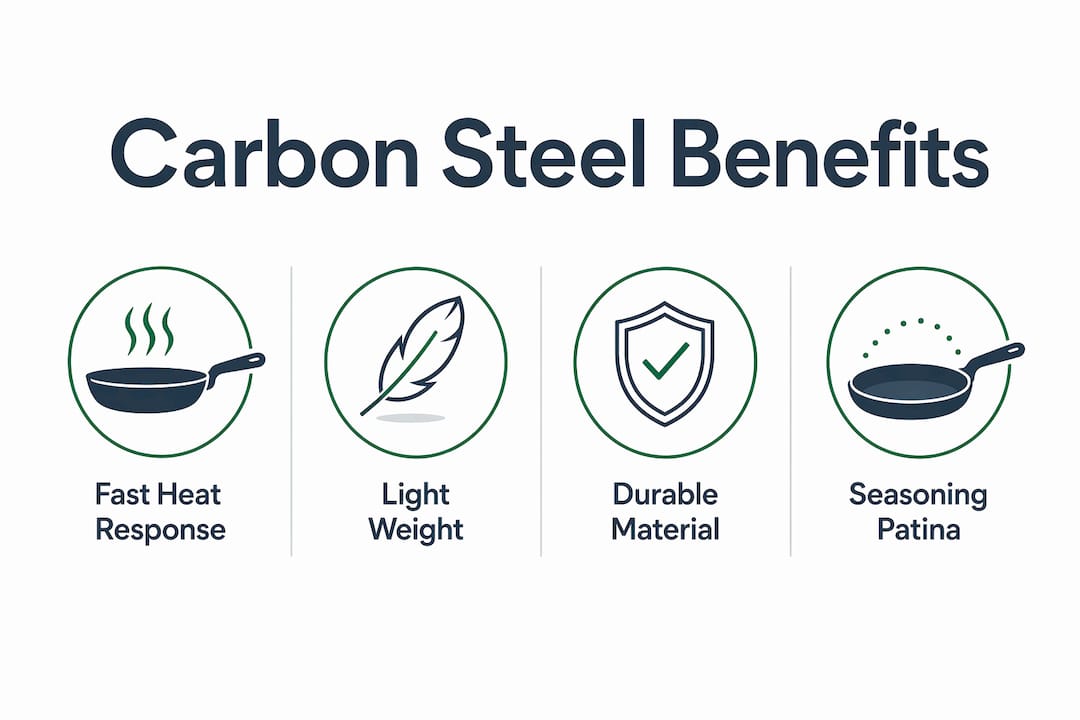
The benefits of carbon steel in a professional kitchen come down to three things: speed, weight, and a surface that improves with use. That combination explains why high-volume professional kitchens consistently reach for carbon steel when tasks demand rapid heat adjustment.
- Faster heat response than cast iron or stainless steel
- Natural patina builds a nonstick surface without synthetic coatings
- Lighter than cast iron, reducing fatigue during long services
- Works on all cooktops, including induction
- Free from PTFE and PFOA, making it a health-conscious choice
Pro Tip: Season your carbon steel pan with grapeseed or avocado oil rather than olive oil. Both have high smoke points and polymerise cleanly, building a stronger base patina faster.
Carbon steel vs cast iron vs stainless steel: which wins in European cooking?
Carbon steel is not simply thin cast iron. Experts are clear on this. It is a distinct material with its own performance profile, suited to different tasks. Understanding the differences helps you choose the right pan for the right job, rather than defaulting to one material for everything.
| Feature | Carbon steel | Cast iron | Stainless steel |
|---|---|---|---|
| Weight | Light to medium | Heavy | Light to medium |
| Heat responsiveness | Very fast | Slow | Moderate |
| Seasoning required | Yes | Yes | No |
| Nonstick surface | Builds naturally | Builds naturally | No |
| Oven safe | Yes | Yes | Usually yes |
| Induction compatible | Yes | Yes | Yes (most) |
| Maintenance | Moderate | Moderate | Low |
| Best use | Searing, sautéing, stir-frying | Slow cooking, braising | Acidic sauces, boiling |
Cast iron excels at long, slow cooking. Its thermal mass holds heat steadily, which suits a braise or a deep-dish cornbread. It is a poor choice when you need to adjust heat quickly or lift the pan repeatedly. Stainless steel is the right call for acidic dishes, since acid strips the seasoning from carbon steel and cast iron alike. A tomato sauce or a wine reduction belongs in stainless steel.
Carbon steel sits in the middle and, for many tasks, at the top. Searing a duck breast, stir-frying vegetables at high heat, or finishing a frittata in the oven: these are carbon steel applications where the material genuinely outperforms the alternatives. You can read a detailed carbon steel vs cast iron comparison to see how the two materials stack up across more cooking scenarios.
Pro Tip: If you cook acidic dishes regularly, keep a stainless steel pan alongside your carbon steel. Use stainless for anything with wine, tomatoes, or citrus, and let the carbon steel handle everything else.
What is the role of carbon steel in Europe’s steel industry?
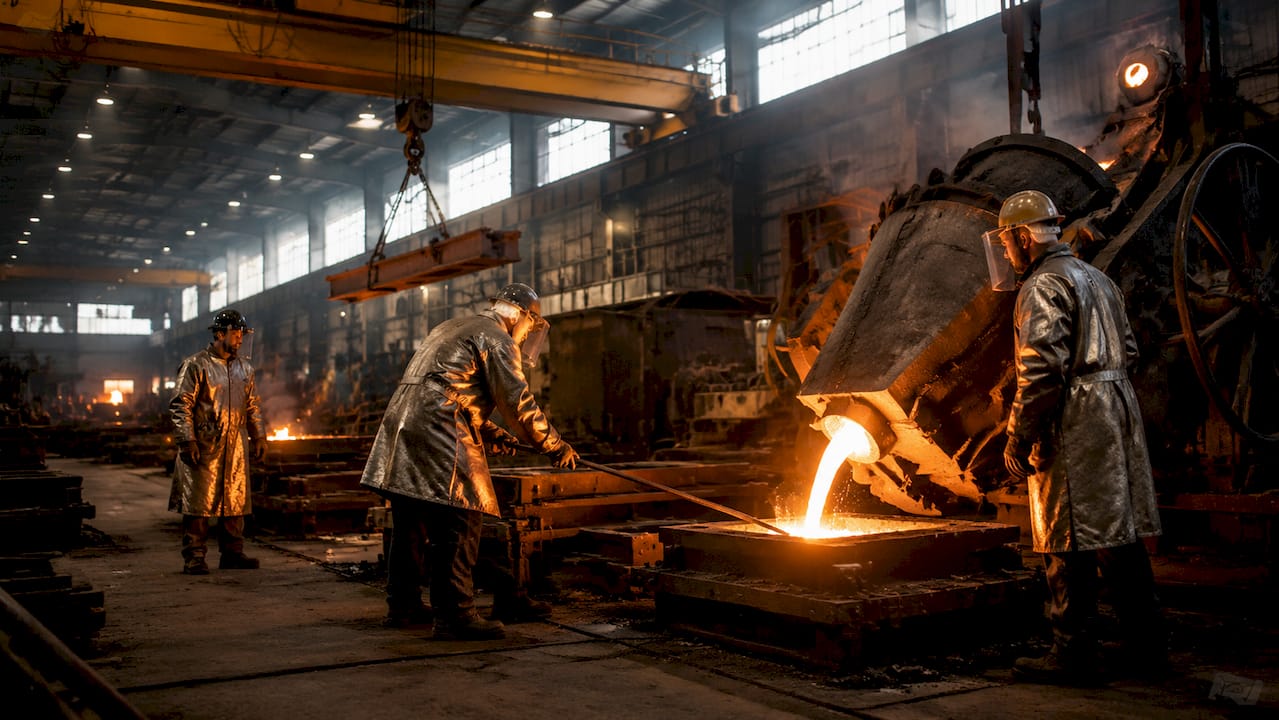
The carbon steel industry in Europe is one of the continent’s most significant economic pillars. The European steel sector generates 152 billion euros in annual economic activity. The EU consumes approximately 140–160 million tonnes of steel each year. Carbon steel accounts for the dominant share of that volume, used in construction, automotive manufacturing, infrastructure, and machinery.
| Sector | Primary carbon steel application |
|---|---|
| Construction | Structural beams, reinforcement bars |
| Automotive | Body panels, chassis components |
| Infrastructure | Bridges, rail tracks, pipelines |
| Cookware and appliances | Pans, ovens, kitchen equipment |
| Machinery | Industrial tools, agricultural equipment |
The importance of carbon steel to European manufacturing cannot be separated from its economic weight. Steel production supports hundreds of thousands of jobs across Germany, Poland, France, Italy, and beyond. Major producers such as ArcelorMittal, thyssenkrupp Steel, and voestalpine operate at the centre of this ecosystem, supplying carbon steel to industries that underpin daily European life.
Carbon steel market trends in Europe reflect both the material’s dominance and the pressures it faces. Demand remains strong, but the cost of production is rising as environmental regulations tighten. The industry is at a turning point, balancing the need to remain competitive with the obligation to reduce emissions.
How are environmental regulations shaping carbon steel production in Europe?
The EU’s Carbon Border Adjustment Mechanism, known as CBAM, is the most significant regulatory shift affecting the carbon steel industry in Europe right now. CBAM is designed to level the playing field between European steelmakers, who face strict emissions costs, and overseas producers who do not. By 2032, free emissions allowances will reduce to 26.5%. That reduction puts direct financial pressure on every tonne of carbon steel produced in Europe.
The challenge for European steelmakers is real. Without reform of the EU Emissions Trading System, production costs rise sharply, making European carbon steel less competitive against imports from regions with weaker environmental rules. ArcelorMittal, thyssenkrupp Steel, and voestalpine have called for pragmatic ETS reforms to protect the sector while accelerating decarbonisation.
The response from the industry includes investment in green steel technologies, such as hydrogen-based direct reduction and electric arc furnaces powered by renewable energy. These are not quick fixes. They require capital, infrastructure, and policy certainty over decades.
- CBAM phases out free emissions allowances, reaching 26.5% by 2032
- European steelmakers face higher production costs without ETS reform
- Green steel initiatives include hydrogen reduction and electric arc furnaces
- ArcelorMittal, thyssenkrupp Steel, and voestalpine are leading calls for policy reform
- The future of European steelmaking depends on balancing decarbonisation targets with economic viability
“Without pragmatic reform, the risk is not just higher costs. It is the gradual hollowing out of a manufacturing base that Europe has spent generations building.”
How should culinary professionals care for carbon steel cookware?
Good care habits extend the life of a carbon steel pan by years. The patina is the pan’s most valuable feature, and every maintenance decision should protect it. Seasoning builds cumulatively, so an older, well-used pan with a dark, uneven patina is often performing better than a newer one with a perfect surface.
- Wash the pan with warm water after each use. Use minimal soap and avoid soaking. Excessive soap strips the seasoning and forces you to rebuild it from scratch.
- Dry the pan immediately and completely. Moisture left on carbon steel causes rust within hours, especially in humid kitchen environments.
- Apply a very thin coat of high-smoke-point oil after drying. Grapeseed, sunflower, or canola oil all work well. Wipe off the excess so the surface looks almost dry.
- Heat the pan gradually when starting to cook. Sudden temperature changes cause warping, which is difficult to reverse and compromises cooking performance.
- Cook fatty foods regularly to strengthen the patina. Bacon, duck, and sautéed vegetables with butter all contribute to a stronger, more resilient surface.
Pro Tip: If your pan develops a sticky surface, you have applied too much oil during seasoning. Scrub it back with a stiff brush and hot water, then re-season using a thinner coat. Less oil, more heat, better result.
Key takeaways
Carbon steel is the most versatile cookware material in a European professional kitchen, and the backbone of the continent’s steel economy.
| Point | Details |
|---|---|
| Heat responsiveness | Carbon steel reacts faster to temperature changes than cast iron or stainless steel. |
| Patina builds value | The seasoning surface improves with every use, outperforming synthetic nonstick coatings over time. |
| Industrial scale | The European steel sector generates 152 billion euros annually, with carbon steel as the dominant material. |
| Regulatory pressure | CBAM will reduce free emissions allowances to 26.5% by 2032, raising production costs for European steelmakers. |
| Care is simple | Minimal soap, immediate drying, and gradual heating preserve the patina and prevent warping. |
Carbon steel in European kitchens: a view from experience
I have cooked with carbon steel for long enough to know that most people underestimate it at first and then refuse to cook without it. The pan feels unfamiliar. The patina looks wrong. The first egg sticks. Then, three months later, nothing sticks, and the pan has become the one you reach for every single morning.
What strikes me most about carbon steel’s place in European cooking is how it connects tradition and practicality. French bistro kitchens have used carbon steel for generations. Italian home cooks season their pans the same way their grandparents did. That continuity is not nostalgia. It is the result of a material that genuinely works better the longer you use it.
The industrial side of the story is equally compelling. The pressure on European steelmakers from CBAM and emissions trading is real, and the outcome matters beyond factory gates. If European carbon steel production declines, the supply chain for everything from cookware to construction shifts elsewhere. That is a cultural and economic loss, not just a commercial one.
My advice to any culinary professional or food educator reading this: treat your carbon steel pan as a long-term investment. Learn its quirks. Cook with it daily. The everyday benefits of carbon steel reveal themselves gradually, and they are worth the patience.
— Davide
Brass-steel carbon steel cookware: made in Europe, built to last
Brass-steel manufactures its carbon steel sauté pans in Jarocin, Poland, forging each pan from a single sheet of carbon steel with no rivets or welds. The result is a pan that is stronger, easier to clean, and built to last a professional lifetime.
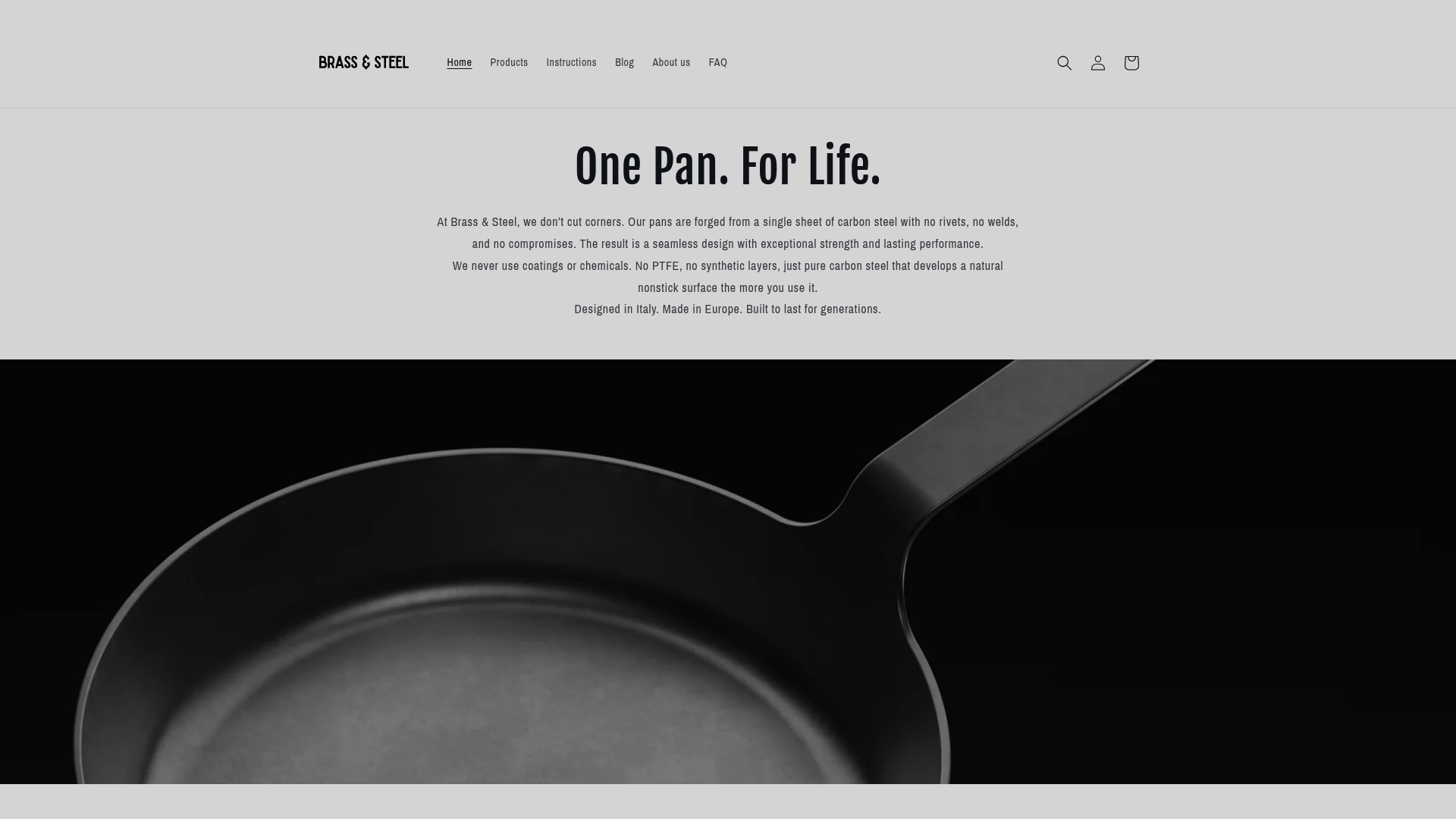
The 27 cm sauté pan at €99.00 suits everyday searing and sautéing. The 30 cm version at €119.00 handles larger meals and professional kitchen volumes. Both are free from PTFE and PFOA, induction compatible, and designed to build a natural nonstick patina with use. If you are ready to make the switch, explore the full Brass-steel cookware range and find the pan that fits your kitchen.
FAQ
What is carbon steel cookware?
Carbon steel cookware is made from an alloy of iron and carbon, offering faster heat response and lighter weight than cast iron. It develops a natural nonstick patina through seasoning that improves with regular use.
Is carbon steel better than cast iron for professional kitchens?
Carbon steel is preferred for high-heat tasks like searing and stir-frying because it responds to temperature changes faster than cast iron. Cast iron suits slow cooking and braising better.
How do I season a carbon steel pan for the first time?
Wash the pan with warm soapy water, dry it fully, then apply a very thin coat of grapeseed or avocado oil and bake it upside down at 250°C for 30 minutes. Repeat two to three times to build a strong base patina.
Why is the European steel industry important?
The European steel sector generates 152 billion euros in annual economic activity and consumes approximately 140–160 million tonnes of steel per year. Carbon steel is the dominant material across construction, automotive, and infrastructure sectors.
What is CBAM and how does it affect carbon steel production?
CBAM is the EU’s Carbon Border Adjustment Mechanism, designed to equalise emissions costs between European and overseas steel producers. Free emissions allowances will fall to 26.5% by 2032, increasing production costs for European steelmakers.