Pros and cons of stainless steel pans explained
TL;DR:
- Stainless steel cookware offers exceptional durability, even heating, and safety for acidic foods, making it ideal for searing and sauces. However, it requires proper preheating and technique to prevent sticking and has a learning curve for heat management. For versatile home cooking, pairing stainless steel with non-stick pans ensures optimal results across various tasks.
Stainless steel cookware is defined as metal cookware made from a chromium-iron alloy, most commonly in 18/10 grade, that resists rust, reacts to nothing, and lasts for decades. The pros and cons of stainless steel pans come down to one central trade-off: outstanding durability and cooking performance on one side, and a genuine learning curve around heat management on the other. Professional kitchens rely on stainless steel for searing, browning, and building sauces precisely because it handles high heat without flinching. For home cooks, the same qualities are available, provided you understand how the material behaves. This article walks through every major advantage and disadvantage so you can decide whether stainless steel belongs in your kitchen.
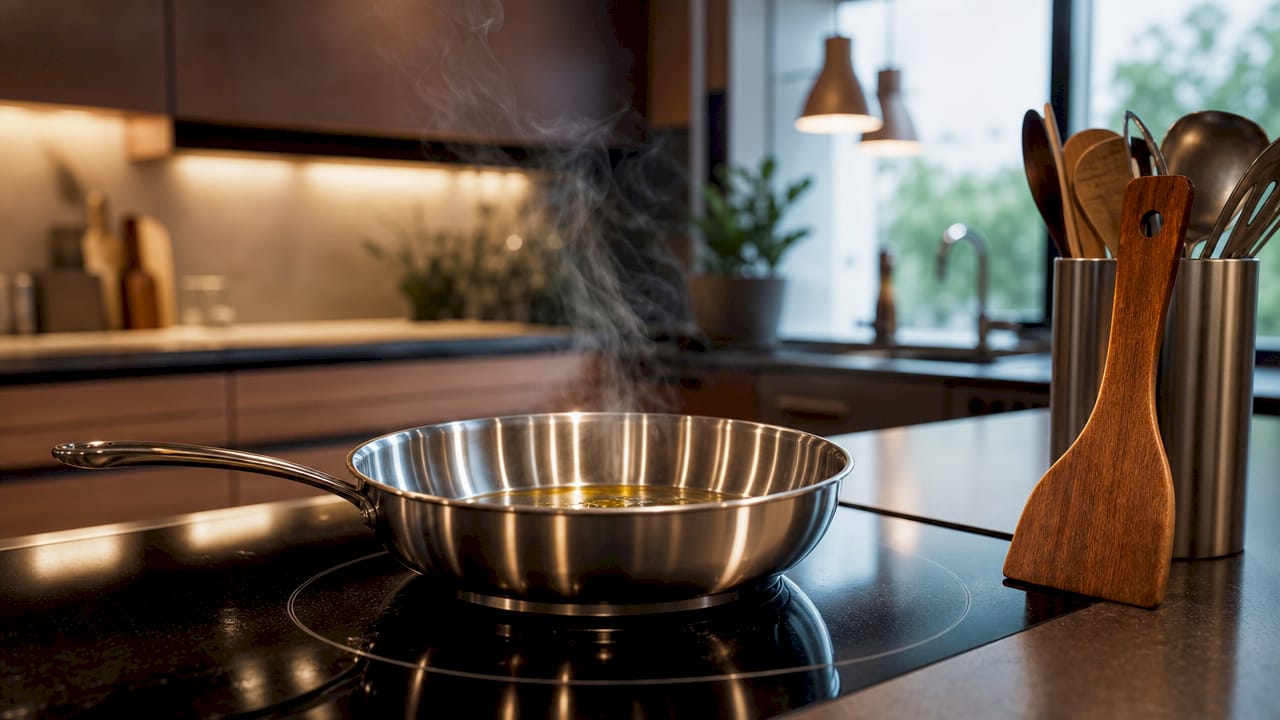
1. What are the main pros of stainless steel pans?
Stainless steel cookware delivers a combination of benefits that no single alternative matches across the board. Understanding these advantages helps you see why it remains the default choice in serious kitchens worldwide.
- Exceptional lifespan. Non-stick coatings degrade within one to five years, while stainless steel pans last for decades with basic care. That longevity makes the higher upfront cost far more economical over time.
- Non-reactive surface. Stainless steel is safe for acidic foods like tomato sauces and wine reductions without imparting any metallic taste. Cast iron and carbon steel both require seasoning to achieve the same result.
- High heat tolerance. Stainless steel handles the temperatures needed for proper searing, deglazing, and fond formation without warping or releasing fumes. This is where it genuinely outperforms non-stick alternatives.
- No synthetic coatings. Non-stick coatings emit fumes above 500°F (260°C), a risk that stainless steel simply does not carry. There are no PTFE or PFOA compounds to worry about.
- Oven and induction compatible. Most stainless steel pans move from hob to oven without issue and work on all cooktop types, including induction.
- Even heat with multi-ply construction. Multi-ply stainless steel uses aluminium or copper cores bonded between steel layers to distribute heat evenly. A disc-bottom pan or a fully-clad pan like All-Clad or Demeyere Atlantis eliminates the hot spots that plain steel would create.
Pro Tip: Buy fully-clad stainless steel rather than disc-bottom if your budget allows. The heat distribution across the sides of the pan makes a noticeable difference when reducing sauces or sautéing vegetables.
2. What are the main cons of stainless steel pans?
The stainless steel cookware disadvantages are real, and ignoring them sets you up for frustration. None of them are deal-breakers, but they do require adjustment.
- Food sticks without proper technique. Stainless steel requires more technique than non-stick to prevent sticking, particularly for proteins. Skipping the preheat step is the most common mistake.
- Learning curve. Heat management takes practice. Cooking on too high a heat, or adding food to a cold pan, produces stuck food and frustration. This is the single biggest reason people give up on stainless steel.
- Heavier than non-stick. A standard 10-inch stainless steel pan weighs between 2.5 and 3.5 lbs, noticeably more than a lightweight non-stick. For cooks who toss food frequently, this matters.
- Cosmetic discolouration. Rainbow-hued heat tints and mineral spots appear with regular use. They do not affect performance, but they can look alarming if you are not expecting them.
- Higher upfront cost. A quality stainless steel pan from a reputable brand costs significantly more than a basic non-stick. The long-term value is better, but the initial spend is higher.
- Not ideal for delicate foods without skill. Eggs, fish fillets, and pancakes stick easily in stainless steel until you have mastered the preheat and oil technique. A non-stick pan remains the easier choice for those specific tasks.
Pro Tip: To test whether your stainless steel pan is ready for food, flick a few drops of water into it. If the droplets bead up and skitter across the surface rather than evaporating immediately, the pan is at the right temperature. Add oil, let it shimmer, then add your food.
3. Stainless steel vs non-stick vs cast iron: a direct comparison
Understanding the pros and cons of steel cookware becomes much clearer when you place it alongside the two most common alternatives. Each material has a specific strength, and the best-equipped kitchen usually contains more than one type.
| Feature | Stainless steel | Non-stick | Cast iron |
|---|---|---|---|
| Lifespan | Decades with basic care | 1 to 5 years before coating degrades | Decades, improves with age |
| Heat tolerance | Excellent, handles high heat | Limited, coatings degrade above 260°C | Excellent, retains heat very well |
| Sticking risk | Moderate without technique | Low, food releases easily | Low once well-seasoned |
| Acidic foods | Safe, non-reactive | Safe | Can strip seasoning |
| Weight | Medium (2.5 to 3.5 lbs) | Light | Heavy (4 to 8 lbs typical) |
| Maintenance | Easy, dishwasher-safe in most cases | Gentle hand-wash only | Requires seasoning and drying |
| Health considerations | Nickel exposure under 1% of daily intake | Fumes possible if overheated | Leaches small amounts of iron |
| Best use | Searing, sauces, deglazing | Eggs, fish, pancakes | Frying, oven cooking, bread |
Professional kitchens use stainless steel for searing and sauce development, pairing it with non-stick pans for eggs and delicate fish. That pairing is the most practical approach for home cooks too. Cast iron earns its place for tasks that benefit from extreme heat retention, such as deep frying or baking cornbread. No single pan wins every category, which is why understanding the stainless steel vs non-stick distinction matters before you spend money.
4. How to cook successfully in a stainless steel pan
Mastering stainless steel is mostly about one thing: the preheat. Get that right and most of the disadvantages of stainless steel cookware disappear.
- Preheat the pan before adding oil. Place the pan over medium heat for two to three minutes. A cold pan with oil added too early is the primary cause of sticking.
- Use the water drop test. Flick water into the pan before adding oil. When the droplets bead and skitter, the pan has reached the Leidenfrost point and is ready. This is the most reliable indicator of correct temperature.
- Choose a high smoke-point oil. Grapeseed, avocado, or sunflower oil all work well. Butter burns too quickly at searing temperatures.
- Do not overcrowd the pan. Adding too much food at once drops the pan temperature sharply, causing food to steam rather than sear. Cook in batches if needed.
- Let proteins release naturally. Proper heat management with stainless steel creates initial protein adhesion that releases once the food is cooked through. If it resists, it is not ready to flip. Wait another thirty seconds.
- Clean with care. Soak the pan briefly in warm water after cooking to loosen residue. A paste of baking soda or a product like Bar Keepers Friend removes heat tints and stains without scratching. Avoid steel wool or harsh abrasives on the cooking surface.
- Store carefully. Stack pans with a cloth or pan protector between them to prevent surface scratches.
Pro Tip: After deglazing a stainless steel pan with wine or stock, scrape up every bit of fond from the base. That browned residue is concentrated flavour and the main reason professional cooks reach for stainless steel over non-stick when making sauces.
5. Are stainless steel pans worth it for home cooks?
The stainless steel cookware pros clearly outweigh the cons for most cooking tasks, provided you are willing to invest a little time in technique. The multi-ply construction found in quality pans from brands like All-Clad, Demeyere, or Mauviel delivers even, consistent heat that cheaper disc-bottom pans cannot match. For home cooks who sear chicken thighs, make pan sauces, or cook pasta dishes with wine and tomatoes regularly, stainless steel is the most versatile tool available. You can read more about getting the most from your pans in this guide to mastering stainless cookware.
The one honest caveat is this: if you cook eggs every morning and have no interest in learning heat management, a non-stick pan will serve that specific task better. The smart approach is to own both. Use stainless steel for high-heat cooking and sauce work, and keep a non-stick pan for delicate items. That combination covers virtually every cooking scenario a home kitchen faces.
Key takeaways
Stainless steel pans offer decades of use, safe cooking with acidic foods, and superior browning, but require proper preheating and technique to prevent sticking.
| Point | Details |
|---|---|
| Durability advantage | Stainless steel lasts decades, far outlasting non-stick coatings that degrade within one to five years. |
| Technique is the key | Preheating correctly using the water drop test eliminates most sticking problems before they start. |
| Non-reactive surface | Safe for tomato sauces, wine reductions, and other acidic foods without imparting metallic flavour. |
| Pair with non-stick | Use stainless steel for searing and sauces, and a non-stick pan for eggs and delicate fish. |
| Multi-ply construction matters | Fully-clad pans with aluminium or copper cores distribute heat evenly and outperform disc-bottom designs. |
Why I think stainless steel deserves a place in every serious kitchen
I have cooked on stainless steel for years, and the honest truth is that the learning curve people warn you about takes about a week to get past, not months. Once you understand that the pan needs to be properly hot before the oil goes in, and that a protein will tell you when it is ready to flip by releasing on its own, the whole experience changes. Stainless steel stops feeling like a difficult material and starts feeling like the most responsive tool in the kitchen.
What I value most is the flavour development. The fond that builds up after searing a piece of chicken or browning onions is something a non-stick pan simply cannot produce. Deglaze that pan with a splash of white wine and you have the base of a sauce that tastes like it came from a restaurant. That is not possible with a coated pan.
My practical advice is to keep one good non-stick pan for eggs and fish, and invest in a quality stainless steel pan for everything else. If you are curious how carbon steel fits into that equation, the carbon steel vs stainless comparison is worth reading before you decide.
— Davide
Upgrade your kitchen with pans built to last
If the durability and performance of quality cookware appeals to you, Brass-steel builds carbon steel pans forged from a single piece of steel with no rivets, no welds, and no synthetic coatings. They develop a natural non-stick patina through seasoning, handle induction and oven use without issue, and are designed to last a lifetime.
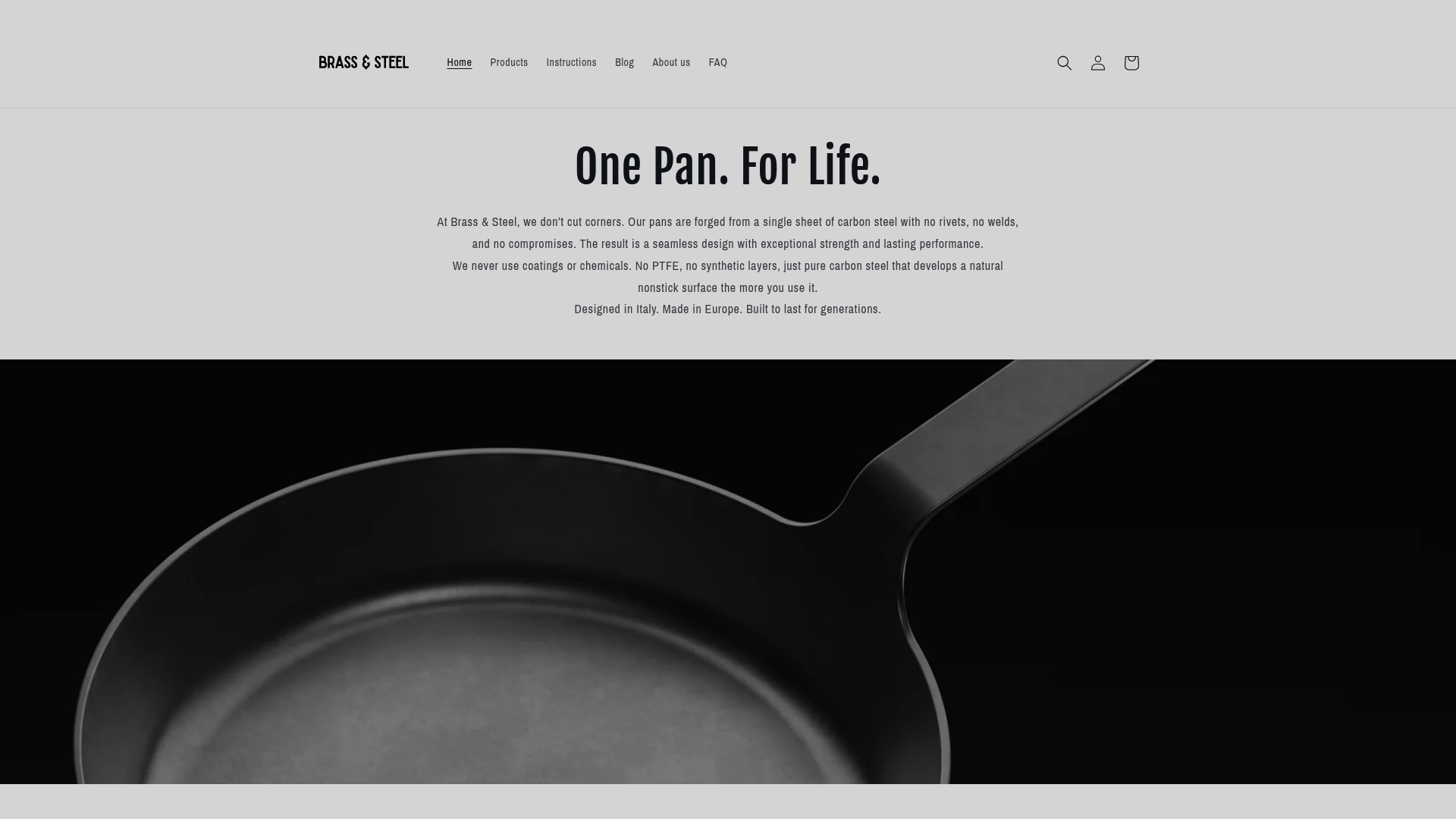
The Brass-steel carbon steel pan range includes a 27 cm sauté pan at €99 and a 30 cm version at €119, both made in Jarocin, Poland to professional standards. If you want cookware that performs at high heat, builds flavour, and never needs replacing, these are worth a serious look.
FAQ
How long do stainless steel pans last?
Stainless steel pans last for decades with basic care, significantly longer than non-stick alternatives, which typically degrade within one to five years as their coatings wear away.
Why does food stick to my stainless steel pan?
Food sticks when the pan is not preheated correctly. Use the water drop test: add food only when water droplets bead and skitter across the surface, then add oil and allow it to shimmer before cooking.
Is stainless steel cookware safe for acidic foods?
Yes. Stainless steel is non-reactive and safe for cooking tomato sauces, wine reductions, and other acidic foods without imparting metallic flavours, provided the pan is undamaged.
What is the difference between 18/10 and other stainless steel grades?
18/10 stainless steel contains 18% chromium and 10% nickel, making it more resistant to corrosion and more durable than lower-grade alloys. It is the standard used in quality cookware.
Can stainless steel pans go in the oven?
Most stainless steel pans are fully oven-safe, typically up to 260°C or higher depending on the handle material. Always check the manufacturer’s guidance for your specific pan before oven use.