Carbon Steel vs Aluminium Cookware – Performance and Health Impact

Choosing the right cookware can transform professional kitchens and ambitious home setups across Poland. Many British and Polish chefs now turn to PTFE-free pans for safety and improved cooking control. With up to 80 percent of experienced cooks reporting better heat retention using carbon steel versus aluminum, understanding each material’s unique strengths becomes essential. This guide breaks down the science and practical realities behind carbon steel and aluminum, helping you select the tool that matches your need for performance, safety, and lasting durability.
Table of Contents
- Defining Carbon Steel And Aluminium Cookware
- Key Properties And How They Differ
- Performance In Professional Kitchens
- Seasoning, Maintenance, And Longevity
- Safety, Health, And Environmental Impact
Key Takeaways
| Point | Details |
|---|---|
| Material Properties | Carbon steel offers superior heat retention and durability, while aluminium provides rapid heat distribution and lightweight handling. |
| Cooking Techniques | Select carbon steel for high-heat searing and aluminium for delicate, quick cooking methods. |
| Maintenance | Carbon steel requires seasoning and careful care, whereas aluminium generally needs gentler cleaning due to anodised coatings. |
| Environmental Impact | Carbon steel is highly recyclable and has lower production energy, while aluminium is also recyclable but requires more energy during manufacturing. |
Defining Carbon Steel and Aluminium Cookware
Carbon steel and aluminium are two prominent materials used in professional and home cookware, each offering unique characteristics that significantly impact cooking performance. Carbon steel is an alloy containing between 0.05 and 2.1 percent carbon, which determines its structural properties and thermal behaviour in kitchen environments.
Cookware materials differ fundamentally in their composition and thermal conductivity. Carbon steel typically contains trace elements like manganese, phosphorus, and silicon that enhance its mechanical strength and durability. Cookware metals like carbon steel and aluminium are selected based on their ability to conduct heat efficiently and withstand repeated cooking processes.
Aluminium cookware is characteristically lightweight and offers rapid, even heat distribution, making it popular among home cooks. Carbon steel, by contrast, requires seasoning to develop a natural non-stick surface and prevent rust. Both materials have distinct advantages: aluminium provides quick heating, while carbon steel delivers superior heat retention and develops a unique patina that improves with use.
Pro tip: When selecting cookware, consider your specific cooking style and maintenance preferences to choose between carbon steel’s durability and aluminium’s lightweight performance.
Key Properties and How They Differ
Thermal conductivity plays a crucial role in determining cookware performance, with aluminium demonstrating exceptional heat transfer characteristics. Aluminium cookware rapidly distributes heat evenly across its surface, ensuring consistent cooking temperatures and minimising hot spots that can lead to uneven food preparation.
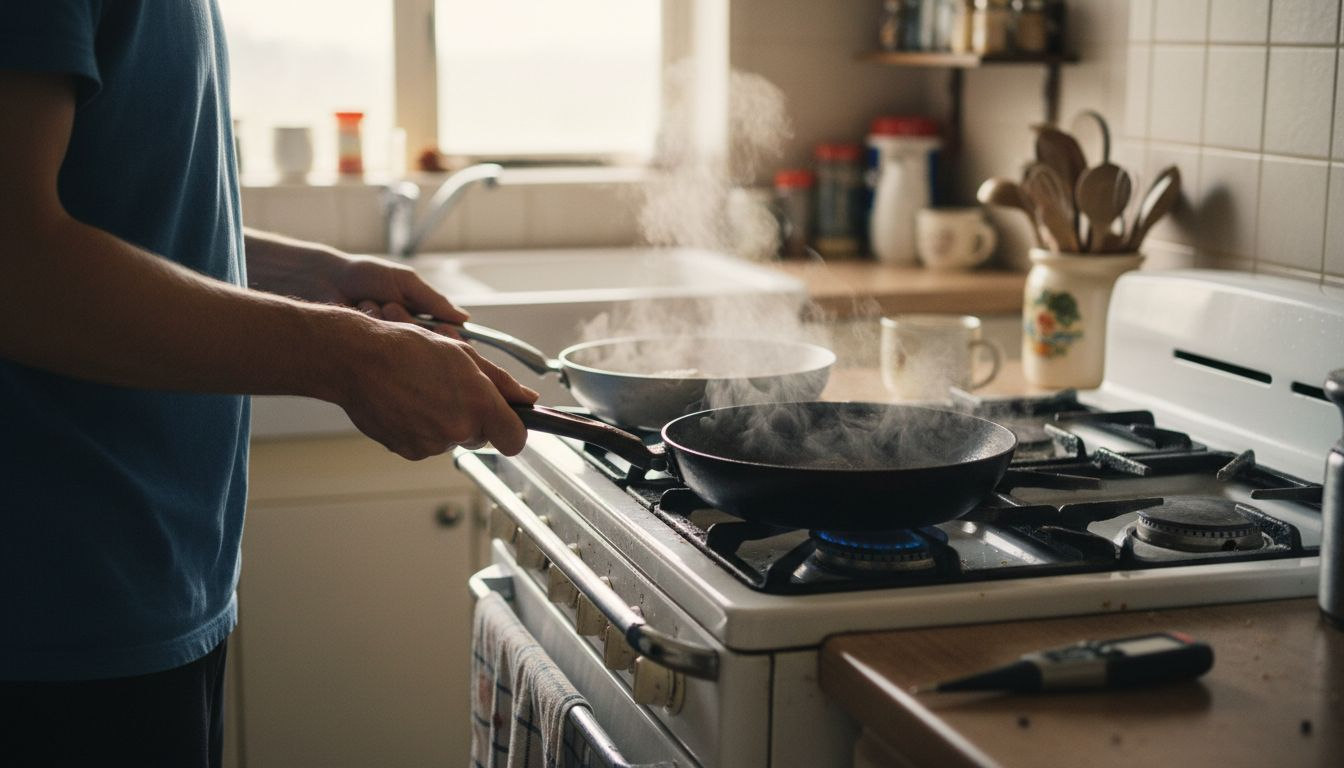
Carbon steel exhibits different thermal properties compared to aluminium, with superior heat retention and a unique ability to develop a natural seasoning layer. Its higher density means it takes longer to heat up but maintains temperature more effectively, making it ideal for searing meats and achieving consistent cooking results. Carbon steel’s thermal behaviour allows for gradual, controlled heating that professional chefs often prefer.
Density and weight present another significant difference between these materials. Aluminium is remarkably lightweight, approximately one-third the density of steel, which makes it easier to handle in kitchen environments. Carbon steel, conversely, offers more substantial weight and durability, providing enhanced stability during cooking processes and potentially longer-lasting performance with proper maintenance.
Pro tip: Choose cookware based on your specific cooking technique – aluminium for quick, even heating, and carbon steel for sustained temperature control and robust performance.
To help compare the unique qualities of carbon steel and aluminium cookware, see this feature summary:
| Feature | Carbon Steel | Aluminium |
|---|---|---|
| Weight | Substantial, provides stability | Lightweight, easy to handle |
| Heating Speed | Slower to heat, retains heat longer | Rapid, distributes heat quickly |
| Surface Treatment | Requires regular seasoning | Typically anodised or coated |
| Non-Stick Properties | Develops with seasoning, improves | Depends on applied coating |
| Ideal Uses | Searing, sustained high temperatures | Quick sautéing, delicate preparations |
| Longevity | Can last generations with care | Reliable if carefully maintained |
| Environmental Impact | Highly recyclable, low energy to make | Recyclable, higher production energy |
Performance in Professional Kitchens
In professional culinary environments, carbon steel pans dominate kitchen performance due to their exceptional durability and heat management capabilities. Chefs rely on these pans for their ability to withstand intense cooking temperatures, develop a naturally non-stick surface through seasoning, and provide consistent heat distribution across various cooking techniques.
Aluminium cookware offers complementary advantages in professional settings, particularly for tasks requiring rapid heat transfer. While less durable than carbon steel, anodized aluminium pans provide quick, even heating essential for precise cooking methods. Professional kitchens often use non-stick surfaces strategically, choosing between carbon steel’s robustness and aluminium’s lightweight responsiveness depending on specific culinary requirements.
The choice between carbon steel and aluminium ultimately depends on specific cooking techniques. Carbon steel excels in high-heat searing, creating beautiful caramelisation and maintaining temperature stability, whereas aluminium proves superior for delicate preparations requiring immediate temperature adjustments. Professional chefs frequently maintain a collection of both materials to leverage their respective strengths across different cooking scenarios.
Pro tip: Select cookware based on your most frequent cooking techniques, understanding that professional kitchens benefit from a diverse range of pan materials.
Seasoning, Maintenance, and Longevity
Carbon steel seasoning involves creating a protective layer) that transforms the cooking surface into a naturally non-stick and rust-resistant environment. This intricate process requires heating a thin layer of oil until it polymerises, forming a hard, hydrophobic coating that improves with each cooking session. Professional chefs understand that a well-seasoned carbon steel pan becomes more non-stick and resilient over time, developing a unique patina that enhances cooking performance.
Aluminium cookware maintenance differs significantly from carbon steel. While carbon steel demands careful seasoning and regular oiling, aluminium surfaces typically feature anodized coatings or protective treatments that require gentler care. Professional maintenance standards emphasise careful cleaning to preserve these protective layers, ensuring the cookware remains functional and aesthetically pleasing for extended periods.
Longevity depends on understanding each material’s unique characteristics. Carbon steel pans can last generations with proper maintenance, improving in performance through consistent seasoning and careful use. Aluminium cookware, while more prone to surface wear, offers reliable performance when users follow manufacturer-recommended cleaning and storage protocols. Both materials require specific care routines that respect their inherent metallurgical properties.
Pro tip: Invest time in learning your cookware’s specific maintenance requirements, as proper care can extend a pan’s useful life by decades.
Here’s a quick reference to maintenance and health considerations for these cookware types:
| Aspect | Carbon Steel Considerations | Aluminium Considerations |
|---|---|---|
| Maintenance | Needs seasoning, oiling, thorough drying | Gentle cleaning, avoid harsh abrasives |
| Health Impact | Adds dietary iron, low chemical risk | Protective oxide layer, minimal migration |
| Sustainability | Low energy production, long-lasting | Energy-intensive production, recyclable |
| Risk Factors | Potential rust if left wet | Surface wear may expose base metal |
Safety, Health, and Environmental Impact
Cookware safety involves understanding potential material interactions with food and human health. Carbon steel naturally releases small amounts of dietary iron, which can be beneficial at low levels, while aluminium cookware features protective oxide layers that minimise potential metal migration. Both materials offer safer alternatives to synthetic non-stick coatings containing potentially harmful chemicals.
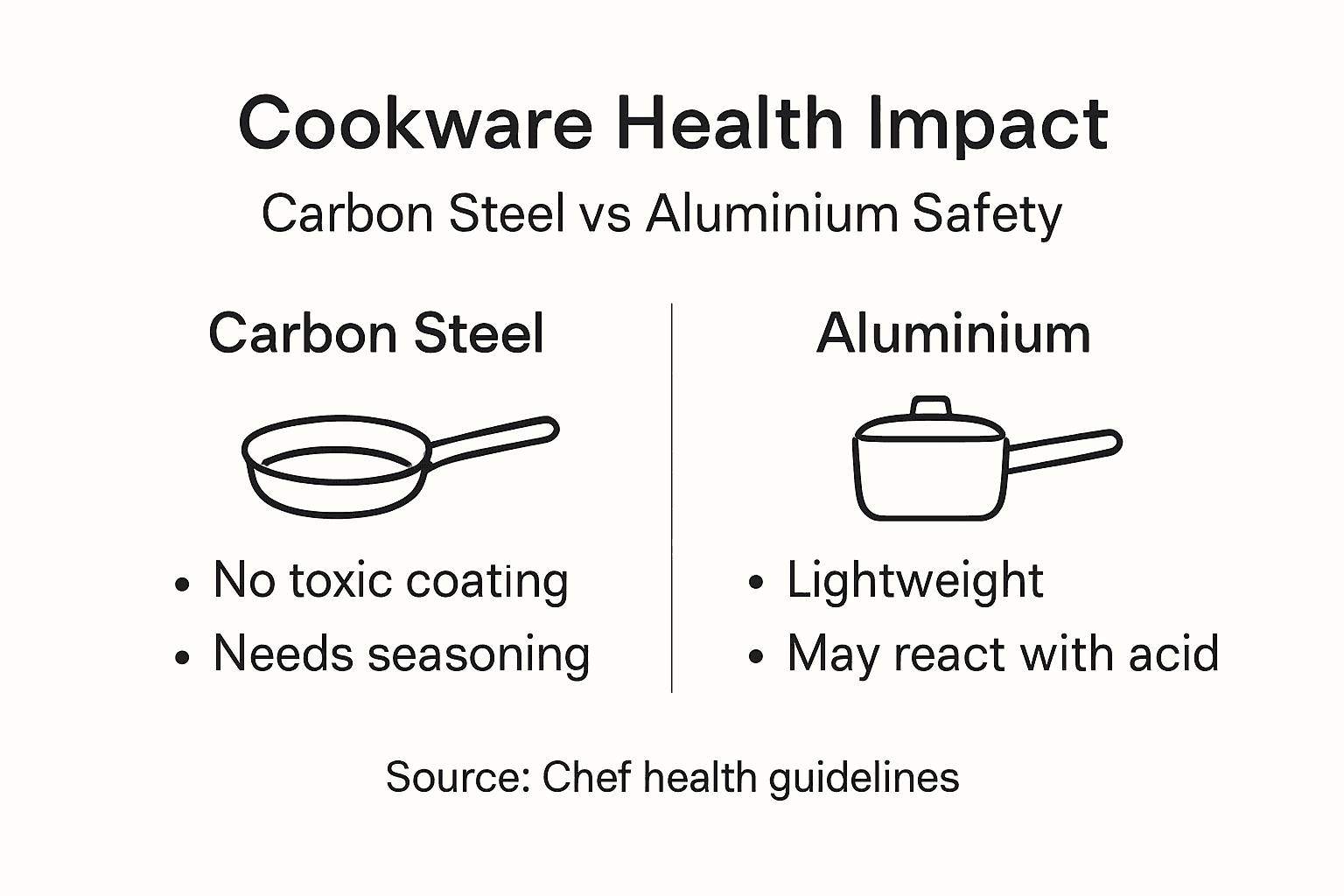
Toxic coatings and heavy metal exposure remain significant health considerations in cookware selection. Carbon steel and aluminium, when properly maintained and free from synthetic treatments, represent more sustainable cooking solutions. Consumers should prioritise cookware without PFAS-based non-stick layers and be mindful of potential metal leaching, particularly when cooking acidic foods.
Environmental sustainability plays a crucial role in cookware selection. Carbon steel stands out for its exceptional recyclability and lower production energy requirements compared to other metals. Aluminium also offers good recyclability, though its initial production demands more energy. Responsible maintenance, careful usage, and eventual recycling can significantly reduce the environmental footprint of both materials.
Pro tip: Invest in high-quality, responsibly manufactured cookware and maintain it carefully to maximise its lifespan and minimise environmental impact.
Discover the Ultimate Balance of Performance and Health with Brass & Steel Carbon Steel Cookware
Struggling to choose between carbon steel and aluminium cookware after learning about their differences in heat retention, seasoning, and health impact Why settle for less when you can elevate your cooking with cookware designed to perform exceptionally and keep your health in mind Our Carbon Steel Collection | Brass&Steel offers heirloom-quality, single-piece forged pans that develop a natural, non-toxic seasoning for a truly safe nonstick surface without PTFE or PFOA coatings
Experience the joy of professional heat control and durability with pans crafted for serious cooks At Brass & Steel we combine precision engineering and minimalist Italian design right here in Poland for pans that last generations Choose your size — from the versatile 27 cm to the robust 30 cm sauté pan — perfect for searing and quick cooking alike Visit Brass & Steel homepage to explore our latest arrivals and start your journey towards healthier, more sustainable cooking today
Frequently Asked Questions
What are the key differences between carbon steel and aluminium cookware?
Carbon steel cookware is heavier, offers superior heat retention, and requires seasoning to develop a non-stick surface. Aluminium cookware is lightweight, heats quickly, and typically offers even heat distribution without needing seasoning.
How do I maintain carbon steel cookware compared to aluminium cookware?
Carbon steel requires regular seasoning and oiling to prevent rust, while aluminium cookware generally requires gentler cleaning methods to preserve its anodised or coated surfaces.
Is carbon steel cookware safer than aluminium cookware for health?
Both carbon steel and aluminium cookware are considered safe when properly maintained. Carbon steel can release small amounts of dietary iron, while aluminium features a protective oxide layer that reduces metal migration. Avoid synthetic non-stick coatings for health safety.
What cooking techniques are best suited for carbon steel and aluminium cookware?
Carbon steel excels at high-heat searing and sustained cooking, making it great for meats, while aluminium is ideal for quick sautéing and delicate preparations due to its rapid heating capabilities.
Recommended
- Ceramic vs Aluminium Cookware – Performance and Safety Explained – Brass & Steel
- Cast Iron vs Nonstick: Choosing the Healthier Pan – Brass & Steel
- Ceramic vs Nonstick Cookware: Safety, Longevity, and Performance – Brass & Steel
- Healthy Cookware Explained: Essential Guide to Safe Choices – Brass & Steel