7 Essential Types of Frying Pan Every Chef Should Know
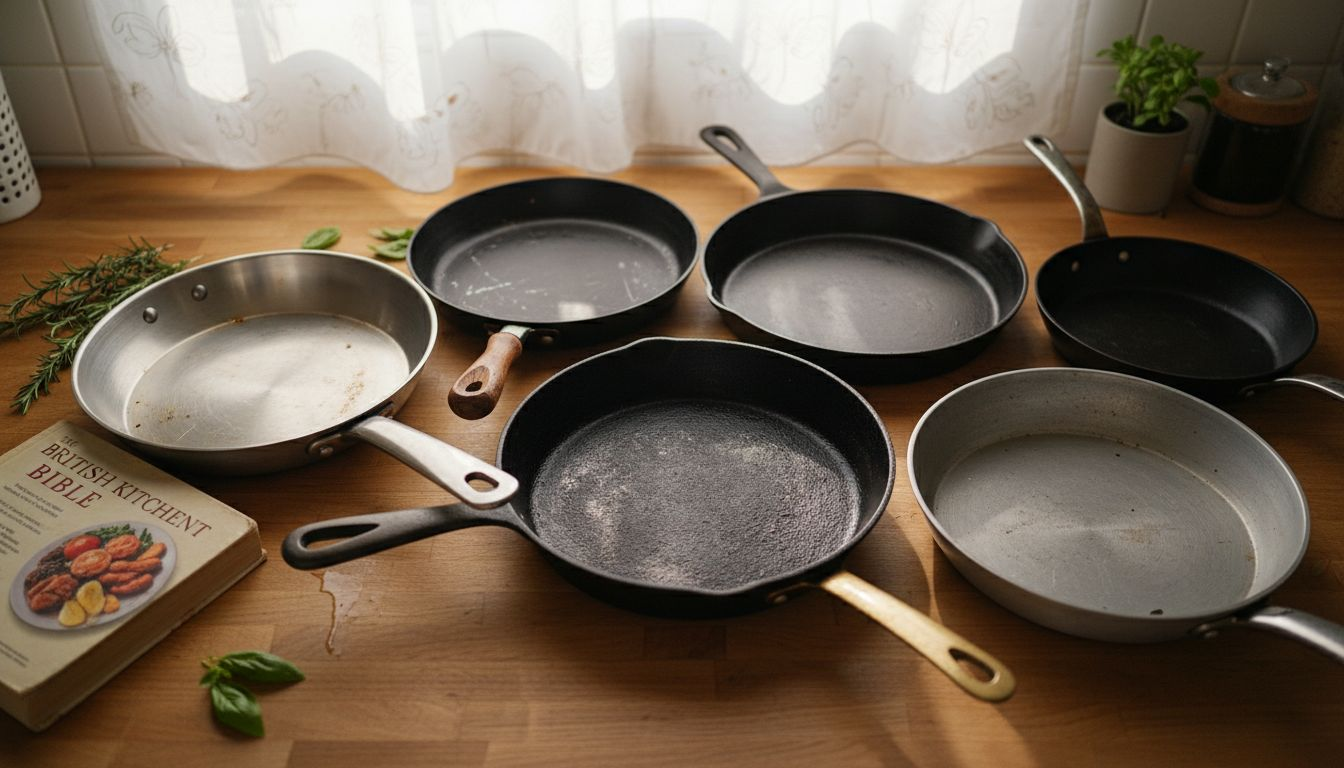
Every british chef knows that achieving flawless results starts with the right pan. For professional kitchens across Europe, cookware must deliver both precision and enduring strength. Carbon steel has become a top choice, blending the heat control of copper with the robust longevity of stainless steel. With over 90 percent of Michelin-starred restaurants in France relying on carbon steel for its natural non-stick qualities and healthy cooking potential, this cookware stands out for anyone devoted to exacting standards and long-lasting performance.
Table of Contents
- 1. Classic Stainless Steel Frying Pan: All-Purpose Performance
- 2. Professional Carbon Steel Pan: Precision and Durability
- 3. Nonstick Frying Pan: Easy Release for Delicate Foods
- 4. Cast Iron Skillet: Superior Heat for Searing
- 5. Copper Frying Pan: Fast, Even Heating Control
- 6. Hard Anodised Pan: Lightweight and Tough
- 7. Aluminium Frying Pan: Quick Heating on a Budget
Quick Summary
| Takeaway | Explanation |
|---|---|
| 1. Use Stainless Steel for Versatility | Stainless steel frying pans are ideal for various cooking techniques, providing durability and excellent heat distribution. |
| 2. Maintain Carbon Steel for Performance | Proper seasoning of carbon steel pans enhances their natural non-stick surface, improving with each use for better performance. |
| 3. Handle Nonstick Pans with Care | To preserve nonstick coatings, use silicone or wooden utensils and avoid high temperatures and metal tools. |
| 4. Maximise Cast Iron Benefits | Seasoned cast iron skillets develop a natural non-stick surface over time, perfect for searing and heat retention. |
| 5. Choose Aluminium for Budget-Friendly Cooking | Aluminium pans offer quick heating and even distribution, making them an affordable option for everyday cooking. |
1. Classic Stainless Steel Frying Pan: All-Purpose Performance
Stainless steel frying pans stand as the workhorses of professional kitchens, offering unparalleled versatility and durability. These robust pans deliver exceptional cooking performance across multiple techniques from searing meats to sautéing vegetables.
Unlike reactive cookware materials, stainless steel provides a non-reactive cooking surface that preserves the authentic flavours of ingredients. Professional culinary resources confirm that stainless steel pans offer excellent durability and can withstand high temperatures, making them ideal for professional and home cooking environments.
The key advantage of stainless steel lies in its heat distribution capabilities. These pans conduct heat evenly, preventing hot spots that could burn delicate ingredients. Chefs appreciate their ability to create perfect golden sears on proteins while maintaining precise temperature control.
To maximise performance, proper preheating and technique are crucial. Adding a thin layer of oil before cooking helps prevent sticking and creates beautiful caramelisation. The pan’s resilient surface also allows for deglazing, enabling chefs to create rich pan sauces directly in the cookware.
Pro tip: Always preheat your stainless steel pan gradually and use moderate heat to prevent warping and maintain the pan’s structural integrity.
2. Professional Carbon Steel Pan: Precision and Durability
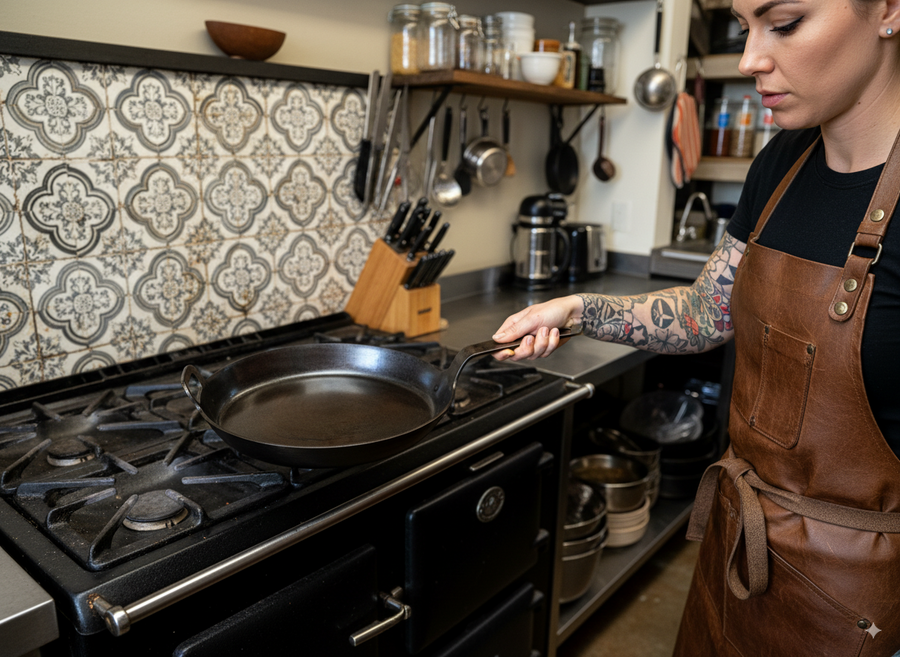
Carbon steel pans represent the pinnacle of culinary performance for professional chefs seeking precision and versatility in their cookware. These remarkable pans combine lightweight design with exceptional heat responsiveness, making them a crucial tool in high-performance kitchens.
Professional kitchens favour carbon steel pans for their remarkable durability and efficient heat conduction, offering chefs an unparalleled cooking experience. Unlike heavier cast iron alternatives, carbon steel pans provide superior manoeuvrability without compromising thermal performance.
The true magic of carbon steel lies in its ability to develop a natural non-stick surface through seasoning. As you cook, a protective patina builds up, creating a smooth cooking surface that improves with each use. This unique characteristic means your pan becomes more non-stick and more resilient over time, adapting to your cooking style.
Professional chefs appreciate carbon steel pans for their versatility across multiple cooking techniques. They excel at high-temperature searing, delicate sauce preparation, and rapid heat distribution, making them indispensable in both restaurant and home kitchens.
Pro tip: Always dry your carbon steel pan thoroughly after washing and apply a light coat of oil to maintain its seasoning and prevent rust formation.
3. Nonstick Frying Pan: Easy Release for Delicate Foods
Nonstick frying pans represent a culinary solution for home cooks and professionals seeking effortless cooking experiences with delicate ingredients. These specialised pans provide an exceptional surface that prevents food from sticking, making them ideal for preparing fragile dishes like omelettes, fish fillets, and pancakes.
Consumer research confirms that nonstick pans are perfect for cooking delicate foods with minimal oil usage, offering both convenience and health benefits. The smooth coating allows foods to glide easily from pan to plate without breaking or leaving residue behind.
However, nonstick pans require careful handling to maintain their protective coating. They perform best at low to medium temperatures and should never be used with metal utensils that could scratch the surface. Ceramic or silicone spatulas work best for preserving the pan’s nonstick properties.
The key advantage of these pans lies in their ability to reduce oil consumption while ensuring perfect food release. This makes them particularly valuable for health-conscious individuals who want to minimise added fats in their cooking without compromising on taste or presentation.
Pro tip: Always use wooden or silicone utensils with your nonstick pan and avoid preheating an empty pan to prevent damaging the delicate coating.
4. Cast Iron Skillet: Superior Heat for Searing
Cast iron skillets represent the pinnacle of culinary heritage, offering unmatched heat retention and versatility for serious home cooks and professional chefs. These remarkable kitchen tools transform ordinary cooking into an extraordinary culinary experience.
Consumer reports confirm that cast iron skillets are exceptionally durable and can be preheated to high temperatures, making them ideal for achieving perfect sears on meats. The remarkable ability to move seamlessly from stovetop to oven makes these pans a true kitchen workhorse.
The secret to a cast iron skillet’s performance lies in its unique heat distribution properties. Unlike other materials, cast iron builds and maintains an intense, even heat that creates those coveted golden brown crusts on steaks, chicken, and other proteins. This thermal stability allows for restaurant quality results in home kitchens.
Properly seasoned cast iron develops a natural non-stick surface that improves with each use. The more you cook, the more seasoned and non-reactive the pan becomes, creating a cooking surface that enhances flavour and prevents food from sticking.
Pro tip: Always dry your cast iron skillet completely after washing and apply a thin layer of oil to maintain its seasoning and prevent rust formation.
5. Copper Frying Pan: Fast, Even Heating Control
Copper frying pans represent the pinnacle of precision cooking, offering chefs unparalleled temperature control and exceptional heat responsiveness. These sophisticated kitchen tools are prized by culinary professionals for their remarkable thermal conductivity.
Consumer reports confirm that copper cookware provides rapid and uniform heat distribution, making it ideal for delicate cooking tasks. Unlike other materials, copper responds instantaneously to temperature changes, allowing cooks to make minute adjustments with extraordinary accuracy.
The molecular structure of copper enables it to heat incredibly quickly and distribute warmth evenly across the entire cooking surface. This means no more hot spots or uneven cooking, ensuring that delicate sauces, omelettes, and sensitive proteins are prepared with professional precision.
Most copper pans are lined with non reactive metals like stainless steel to prevent potential chemical interactions with acidic foods, combining the thermal excellence of copper with practical cooking safety. Professional chefs appreciate these pans for their ability to create complex dishes that require nuanced temperature management.
Pro tip: Always use wooden or silicone utensils with your copper pan to preserve its delicate lining and maintain its exceptional cooking performance.
6. Hard Anodised Pan: Lightweight and Tough
Hard anodised pans represent a technological breakthrough in modern cookware, offering professional chefs and home cooks an exceptional balance between durability and performance. These sophisticated cooking tools have revolutionised kitchen equipment with their unique material properties.
Consumer reports confirm that hard anodised cookware provides a tough, non-reactive surface that resists scratches and corrosion, making them a superior choice for serious cooking enthusiasts. Unlike traditional materials, these pans combine lightweight construction with remarkable structural integrity.
The anodisation process transforms the aluminium surface through an electrochemical treatment, creating an extraordinarily hard ceramic-like finish. This engineering marvel results in a pan that conducts heat efficiently, maintains consistent temperatures, and withstands intense culinary demands.
Professional chefs appreciate hard anodised pans for their versatility across different cooking techniques. They excel at everything from delicate sauces to high temperature searing, providing consistent performance without the weight of traditional cast iron cookware.
Pro tip: Use non metallic utensils to preserve the hard anodised surface and maintain its exceptional non stick properties for longer.
7. Aluminium Frying Pan: Quick Heating on a Budget
Aluminium frying pans represent the budget conscious cook’s best friend, offering remarkable heat conductivity and lightweight performance at an accessible price point. These versatile kitchen tools bring professional cooking potential within reach of home chefs on a budget.
Consumer reports highlight that aluminium pans provide quick and even heating at an affordable price, making them an attractive option for everyday cooking. Their exceptional thermal responsiveness means ingredients heat rapidly and uniformly, reducing cooking times and energy consumption.
The primary advantage of aluminium pans lies in their remarkable heat distribution. Unlike other materials that create hot spots, aluminium conducts heat evenly across the entire cooking surface, ensuring consistent results whether you are preparing delicate sauces or searing robust proteins.
While aluminium pans are incredibly efficient, they do require some strategic cooking approaches. Chefs should be mindful of potential reactivity with acidic foods and consider using anodized or coated versions to prevent metallic flavours and potential surface degradation.
Pro tip: Choose anodized or hard coated aluminium pans to enhance durability and prevent potential reactivity with food ingredients.
This table provides a comprehensive summary of different types of frying pans, highlighting their key features, benefits, and ideal usage scenarios.
| Type of Pan | Features | Benefits | Ideal For |
|---|---|---|---|
| Stainless Steel | Non-reactive surface, heat distribution capability, resilient surface | Preserves flavours, even cooking, perfect searing | Professional and home kitchens |
| Carbon Steel | Lightweight, heat responsive, develops patina | Precision in cooking, improves non-stick over time | High-performance kitchens |
| Nonstick | Specialised surface for easy release | Reduces oil use, effortless cooking | Cooking delicate foods |
| Cast Iron | High heat retention, versatile, natural non-stick | Superior searing, enhances flavour, durable | Achieving perfect sears on meats |
| Copper | Fast and even heating, lined with non-reactive metals | Rapid and uniform heat distribution, precise cooking | Delicate cooking tasks |
| Hard Anodised | Tough, non-reactive, light construction | Resists corrosion, efficient heat conduction | Versatility across cooking techniques |
| Aluminium | Quick heating, lightweight, budget-friendly | Remarkable heat conductivity, reduces cooking time | Everyday cooking |
Discover the Power of Carbon Steel for Your Frying Pan Collection
Every chef understands the importance of choosing the right frying pan, as highlighted in “7 Essential Types of Frying Pan Every Chef Should Know.” If you are looking to elevate your cooking with a pan that offers precision heat control, durability, and a natural nonstick surface, a professional carbon steel pan is your perfect solution. Brass & Steel forges carbon steel cookware from a single sheet, ensuring both strength and seamless design without rivets to trap residue.
Experience the unmatched performance of our Carbon Steel Collection | Brass&Steel where pans are designed to improve with every use through natural seasoning. Step into the world of healthier cooking free from toxic coatings such as PTFE and PFOA, all while enjoying compatibility with induction and all cooktops. Visit Brass & Steel today to find your ideal carbon steel pan and bring professional-grade cookware into your kitchen. Don’t wait — master the art of searing and sautéing with cookware built to last a lifetime.
Frequently Asked Questions
What is the difference between stainless steel and carbon steel frying pans?
Stainless steel frying pans offer a non-reactive surface ideal for preserving flavours, while carbon steel pans are prized for their lightweight design and ability to develop a natural non-stick surface through seasoning. Consider using stainless steel for tasks requiring precise temperature control and carbon steel for high-performance cooking techniques.
How do I season a carbon steel frying pan?
To season a carbon steel frying pan, first clean it thoroughly, then heat it on the stove and apply a thin layer of oil. Allow the oil to smoke slightly, then let the pan cool before wiping off the excess oil to build a non-stick patina over time.
What are the best practices for maintaining a nonstick frying pan?
To maintain a nonstick frying pan, avoid using metal utensils, which can scratch the surface, and always cook at low to medium temperatures. Regularly clean with a soft sponge and avoid preheating the empty pan to prolong its lifespan.
Why would I choose a cast iron skillet over other frying pans?
A cast iron skillet excels in heat retention and provides a naturally non-stick surface as it becomes more seasoned with use. Opt for cast iron for dishes that require high heat for searing, as it can move seamlessly from stovetop to oven.
How do I prevent warping in my stainless steel frying pan?
To prevent warping in a stainless steel frying pan, always preheat it gradually and use moderate heat while cooking. This practice helps maintain the pan’s structural integrity and ensures even cooking.
What advantages does a copper frying pan offer?
Copper frying pans provide outstanding thermal conductivity, allowing for rapid and even heating. Use them for delicate cooking tasks where precise temperature control is essential, like preparing sauces or eggs, to achieve professional results.