Pan Re-Seasoning Explained: Revive Your Carbon Steel
Over 60 percent of british kitchens rely on carbon steel pans for their unbeatable cooking performance, yet many owners struggle to keep them in prime condition. Pan re-seasoning matters because it safeguards the non-stick surface that delivers flawless meals and helps prevent rust. By understanding the science and simple steps behind this process, you can extend your pan’s lifespan and enjoy consistently smooth results every time you cook.
Table of Contents
- What Is Pan Re-Seasoning? Core Principles
- How Pan Re-Seasoning Works Step-by-Step
- When and Why to Re-Season Your Pan
- Pan Re-Seasoning vs Initial Seasoning
- Common Mistakes to Avoid During Re-Seasoning
Key Takeaways
| Point | Details |
|---|---|
| Pan Re-Seasoning Importance | Essential for restoring carbon steel pans’ non-stick properties and preventing rust, enhancing cooking performance. |
| Re-Seasoning Process | Involves cleaning the pan, applying a thin layer of high smoke point oil, and heating to polymerise the oil. |
| Signs to Re-Season | Look for diminished non-stick qualities, food sticking, or visible rust, indicating it’s time for re-seasoning. |
| Common Mistakes | Avoid applying too much oil, using wrong oils, inconsistent heating, and neglecting proper cleaning. |
What Is Pan Re-Seasoning? Core Principles
Pan re-seasoning is the strategic process of restoring and enhancing a carbon steel pan’s protective cooking surface. According to professionalsecrets.com, re-seasoning involves “restoring its non-stick properties by applying a thin layer of oil and heating it until the oil polymerizes, forming a protective patina”. This crucial maintenance technique ensures your cookware remains functional, prevents rust, and maintains superior cooking performance.
At its core, pan re-seasoning transforms the cooking surface through a precise thermal process. When oil is heated to high temperatures, it undergoes a chemical transformation called polymerization. During this process, the oil molecules bond with the pan’s metal surface, creating a hard, slick, and naturally non-stick layer. This molecular bonding is what gives well-seasoned carbon steel pans their remarkable cooking characteristics - exceptional heat distribution, natural food release, and remarkable durability.
The principles of effective pan re-seasoning revolve around several key factors:
- Oil Selection: Use high smoke point oils like grapeseed, avocado, or sunflower oil
- Temperature Control: Ensure consistent, high-heat application
- Even Distribution: Apply oil in an ultra-thin, uniform layer
- Repeated Layering: Build seasoning through multiple heating cycles
By understanding and implementing these core principles, home cooks and professional chefs can transform their carbon steel cookware into high-performance kitchen tools. For a comprehensive walkthrough of the re-seasoning process, check out our detailed carbon steel pan seasoning guide.
How Pan Re-Seasoning Works Step-by-Step
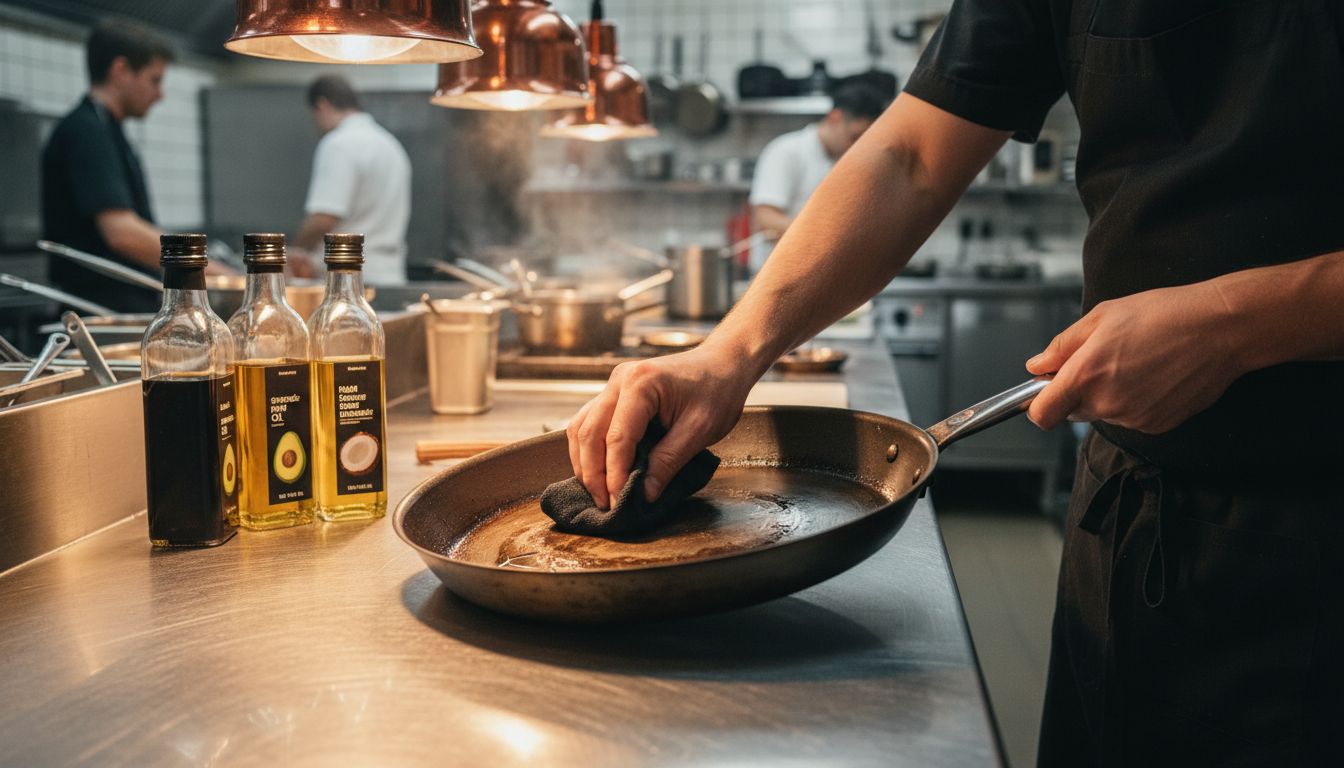
Re-seasoning a carbon steel pan is a methodical process that transforms your cookware’s surface into a naturally non-stick cooking platform. According to communitycutlery.co.uk, the process involves a carefully controlled thermal treatment where you “apply a very thin layer of oil using a cotton cloth” and then systematically heat the pan to create a durable protective layer.
Preparation is the critical first stage of re-seasoning. Before beginning, thoroughly clean your carbon steel pan to remove any existing residue, ensuring the surface is completely dry. Select a high smoke point oil like grapeseed or avocado oil, which will polymerize effectively without breaking down. The key is applying an ultra-thin oil layer - too much oil will create a sticky, uneven surface that undermines the seasoning process.
Here’s a detailed step-by-step breakdown of the re-seasoning technique:
- Clean Thoroughly: Wash pan with hot water, scrub gently, and dry completely
- Oil Application: Rub a microscopic layer of high smoke point oil using a lint-free cloth
- Initial Heating: Place pan in oven at medium temperature (around 180°C/350°F) for 30 minutes
- Final Baking: Increase temperature to maximum (250°C/480°F) and bake for an additional 60 minutes
- Cool Down: Remove carefully, wipe with a fine oil layer, and allow to cool slowly
For those seeking a comprehensive visual guide to perfecting this technique, check out our tutorial on re-seasoning carbon steel pans. Mastering this process ensures your cookware develops a robust, natural non-stick surface that improves with every cooking session.
When and Why to Re-Season Your Pan
Maintaining the performance of your carbon steel pan requires understanding when and why re-seasoning becomes necessary. According to professionalsecrets.com, you should “re-season your pan when its non-stick properties diminish or after cooking acidic foods that can strip the seasoning”. This proactive approach ensures your cookware remains in optimal condition.
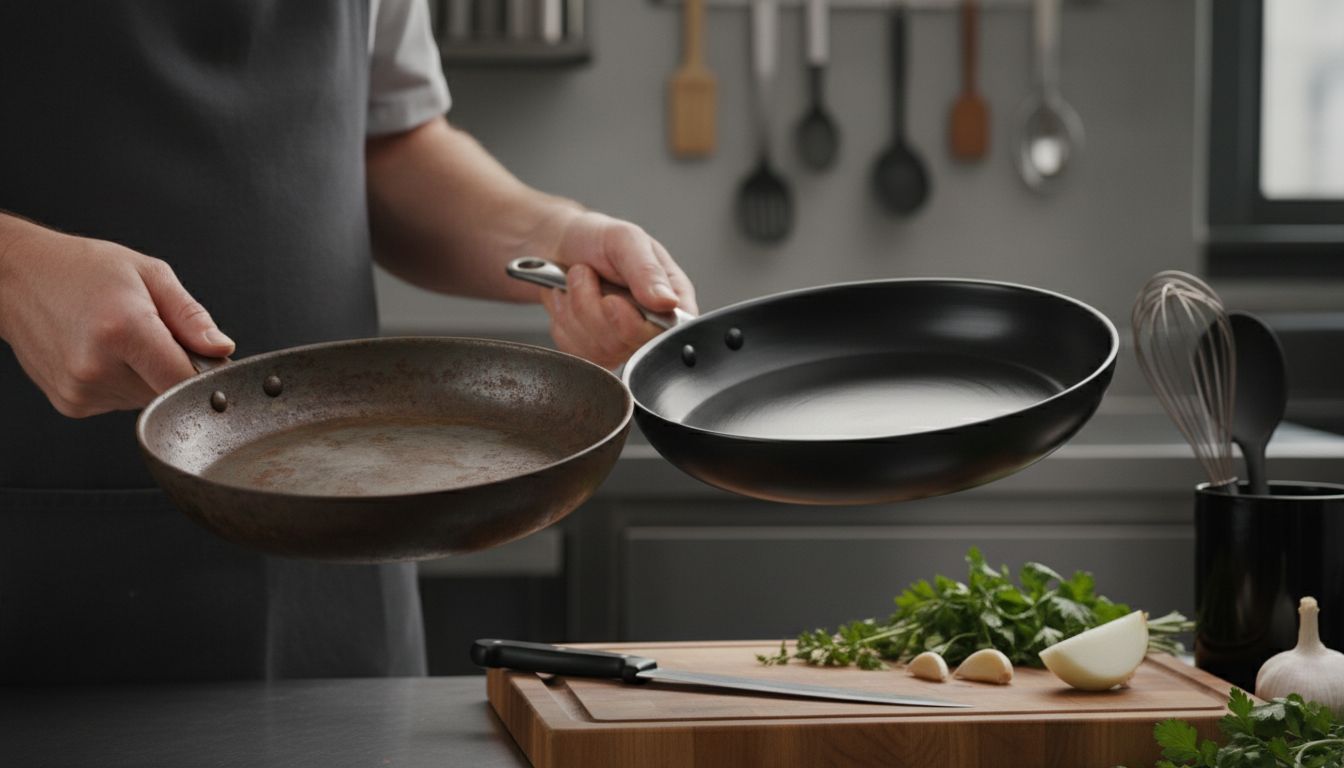
Signs that indicate it’s time to re-season include visible changes in your pan’s surface texture and cooking performance. A well-seasoned pan should have a smooth, dark surface with minimal sticking. When you notice food starting to adhere more frequently, or if the pan’s surface looks patchy, dull, or develops rust spots, these are clear signals that a thorough re-seasoning is required. Communitycutlery.co.uk emphasizes that “regular re-seasoning, especially during the first few uses, enhances the pan’s performance and longevity”.
Here are the key reasons to re-season your carbon steel pan:
- Restore Non-Stick Properties: Rebuild the protective cooking surface
- Prevent Rust: Create a barrier against moisture and oxidation
- Improve Cooking Performance: Maintain even heat distribution
- Remove Food Residue: Eliminate buildup that can affect taste
- Extend Pan Lifespan: Protect your investment through proper maintenance
For those looking to master the art of pan maintenance, our guide on repairing seasoning provides comprehensive insights into keeping your carbon steel cookware in top condition. Remember, a well-maintained pan is the secret to exceptional cooking results.
Pan Re-Seasoning vs Initial Seasoning
Understanding the nuanced differences between initial seasoning and re-seasoning is crucial for maintaining your carbon steel pan’s performance. According to professionalsecrets.com, these processes differ fundamentally in their approach and purpose. “Initial seasoning involves applying multiple layers of oil and heating to build a strong patina, while re-seasoning focuses on restoring the existing seasoning layer by applying oil and heating after cleaning.”
Initial Seasoning is the foundational process that transforms a brand new carbon steel pan from a raw metal surface into a protective, non-stick cooking platform. This first-time treatment requires multiple heating cycles to create a robust base layer. Re-Seasoning, in contrast, is a maintenance technique that repairs and refreshes an existing seasoning layer. Think of initial seasoning as building the house, while re-seasoning is equivalent to routine maintenance and touch-ups to keep the structure in top condition.
Key differences between initial and re-seasoning include:
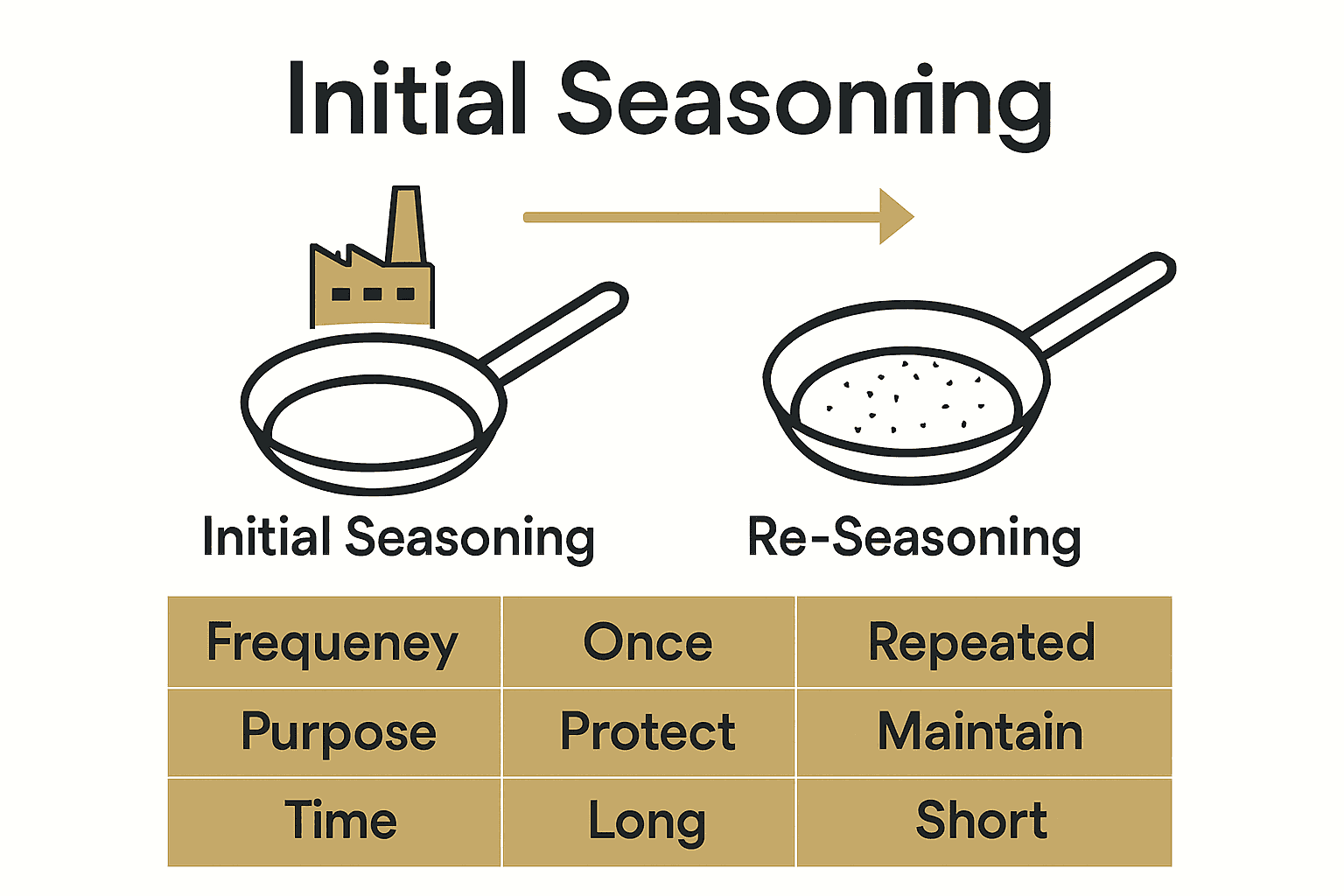
- Frequency: Initial seasoning occurs once, re-seasoning happens periodically
- Complexity: Initial seasoning requires more thorough and repeated application
- Purpose: Initial seasoning creates the base layer, re-seasoning maintains and repairs
- Oil Application: Initial seasoning uses multiple thin layers, re-seasoning involves spot treatment
- Duration: Initial seasoning is more time-intensive, re-seasoning is quicker
For home cooks and professional chefs looking to master the intricacies of carbon steel pan care, our guide on initial seasoning techniques provides comprehensive insights into creating that perfect first layer of protection.
Common Mistakes to Avoid During Re-Seasoning
Re-seasoning a carbon steel pan seems straightforward, but several critical errors can compromise your cookware’s performance. According to thefooddee.ca, one of the most common pitfalls is “applying too much oil during seasoning”, which can lead to a sticky residue instead of a smooth patina. Understanding these potential missteps is crucial for maintaining your pan’s quality.
The top mistakes that can derail your re-seasoning process include using inappropriate oils, applying inconsistent heat, and neglecting proper cleaning techniques. Rushing the process or using high-acid cooking oils can strip away existing seasoning, creating a challenging restoration scenario. Professional chefs understand that re-seasoning is a delicate balance of technique, temperature, and patience.
Here are the most critical mistakes to avoid during pan re-seasoning:
- Oil Overload: Applying too thick a layer of oil creates sticky, uneven surfaces
- Wrong Oil Selection: Using low smoke-point or flavoured oils that break down quickly
- Inconsistent Temperature: Heating pan unevenly or at incorrect temperatures
- Insufficient Cleaning: Failing to remove old food residue before re-seasoning
- Rapid Temperature Changes: Subjecting pan to sudden, extreme heat variations
- Improper Storage: Storing pan in humid environments after seasoning
For culinary enthusiasts seeking a comprehensive approach to carbon steel pan maintenance, our carbon steel care routines guide offers expert insights into preserving your cookware’s performance and longevity.
Restore and Elevate Your Cooking with Expert Pan Re-Seasoning Support
If you have discovered the importance of pan re-seasoning to maintain your carbon steel cookware’s non-stick surface and durability then Brass & Steel is here to support your culinary journey. Re-seasoning challenges such as restoring that perfect natural patina or preventing rust can feel daunting but our Carbon Steel Collection | Brass&Steel offers premium pans designed for ease of seasoning paired with unmatched performance that improves with every layer.
Explore our high-quality carbon steel pans forged in one piece for seamless strength and lasting beauty. With our clear care guides and industry-leading design you can maintain your pan effortlessly while enjoying greater heat retention and a truly healthy nonstick surface. Start reviving your cookware today by visiting Brass & Steel and take the next step toward heirloom-quality cooking tools built for your kitchen success.
Frequently Asked Questions
What is pan re-seasoning?
Pan re-seasoning is the process of restoring and enhancing a carbon steel pan’s cooking surface by applying a thin layer of oil and heating it to create a protective non-stick layer through polymerization.
When should I re-season my carbon steel pan?
You should re-season your pan when its non-stick properties diminish, if you notice food sticking more frequently, or after cooking acidic foods that can strip the seasoning.
How do I properly re-season a carbon steel pan?
To re-season, clean the pan thoroughly, apply a very thin layer of high smoke point oil, heat it in the oven at medium temperature for about 30 minutes, then increase the temperature and bake for an additional 60 minutes before allowing it to cool.
What are common mistakes to avoid during the re-seasoning process?
Common mistakes include applying too much oil, using the wrong type of oil, inconsistent heating, insufficient cleaning of the pan, and exposing it to rapid temperature changes.
Recommended
- How to Repair Seasoning on a Carbon Steel Pan Easily – Brass & Steel
- Carbon Steel Seasoning Checklist for Lasting Nonstick Performance – Brass & Steel
- How to Re-Season a Carbon Steel Pan for Perfect Cooking – Brass & Steel
- Ultimate Carbon Steel Pan Seasoning Guide for Perfect Results – Brass & Steel