Better cooking with a flat cast iron skillet in 2026
TL;DR:
- Flat cast iron skillets have a level base for even heat contact. Proper flatness enhances cooking results and durability. They outperform warped pans and certain materials for searing, baking, and health benefits.
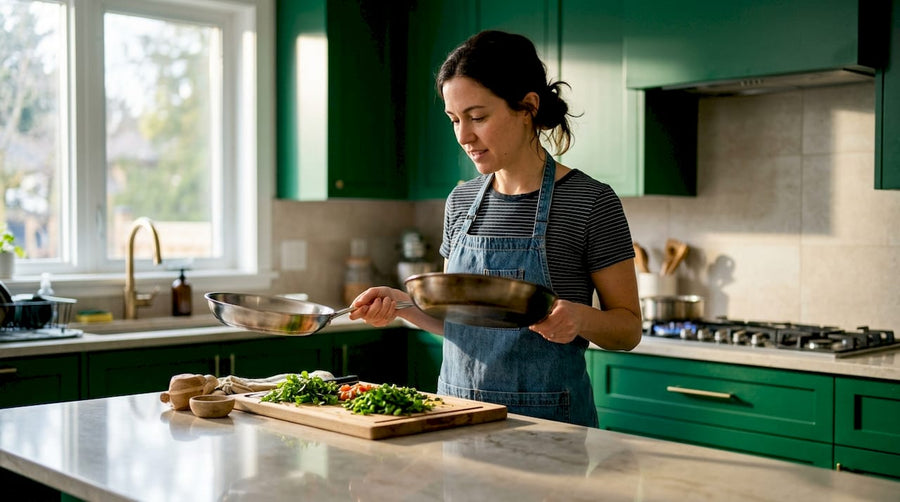
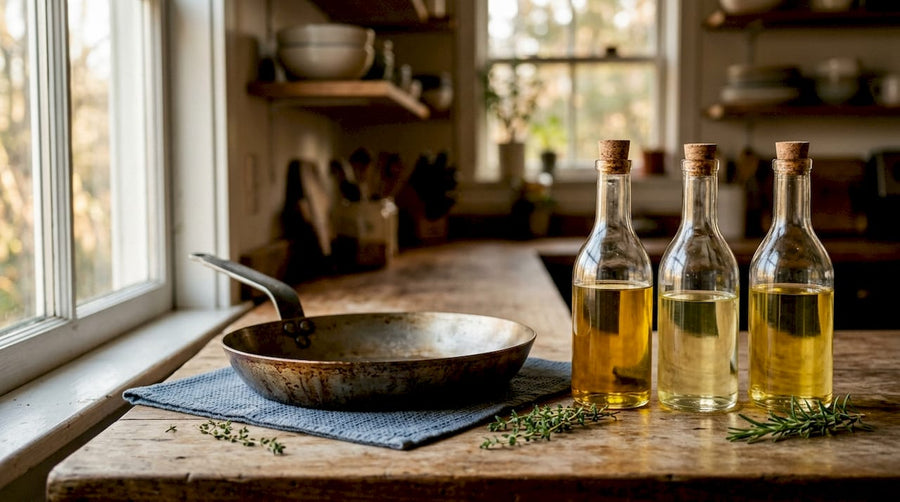
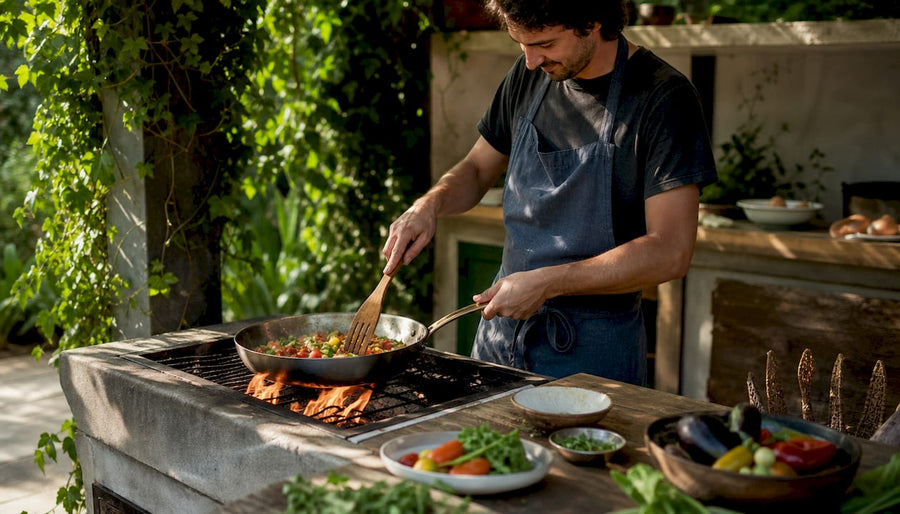
Cast iron has a reputation problem. Many cooks assume it means lugging a heavy, unwieldy lump from hob to table, cursing every step. But flat cast iron skillets tell a different story. With a genuinely level base and outstanding heat retention, they suit everything from delicate crêpes to restaurant-quality steaks. This guide covers what makes a skillet truly flat, how flat cast iron compares to carbon steel, the real health and cooking benefits you can expect, and how to care for one properly so it outlasts your kitchen renovation by several decades.
Table of Contents
- What makes a skillet ‘flat’ and why it matters
- Flat cast iron vs carbon steel: A practical comparison
- Cooking performance and health benefits
- Caring for and maintaining your flat cast iron skillet
- What most cooks get wrong about flat cast iron skillets
- Level up your cooking with the right skillet
- Frequently asked questions
Key Takeaways
| Point | Details |
|---|---|
| Flatness ensures performance | A flat cast iron skillet delivers even heat and eliminates cooking hot spots. |
| Cast iron or carbon steel | Choose between weight, heat retention, and responsiveness for your cooking style. |
| Healthier everyday cooking | Flat skillets reduce oil pooling, helping you use less oil for better health. |
| Long-term durability | Proper care allows your skillet to last a lifetime and provide consistent results. |
What makes a skillet ‘flat’ and why it matters
Not all cast iron is created equal. A flat cast iron skillet is one where the cooking surface sits consistently level across its full diameter, with no bowing, cupping, or raised centre. That sounds obvious, but it is surprisingly rare among cheaper pans, and the difference it makes is enormous.
When your skillet’s base is genuinely flat, it maintains full contact with your hob surface. On glass and ceramic hobs, which are common across European kitchens, even a millimetre of warping creates hot spots and cold zones. Eggs cook unevenly. Pancakes brown on one side and stay pale on the other. Butter pools at the edges instead of coating the base. These are not minor annoyances; they actively undermine your cooking results.
According to testing by culinary experts, flat cast iron skillets offer exceptional stability and heat contact, which matters most on smooth hob surfaces and induction plates. On induction in particular, the electromagnetic field only transfers heat where metal touches the glass. A warped pan wastes energy and produces unpredictable results.
For tasks like bread baking, pancake making, and egg cookery, a flat base is not a preference; it is a requirement. Sourdough benefits from even bottom heat. Crêpes demand consistent browning across the whole surface. A single warped pan quietly ruins results that should be straightforward.
Here is what to look for when assessing flatness:
- Place the skillet on a flat surface and press the centre. If it rocks, it is warped.
- Hold it at eye level to check for any visible bow in the base.
- Look for a consistent gap (or no gap at all) between the pan and the hob surface.
- Run a straight edge or ruler across the base in multiple directions.
Pro Tip: New cast iron can warp if heated too rapidly from cold. Always start on a low heat and bring the pan up gradually. This also preserves your cast iron sauté pan care routine, as thermal shock is the primary cause of long-term distortion.
Quality flat cast iron pans are machined or ground on the base to ensure precision. This process costs more to manufacture but pays back every time you cook.
Flat cast iron vs carbon steel: A practical comparison
Understanding flatness is only the start. Now, see how cast iron compares to carbon steel in real kitchens, because these two materials are often confused and equally often recommended interchangeably when they behave quite differently.
The headline finding from equipment testing is that carbon steel skillets are lighter and more responsive to heat changes, while cast iron retains heat better once it reaches temperature. This single distinction shapes every practical scenario in which you use them.
| Feature | Flat cast iron | Carbon steel |
|---|---|---|
| Weight (30 cm) | 3.5 to 5 kg | ~3 kg |
| Heat retention | Excellent | Good |
| Heat responsiveness | Slower | Faster |
| Seasoning required | Yes | Yes |
| Induction compatible | Yes | Yes |
| Price range | €40 to €150+ | €99 to €119 |
| Lifespan | Generations | Decades+ |
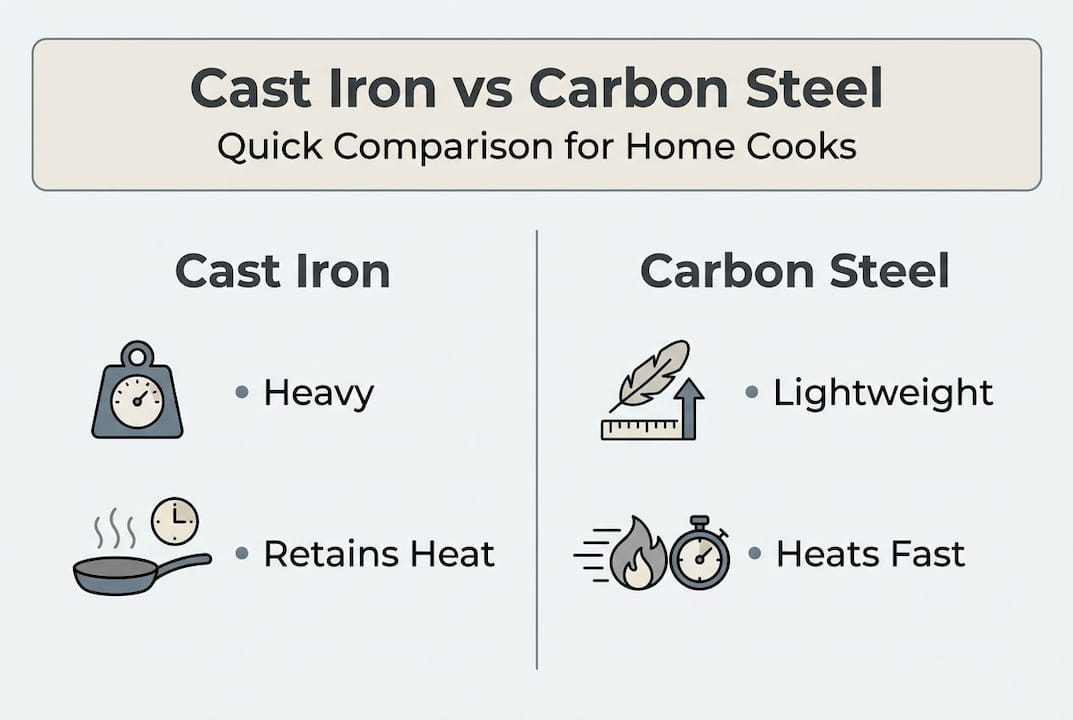
For more detail on how the two materials handle specific tasks, the carbon steel vs cast iron breakdown is worth reading before you make a decision.
Carbon steel advantages:
- Lighter to lift and manoeuvre, better for tossing vegetables.
- Heats up and cools down faster, giving you more control.
- Thinner walls make it easier to slide food onto a plate cleanly.
- Excellent for sautéing, stir frying, and delicate proteins.
Flat cast iron advantages:
- Superior heat retention makes it ideal for searing thick steaks.
- Distributes heat more evenly once preheated, helping with bread and baking.
- Handles higher oven temperatures without concern.
- The weight assists in pressing proteins flat for better crust contact.
Who should choose each? If you cook primarily on a gas hob, flip a lot, and value responsiveness, carbon steel is likely your better match. If you sear meat regularly, bake skillet breads, or want one pan that goes from hob to oven without thought, flat cast iron earns its place. Many serious home cooks eventually own both. The complete carbon steel vs cast iron guide can help you work out which suits your actual cooking habits.
Cooking performance and health benefits
With the main differences clear, let’s focus on how flat cast iron’s design transforms your cooking results and your approach to healthier meals.
Heat retention is the central story. Once a flat cast iron skillet reaches temperature, it holds that heat even when cold food hits the surface. A chicken breast or steak causes a sharp temperature drop in thinner pans, which leads to steaming rather than searing. Cast iron absorbs that shock and keeps cooking. The result is a proper crust, better colour, and far more flavour through the Maillard reaction.
“Cast iron’s heat retention enhances searing, while flat skillets avoid oil pooling, making them a practical choice for lower-fat, high-flavour cooking.”
The flat base also means oil spreads evenly rather than collecting in a central dip. That matters for health-conscious cooking, where you want a thin, consistent layer rather than a puddle. You use less oil overall, and the food cooks in it rather than sitting in it.
Here is how to get the best results from a flat cast iron skillet:
- Preheat slowly on a medium heat for three to five minutes before adding food.
- Pat proteins dry before placing them in the pan; moisture is the enemy of a good crust.
- Add just enough oil to coat the base when you tilt the pan.
- Do not move the food immediately. Let it release naturally before turning.
- Rest meat on a board after cooking, not back in the pan, to stop carryover cooking.
- Use the oven for thick cuts: start on the hob and finish at 180°C to 200°C.
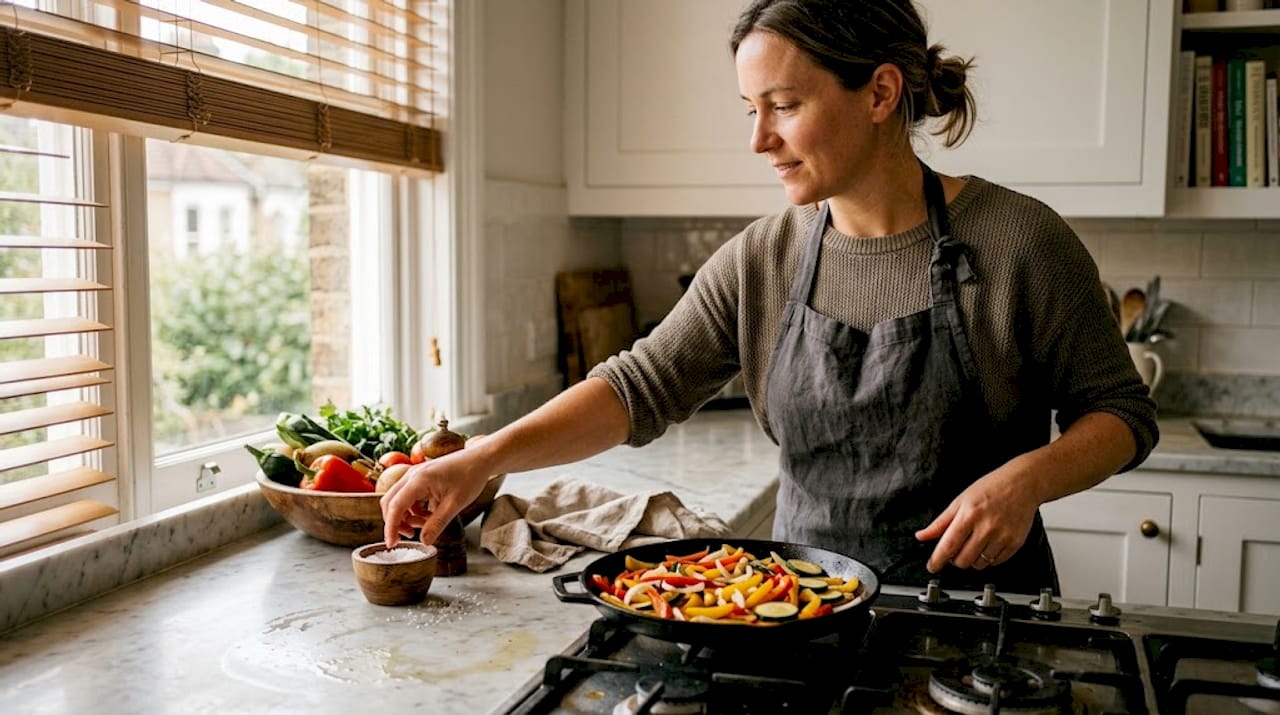
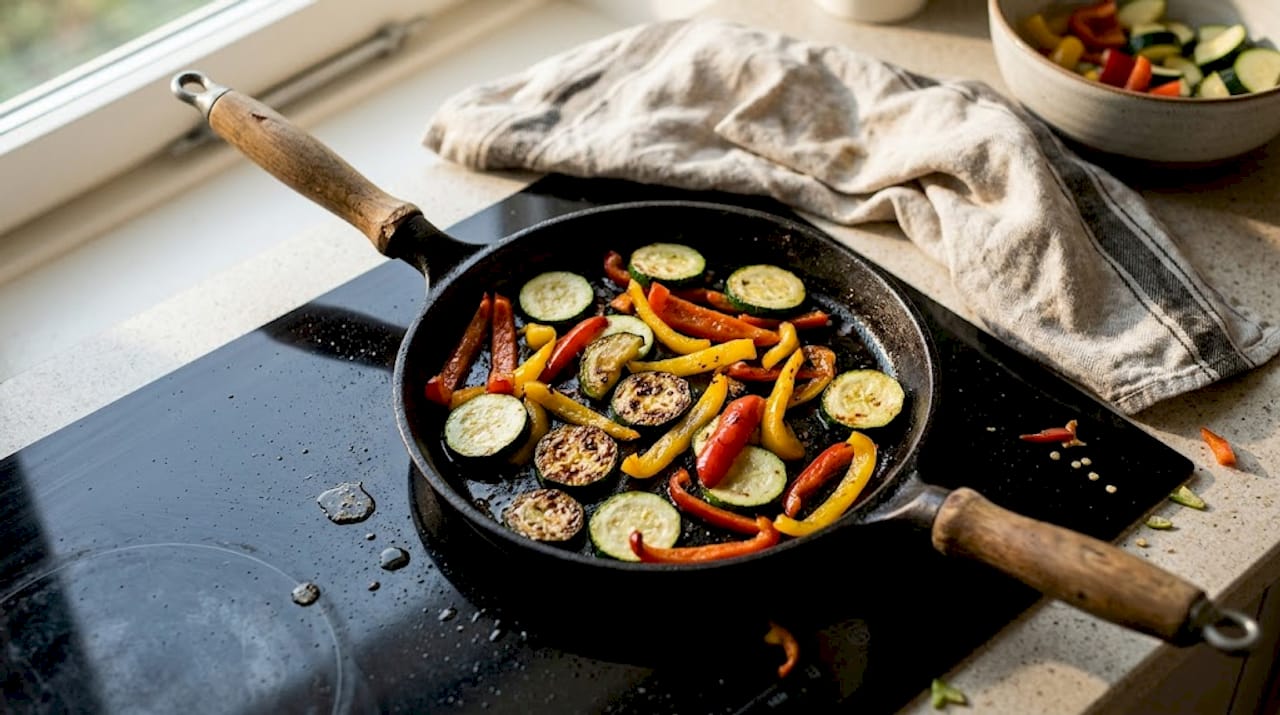
For everyday vegetables, the flat base browns rather than steams, giving courgettes and peppers that caramelised edge that makes them genuinely satisfying. To choose the best cookware for your kitchen, think about which of these tasks you perform most often.
Pro Tip: Cast iron adds a small amount of dietary iron to food during cooking, particularly with acidic ingredients like tomatoes. If you are looking at healthier pan options that avoid synthetic coatings entirely, this is a relevant and often overlooked benefit.
Caring for and maintaining your flat cast iron skillet
Knowing how to use your skillet is only half the story. Maintaining it properly ensures a legacy of great meals, and the process is simpler than most people expect.
The biggest myth about cast iron care is that it is fragile. It is not. Flat cast iron can last generations with proper care, and the maintenance routine takes less than two minutes after each cook.
Here is the core seasoning and cleaning process:
- Wash the new pan once with warm soapy water to remove any factory coating or oil.
- Dry it thoroughly on a low heat on the hob for a few minutes.
- Apply a very thin coat of high-smoke-point oil such as grapeseed or sunflower.
- Wipe off virtually all of it; the surface should look almost dry.
- Place upside down in an oven preheated to 230°C to 250°C for 30 minutes.
- Repeat this process two to three times for a strong base seasoning.
For your complete care guide, including long-term storage and rust recovery, the detail is all there.
Ongoing maintenance dos:
- Clean with hot water and a stiff brush immediately after cooking while the pan is still warm.
- Dry the pan fully before storing; a minute on a low heat does this perfectly.
- Apply a paper-thin coat of oil after every wash.
- Cook fatty foods regularly; bacon, sausages, and fried eggs build seasoning naturally.
Ongoing maintenance don’ts:
- Never soak cast iron in water; rust forms quickly.
- Avoid the dishwasher entirely.
- Do not use harsh abrasive scourers, which strip seasoning.
- Avoid exposing a cold pan to very high heat suddenly.
If you are still deciding between materials, the guide on choosing cast iron pans covers the decision in practical terms. Properly maintained, your skillet will outlast any non-stick pan by decades, and the seasoning only improves with every cook.
What most cooks get wrong about flat cast iron skillets
Here is something worth saying plainly: most cooks focus entirely on weight and thickness when choosing cast iron, and those metrics matter far less than whether the base is genuinely flat.
A heavy pan with a warped base performs worse than a lighter pan that sits perfectly on your hob. We have seen cooks invest in expensive, thick cast iron only to get uneven results because the base was never precision-ground. The brand name and the kilo count on the box tell you almost nothing about actual cooking performance.
The other thing that gets overlooked is the handle angle. A well-designed flat cast iron skillet should allow you to tilt and pour without strain. A handle that sits too low forces awkward wrist movements that make a heavy pan feel even heavier.
Read the best pan for steak analysis and you will see that results come down to base contact, preheat time, and technique, not price or thickness. A flat, well-seasoned £60 skillet consistently outperforms a prestigious but slightly warped alternative. Small design details matter more than the marketing.
Level up your cooking with the right skillet
Choosing cookware that genuinely suits your cooking style is one of the most impactful decisions you can make for everyday meals. At Brass & Steel, we believe that serious cooking deserves serious tools, which is why everything we make is designed for real performance and built to last a lifetime.
Our carbon steel sauté pans are forged from a single piece of steel, free from PTFE and synthetic coatings, and compatible with every hob including induction. Whether you are a daily home cook or someone who takes the weekend roast seriously, the right pan changes the experience. Explore the full range and our library of practical cooking guides at Brass & Steel and find the skillet that fits your kitchen.
Frequently asked questions
Is a flat cast iron skillet suitable for all types of hobs?
Yes, flat cast iron skillets work on gas, electric, ceramic, and induction hobs. Their even base contact ensures stable heat transfer across all surface types.
What is the main advantage of flat cast iron over traditional pans?
A flat base promotes consistent heat distribution and prevents oil pooling, so food cooks evenly across the whole surface. This leads to better browning and more predictable results than warped alternatives.
How should I clean my flat cast iron skillet without damaging it?
Use hot water and a stiff brush, then dry immediately on a low heat and apply a thin coat of oil. Proper care ensures the seasoning builds over time rather than breaking down.
Can I use flat cast iron for baking and roasting?
Absolutely. The pan’s heat retention makes it excellent for baking skillet bread, roasting vegetables, and finishing thick proteins in the oven at temperatures up to 250°C.