

Best pans for induction hobs: a practical guide
TL;DR:
- Choosing induction-compatible pans requires performing a simple magnet test to confirm ferrous bases, but performance also depends on material, thickness, and flatness. Carbon steel offers an excellent balance of quick heating, heat retention, and built-in nonstick qualities, making it ideal for most home cooks. Selecting the right pan involves matching size to the hob, considering durability, and starting with a single quality piece to learn induction cooking effectively.
Choosing the right pans for induction hobs is genuinely confusing at first. You stare at a shelf full of cookware, nothing says “induction compatible” in plain English, and you end up guessing. The magnet test is the simplest check you can do at home: if a fridge magnet sticks firmly to the base, the pan will work. But compatibility alone does not guarantee performance. The material, thickness, and base flatness all decide how well your food actually cooks. This guide cuts through the noise and gives you a clear path from confused to confident.
Table of Contents
- Key takeaways
- 1. What makes pans work on induction hobs
- 2. The key criteria for choosing induction hob cookware
- 3. Pan materials for induction: the honest pros and cons
- 4. Top recommended pans for induction hobs
- 5. Comparing the top pan types side by side
- 6. How to match your pan to your cooking style
- 7. What I have actually learned from using different pans on induction
- Why Brass-steel carbon steel pans are built for induction
- FAQ
Key takeaways
| Point | Details |
|---|---|
| Magnet test first | Hold a magnet to the base. A firm stick means the pan is induction compatible. |
| Match base to burner | Your pan’s base should closely match the hob zone diameter for efficient heating. |
| Carbon steel is the sweet spot | It is lighter than cast iron, heats quickly, and builds a natural nonstick surface over time. |
| Avoid high heat on induction | Induction transfers heat faster than gas, so medium settings are enough for most cooking. |
| Flat base is non-negotiable | A warped or curved base reduces contact with the hob, causing uneven cooking and poor detection. |
1. What makes pans work on induction hobs
Induction hobs do not use a flame or a glowing element. They generate a magnetic field that creates heat directly inside the pan itself. That means only pans with ferrous bases will work. Cast iron, carbon steel, and magnetic-grade stainless steel are all naturally compatible. Pure aluminium and copper are not, unless they have a bonded magnetic layer built into the base.
This is not just a technical detail. It changes how you shop. A beautiful copper pan at half price is useless on induction without that magnetic layer. Check the base, not the branding.
2. The key criteria for choosing induction hob cookware
Before you spend a single penny, run through these factors:
- Magnetic base. Do the magnet test at home or check the manufacturer’s label. No magnet grip, no induction cooking.
- Flat, heavy base. Heavy, flat-bottomed pans reduce the buzzing noise that induction hobs can produce and make better contact with the glass surface.
- Base diameter. Your pan’s base should match the hob zone as closely as possible. Mismatched pan sizes either waste energy or stop the hob from detecting the pan at all.
- Material and thickness. Thicker pans hold heat more steadily. Thinner ones respond faster but can create hot spots.
- Durability and maintenance. Some materials, like cast iron, last for decades but are heavy and need specific care. Others, like coated non-stick pans, are convenient but degrade faster under high heat.
- Price and long-term value. A cheap pan that warps after six months costs more in the long run than one solid pan bought once.
Pro Tip: Buy the thickest base you can comfortably lift. On induction, thermal mass matters more than it does on gas because the heat transfer is so rapid.
3. Pan materials for induction: the honest pros and cons
Not all induction stove top cookware is equal. Here is how the main materials actually perform.
Cast iron is the gold standard for heat retention. Once hot, it stays hot and delivers an even sear. The downside is weight. A cast iron skillet can feel like a small dumbbell, which makes it awkward for daily use. It also takes longer to heat up than other materials.
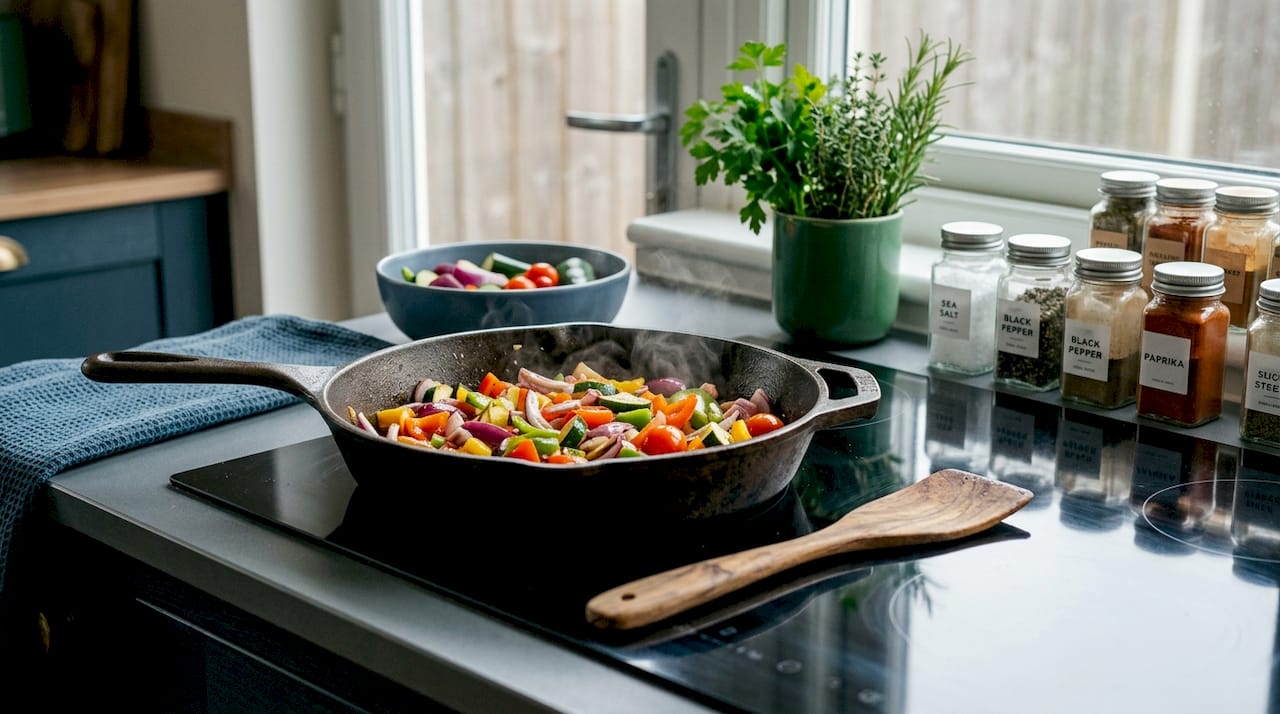
Carbon steel is where things get interesting. It is made from the same basic material as cast iron but rolled much thinner. That makes it lighter yet heat-efficient, with heat responsiveness closer to stainless steel and heat retention closer to cast iron. Season it correctly and it builds a natural, PTFE-free nonstick surface over time. It is also oven-safe at high temperatures. For most serious home cooks, carbon steel is the best all-round choice.
Magnetic stainless steel is durable, dishwasher-safe, and looks good after years of use. It does not season or build a nonstick surface, but it handles acidic foods without any reaction, which carbon steel and cast iron cannot do as comfortably.
Hybrid multi-layer pans combine an aluminium or copper core with a magnetic steel outer layer. Multi-layer bases deliver better heat distribution and are worth considering if you want something low-maintenance.
Non-stick coated pans are convenient, but high heat settings on induction can damage coatings and shorten the pan’s lifespan. If you go this route, always stay at medium or below.
Pro Tip: Pure aluminium and copper pans will not work on induction at all unless the base is specifically bonded with a magnetic layer. Always check the base, not just the pan body.
4. Top recommended pans for induction hobs
Here are the types of pots and pans for induction cooktops worth your money, with honest notes on each.
Carbon steel sauté pans
The Brass-steel 27 cm carbon steel sauté pan is forged from a single 3mm sheet, weighs around 2 kg, and works on all cooktops including induction. No rivets, no welds, and no synthetic coatings. The seasoning you build becomes a natural nonstick surface that improves with every use. At €99, it is genuinely competitive for what you get.
The 30 cm version steps up to 4mm thickness and around 3 kg. That extra weight makes it the better choice for searing larger cuts of meat or cooking for a family. Both pans are oven-safe, which is something a lot of coated pans cannot claim without restrictions.
Cast iron skillets
Ideal if you cook low and slow regularly. Heavy and slow to heat, but once at temperature they hold it brilliantly. Great for bread, stews, and long braises. Not ideal if you move your pan around the hob frequently.
Magnetic stainless steel pans
Best for cooking acidic dishes like tomato-based sauces. They are easy to clean, dishwasher-safe, and do not require seasoning. Look for tri-ply or five-ply construction to get decent heat distribution, as single-layer stainless steel is prone to hot spots.
Hybrid non-stick pans
A reasonable choice for eggs and delicate fish. The magnetic outer layer qualifies them as pots for induction hobs. Just know they will not last as long as carbon steel or cast iron, and they need gentler treatment to protect the coating.
Saucepans for induction cooktops
For boiling pasta, making sauces, or blanching vegetables, a good magnetic stainless steel or carbon steel saucepan with a flat base and tight-fitting lid is the practical choice. Check that the base diameter matches your smallest hob zone.
5. Comparing the top pan types side by side
| Pan type | Material | Heat retention | Oven-safe | Maintenance | Price range |
|---|---|---|---|---|---|
| Carbon steel sauté | Carbon steel | High | Yes, unlimited | Season and oil regularly | €99 to €119 |
| Cast iron skillet | Cast iron | Very high | Yes, unlimited | Season and dry immediately | €30 to €120 |
| Tri-ply stainless | Stainless steel | Medium | Yes (usually to 260°C) | Dishwasher-safe | €40 to €150 |
| Hybrid non-stick | Aluminium core, steel base | Medium | Limited (check label) | Hand wash only | €30 to €100 |
The global cookware market reached 26.9 billion euros in 2025, which tells you just how much interest there is in quality cooking equipment. With so many options on shelves, the comparison above is designed to save you time.
6. How to match your pan to your cooking style
Choosing the best pots and pans for an induction stove top is not just about compatibility. It is about what you actually cook.
- You sear meat often. Go for carbon steel or cast iron. Both handle high, sustained heat and produce a proper crust without sticking once seasoned well.
- You cook sauces and acidic dishes. Stainless steel is your friend. It will not react with tomatoes or wine the way carbon steel can when not properly seasoned.
- You want one pan that does everything. A good carbon steel sauté pan handles searing, sautéing, baking, and even eggs once the seasoning matures.
- You cook in large batches. Opt for the larger diameter option. The Brass-steel 30 cm pan is particularly well-suited here, with the thicker 4mm base providing even heat across a bigger surface.
- You are new to induction. Start with a medium-weight pan. Adapting heat settings on induction takes a little practice, and a manageable weight makes the learning curve less frustrating.
Some premium smart hobs now offer 19 heat settings with precise temperature control. If you own one of these, a responsive pan like carbon steel lets you make full use of that precision.
You can also read more about using carbon steel on induction if you want a deeper dive into technique.
7. What I have actually learned from using different pans on induction
I switched to induction about four years ago and made every mistake you can make. I used my old thin stainless pan on full power and watched it warp within a fortnight. I bought a coated non-stick pan thinking it would make life easier, and it did, for about eight months before the coating started to go.
What changed my cooking was switching to carbon steel. The first few weeks were awkward. The seasoning was thin, things stuck occasionally, and I had to resist the urge to crank the heat. But induction is so responsive that medium settings are genuinely enough for almost everything. Once I stopped fighting that and trusted the technology, the results got dramatically better.
My honest recommendation is to start with one good carbon steel pan and learn it properly before buying anything else. The carbon steel versus other materials conversation becomes much clearer once you have cooked on it for a few weeks.
The mistake most people make is buying too many pans too quickly. One well-chosen pan, used consistently, teaches you more about induction cooking than a full set of mediocre ones.
— Davide
Why Brass-steel carbon steel pans are built for induction
If you want the best cooking pans for an induction cooktop without compromise, Brass-steel makes a compelling case. Every pan is forged from a single piece of carbon steel, which means no rivets to trap food and no welds to fail over time. The flat, thick base sits perfectly on an induction glass surface, maximises contact, and works with every hob on the market.
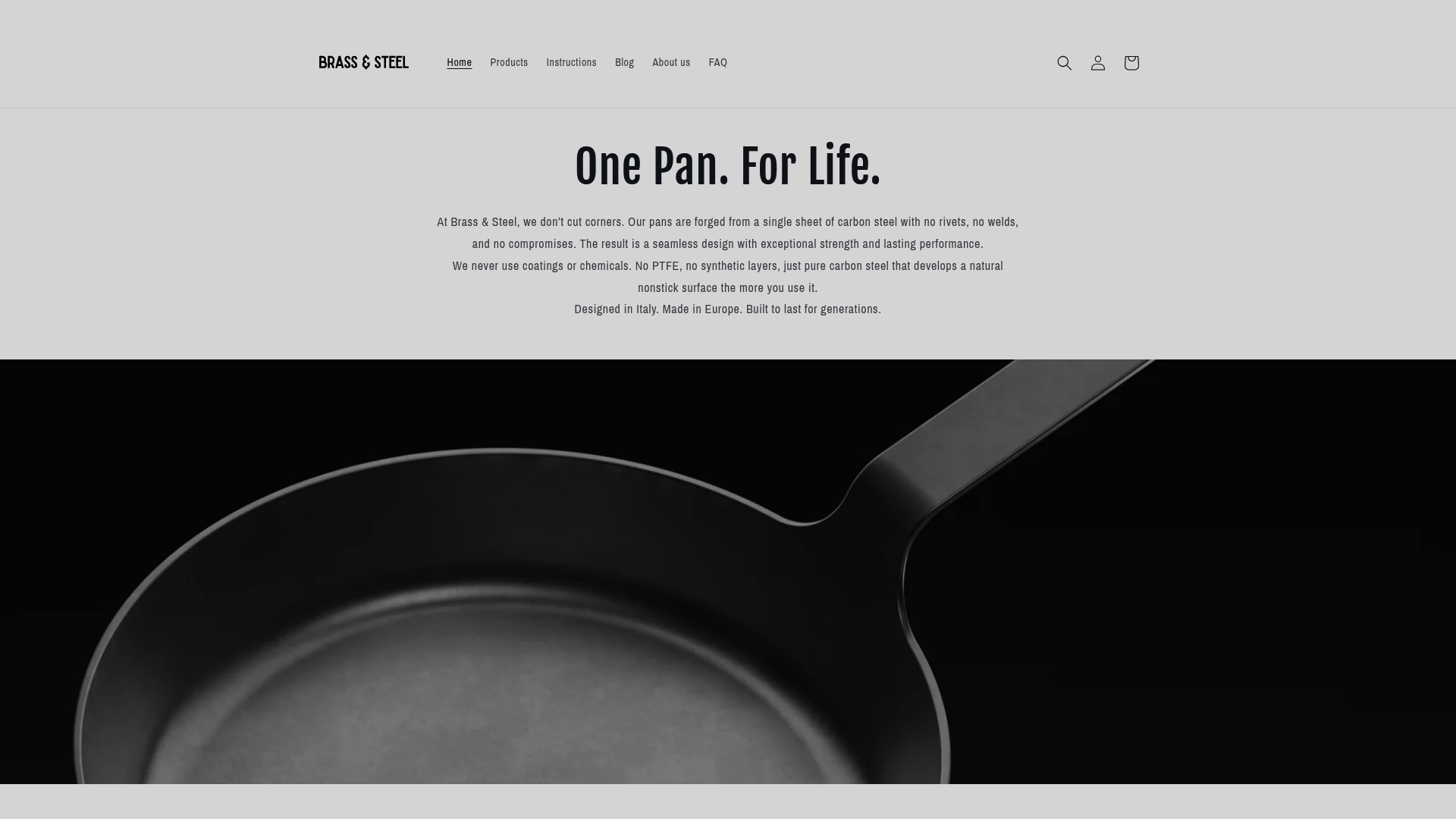
Both the 27 cm and 30 cm sauté pans are free from PTFE and PFOA, and they are built to last decades with basic care. Explore the full Brass-steel carbon steel range and find the right size for your kitchen. These are pans you buy once.
FAQ
Do all pans work on induction hobs?
No. Only pans with a ferrous magnetic base work on induction. Cast iron, carbon steel, and magnetic-grade stainless steel are compatible. Pure aluminium and copper are not unless they have a bonded magnetic layer.
How do I know if my pan is induction compatible?
Hold a fridge magnet firmly against the base. If it sticks, the pan will work on induction. This simple test is more reliable than reading product labels.
Is carbon steel good for induction cooking?
Yes. Carbon steel is one of the best materials for induction hobs. It heats quickly, retains heat well, and develops a natural nonstick surface over time. It also works at any temperature your oven can reach.
What size pan works best on induction?
Match your pan’s base diameter as closely as possible to the hob zone you are using. Too small and the pan will not heat efficiently. Too large and the hob may not detect it at all.
Can you use high heat on induction with non-stick pans?
No. High heat on induction can damage non-stick coatings and warp lighter pans. Stick to medium settings. Induction heats so quickly that high power is rarely necessary anyway.