Induction Cooktops: The Science Behind Effortless Cooking

Choosing the right cookware can feel confusing when updating your kitchen with the latest technology. Induction cooktops are quickly becoming popular across Europe thanks to their impressive energy efficiency, faster cooking, and precise control. For those looking to unlock the full potential of induction cooking, selecting ferromagnetic materials like carbon steel ensures reliable performance and safety. This guide explores how induction technology works and why compatible cookware choices matter for everyone who takes cuisine seriously.
Table of Contents
- What Is Induction Cooking Technology?
- How Induction Cooktops Generate Heat
- Compatible Cookware And Why It Matters
- Efficiency, Safety, And Common Misconceptions
- Comparing Induction With Gas And Electric
Key Takeaways
| Point | Details |
|---|---|
| Induction Cooking Efficiency | Induction cooking can transfer up to 90% of energy directly to cookware, significantly outpacing gas and electric cooktops in energy efficiency. |
| Cookware Compatibility | Only ferromagnetic materials such as cast iron and carbon steel work with induction cooktops; users should ensure compatibility before purchasing. |
| Safety Features | Induction cooktops remain relatively cool during use, reducing burn risks and improving indoor air quality by eliminating combustion pollutants. |
| Heat Control Precision | Induction technology allows precise temperature adjustments and rapid heating, making it a superior choice for modern kitchens. |
What Is Induction Cooking Technology?
Induction cooking represents a revolutionary culinary technology that transforms how we prepare meals by leveraging electromagnetic principles. Unlike traditional cooking methods, induction cooktops generate heat directly within compatible cookware through an ingenious scientific process. Electromagnetic energy efficiency makes this approach dramatically different from conventional gas or electric stovetops.
The fundamental mechanism behind induction cooking involves generating eddy currents within metal cookware. When an alternating electromagnetic field passes through a compatible pan, it creates circular electrical currents inside the metal itself. These currents produce heat instantly and precisely, warming only the cookware rather than the surrounding cooktop surface. This targeted heating approach offers several significant advantages:
- Faster cooking times
- Superior energy efficiency
- Enhanced temperature control
- Reduced risk of accidental burns
- Minimal heat wastage
Modern induction technology has evolved to address initial limitations, with researchers continually improving power requirements and material compatibility. Systematic mapping studies indicate emerging trends like deep learning techniques and flexible induction stove designs are expanding the technology’s potential.
To work effectively, induction cooktops require specific cookware made from ferromagnetic materials like cast iron or carbon steel. Aluminium, copper, and glass cookware without magnetic properties will not generate the necessary eddy currents for heating. This requirement means users must carefully select compatible cookware, though many modern kitchen collections now include induction-ready options.
Pro tip: When purchasing cookware for an induction cooktop, always check for the distinctive induction-compatible symbol or test the base with a magnet to ensure proper functionality.
How Induction Cooktops Generate Heat
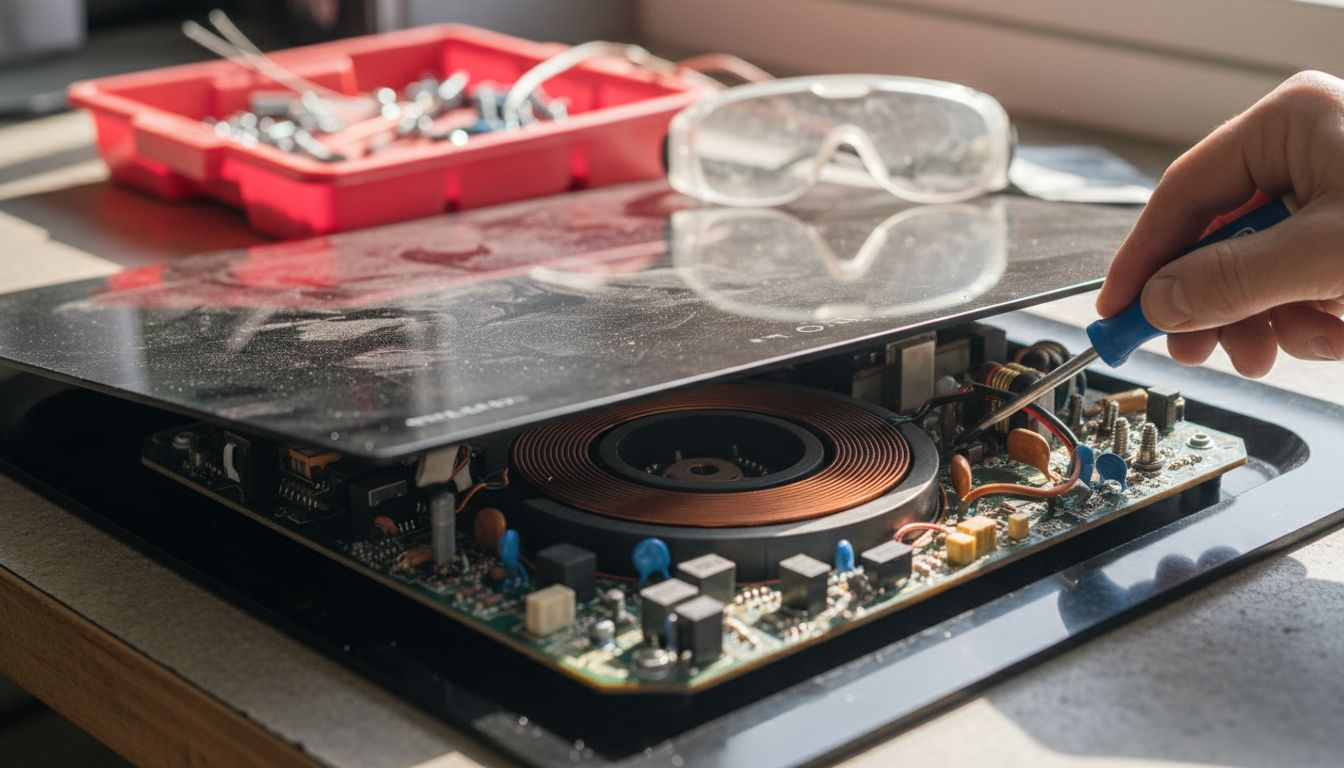
Induction cooktops employ a sophisticated electromagnetic heating mechanism that fundamentally differs from traditional cooking technologies. Magnetic induction principles enable these innovative surfaces to generate heat directly within compatible cookware through an intricate scientific process. Unlike conventional stovetops that heat surfaces externally, induction technology creates heat inside the pan itself using precisely controlled electromagnetic fields.
The core mechanism involves a complex interaction between three primary components:
- A copper coil beneath the glass-ceramic surface
- An alternating electrical current
- Ferromagnetic cookware with magnetic properties
When an electrical current passes through the copper coil, it generates a high-frequency alternating magnetic field. This magnetic field induces eddy currents within the cookware’s metal structure. These circular electrical currents generate heat through electrical resistance, a phenomenon known as the Joule effect. Remarkably, this process means the cooktop itself remains relatively cool while the cookware heats up rapidly and precisely.
Modern induction systems operate at sophisticated switching frequencies between 20 to 50 kilohertz, allowing for exceptional temperature control. The system continuously adapts power output based on cookware characteristics, ensuring optimal heating efficiency and safety. Closed-loop control mechanisms and infrared temperature sensors further enhance the precision of this remarkable cooking technology.
Pro tip: Ensure your cookware has a flat, smooth base to maximise electromagnetic contact and heating efficiency when using an induction cooktop.
Compatible Cookware and Why It Matters
Choosing the right cookware is crucial for successfully using an induction cooktop. Magnetic cookware compatibility determines whether your pans will heat effectively and efficiently. Not all cookware is suitable for these innovative cooking surfaces, making it essential to understand the fundamental requirements for successful induction cooking.
Compatible cookware materials include:
- Cast iron
- Carbon steel
- Magnetic stainless steel (430 grade)
- Enamelled cast iron
- Some nickel-based alloys
The key factor in induction cooking is the presence of ferromagnetic materials that can interact with the cooktop’s magnetic field. Materials like copper, aluminium, and glass do not generate heat independently and require special magnetic bases or inserts to function on an induction surface. Cookware material science reveals that the thickness and construction of the cookware base significantly impact heat distribution, retention, and overall cooking performance.
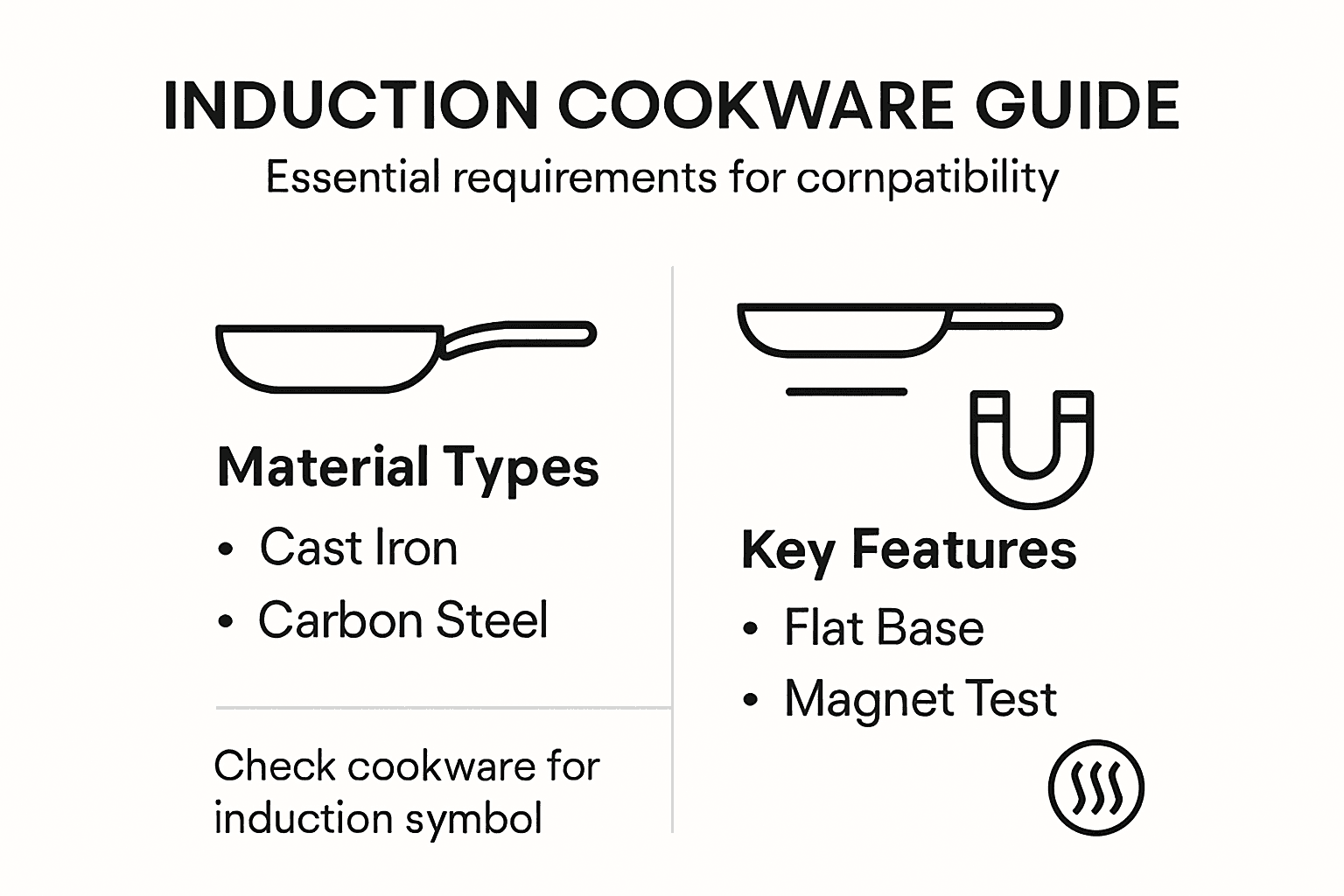
Practical considerations extend beyond material composition. The cookware’s bottom must be flat and smooth to maximise electromagnetic contact and ensure even heat transfer. Uneven or warped surfaces can create inefficient heating and potential hot spots, compromising cooking quality. Some manufacturers now produce specialised induction-compatible cookware with precisely engineered bases designed to optimise heat transmission and cooking efficiency.
Pro tip: Perform a simple magnet test by checking if a standard kitchen magnet sticks firmly to the bottom of your cookware to determine induction compatibility.
Here’s how popular cookware materials perform on induction cooktops:
| Material | Induction Compatibility | Heat Distribution | Typical Durability |
|---|---|---|---|
| Cast iron | Excellent | Moderate | Very high, prone to rust |
| Carbon steel | Good | Fair | High, needs seasoning |
| Magnetic stainless steel | Very good | Good | Very high, resists stains |
| Copper (without base) | Not compatible | Excellent | High, requires upkeep |
| Aluminium (without base) | Not compatible | Good | High, may warp |
| Glass | Not compatible | Poor | Moderate, can shatter |
Efficiency, Safety, and Common Misconceptions
Induction cooking technology represents a significant leap forward in culinary engineering, offering unprecedented levels of energy efficiency and safety. Unlike traditional cooking methods, these innovative cooktops transfer approximately 85-90% of energy directly to cookware, compared to merely 40% in gas stoves. This remarkable efficiency translates to faster cooking times, reduced energy consumption, and lower utility bills.
Key advantages of induction cooking include:
- Direct heat transfer to cookware
- Minimal heat loss
- Rapid temperature control
- Reduced kitchen temperature
- Enhanced cooking precision
- Lower environmental impact
Safety remains a paramount concern for many home cooks, and induction technology addresses several critical aspects. The cooktop surface remains relatively cool during cooking, significantly reducing burn risks. Electromagnetic field technology eliminates combustion processes, dramatically improving indoor air quality by minimising pollutants like nitrogen dioxide typically associated with gas cooking. Contrary to popular misconceptions, extensive research confirms that properly manufactured and used induction cooktops pose no significant health risks.
Many consumers harbour unfounded concerns about electromagnetic fields and cooking technology. Scientific studies consistently demonstrate that the electromagnetic fields generated by induction cooktops are well within international safety standards. The technology’s precise heat control, combined with built-in safety features like automatic shut-off and pan detection, makes induction cooking substantially safer than traditional gas or electric alternatives.
Pro tip: Always keep your induction cooktop’s surface clean and free from metal debris to maintain optimal performance and safety.
Comparing Induction with Gas and Electric
Cooking technologies have evolved significantly, with energy efficiency becoming a critical benchmark. Induction cooking represents a remarkable advancement over traditional gas and electric stovetops, offering unprecedented performance and technological sophistication. Unlike its predecessors, induction technology transforms how heat is generated and transferred during cooking.
Key performance differences include:
- Energy transfer efficiency
- Induction: Up to 90%
- Electric: Around 74%
- Gas: Approximately 40%
- Heat control precision
- Safety features
- Environmental impact
- Cooking speed
Traditional gas stoves rely on open flame and direct heat conduction, which results in significant heat loss and potential safety risks. Electric cooktops use resistive heating elements that warm slowly and distribute heat less efficiently. Electromagnetic cooking technology stands apart by generating heat directly within compatible cookware, ensuring minimal energy wastage and remarkable temperature responsiveness.
The comparative advantages of induction cooking extend beyond mere efficiency. While gas stoves offer immediate visual flame control and electric stoves provide familiar cooking experiences, induction technology delivers superior performance. Precise temperature adjustments, rapid heating, cooler surface temperatures, and elimination of indoor air pollution make induction a compelling choice for modern kitchens. The technology’s ability to instantly respond to cooking requirements represents a significant leap in culinary engineering.
The following table summarises how induction, gas, and electric cooktops compare for home kitchens:
| Feature | Induction | Gas | Electric |
|---|---|---|---|
| Energy efficiency | Up to 90% | Around 40% | About 74% |
| Heat-up time | Very fast | Instant flame | Slow |
| Surface temperature | Remains cool | Gets very hot | Hot, longer to cool |
| Air quality impact | No emissions | Possible pollutants | No emissions |
| Safety level | Highest | Lowest | Moderate |
Pro tip: When transitioning to induction cooking, invest in a few magnetic-based cookware items to maximise your new cooktop’s performance capabilities.
Elevate Your Induction Cooking with Precision Carbon Steel Cookware
Induction cooktops offer fast, precise heating but require compatible cookware built to maximise their potential. If you are searching for cookware that delivers exceptional heat retention, natural nonstick performance, and seamless induction compatibility, exploring our range of carbon steel sauté pans could transform your cooking experience. Our cookware is forged from one piece of carbon steel ensuring durability without rivets or welds, together with the perfect flat base that induction technology demands for optimal eddy current generation and heat efficiency.
Discover the benefits of our carbon steel cookware crafted for serious cooks who value heirloom quality and high heat performance. Whether you choose the 27 cm or 30 cm pan, each is engineered to excel on induction cooktops while developing a natural, safe nonstick surface over time. Visit Brass & Steel now to upgrade your kitchen with cookware designed specifically for modern induction cooking. Start your journey to effortless cooking today by selecting the best carbon steel pan tailored to your needs.
Frequently Asked Questions
What is induction cooking technology?
Induction cooking technology uses electromagnetic principles to generate heat directly within compatible cookware, leading to faster cooking times, superior energy efficiency, and enhanced temperature control compared to traditional cooking methods.
What types of cookware are compatible with induction cooktops?
Compatible cookware includes ferromagnetic materials such as cast iron, carbon steel, and magnetic stainless steel. Non-magnetic materials like copper, aluminium, and glass will not work unless they have a magnetic base.
How do induction cooktops generate heat?
Induction cooktops generate heat through a copper coil beneath the surface that produces an alternating magnetic field. This field induces eddy currents in the ferromagnetic cookware, generating heat internally through electrical resistance while keeping the cooktop itself relatively cool.
How does induction cooking compare to gas and electric cooking?
Induction cooking is significantly more energy-efficient, with up to 90% energy transfer directly to cookware, compared to around 40% for gas and 74% for electric stoves. Additionally, induction cooktops offer faster heat-up times, better temperature control, and improved safety features.
Recommended
- Induction Cooktop Function – Science and Culinary Impact – Brass & Steel
- How to Use Carbon Steel Pans on Induction Cooktops (Compatibility & Ti – Brass & Steel
- Master Using Carbon Steel on Induction for Perfect Cooking – Brass & Steel
- How to Use Induction Cookware for Effortless Cooking – Brass & Steel