What Is a Sauté Pan? Complete Breakdown for Cooks
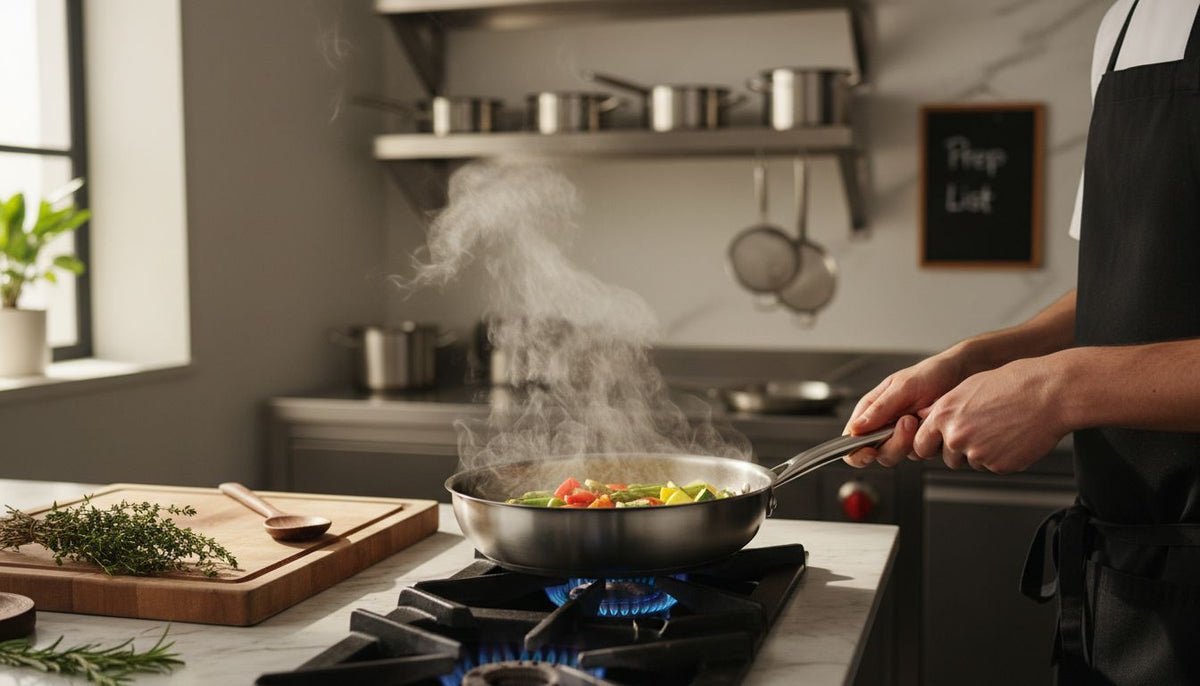
Over 80 percent of british households own a sauté pan, yet many home cooks remain unaware of its unique benefits and proper uses. This simple piece of cookware offers far more than its sleek design suggests, playing a crucial role in developing flavour and mastering professional cooking techniques. Discover what sets a sauté pan apart and how understanding its core functions can transform everyday meals into true culinary feats.
Table of Contents
- Defining A Sauté Pan And Its Core Uses
- Key Features Of Carbon Steel Sauté Pans
- Variations: Sizes, Shapes, And Materials
- Sauté Pans Vs Frying Pans: Critical Differences
- Proper Care, Seasoning, And Maintenance Tips
- Common Mistakes And How To Avoid Them
Key Takeaways
| Point | Details |
|---|---|
| Versatility of Sauté Pans | Sauté pans feature straight sides and a wide base, allowing for a variety of cooking techniques like sautéing, braising, and deglazing. |
| Carbon Steel Advantages | Carbon steel pans offer excellent heat distribution and durability, developing a natural non-stick surface with proper seasoning. |
| Size and Material Variation | Sauté pans come in various materials such as stainless steel, cast iron, and copper, each suited to different cooking needs. |
| Common Cooking Mistakes | Avoid overcrowding, insufficient preheating, and poor ingredient management to enhance sautéing results and achieve desired textures. |
Defining a Sauté Pan and Its Core Uses
A sauté pan represents a distinctive and versatile piece of cookware designed to handle multiple culinary techniques with remarkable precision. Unlike standard frying pans, these cooking vessels feature straight sides and a wide, flat base, which provides exceptional surface area for exploring different cooking methods.
The pan’s unique design enables sophisticated cooking techniques that go far beyond simple frying. Kitchenaid research highlights that sauté pans excel at preparing tender meats, delicate fish, and perfectly cooked vegetables. Their construction allows chefs to perform complex tasks such as:
- Creating rich pan sauces
- Reducing cooking liquids
- Executing shallow frying techniques
- Braising ingredients
- Deglazing cooking surfaces
Most sauté pans are typically accompanied by a well-fitted lid, which further expands their versatility. This design element transforms the pan from a simple cooking surface into a multi-functional kitchen tool capable of handling everything from quick sautéing to slow, controlled braising. Professional chefs and home cooks appreciate these pans for their ability to manage heat distribution and provide consistent cooking performance across various culinary applications.
The straight sides of a sauté pan are particularly significant, as they differ markedly from traditional slope-sided frying pans. These vertical walls help contain ingredients, prevent spillage, and provide more cooking surface area, making them an essential tool for anyone serious about developing complex flavour profiles and executing precise cooking techniques.
Key Features of Carbon Steel Sauté Pans
Carbon steel sauté pans represent the pinnacle of culinary engineering, offering professional chefs and home cooks a robust cooking surface with remarkable performance characteristics. Carbon steel pan uses demonstrate exceptional versatility, particularly in their ability to deliver precise heat management and unparalleled durability.
Croghan research reveals that high-quality carbon steel pans are crafted from 99% pure carbon steel, providing remarkable benefits for cooking enthusiasts. These pans offer several distinctive features:
- Rapid and uniform heat distribution
- Superior heat retention capabilities
- Naturally developing non-stick surface through seasoning
- Incredible durability and long-lasting performance
- Versatility across multiple cooking techniques
The construction of carbon steel sauté pans typically includes high, gently sloped sides that serve multiple functional purposes. These carefully designed walls help contain cooking ingredients, minimise splatter, and facilitate easy stirring and ingredient manipulation. Professional cookware selection guides consistently highlight carbon steel’s unique ability to develop a natural patina over time, which enhances both cooking performance and flavour development.
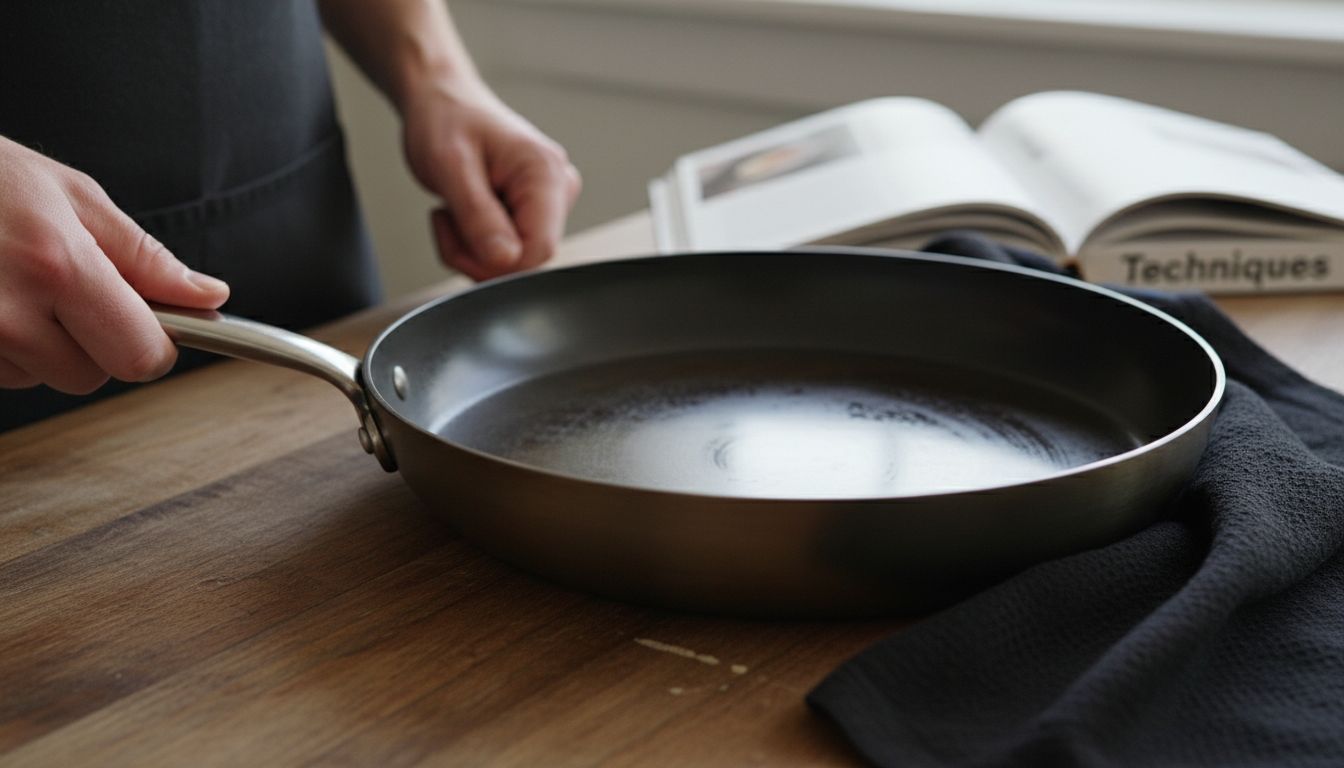
Unlike other cookware materials, carbon steel offers an extraordinary combination of lightweight construction and exceptional heat conductivity. The material’s thermal properties allow for quick temperature adjustments, making it ideal for techniques requiring precise temperature control such as searing, sautéing, and creating delicate pan sauces. Chefs appreciate these pans for their ability to transition seamlessly between stovetop and oven, providing unparalleled cooking flexibility across various culinary applications.
Variations: Sizes, Shapes, and Materials
Sauté pans demonstrate remarkable diversity across materials, sizes, and design configurations, offering professional and home cooks an extensive range of cooking options. Comprehensive cookware guides emphasise the importance of selecting the right pan for specific culinary techniques and preferences.
Food Network research reveals that sauté pans are available in multiple materials, each presenting unique cooking characteristics:
- Stainless steel: Durable and excellent heat distribution
- Enamelled cast-iron: Superior heat retention
- Copper: Rapid temperature responsiveness
- Aluminium: Lightweight and affordable
- Non-stick finishes: Easy food release
Typical sauté pans range from 3 to 6 quarts in volume, featuring distinctive design elements such as straight vertical edges and expansive bases optimised for searing and browning. GreenPan insights highlight that most sauté pans incorporate a lid, enhancing their versatility for creating complex one-pan meals and sauces.
The shape of a sauté pan plays a critical role in its performance. The combination of high, straight sides and a wide base allows for maximum cooking surface area, improved ingredient containment, and efficient liquid reduction. Professional chefs particularly appreciate pans that facilitate smooth transitions between stovetop and oven, enabling complex cooking techniques that demand precise temperature control and seamless cooking processes.
Sauté Pans vs Frying Pans: Critical Differences
Cookware design plays a pivotal role in culinary performance, with sauté pans and frying pans representing two distinctly engineered cooking tools. Understanding the differences between these pans is crucial for selecting the right equipment for specific cooking techniques.
KitchenAid research highlights the fundamental structural differences between these pans. Sauté pans feature straight, vertical sides that are specifically designed to:
- Contain cooking liquids effectively
- Prevent ingredient splatter
- Support sauce reduction techniques
- Provide larger cooking surfaces
- Enable more controlled cooking methods
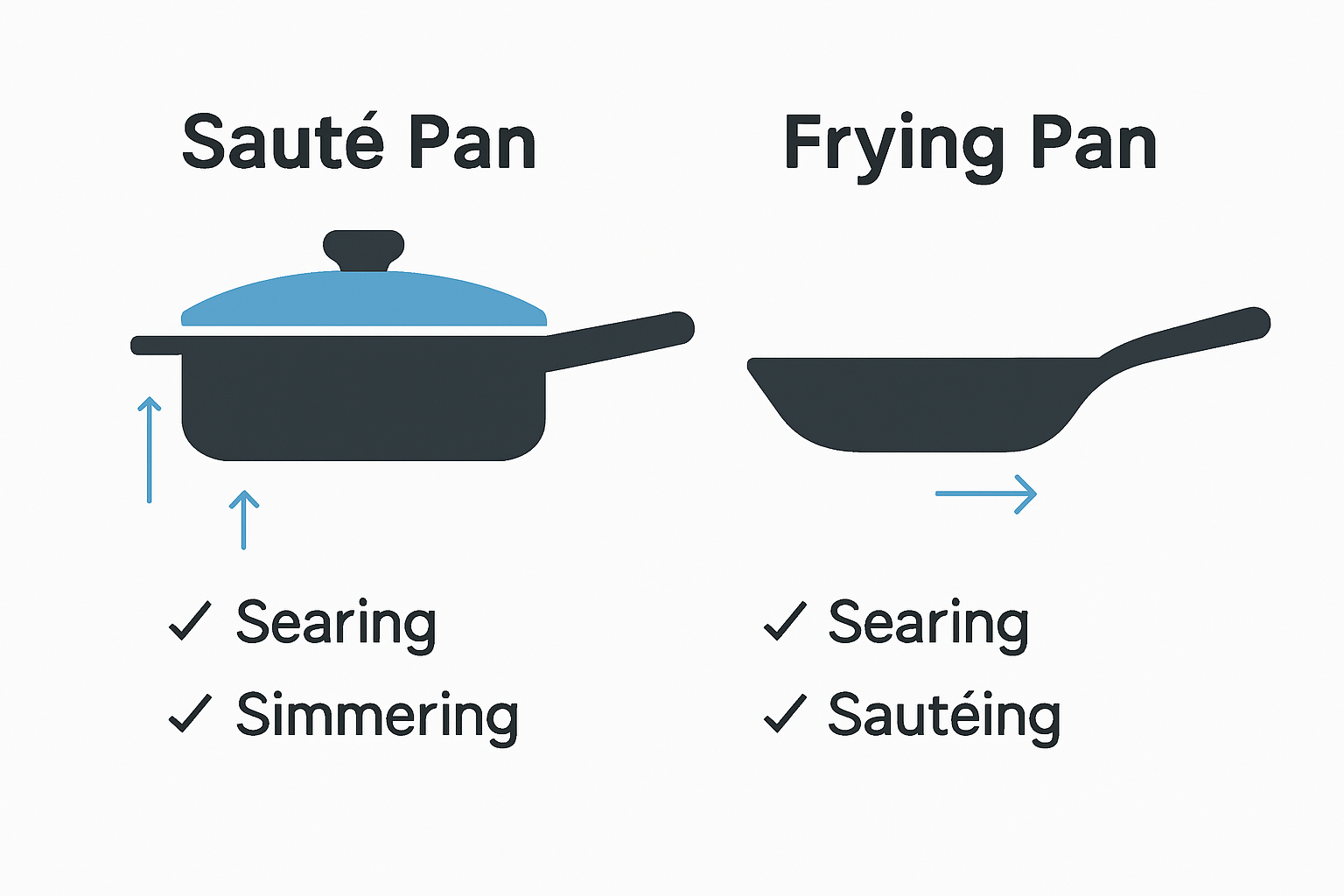
In contrast, Wikipedia’s culinary resources explain that frying pans typically have low, flared sides with a long handle, optimised for techniques requiring quick ingredient manipulation. These design variations fundamentally impact cooking performance, with frying pans excelling at high-heat searing and rapid movement, while sauté pans support more nuanced, controlled cooking processes.
The structural differences extend beyond mere aesthetics. Sauté pans often include lids, making them more versatile for techniques involving partial liquid cooking, braising, and creating complex one-pan meals. Frying pans, with their open design and angled sides, are primarily engineered for direct, high-temperature cooking methods like quick sautéing, frying, and creating crisp exterior textures on ingredients.
Proper Care, Seasoning, and Maintenance Tips
Sauté pan maintenance requires a strategic approach to preserve the pan’s performance and extend its culinary lifespan. Carbon steel care routines are essential for maintaining the pan’s integrity and developing a natural non-stick surface.
Croghan research emphasises the critical importance of proper initial care, recommending hand washing and seasoning before first use. The key maintenance steps include:
- Hand wash with warm water
- Dry thoroughly after each use
- Apply a thin layer of high-smoke-point oil
- Avoid using soap or harsh detergents
- Store in a dry environment
- Re-season periodically to maintain non-stick properties
The seasoning process is fundamental to carbon steel pan performance. A well-seasoned pan develops a natural protective layer that prevents rust, enhances non-stick properties, and improves flavour transfer. Expert seasoning techniques recommend using high-smoke-point oils like grapeseed or avocado oil, applying thin, even coats, and gradually building up the patina through repeated use.
Professional chefs understand that maintaining a carbon steel sauté pan is an ongoing process. Avoiding sudden temperature changes, cleaning immediately after use, and storing the pan in a moisture-free environment are crucial steps in preserving its performance. Regular maintenance not only protects the pan’s surface but also enhances its cooking capabilities, ensuring a reliable and high-performing kitchen tool for years to come.
Common Mistakes and How to Avoid Them
Sauté pan technique demands precision and understanding of common pitfalls that can compromise cooking quality. Expert cooking guides emphasise the importance of avoiding fundamental errors that can diminish culinary performance.
School of Public Health research highlights critical mistakes home cooks frequently make when using sauté pans:
- Overcrowding the cooking surface
- Using oil with low smoke points
- Not preheating the pan correctly
- Cooking ingredients with excessive moisture
- Maintaining inconsistent cooking temperatures
- Neglecting pan movement during cooking
Wikipedia’s culinary resources underscore the significance of ingredient movement, noting that rapid pan techniques prevent burning and ensure even cooking. Overcrowding can transform sautéing into steaming, significantly reducing the desired crisp texture and caramelisation.
Professional chefs recognise that successful sautéing requires understanding heat management, ingredient preparation, and pan dynamics. Ensuring ingredients are dry, using high smoke-point oils, and maintaining consistent pan temperature are fundamental strategies for achieving restaurant-quality results. Mastering these techniques transforms a simple cooking tool into a precision instrument for culinary excellence.
Elevate Your Cooking with the Perfect Carbon Steel Sauté Pan
Mastering sautéing requires cookware designed to deliver precise heat control, durability and versatile performance. If you are seeking a pan that allows you to create tender meats, delicate fish and rich pan sauces while avoiding common pitfalls like uneven heating or ingredient spillage then a premium carbon steel sauté pan is the solution. Crafted from a single sheet of carbon steel, these pans develop a natural nonstick surface through seasoning and provide excellent heat retention without toxic coatings.
Discover the ultimate balance of form and function in our Carbon Steel Collection | Brass&Steel that meets the needs discussed in “What Is a Sauté Pan? Complete Breakdown for Cooks.” Experience heirloom quality craftsmanship forged in Jarocin with Italian design roots that ensures your pan will be your trusted kitchen companion for years.
Take control of your cooking today by exploring our range of carefully engineered and induction compatible carbon steel pans perfect for everyday use and professional kitchens alike. Visit Brass & Steel now to invest in cookware that will transform your culinary skills and let you master complex sautéing techniques with confidence.
Frequently Asked Questions
What is a sauté pan and how is it different from a frying pan?
A sauté pan features straight, vertical sides and a wide flat base, which is designed for sautéing, braising, and creating sauces. In contrast, frying pans have sloped sides and are better suited for quick, high-heat cooking, such as frying and searing.
What dishes can I prepare using a sauté pan?
Sauté pans are versatile and can be used for preparing a variety of dishes, including tender meats, delicate fish, vegetables, rich pan sauces, and braised ingredients. They are excellent for tasks that require controlled cooking processes and heat distribution.
How do I properly care for and maintain my sauté pan?
To maintain your sauté pan, especially if it’s carbon steel, hand wash it with warm water, dry thoroughly, and apply a thin layer of high-smoke-point oil after each use. Avoid soap or harsh detergents, and periodically re-season the pan to maintain its non-stick properties.
What are the key features to look for in a sauté pan?
When selecting a sauté pan, consider features such as material (stainless steel, carbon steel, or non-stick), size (typically ranging from 3 to 6 quarts), and design elements that include a lid and high, straight sides for better heat management and ingredient containment.