Complete Guide to Sauté Pan Differences
Over 80 percent of british home cooks admit they often overlook the true versatility of a sauté pan. Many believe it’s just another frying pan, yet its unique design unlocks culinary techniques that make everyday meals easier and tastier. Knowing how a sauté pan actually works helps clear up common myths and can transform the way you cook, allowing you to make the most of this essential kitchen tool.
Table of Contents
- Sauté Pans Defined: Core Functions And Myths
- Comparing Sauté Pan Materials And Construction
- Shape, Handle, And Lid Variations Explained
- Performance Factors: Heat, Weight, And Nonstick
- Choosing The Right Sauté Pan Size And Design
- Carbon Steel Vs Alternatives: Pros And Cons
Key Takeaways
| Point | Details |
|---|---|
| Sauté pans are essential tools | Designed for high-temperature cooking, they enable techniques like browning, reducing sauces, and transitioning from stovetop to oven. |
| Material choice matters | Carbon steel offers excellent heat conductivity and develops a natural nonstick surface over time, enhancing performance. |
| Design impacts functionality | The shape, weight, and handle of a sauté pan significantly affect cooking efficiency and ease of use. |
| Proper maintenance is key | Regular seasoning of carbon steel pans promotes longevity and optimal cooking performance, making them a worthwhile investment. |
Sauté Pans Defined: Core Functions and Myths
A sauté pan is a versatile piece of cookware designed for quick, high-temperature cooking techniques that involve moving food rapidly across a hot surface. Unlike standard frying pans, these specialised cooking vessels have distinctive characteristics that make them indispensable in professional and home kitchens alike. Understanding their core functions helps dispel common misconceptions about their use and performance.
At its essence, a sauté pan is characterised by straight, relatively high sides and a wide, flat bottom that maximises cooking surface area. These design elements enable cooks to perform several crucial cooking methods beyond simple sautéing. Understanding the Difference Between Sauté and Fry Pan reveals that while frying pans have sloped sides for easier food tossing, sauté pans provide superior control and prevent ingredients from easily escaping during cooking.
The fundamental myths surrounding sauté pans often revolve around their perceived complexity and limitations. Many home cooks believe these pans are exclusively for professional chefs or require extraordinary skills. However, the reality is quite different. Sauté pans are remarkably adaptable cooking tools suitable for various techniques such as:
- Browning meats
- Reducing sauces
- Creating one-pan meals
- Quick vegetable cooking
- Transitioning from stovetop to oven
Choosing the right material for your sauté pan significantly impacts its performance. Carbon steel, as exemplified by high-quality manufacturers like Brass & Steel, offers exceptional heat conductivity and natural nonstick properties when properly seasoned. 7 Types of Sauté Pans Every Cook Should Know provides deeper insights into material selections that can transform your cooking experience.
Ultimately, a sauté pan is more than just cookware—it’s a culinary instrument that bridges technique and creativity in the kitchen. By understanding its core functions and dispelling myths, home cooks can unlock a world of cooking possibilities previously thought reserved for professional chefs.
Comparing Sauté Pan Materials and Construction
Choosing the right material for a sauté pan is a critical decision that directly impacts cooking performance, durability, and overall kitchen experience. Material composition plays a pivotal role in heat distribution, heat retention, and the pan’s ability to develop a natural nonstick surface. Professional chefs and home cooks alike understand that the construction of a sauté pan can make or break culinary success.
Carbon steel emerges as a standout material in the sauté pan landscape. Carbon Steel vs Stainless Steel Pans, which one is best? highlights the unique advantages of carbon steel, including its exceptional heat conductivity and natural seasoning properties. Unlike stainless steel or aluminium, carbon steel develops a protective patina over time, which enhances its nonstick capabilities and imparts subtle flavour nuances to dishes.
The construction of a sauté pan involves several critical considerations beyond material selection:
- Wall thickness (impacts heat distribution)
- Handle design and material
- Weight and balance
- Riveted vs seamless construction
- Compatibility with different cooking surfaces
Professional kitchens typically prioritise pans with robust construction that can withstand frequent use. Complete Guide to What Makes a Good Sauté Pan suggests that a well-constructed sauté pan should offer:
- Even heat distribution
- Durability
- Versatility across cooking methods
- Ease of maintenance
Ultimately, the ideal sauté pan combines superior material science with thoughtful engineering.
Whether you’re preparing delicate sauces or searing meats, the right pan can elevate your cooking from good to extraordinary. Understanding the nuanced differences in materials and construction empowers cooks to make informed choices that will serve them well in the kitchen for years to come.
Shape, Handle, and Lid Variations Explained
The design of a sauté pan is far more than aesthetic—it’s a carefully engineered solution to culinary challenges. Pan geometry plays a crucial role in determining cooking performance, with each element serving a specific functional purpose. From the angle of the walls to the configuration of handles, every detail impacts how effectively a cook can prepare their favourite dishes.
According to Circulon, sauté pans feature distinctive straight sides and a wide, flat base, providing a generous cooking volume ideal for recipes involving liquids. These architectural nuances distinguish sauté pans from other cookware, enabling more complex cooking techniques. A Guide to Cooking Pans by Shape and Usage further emphasises the importance of pan geometry in selecting the right cooking tool.
Handle design represents another critical consideration in sauté pan selection. Professional chefs prioritise handles that offer:
- Balanced weight distribution
- Heat-resistant materials
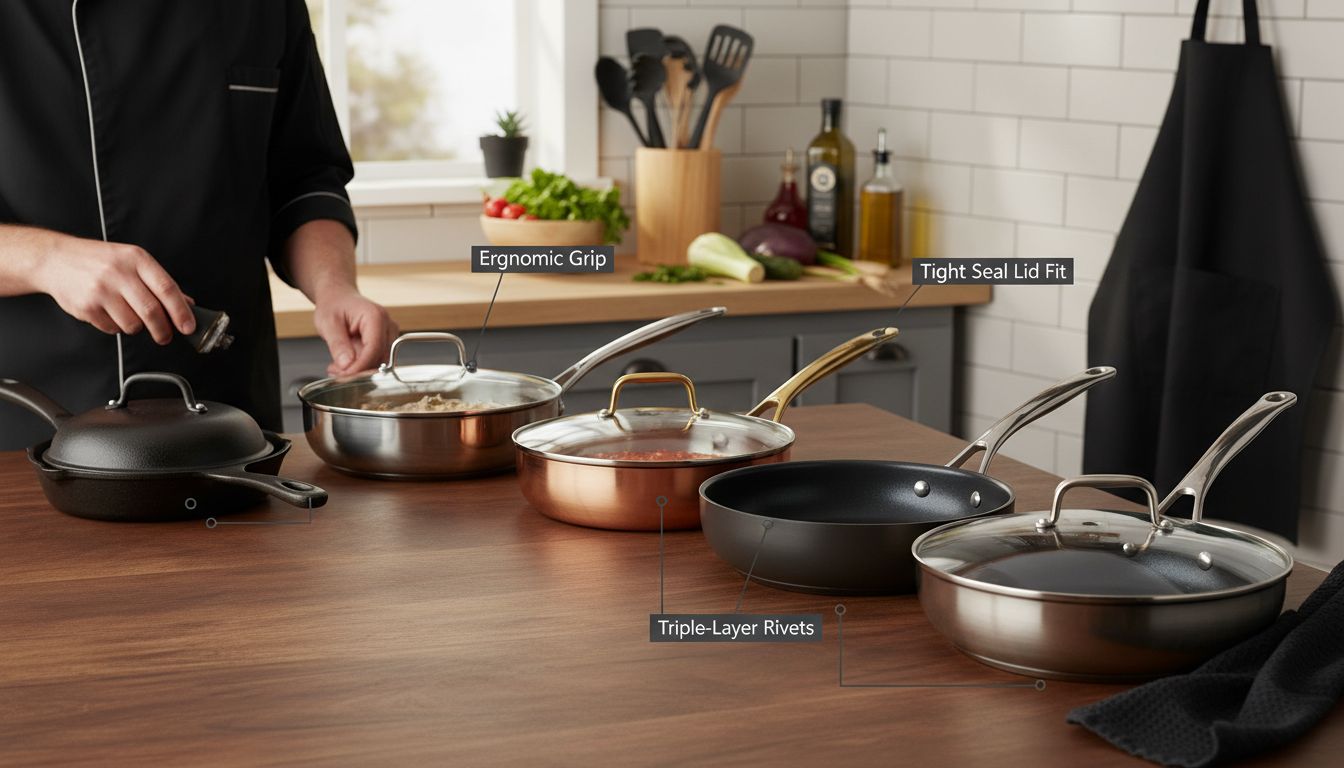
- Ergonomic grip
- Secure attachment
- Potential for oven transition
As Misen notes, larger sauté pans often incorporate a secondary helper handle, providing additional stability when managing heavier contents. This design consideration proves particularly valuable when transferring substantial dishes between stovetop and oven or navigating crowded kitchen spaces.
Lid variations further expand a sauté pan’s versatility. Modern designs range from tight-fitting glass lids that allow visual monitoring to heavy stainless steel covers that retain maximum heat. The right lid can transform a simple pan into a multi-functional cooking instrument, enabling techniques from braising to steam cooking with remarkable ease.
Performance Factors: Heat, Weight, and Nonstick
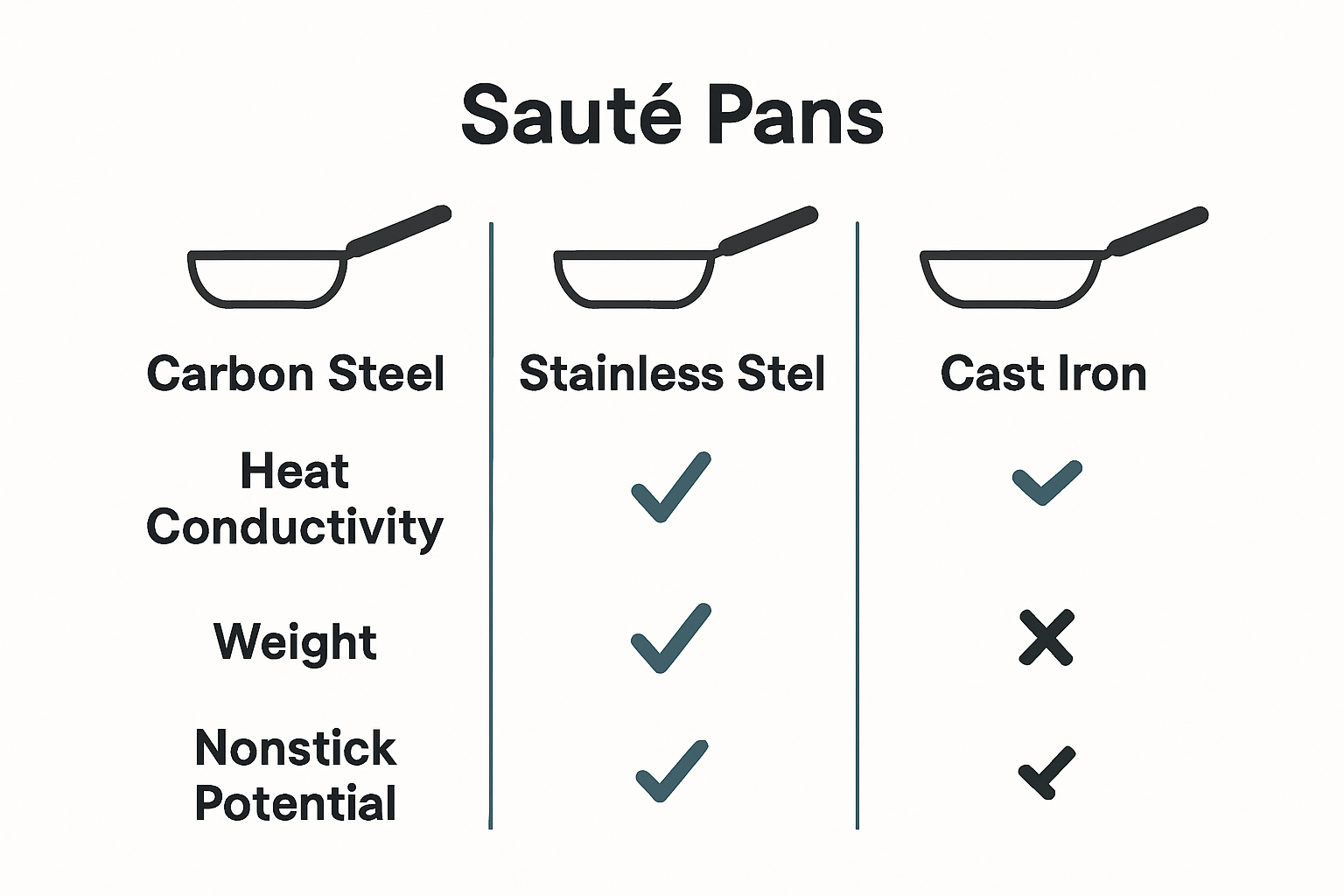
The performance of a sauté pan hinges on three critical factors: heat conductivity, overall weight, and nonstick capabilities. Thermal performance represents the foundation of exceptional cooking, determining how quickly and evenly heat distributes across the cooking surface. Professional chefs understand that these characteristics can transform an ordinary cooking experience into a culinary masterpiece.
According to Wikipedia, different materials offer unique thermal properties. Copper pans provide extraordinary heat conductivity, while carbon steel develops a natural nonstick patina over time, making it particularly beneficial for cooking proteins prone to sticking. What Makes Cookware Nonstick: Complete Guide further explores how surface characteristics impact cooking performance.
Weight plays a crucial role in pan performance, influencing several key cooking dynamics:
- Heat retention
- Stability during cooking
- Ease of manipulation
- User comfort
- Durability of construction
Nonstick properties represent another essential consideration for home cooks and professional chefs. Unlike traditional nonstick coatings that degrade over time, carbon steel develops a natural seasoning that improves with each use. This organic nonstick surface prevents food from adhering while simultaneously enhancing flavour profiles.
Ultimately, the ideal sauté pan balances these performance factors seamlessly. Thermal responsiveness, balanced weight, and a naturally developing nonstick surface combine to create a cooking tool that adapts to a chef’s most demanding culinary techniques. Understanding these nuanced performance characteristics empowers cooks to select equipment that truly elevates their gastronomic capabilities.
Choosing the Right Sauté Pan Size and Design
Selecting the perfect sauté pan demands careful consideration of size, design, and intended cooking applications. Pan dimensions significantly impact cooking performance, with each size range offering unique advantages for different culinary scenarios. Home cooks and professional chefs must evaluate their specific cooking needs to make an informed selection.
30 cm Sauté Pan Reviews – Expert Comparison 2025 highlights the importance of understanding pan dimensions relative to cooking requirements. Typically, sauté pan sizes range from compact 20 cm models ideal for individual meals to expansive 30 cm versions designed for family cooking or professional kitchen environments.
Consider these critical factors when selecting pan size:
- Number of people typically served
- Types of dishes frequently prepared
- Available stovetop and storage space
- Cooking technique requirements
- Weight handling capabilities
Design considerations extend beyond mere dimensions. 7 Different Pan Names Every Cook Should Know emphasises that each pan style serves a unique purpose. Key design elements to evaluate include:
- Wall height
- Bottom surface area
- Handle configuration
- Weight distribution
- Material thickness
Professional cooks recommend choosing a sauté pan that balances size, weight, and design complexity. A well-selected pan becomes an extension of the chef’s culinary skills, enabling precise temperature control and versatile cooking techniques across various recipes and cuisines.
Carbon Steel vs Alternatives: Pros and Cons
Navigating the landscape of cookware materials requires understanding the unique characteristics of each option. Material selection represents a critical decision that impacts cooking performance, durability, and overall culinary experience. Carbon steel emerges as a sophisticated alternative to traditional cookware materials, offering distinctive advantages and challenges.
According to Wikipedia, carbon steel cookware develops a remarkable nonstick patina over time, making it particularly useful for cooking proteins prone to sticking, such as fish and eggs. What Is Carbon Steel? Complete Guide for Cookware provides deeper insights into this unique material’s characteristics.
Pros of carbon steel sauté pans include:
- Natural nonstick surface development
- Exceptional heat conductivity
- Lightweight compared to cast iron
- Durability and longevity
- Versatility across cooking techniques
Alternative materials each present their own set of characteristics:
- Stainless steel: Highly durable, but less nonstick
- Aluminium: Lightweight and quick to heat
- Cast iron: Excellent heat retention, but significantly heavier
- Nonstick coated pans: Easy to clean, but less durable
The primary considerations when comparing carbon steel to alternatives involve maintenance, performance, and long-term value. While carbon steel requires periodic seasoning and careful maintenance, it offers a cooking experience that synthetic nonstick surfaces cannot match. Professional chefs often prefer carbon steel for its ability to develop a natural nonstick surface that improves with each use, creating a unique cooking instrument that grows more effective over time.
Discover the Perfect Carbon Steel Sauté Pan for Your Kitchen
Understanding the intricate differences between sauté pans is key to unlocking your full cooking potential. If you are seeking a versatile, durable, and naturally nonstick pan that can handle everything from searing meats to gently reducing sauces, Brass & Steel offers expertly crafted carbon steel cookware designed precisely for these challenges. Say goodbye to the uncertainties of pan materials and shapes, and embrace cookware that improves with every use.
Explore our Carbon Steel Collection | Brass&Steel for high-quality pans made from a single piece of carbon steel. These pans deliver exceptional heat performance and develop a natural nonstick patina without harmful coatings or rivets. Whether you choose the manageable 27 cm carbon steel pan or the larger 30 cm version ideal for bigger meals, you are investing in heirloom-quality cookware made with precision and passion. Visit Brass & Steel today and transform your cooking experience with a pan as serious about performance as you are.
Frequently Asked Questions
What is the primary difference between a sauté pan and a frying pan?
A sauté pan features straight, relatively high sides and a wide, flat bottom, which provides better control and prevents ingredients from escaping, unlike frying pans that have sloped sides.
What materials are ideal for a sauté pan?
Carbon steel is highly recommended due to its excellent heat conductivity and natural nonstick properties. Stainless steel and cast iron are also common, each having its own advantages and disadvantages in terms of heat retention and weight.
How do I maintain a carbon steel sauté pan?
To maintain a carbon steel sauté pan, it’s essential to regularly season it by applying a thin layer of oil and heating it, as well as cleaning it with minimal soap and avoiding abrasive materials.
What size sauté pan should I choose for my cooking needs?
Choose a sauté pan size based on the number of servings you typically prepare, the types of dishes you cook, and the available stovetop space. Common sizes range from 20 cm for individual meals to 30 cm for larger batches.