Oven safe cookware definition: a practical guide
TL;DR:
- Oven safe cookware includes pans with bodies, handles, lids, and coatings that withstand oven temperatures without damage. Metal, cast iron, and stainless steel pans typically tolerate higher heat, while handles, lids, and coatings often limit overall oven safety. Always check the manufacturer’s rated maximum temperature and avoid using cookware beyond that limit to prevent damage or safety hazards.
Oven safe cookware is defined as any kitchen vessel that can withstand high oven temperatures without warping, melting, cracking, or releasing harmful substances, provided every component meets its heat limit. That means the body, handles, lids, and any coatings all need to cope with the heat, not just the pan itself. Manufacturers set temperature thresholds ranging from 177°C (350°F) up to 260°C (500°F) and beyond, depending on the material. Knowing the oven safe cookware definition before you slide a pan into the oven is the difference between a perfectly finished dish and a ruined piece of kit.
What materials are used in oven safe cookware?
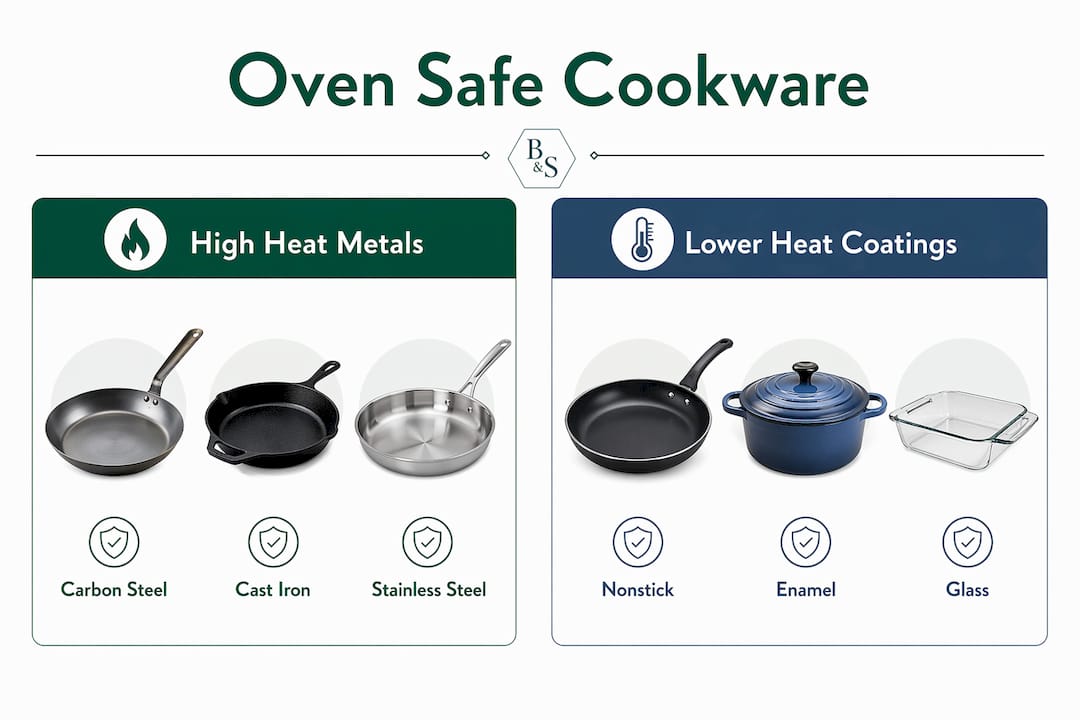
The material your cookware is made from sets its heat ceiling. All-metal options like stainless steel, cast iron, and carbon steel typically handle 260°C–482°C (500°F–900°F) with ease. That range covers virtually every home cooking task, from slow braises to high-heat roasting.
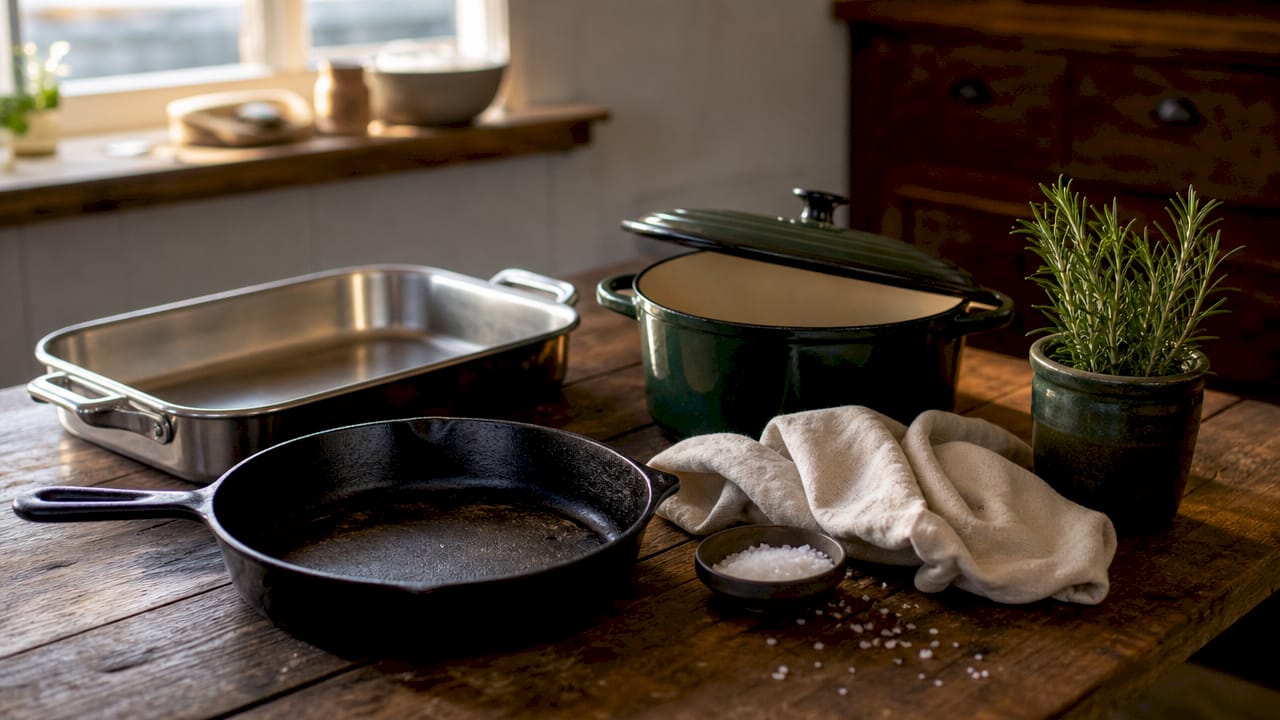
Nonstick-coated cookware sits at the lower end of the scale. Most nonstick pans tolerate 177°C–260°C (350°F–500°F) before their coatings begin to degrade. Pushing them beyond that risks both the coating and, depending on the material, your health.
Glass cookware is a different story. Borosilicate glass handles oven heat better than standard glass because it expands less when heated. It is a solid choice for baking dishes and casseroles, but it still needs careful handling when moving between temperatures.
Enamelled cast iron sits somewhere between bare metal and coated cookware. The enamel layer adds colour and makes cleaning easier, but it also introduces a temperature ceiling that bare cast iron does not have. Most enamelled pieces are rated to around 260°C (500°F).
| Material | Typical oven safe range | Key consideration |
|---|---|---|
| Carbon steel | Up to 482°C (900°F) | No coatings to degrade |
| Stainless steel | Up to 482°C (900°F) | Check handle material |
| Cast iron (bare) | Up to 482°C (900°F) | Heavy but extremely durable |
| Enamelled cast iron | Up to 260°C (500°F) | Enamel limits max heat |
| Nonstick coated | 177°C–260°C (350°F–500°F) | Coatings degrade at high heat |
| Borosilicate glass | Up to 260°C (500°F) | Avoid sudden temperature changes |
Why do handles, lids, and coatings affect oven safety?
The pan body is rarely the weak link. Handles and lid knobs are the parts that most often limit how hot your cookware can safely go, with many breaking down at just 177°C–204°C (350°F–400°F). This is the most common misconception about oven safe cookware: people assume the whole piece is safe because the pan itself is metal.
Here is what to check on every piece before it goes in the oven:
- Metal handles (stainless steel or cast iron) tolerate the same high temperatures as the pan body. They are the safest choice for regular oven use.
- Plastic handles typically fail at 177°C–204°C (350°F–400°F). Some melt, some warp, and some release fumes.
- Silicone handles usually cope up to around 204°C–232°C (400°F–450°F), but always check the manufacturer’s rating.
- Wooden handles are not oven safe. Wood dries out, cracks, and can char at oven temperatures.
- Glass lids have lower heat limits than metal lids and are vulnerable to thermal shock if moved quickly between hot and cold environments.
- Metal rivets attaching handles to pan bodies increase durability compared to plastic clips or adhesive attachments.
Nonstick coatings add another layer of complexity. Most PTFE-based coatings begin to break down above 260°C (500°F), releasing fumes that are unpleasant at best and harmful at worst. Carbon steel and stainless steel carry no such risk because they have no synthetic coating to degrade.
Pro Tip: Before using any pan in the oven, run your hand along every part of it and ask yourself what each component is made from. If you cannot identify the material, check the manufacturer’s website before proceeding.
How do you tell if your cookware is oven safe?
The most reliable method is to check the manufacturer’s stamped temperature rating on the base of the pan or on the original packaging. Oven safe labelling is not standardised, so there is no universal symbol you can rely on. Different brands use different icons, and some use none at all.
Follow these steps to check any piece of cookware:
- Check the base of the pan. Many manufacturers stamp a maximum temperature directly onto the metal.
- Read the original packaging. Temperature limits are almost always listed there.
- Visit the manufacturer’s product page. This is the most up-to-date source and often includes specific guidance on handles and lids.
- If you cannot find a rating, treat the piece as not oven safe. Nonstandard labelling puts the safety burden on you, so the cautious approach is the right one.
- Distinguish between oven safe and broiler safe. These are not the same thing. Broilers emit direct infrared heat that can damage coatings and melt synthetic parts even on cookware that is rated oven safe.
One more practical rule: cook below the maximum rating by at least 14°C–28°C (25°F–50°F). Regularly pushing cookware to its upper limit accelerates wear and shortens its life. Treat the maximum rating as an emergency ceiling, not a target temperature.
Pro Tip: Screenshot or save the product page for every piece of cookware you own. When a recipe calls for a high oven temperature, you can check your notes in seconds rather than hunting for the original box.
Oven safe cookware in practice: uses and best practices
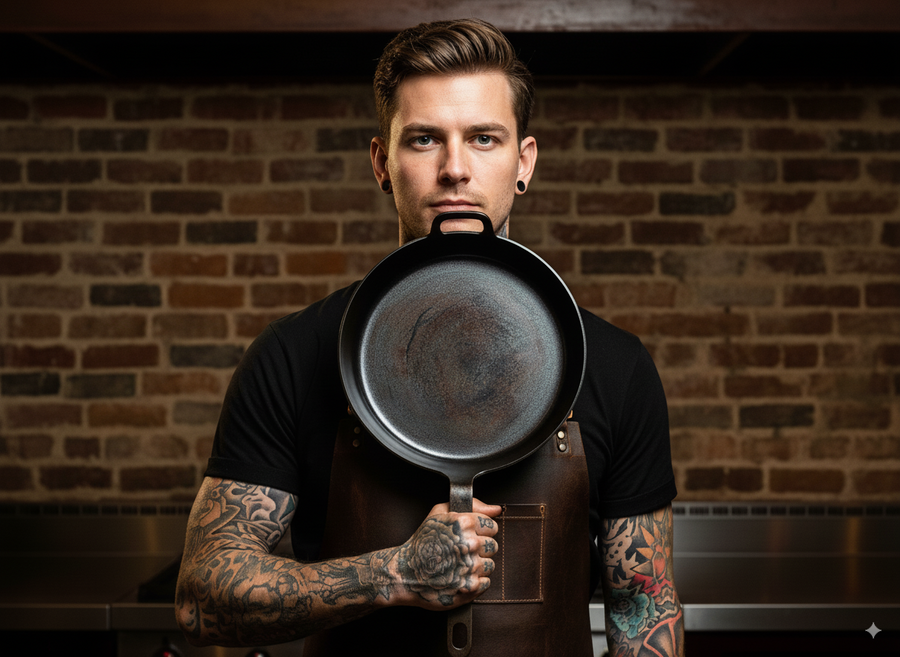
Knowing which cookware is oven safe opens up a whole range of cooking techniques that stovetop-only cooking cannot achieve. The most useful application is the stovetop-to-oven method: sear meat on a high flame to develop a crust, then transfer the pan straight to the oven to finish cooking through. This works brilliantly with all-metal pans like carbon steel and stainless steel.
Here are the most common oven safe cookware uses and what works best for each:
- Roasting vegetables and meat: Bare cast iron and carbon steel are ideal. They retain heat well and create excellent caramelisation.
- Finishing steaks and thick chops: A carbon steel sauté pan goes from hob to oven without any fuss. Brass-steel’s carbon steel sauté pans are forged from a single piece of steel with no rivets or welds, which means there are no weak points when the heat climbs.
- Baking frittatas and shakshuka: Any oven safe frying pan works here. The pan goes on the hob to cook the base, then into the oven to set the top.
- Slow braises and casseroles: Enamelled cast iron and heavy stainless steel pots are the classic choice for long, low-temperature oven cooking.
- Baking bread and flatbreads: A preheated carbon steel or cast iron pan acts like a professional baking stone, delivering a crisp base.
Thermal shock is a genuine risk with glass and enamelled cast iron. Never place a hot glass dish on a cold or wet surface, and never pour cold liquid into a hot glass vessel. The sudden temperature change can crack or shatter the piece. All-metal cookware is far more forgiving in this regard.
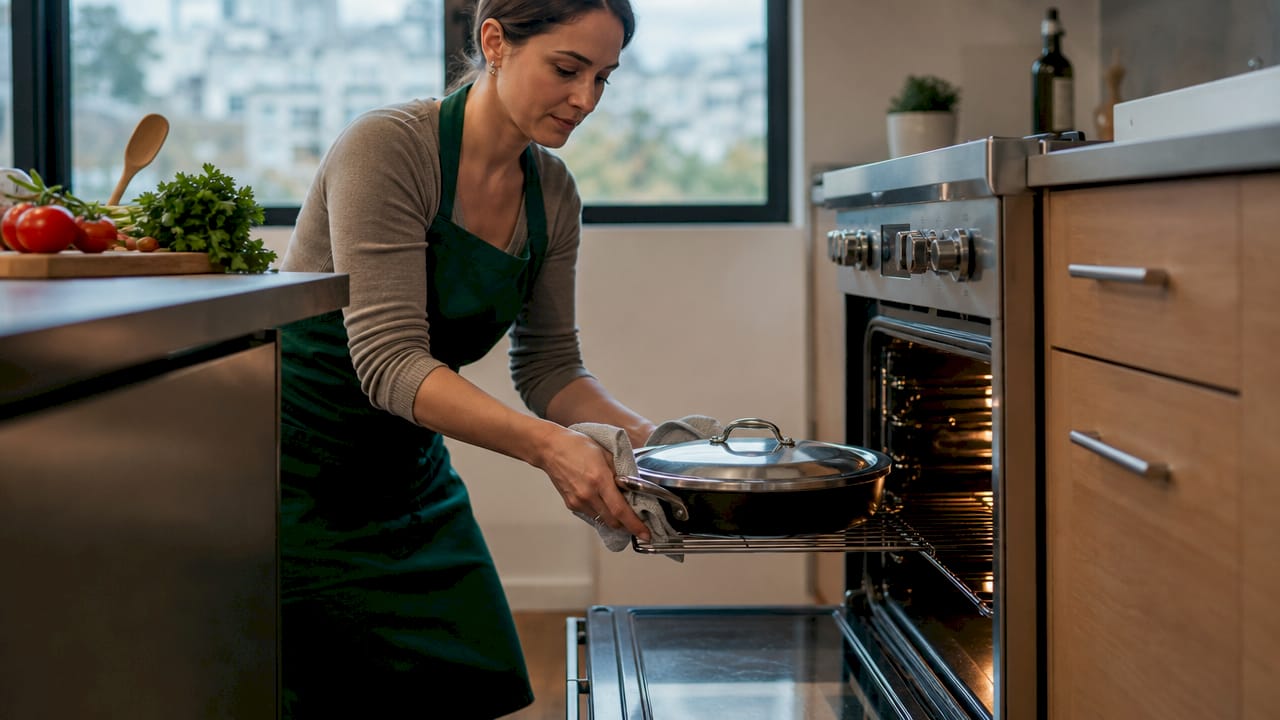
Always use oven gloves when handling any cookware that has been in the oven. Even pans with handles that stay relatively cool on the hob will be dangerously hot after oven use. This is especially true for high-heat cooking with carbon steel and cast iron, where the entire pan retains heat for several minutes after removal.
Key takeaways
Oven safe cookware requires every component, including the body, handles, lids, and coatings, to meet its rated heat limit before it is safe to use in the oven.
| Point | Details |
|---|---|
| Full-piece check | Always verify handles, lids, and coatings, not just the pan body, before oven use. |
| Material heat limits | Carbon steel, stainless steel, and bare cast iron tolerate the highest oven temperatures. |
| No universal symbol | Check the manufacturer’s stamped rating or product page, as oven safe labelling is not standardised. |
| Oven safe vs broiler safe | These are different ratings. Confirm broiler safety separately before using direct overhead heat. |
| Cook below the maximum | Stay 14°C–28°C below the rated limit to extend cookware life and maintain performance. |
Why I always reach for all-metal cookware first
After years of cooking with every type of pan imaginable, I have come to one firm conclusion: all-metal cookware removes almost every oven safety concern from the equation. With carbon steel or stainless steel, you are not worrying about handle ratings, coating degradation, or thermal shock. The pan goes in, does its job, and comes out intact.
The mistake I see most often is people assuming their nonstick pan is oven safe because it has a metal body. The handle is almost always the limiting factor, and it is easy to miss. I once ruined a perfectly good silicone-handled pan by leaving it in a 230°C oven for forty minutes. The handle did not melt completely, but it warped enough to make the pan uncomfortable to hold and unsafe to trust.
Glass cookware is the other area where I urge caution. Borosilicate glass is genuinely useful for baking dishes, but the thermal shock risk is real. I have seen glass baking dishes crack simply from being placed on a slightly damp worktop straight from the oven. The fix is simple: always rest hot glass on a dry cloth or wooden board.
My honest recommendation is to invest in one or two good all-metal pans that you know are fully oven safe to high temperatures. Check the durable cookware criteria before you buy, and look specifically for single-piece construction with no plastic components. That single decision removes most of the guesswork from oven cooking.
— Davide
Carbon steel pans built for the oven, from Brass-steel
If you want cookware that goes from hob to oven without a second thought, carbon steel is the material to choose. Brass-steel makes carbon steel sauté pans forged from a single piece of steel, with no rivets, no welds, and no synthetic coatings. That means no weak points, no coating to degrade, and no temperature ceiling that a plastic handle would impose.
The 27 cm pan (3mm thick, €99.00) handles everyday searing and oven finishing with ease. The 30 cm pan (4mm thick, €119.00) suits larger meals and higher-demand cooking. Both are free from PTFE and PFOA, work on all cooktops including induction, and build a natural nonstick patina over time. Browse the full range at Brass-steel and find the pan that fits your kitchen.
FAQ
What is the oven safe cookware definition?
Oven safe cookware is any kitchen vessel whose body, handles, lids, and coatings can all withstand oven heat without warping, melting, cracking, or releasing harmful substances, up to the temperature specified by the manufacturer.
What oven safe cookware materials handle the highest heat?
Carbon steel, bare cast iron, and stainless steel tolerate the highest temperatures, typically up to 482°C (900°F), making them the most versatile choices for oven use.
How do I test if my cookware is oven safe?
Check the base of the pan for a stamped temperature rating, read the original packaging, or visit the manufacturer’s product page. If no rating is listed, treat the piece as not oven safe.
Is oven safe the same as broiler safe?
No. Broilers emit direct infrared heat that can damage coatings and melt synthetic parts even on cookware rated as oven safe. Always check for a separate broiler-safe rating before using overhead heat.
Why does my oven safe pan have a lower temperature limit than I expected?
The handle or lid is almost always the limiting component. Secondary hardware like handles, knobs, and rivets typically has a lower heat tolerance than the pan body itself, and the lowest-rated component sets the overall limit for the whole piece.