Carbon Steel Grades – What They Mean for Cookware

Finding reliable cookware can be frustrating when the performance you expect never matches what arrives in your kitchen. For any chef or culinary enthusiast across Europe, understanding carbon steel grades is key to choosing pans that withstand daily use and deliver precise results. This guide empowers you with clear knowledge about how carbon content shapes strength, durability, and cooking experience, so you can select the right grade for your needs and avoid costly mistakes.
Table of Contents
- Defining Carbon Steel and Its Grades
- How Grades Impact Pan Performance
- Low, Medium, and High Carbon Explained
- Choosing the Right Grade for Your Needs
- Common Pitfalls When Selecting Cookware
Key Takeaways
| Point | Details |
|---|---|
| Understand Carbon Grades | Carbon steel is categorised into low, medium, and high-carbon grades, each affecting cookware performance and durability. |
| Importance of Medium-Carbon Steel | Medium-carbon steel provides the ideal balance of heat responsiveness and seasoning durability for professional cooking. |
| Maintenance is Key | All carbon steel requires seasoning and proper care, with medium-carbon grades being more forgiving to occasional maintenance lapses. |
| Choose Based on Cooking Style | Your cooking habits should guide your choice of carbon grade, with medium-carbon often being the best option for both professionals and home cooks. |
Defining Carbon Steel and Its Grades
Carbon steel is fundamentally an alloy of iron and carbon. The carbon content is what sets it apart from pure iron and determines how the steel behaves when you cook with it.
The amount of carbon in the steel creates distinct grades, each suited to different purposes. Understanding these grades helps you appreciate why certain pans perform better than others for professional cooking.
How Carbon Content Defines the Grade
Carbon steel is classified into three main categories based on carbon content:
- Low-carbon steel (0.04–0.30% carbon) – soft, ductile, and easy to work with
- Medium-carbon steel (0.30–0.60% carbon) – balances strength with flexibility
- High-carbon steel (0.60–1.70% carbon) – hard, wear-resistant, but more brittle
Cookware manufacturers typically use medium to high-carbon steel because these grades provide the hardness and heat retention that serious cooks demand. Low-carbon, medium-carbon, and high-carbon steel grades differ significantly in strength, hardness, and durability.
Why Higher Carbon Matters for Cooking
Higher carbon content makes steel harder and more wear-resistant. This means your pan maintains its shape under heat and resists warping better over years of use.
The trade-off is brittleness. Very high-carbon steel can crack if exposed to sudden temperature changes, which is why forging and heat treatment are critical in manufacturing.
Medium to high-carbon steel offers professional cooks the durability and performance they need without the fragility of ultra-high-carbon grades.
Brass and Steel’s Approach
Our forged carbon steel pans use medium-carbon compositions optimised for cookware. This gives you excellent heat retention and a naturally non-stick surface that builds with seasoning.
The complete process of how carbon steel is made involves precise heating, forging, and cooling to create the ideal structure for your kitchen.
When you understand these grades, you recognise why seamless, single-piece construction matters. There are no weak points from rivets or welds where different materials meet.
Pro tip: When comparing carbon steel pans, ask about the specific carbon percentage and forging method—these details tell you far more about performance than price alone.
How Grades Impact Pan Performance
The carbon grade you choose directly affects how your pan behaves in the kitchen. Different grades deliver vastly different cooking experiences, from heat response to durability and maintenance requirements.
Understanding these performance differences helps you select a pan that matches your cooking style and expectations.
Heat Conductivity and Temperature Response
Medium to high-carbon steel pans respond quickly to temperature changes. When you turn up the heat, the pan heats uniformly and fast, giving you precise control over your cooking.
Lower-carbon grades heat more slowly and can develop hot spots. This matters when you’re searing meat or executing precise temperature work like tempering chocolate.
Carbon steel cookware heats quickly and provides fast response to temperature adjustments, which is crucial for professional-level cooking.
Weight and Manoeuvrability
Higher-carbon steel allows manufacturers to use less material whilst maintaining strength. This means your pan stays lighter and easier to handle compared to cast iron.
A 30 cm carbon steel sauté pan weighs around 3 kg, giving you control without excessive fatigue during extended cooking sessions.
- Lighter weight = easier flipping and manoeuvring
- Maintains strength = no warping under heat
- Better balance = more precise cooking technique
Seasoning and Non-Stick Surface
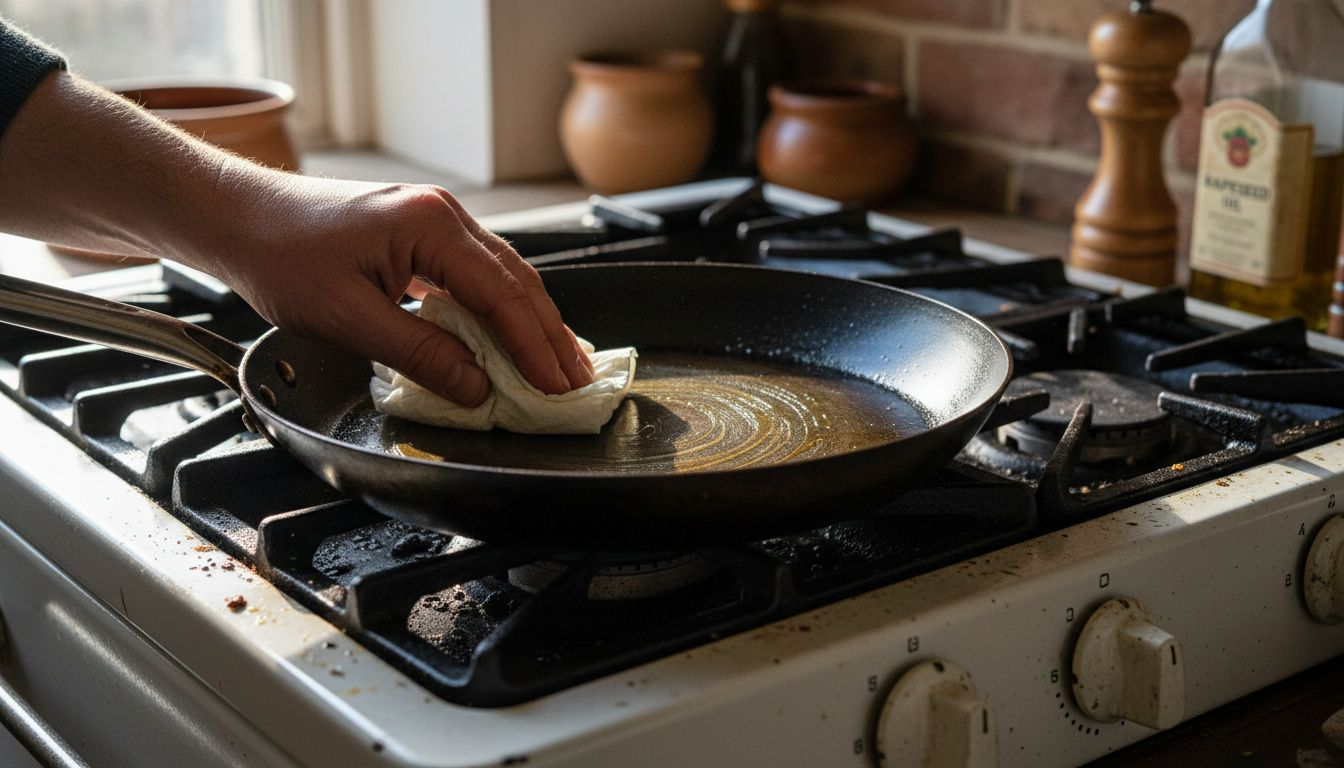
Medium to high-carbon grades develop a naturally non-stick patina when seasoned properly. This surface improves with use as you cook fatty foods and build up layers of seasoning.
Lower-carbon steel struggles to hold seasoning effectively because it lacks the hardness to support a durable coating.
The harder your steel, the more resilient your seasoning becomes over time.
Durability and Rust Resistance
Higher-carbon steel resists warping and maintains its shape through years of cooking. However, all carbon steel requires proper maintenance to prevent rust.
The grade doesn’t change your care routine, but it does affect how forgiving the pan is if you occasionally forget to dry it immediately after washing.
Proper maintenance remains essential regardless of grade. Carbon steel pan performance and care go hand in hand for long-term reliability.
Pro tip: Cook with fatty foods like bacon or chicken skin regularly to naturally strengthen your seasoning and reduce maintenance time.
Low, Medium, and High Carbon Explained
Each carbon grade occupies a specific range, and these ranges create distinct material properties. Knowing where your cookware falls on this spectrum helps you understand what to expect in actual cooking.
Let’s break down each grade and what it means for your kitchen.
Low-Carbon Steel (0.04% to 0.30% Carbon)
Low-carbon steel is soft and ductile, making it easy to bend and weld. This grade dominates construction and automotive manufacturing because it’s forgiving to work with.
For cookware, low-carbon steel has one major drawback: it struggles to hold a seasoning layer. The steel simply isn’t hard enough to support a durable non-stick coating.
You’d find this grade in budget pans that feel flimsy and develop uneven hot spots. Professional chefs avoid it entirely.
Medium-Carbon Steel (0.30% to 0.60% Carbon)
Medium-carbon steel balances strength with flexibility. It’s hard enough to build excellent heat retention but still flexible enough to resist cracking under thermal stress.
This is the sweet spot for cookware. Medium-carbon steel accepts and holds seasoning beautifully, heating evenly across the pan surface.
Medium-carbon steel balances strength and ductility perfectly for kitchen applications, giving you durability without brittleness.
High-Carbon Steel (0.60% to 1.70% Carbon)
High-carbon steel becomes very hard and wear-resistant, making it ideal for cutting tools and industrial blades. However, this hardness comes with a penalty: brittleness.
When exposed to rapid temperature changes, high-carbon steel can develop micro-cracks. This is why cookware manufacturers rarely push beyond 0.70% carbon content.
The best cookware sits in the upper medium range, around 0.50% to 0.65% carbon. This delivers professional performance without the fragility risk.
Here’s a quick reference for how different carbon steel grades affect cookware properties:
| Grade Type | Seasoning Durability | Heat Responsiveness | Rust Risk |
|---|---|---|---|
| Low-carbon | Weak, wears quickly | Slow to heat, uneven spots | Moderate |
| Medium-carbon | Builds strong patina easily | Fast, even heat response | Forgiving |
| High-carbon | Very resilient but brittle | Instant heat, prone to shock | High, needs attention |
Quick Comparison
- Low-carbon: Soft, weak seasoning adhesion, unsuitable for cookware
- Medium-carbon: Ideal balance, excellent non-stick building, responsive heating
- High-carbon: Very hard but brittle, prone to cracking under thermal shock
Professional cookware lives in the medium to upper-medium carbon range where performance and durability converge.
Why This Matters for Professional Chefs
When you’re working at speed in a commercial kitchen, you need a pan that responds instantly to temperature changes. Professional chefs rely on carbon steel because the right carbon grade delivers exactly that responsiveness.
The grade also affects how your pan ages. Medium-carbon steel builds character over years, developing a natural patina that actually improves non-stick performance.
Pro tip: Ask manufacturers for their exact carbon percentage—this single number tells you more about a pan’s potential than marketing language ever could.
Choosing the Right Grade for Your Needs
Selecting the right carbon grade comes down to understanding your cooking style and what matters most to you. Different cooks have different priorities, and the grade you choose should match those priorities.
There’s no universally “best” grade, only the best grade for your situation.
Assess Your Cooking Style
Ask yourself what you cook most. Do you sear meat at high temperatures? Are you making sauces that require precise heat control? Do you cook daily or occasionally?
High-volume professional cooks benefit from medium-carbon steel because it responds instantly to temperature adjustments. Home cooks who value durability and low maintenance also thrive with this grade.
Selecting the right cookware grade involves understanding your cooking requirements such as heat conduction, durability, and maintenance needs.
Consider Your Maintenance Commitment
All carbon steel requires seasoning and proper care, but medium-carbon grades are more forgiving. If you occasionally forget to dry your pan immediately, medium-carbon steel won’t punish you as severely.
High-carbon steel demands stricter maintenance discipline because it’s more prone to rust and thermal damage.
Weight and Control Matter
Heavier pans provide better heat distribution but fatigue your wrist during long cooking sessions. Lighter pans offer manoeuvre-ability but may have inconsistent heat.
Medium-carbon steel allows manufacturers to optimise this balance. You get responsive control without excessive weight.
Practical Selection Guide
- Daily cooking, high-volume kitchen: Medium-carbon steel, 0.50%–0.65% carbon
- Occasional home use, durability priority: Medium-carbon steel, 0.40%–0.55% carbon
- Precision work, professional standards: Upper-medium carbon, 0.55%–0.70% carbon
- Avoid: Low-carbon steel entirely, high-carbon above 0.75%
Medium-carbon steel is the Goldilocks zone for cookware, not too soft and not too brittle.
Size and Thickness Work Together
A 27 cm pan with 3 mm thickness suits everyday cooking and single-person households. A 30 cm pan with 4 mm thickness handles family meals and commercial kitchen demands.
The carbon grade remains consistent across sizes, but thickness affects heat distribution. Thicker pans hold heat longer and develop more even cooking surfaces.
To help you choose a pan, here’s how size, thickness, and grade interact for common kitchen needs:
| Pan Diameter | Thickness | Ideal Grade | Best Use Scenario |
|---|---|---|---|
| 27 cm | 3 mm | Medium-carbon (0.5%) | Singles, daily meals |
| 30 cm | 4 mm | Medium-carbon (0.6%) | Families, professional work |
Trust Your Intuition
If a pan feels light and flimsy, you’ve probably encountered low-carbon steel. If it feels substantial and balanced, you’re holding medium-carbon steel in action.
Genuine cookware feels deliberate in your hands, not like a disposable tool.
Pro tip: Start with a 30 cm medium-carbon pan if you’re new to carbon steel—this single tool handles 80% of professional cooking tasks brilliantly.
Common Pitfalls When Selecting Cookware
Many cooks buy carbon steel without understanding what they’re actually purchasing. This disconnect between expectation and reality leads to frustration, rust, and abandoned pans in kitchen cupboards.
Knowing the common mistakes helps you avoid wasting money and time.
Ignoring the Maintenance Reality
This is the biggest pitfall. Carbon steel requires hand washing, immediate drying, and regular seasoning. If you want a pan you can toss in the dishwasher and forget, carbon steel isn’t for you.
New users often underestimate the seasoning commitment. Carbon steel cookware requires regular seasoning maintenance to maintain non-stick performance and prevent rust issues.
Choosing Based on Price Alone
Budget pans often use low-carbon steel disguised with marketing language. They feel light, heat unevenly, and won’t build a proper seasoning layer.
Investing in medium-carbon steel costs more initially but delivers years of reliable performance. This is where the adage “buy once, cry once” applies perfectly.
Overlooking Construction Method
Seamless, single-piece forged construction matters far more than most buyers realise. Pans with rivets or welds have weak points that can develop leaks or break under thermal stress.
A properly forged pan is built to last decades, not seasons.
Mistakes to Avoid When Selecting
- Comparing carbon steel to non-stick: They serve different purposes entirely
- Expecting instant non-stick performance: Seasoning takes time to develop
- Buying the wrong size: 27 cm suits solo cooks, 30 cm handles families
- Assuming all grades perform identically: Low-carbon steel is unsuitable
- Neglecting thickness specifications: 3 mm suits everyday use, 4 mm for professional work
The pans that fail are rarely defective, they’re simply mismatched to the user’s expectations and willingness to maintain them.
Reactive Behaviour with Acidic Foods
Carbon steel reacts with acidic foods like tomato sauce or wine-based dishes. This can cause discolouration and food sticking if your seasoning isn’t strong enough.
Proper seasoning protects against this, but new users without established patina should avoid prolonged cooking with acidic foods.
Comparing to Wrong Alternatives
Don’t compare carbon steel directly to ceramic or non-stick cookware. Different cookware materials serve distinct purposes and require different maintenance approaches.
Carbon steel belongs in a professional kitchen because professionals understand the care it demands and appreciate what it delivers.
Pro tip: Ask the retailer about their return policy before purchasing, then invest in proper seasoning oils and a dedicated drying cloth to avoid early disappointment.
Discover the Perfect Carbon Steel Pan Tailored to Your Cooking Needs
Choosing the right carbon steel grade can be confusing and frustrating without the right guidance. You want a pan that offers the ideal balance of durability, heat responsiveness, and a natural nonstick surface that evolves with seasoning. At Brass & Steel, we understand that medium to high-carbon steel delivers the professional performance you seek without compromises in reliability or maintenance stress.
Explore our Carbon Steel Collection | Brass&Steel where every pan is expertly forged as a single piece ensuring seamless strength and outstanding heat retention. Whether you are after a lighter 27 cm pan for everyday cooking or a robust 30 cm pan for family meals and professional kitchens, we have crafted each option with your needs in mind. Visit Our Homepage today to find the heirloom-quality pan made just for you and elevate your culinary experience with cookware engineered to last a lifetime.
Frequently Asked Questions
What are the main grades of carbon steel used in cookware?
Carbon steel is classified into three main grades based on carbon content: low-carbon steel (0.04–0.30%), medium-carbon steel (0.30–0.60%), and high-carbon steel (0.60–1.70%). Each grade has distinct properties that affect performance in cookware.
How does the carbon content affect the performance of carbon steel pans?
Higher carbon content generally means the steel is harder and more durable, providing better heat retention and resistance to warping. However, it can also lead to brittleness, especially in high-carbon steel, so medium-carbon steel is commonly preferred for a balance of durability and flexibility.
Why is seasoning important for carbon steel cookware?
Seasoning creates a non-stick surface and protects against rust. Medium to high-carbon steel pans benefit from seasoning, which improves over time with use. Low-carbon steel, however, typically struggles to hold seasoning effectively.
What maintenance is required for carbon steel pans?
Carbon steel pans require hand washing, immediate drying, and regular seasoning to maintain their non-stick performance and prevent rust. Proper care extends the lifespan and enhances cooking performance.