Best cookware material: non-toxic options for 2026
TL;DR:
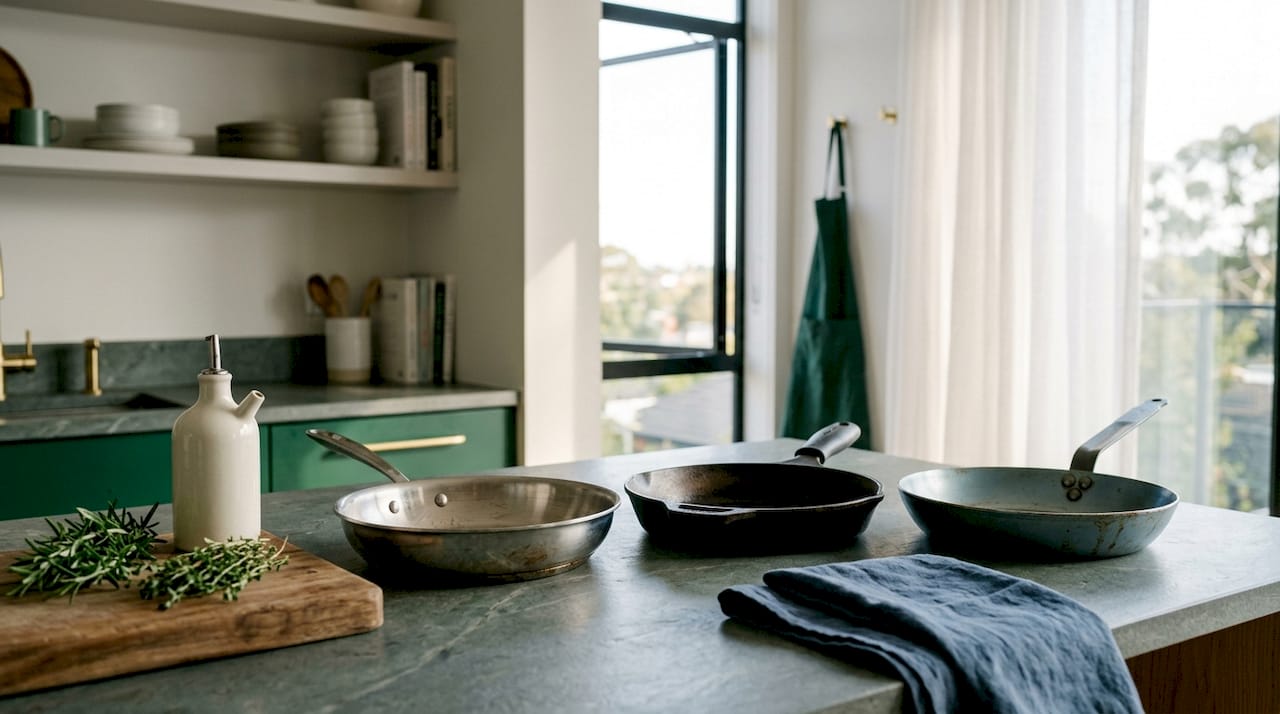
- Uncoated stainless steel, cast iron, and carbon steel are the safest non-toxic cookware options because they contain no synthetic coatings that can degrade and leach into food. These materials develop natural nonstick surfaces through seasoning or design, offering durability and health benefits for everyday cooking. Choosing uncoated metals and verifying specific chemical-free labels ensures maximum safety and long-term usability.
The best non-toxic cookware materials are uncoated stainless steel, cast iron, and carbon steel, because they contain no PFAS chemicals or synthetic coatings that can degrade and leach into food. The term “non-toxic cookware” is not officially regulated, so it broadly refers to cookware that avoids the PFAS family of chemicals, including PTFE and PFOA, which are commonly found in traditional nonstick coatings. Uncoated materials simplify risk management entirely, since there are no synthetic layers to wear away. Ceramic and ceramic-coated pans can also be safer choices, but they come with important caveats worth understanding before you buy.
1. What makes stainless steel a top non-toxic cookware material?
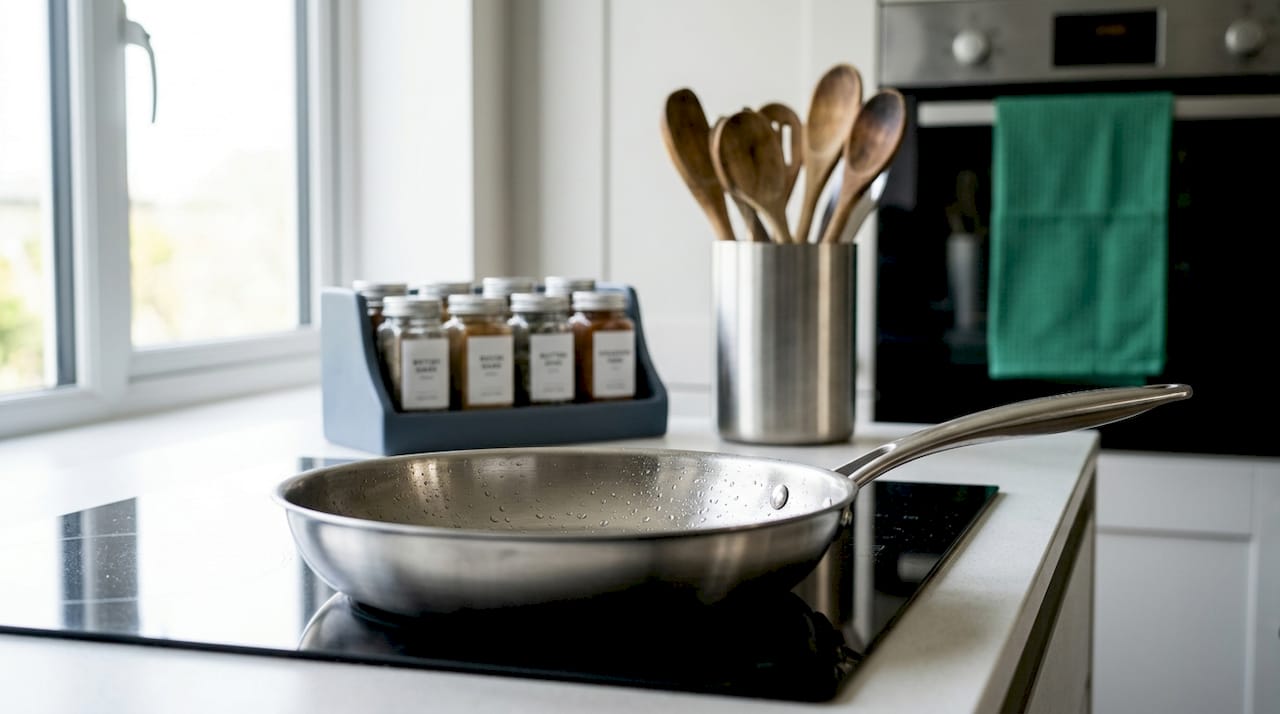
Stainless steel is the most straightforward answer to the question of safe, everyday cookware. It contains no coatings, no PFAS, and no risk of chemical transfer under normal cooking conditions. Uncoated stainless steel is recommended by Serious Eats as one of the clearest starting points for health-conscious cooks.
The material is corrosion-resistant, dishwasher-safe, and works on all hob types including induction. It handles searing, boiling, and braising without complaint. The main trade-off is that food can stick without adequate oil and heat management, but that is a technique issue rather than a safety one.
Key practical points for stainless steel:
- Preheat the pan before adding oil to reduce sticking
- Use tri-ply or multi-clad construction for even heat distribution
- Avoid soaking for long periods to protect the finish
- Deglaze with water or stock to lift stuck food easily
Pro Tip: Heat your stainless steel pan until a drop of water beads and rolls across the surface before adding oil. This is the Leidenfrost effect, and it dramatically reduces sticking.
Stainless steel is also one of the most durable options available. A good tri-ply pan from brands like All-Clad or Made In can last decades with basic care, making it excellent value over time.
2. How cast iron offers natural non-toxic benefits
Cast iron is one of the oldest cooking materials in existence, and its safety profile is straightforward. It contains no synthetic coatings and builds a natural nonstick surface through seasoning, which is a polymerised layer of oil that improves with every use. Seasoning creates a nonstick patina that genuinely improves the longer you cook with the pan.
Cast iron retains heat exceptionally well, making it ideal for searing steaks, baking cornbread, and cooking anything that benefits from sustained, even heat. It moves from hob to oven without issue and can handle very high temperatures without any risk of coating degradation.
The downsides are weight and maintenance. A standard 30 cm cast iron skillet from Lodge weighs around 3.6 kg, which some cooks find tiring. It also requires drying immediately after washing and a light oil coat after each use to prevent rust.
- Dry cast iron fully after every wash
- Apply a thin layer of oil while still warm
- Avoid acidic foods like tomatoes during the seasoning build-up phase
- Re-season in the oven if the surface looks dull or patchy
Pro Tip: Cook bacon or fry eggs in butter during the first few weeks with a new cast iron pan. The fat strengthens the seasoning faster than almost anything else.
3. Why carbon steel is the best non-toxic cookware material for versatile cooks
Carbon steel sits between cast iron and stainless steel in terms of weight and performance. It is uncoated and PFAS-free, and like cast iron, it develops a seasoning layer that provides natural nonstick properties without any synthetic chemistry involved.
The key advantage over cast iron is weight. A 27 cm carbon steel pan from Brass-steel weighs around 2 kg compared to over 3 kg for a comparable cast iron piece. That makes it far easier to handle when sautéing or tossing vegetables. Carbon steel is also more thermally responsive, meaning it heats up and cools down faster, which gives you more control over delicate cooking tasks.
Carbon steel pans can also be treated through nitriding, a heat process that hardens the surface and creates a corrosion-resistant base that facilitates nonstick cooking without any coating at all. Brass-steel’s single-piece forged construction eliminates rivets and welds, making the pan easier to clean and structurally stronger over time.
- Season carbon steel with grapeseed, avocado, or sunflower oil
- Avoid soaking or leaving wet after washing
- Cook fatty foods regularly to build up the patina
- Re-season if the surface becomes sticky or dull
Pro Tip: If your carbon steel pan feels sticky after seasoning, you used too much oil. Scrub it back with a stiff brush and start the seasoning process again with a thinner coat. The pan should look almost dry before it goes into the oven.
4. Ceramic and ceramic-coated cookware: what you actually need to know
This is where a lot of confusion exists in the market. True ceramic cookware is made entirely from mineral-based clay fired at high temperatures. It is naturally non-toxic, contains no PFAS, and is completely free of synthetic coatings. However, it is heavy, fragile, and not widely available in the form of everyday frying pans.
Most pans sold as “ceramic” are actually metal pans with a thin ceramic-like nonstick coating applied to the surface. This is a meaningful distinction. These coatings avoid PFAS and are generally safer than traditional PTFE coatings, but they wear down with use and lose their nonstick properties over time.
| Type | Material | PFAS-free | Durability | Nonstick longevity |
|---|---|---|---|---|
| True ceramic | Fired mineral clay | Yes | Fragile | Permanent if undamaged |
| Ceramic-coated | Metal core with coating | Usually yes | Moderate | Degrades with use |
| PTFE nonstick | Metal core with PTFE | No | Moderate | Degrades with use |
When ceramic coatings chip or lose their slickness, replace the pan rather than continuing to cook with a degraded surface. The coating’s safety profile is only reliable when it is intact.
Look for labels that specifically state PFAS-free, PTFE-free, and PFOA-free. A broad “non-toxic” label without those specifics tells you very little. Many consumers assume a ceramic label guarantees full safety, but marketing often obscures the actual coating composition.
5. How to choose the right non-toxic cookware for your kitchen
Choosing between these materials comes down to how you cook, how much maintenance you are willing to do, and your budget. There is no single best answer, but there is a best answer for your situation.
If you want zero maintenance and maximum versatility, stainless steel is the most practical choice. It handles everything from acidic tomato sauces to high-heat searing without any special care beyond washing. The trade-off is that it requires more oil and technique to prevent sticking.
If you want a natural nonstick surface that gets better over time and you enjoy the ritual of caring for your cookware, cast iron or carbon steel will serve you better. Uncoated metals are recommended by food experts including Alexis Pisciotta at Food Network precisely because there are no synthetic layers to degrade or expose chemicals. Carbon steel is the better choice if weight is a concern. Cast iron wins if you prioritise heat retention above everything else.
A practical buying checklist:
- Confirm the pan is labelled PFAS-free, PTFE-free, and PFOA-free if it has any coating
- Avoid buying secondhand pans manufactured before 2006, when older PFOA-based coatings were still in use
- Choose uncoated materials if you want the simplest long-term safety profile
- Match the material to your hob type, especially if you use induction
- Replace any coated pan once the surface chips, peels, or loses its nonstick quality
- Consider a checklist of excluded substances rather than relying on broad “non-toxic” marketing claims
Pro Tip: Build your kitchen around one or two uncoated pans rather than a full set of ceramic-coated cookware. A carbon steel sauté pan and a stainless steel saucepan cover the vast majority of everyday cooking tasks with no coating risk at all.
Key takeaways
The safest cookware materials are uncoated stainless steel, cast iron, and carbon steel, because they contain no synthetic coatings that can degrade and expose harmful chemicals.
| Point | Details |
|---|---|
| Uncoated metals are safest | Stainless steel, cast iron, and carbon steel carry no PFAS risk and need no replacement due to coating wear. |
| Seasoning builds natural nonstick | Cast iron and carbon steel develop a polymerised patina that improves with every use. |
| Ceramic labels need scrutiny | Most ceramic pans have coated metal cores, not solid ceramic, and should be replaced when the coating degrades. |
| Check specific exclusions | Look for PFAS-free, PTFE-free, and PFOA-free labels rather than relying on broad non-toxic claims. |
| Carbon steel balances all priorities | Lighter than cast iron, coating-free, and induction-compatible, it suits most health-conscious home cooks. |
Why I keep coming back to carbon steel
I have cooked on stainless steel, cast iron, enamelled cast iron, and several ceramic-coated pans over the years. Each has its place. But if someone asks me what I would choose if I could only keep one pan, it is carbon steel every time.
The seasoning process puts some people off, and I understand that. The first few weeks with a new carbon steel pan feel like a learning curve. Food sticks occasionally, the surface looks uneven, and you wonder if you are doing something wrong. You are not. That break-in period is the pan building the patina that will eventually make it one of the most satisfying surfaces to cook on.
What I appreciate most is the honesty of the material. There is no coating to worry about, no label to decode, and no point at which you need to throw it away because the surface has worn through. You can read more about carbon steel vs ceramic pans if you are weighing up those two options specifically.
My advice: do not overthink the health side of this. Pick an uncoated material, learn how it behaves, and cook with it regularly. The safety benefits come automatically. The cooking skills are the part worth investing in.
— Davide
Cook safely with Brass-steel carbon steel pans
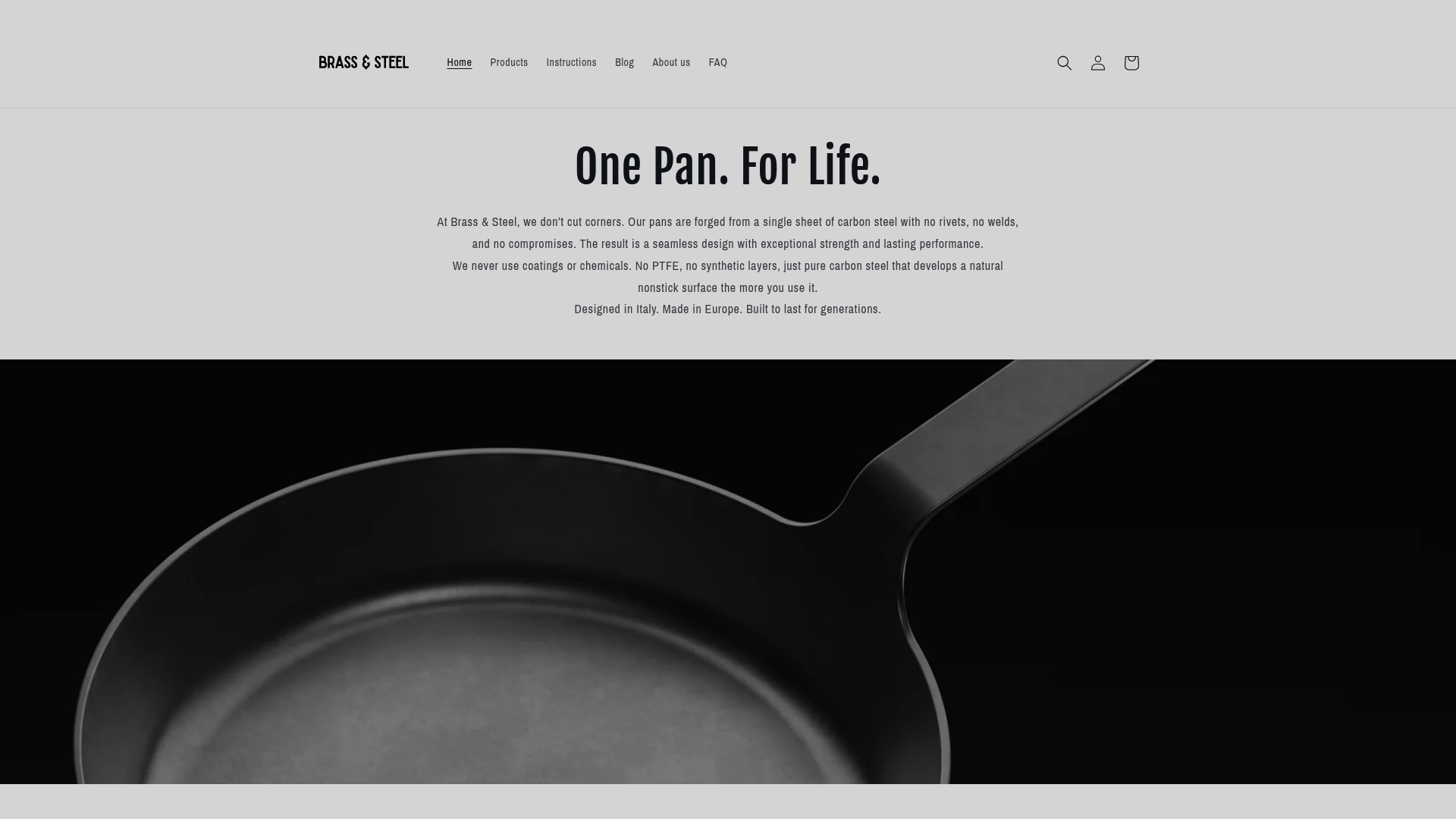
Brass-steel makes carbon steel sauté pans forged from a single piece of steel in Jarocin, Poland. No rivets, no welds, no synthetic coatings. Just raw carbon steel that builds a natural nonstick surface the more you cook with it. The 27 cm pan at €99 suits everyday cooking, while the 30 cm pan at €119 handles larger meals and family cooking with ease. Both are PTFE-free, PFOA-free, and induction-compatible. If you are ready to move away from coated cookware for good, explore the full range of Brass-steel carbon steel pans and find the right fit for your kitchen.
FAQ
What is the safest cookware material for everyday use?
Uncoated stainless steel, cast iron, and carbon steel are the safest options because they contain no PFAS chemicals or synthetic coatings that can degrade over time.
Are ceramic pans actually non-toxic?
Most ceramic pans have a ceramic-like coating on a metal core rather than being solid ceramic. These coatings are generally PFAS-free, but they wear with use and should be replaced once they chip or lose their nonstick quality.
Do carbon steel pans need a special coating to be nonstick?
No. Carbon steel develops a natural nonstick surface through seasoning, which is a polymerised oil layer that builds up with regular use and requires no synthetic coating at all.
Is PTFE cookware safe to use?
PTFE coatings are stable under normal cooking temperatures but should not be heated beyond 260°C (500°F). Health-conscious cooks often prefer uncoated alternatives to avoid any risk of overheating.
How do I know if a pan is truly non-toxic?
Look for specific labels stating PFAS-free, PTFE-free, and PFOA-free rather than relying on a general non-toxic claim. Uncoated pans made from stainless steel, cast iron, or carbon steel carry the clearest safety profile with no coating-related risk.