Stainless Steel vs Ceramic Cookware – Which Suits Serious Cooks?

Most British households invest in cookware without realizing how much their choices affect every meal. With more than 60 percent of British home chefs using either stainless steel or ceramic pans daily, the differences matter more than most realise. Understanding these two popular materials helps you pick pans that match your cooking style, ensure safety, and make smart choices for your kitchen and budget.
Table of Contents
- Defining Stainless Steel and Ceramic Cookware
- Key Cooking Performance Differences Explained
- Durability, Maintenance and Safety Factors
- Health Impacts and Potential Risks Compared
- Cost, Longevity and Real-World Applications
Key Takeaways
| Point | Details |
|---|---|
| Cookware Material Matters | Stainless steel and ceramic cookware serve different culinary needs; stainless steel is ideal for high-heat techniques, while ceramic excels in delicate cooking. |
| Durability and Maintenance | Stainless steel offers exceptional durability and is easier to maintain, whereas ceramic requires more careful handling and is prone to chipping. |
| Health Considerations | Stainless steel may leach trace metals, while ceramic could contain harmful glaze components; prioritise certified cookware for safety. |
| Cost and Longevity | Stainless steel represents a higher initial investment but lasts longer, making it more economical over time compared to ceramic, which needs more frequent replacement. |
Defining Stainless Steel and Ceramic Cookware
Cookware materials dramatically influence cooking performance, and serious home chefs require deep understanding of their options. Stainless steel and ceramic cookware represent two distinctly different approaches to culinary equipment, each with unique characteristics that impact cooking techniques and results.
Stainless steel cookware consists of an alloy primarily composed of chromium and nickel, engineered to provide exceptional durability and heat distribution. Cookware materials vary significantly in their production processes, and stainless steel stands out for its resistance to corrosion and remarkable longevity. Professional kitchens frequently choose stainless steel for its ability to withstand high temperatures and maintain consistent cooking performance.
Ceramic cookware, by contrast, represents a fundamentally different cooking surface. Manufactured from clay materials fired at extremely high temperatures, ceramic pans offer a smooth, non-reactive cooking surface. These pans typically feature a glazed finish that provides natural non-stick properties without relying on synthetic chemical coatings. While beautiful and often available in vibrant colours, ceramic cookware requires more delicate handling compared to robust stainless steel alternatives.
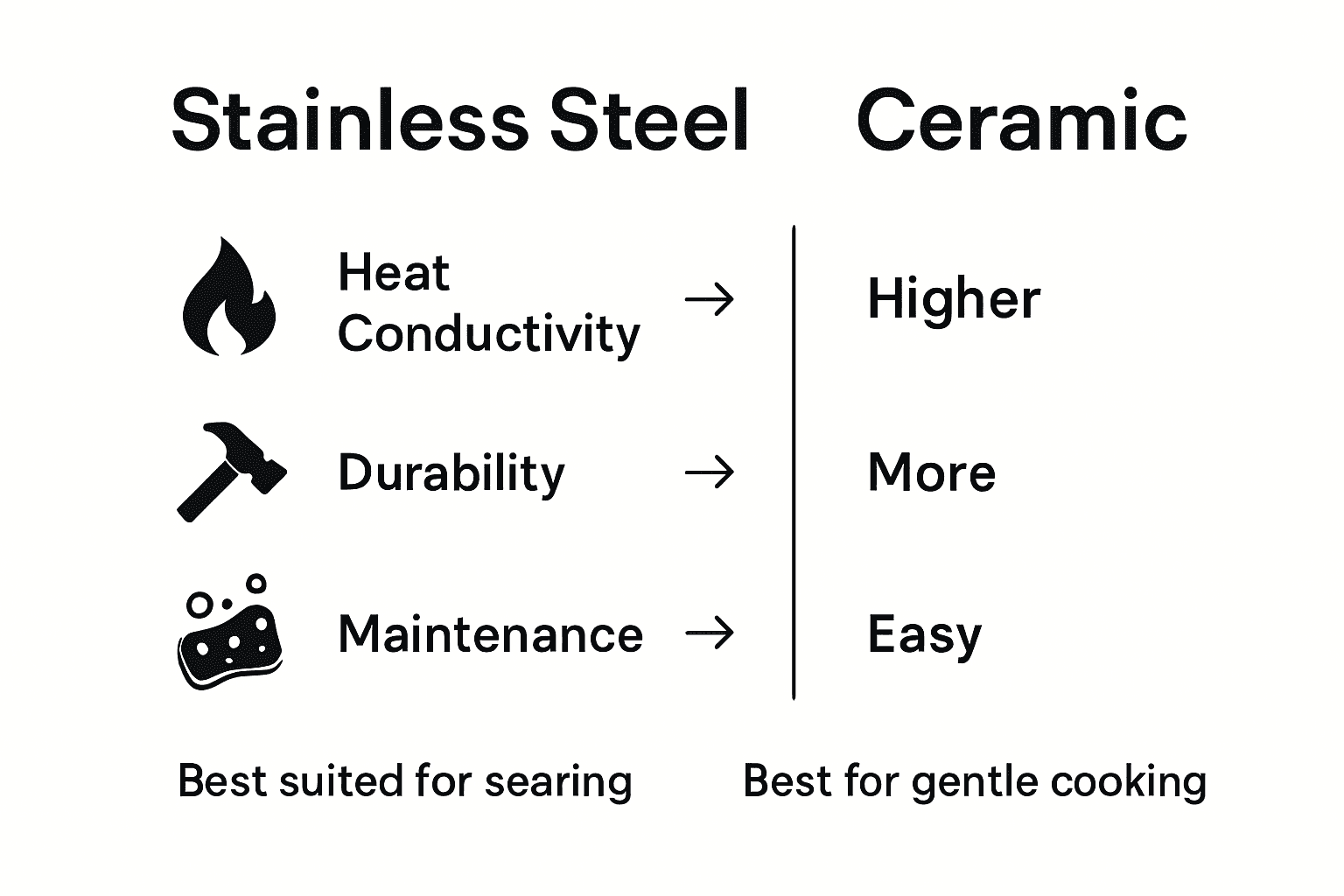
When comparing these materials, serious cooks must consider factors beyond mere aesthetics. Stainless steel conducts heat more evenly, supports higher temperatures, and can transition seamlessly between stovetop and oven. Ceramic cookware offers gentler heat distribution and works exceptionally well for low to medium-temperature cooking techniques.
Here’s a practical comparison of stainless steel and ceramic cookware across critical criteria:
| Criterion | Stainless Steel Cookware | Ceramic Cookware |
|---|---|---|
| Heat Tolerance | Very high; suitable for searing | Moderate; best for gentle heat |
| Surface Reactivity | May react with acidic food | Naturally non-reactive |
| Likelihood of Chipping | Extremely rare | Relatively common with mishandling |
| Dishwasher Compatibility | Generally safe | Usually hand wash recommended |
| Recommended Use Cases | Searing, browning, roasting | Sauces, low-heat simmering |
Pro Tip: Always match your cookware to specific cooking techniques. Stainless steel excels for high-heat searing and professional techniques, while ceramic works brilliantly for delicate dishes requiring precise temperature control.
Key Cooking Performance Differences Explained
Cooking performance distinguishes stainless steel and ceramic cookware, with each material offering unique thermal characteristics that profoundly impact culinary outcomes. Understanding these nuanced differences enables serious home chefs to select the most appropriate cookware for specific cooking techniques.
Comparative performance analyses reveal significant variations between stainless steel and ceramic cookware. Stainless steel demonstrates exceptional heat conductivity, distributing thermal energy rapidly and uniformly across its surface. This property allows for precise temperature control and enables techniques like searing meats with consistent browning. Professional chefs appreciate stainless steel’s ability to withstand extremely high temperatures without warping or degrading, making it ideal for techniques requiring intense, direct heat.
Ceramic cookware, by contrast, offers gentler heat distribution with slower thermal transfer. These pans excel at maintaining steady, moderate temperatures perfect for delicate sauces, slow cooking, and recipes requiring nuanced temperature management. The non-reactive ceramic surface prevents flavour contamination, ensuring pure ingredient expression. However, ceramic’s lower heat tolerance means it struggles with high-temperature cooking methods like professional searing or rapid stir-frying.

The critical performance differences extend beyond thermal properties. Stainless steel cookware provides exceptional durability, resisting scratches and maintaining structural integrity through years of professional use. Ceramic pans, while aesthetically pleasing and naturally non-stick, require more careful handling and are more prone to chipping or cracking under thermal stress.
Pro Tip: Match your cookware to specific cooking techniques. Use stainless steel for high-heat searing and professional techniques, and ceramic for delicate, temperature-sensitive dishes that require gentle, consistent heating.
Durability, Maintenance and Safety Factors
Cookware durability and safety represent critical considerations for serious home chefs evaluating material choices. Stainless steel and ceramic cookware present distinctly different profiles in terms of long-term performance, maintenance requirements, and potential health implications.
Comprehensive kitchen safety analyses reveal nuanced differences between these two materials. Stainless steel cookware demonstrates exceptional durability, resisting scratches, dents, and structural degradation through years of intensive use. Its non-porous surface prevents bacterial accumulation and withstands rigorous cleaning techniques, including dishwasher cycles and abrasive scrubbing. Professional chefs appreciate stainless steel’s remarkable resistance to discolouration and corrosion, ensuring consistent aesthetic and functional performance over extended periods.
Ceramic cookware, while aesthetically appealing, requires more delicate maintenance strategies. These pans feature a glazed surface susceptible to chipping, cracking, and gradual degradation under thermal stress. The non-reactive ceramic material prevents potential metal leaching, offering a seemingly safer cooking surface. However, the fragility of ceramic necessitates gentler handling, hand washing, and careful temperature management to maintain its structural integrity and non-stick properties.
Safety considerations extend beyond physical durability. Stainless steel cookware contains chromium and nickel, which can potentially leach minute quantities of metals during high-temperature cooking. Ceramic pans, marketed as a ‘safer’ alternative, may contain ceramic glazes with trace amounts of lead or cadmium. Serious cooks must critically evaluate manufacturing processes and certifications to understand potential long-term health implications of their chosen cookware.
Pro Tip: Prioritise regular maintenance and careful handling. Inspect your cookware periodically for signs of wear, avoid sudden temperature changes, and choose high-quality, certified cooking surfaces to ensure both performance and safety.
Health Impacts and Potential Risks Compared
Cooking enthusiasts must critically evaluate the health implications of their cookware choices beyond surface-level aesthetics. The potential risks associated with stainless steel and ceramic cookware extend far beyond simple performance characteristics, encompassing complex considerations of material composition, chemical interactions, and long-term exposure.
Comprehensive health assessments of cookware materials reveal intricate nuances in safety profiles. Stainless steel cookware contains trace metals like chromium and nickel, which can potentially leach into food during high-temperature cooking. Individuals with nickel sensitivities face particular risks, as prolonged exposure might trigger allergic reactions or skin irritations. The medical community recommends periodic testing of cookware and careful monitoring of metal ion migration, especially when cooking acidic foods that can accelerate leaching processes.
Ceramic cookware presents its own set of health considerations. While marketed as a ‘natural’ and ‘safer’ alternative, these pans may contain ceramic glazes with trace amounts of lead or cadmium. The manufacturing process and quality of ceramic coatings significantly impact their potential health risks. High-quality, certified ceramic cookware undergoes rigorous testing to ensure minimal chemical migration, but budget options might compromise on safety standards. Professional chefs and health-conscious home cooks must scrutinise manufacturer certifications and independent laboratory testing results.
Interestingly, the health risks are not uniform across all stainless steel or ceramic cookware. Factors such as manufacturing quality, cooking temperatures, food acidity, and maintenance practices dramatically influence potential chemical interactions. Reputable brands invest in advanced manufacturing techniques that minimise metal leaching and reduce potential health risks, making brand reputation and certifications critical considerations for informed consumers.
Pro Tip: Prioritise quality over price when selecting cookware. Choose certified brands with transparent manufacturing processes, avoid extreme temperatures, and replace cookware showing signs of significant wear to minimise potential health risks.
Cost, Longevity and Real-World Applications
Serious cooks understand that cookware represents a significant investment, demanding careful consideration of performance, durability, and long-term value. Stainless steel and ceramic cookware present distinct economic and practical profiles that extend far beyond initial purchase price.
Comprehensive cookware performance analyses reveal nuanced differences in cost-effectiveness and real-world utility. Stainless steel cookware typically represents a higher initial investment, with professional-grade sets ranging from £200 to £800. However, these pans offer exceptional longevity, often lasting decades with proper maintenance. Professional chefs appreciate stainless steel’s ability to withstand intensive daily use, making the higher upfront cost a strategic long-term investment. The material’s durability means fewer replacements, ultimately providing superior economic value compared to more fragile alternatives.
Ceramic cookware presents a more budget-friendly initial option, with entry-level sets available from £50 to £250. These pans offer aesthetic appeal and gentle cooking characteristics but demonstrate shorter operational lifespans. Ceramic surfaces are more prone to chipping, cracking, and performance degradation, potentially requiring replacement every 3-5 years. Home cooks seeking cost-effective solutions must balance the lower purchase price against potentially more frequent replacements and more delicate handling requirements.
Real-world applications further differentiate these materials. Stainless steel cookware excels in professional and home kitchens requiring versatile, robust cooking tools. These pans seamlessly transition between stovetop, oven, and grill, supporting complex cooking techniques. Ceramic cookware, while beautiful and suitable for specific cooking methods, performs best with low to medium-heat techniques and delicate recipes. Professional chefs and serious home cooks prioritise adaptability and consistent performance, making stainless steel a more attractive long-term solution.
The following table compares the long-term investment and health considerations for each material:
| Aspect | Stainless Steel | Ceramic |
|---|---|---|
| Price Range | £200–£800 per set | £50–£250 per set |
| Typical Lifespan | 10+ years with care | 3–5 years with proper handling |
| Health Concerns | Possible nickel leaching | Risk of lead/cadmium in glaze |
| Longevity Value | Higher, less frequent replace | Lower, more frequent replacements |
| Replacement Triggers | Surface pitting, severe warping | Chipping, glaze cracks |
Pro Tip: Calculate true cookware cost by considering longevity, not just initial price. Invest in high-quality pieces that offer durability, versatility, and consistent performance across multiple cooking techniques.
Discover the Ideal Cookware for Serious Cooks
Choosing between stainless steel and ceramic cookware can be challenging when looking for durability, health-conscious design, and superior cooking performance. This article highlights the difficulty of finding cookware that withstands high heat, offers natural non-stick properties, and remains safe without chemical coatings. If you seek cookware that delivers consistent heat retention, easy maintenance, and long-term reliability, carbon steel cookware provides a compelling solution.
Explore our Carbon Steel Collection | Brass&Steel to experience pans forged from a single sheet for unmatched strength and seamless cleaning. With a naturally seasoned non-stick surface, these pans are PTFE free and induction compatible, so you can enjoy healthy cooking without compromising performance. Ready to upgrade your kitchen essentials? Visit our New arrivals – Brass & Steel and the main site Brass & Steel for detailed guides on care, seasoning, and mastering every sear.
Make a confident choice today and invest in heirloom-quality cookware designed for serious cooks who value durability, versatility, and health-conscious design.
Frequently Asked Questions
What are the main differences between stainless steel and ceramic cookware?
Stainless steel cookware is known for its durability, high heat tolerance, and excellent heat conductivity, making it ideal for high-heat techniques like searing. Ceramic cookware provides a gentler, non-reactive cooking surface suitable for low to medium-heat cooking and delicate dishes but is more prone to chipping and has lower heat tolerance.
How do stainless steel and ceramic cookware differ in terms of maintenance?
Stainless steel cookware is generally dishwasher safe and resistant to scratches and corrosion, making it easy to maintain. Ceramic cookware usually requires hand washing and careful handling to prevent chipping or cracking, necessitating more delicate maintenance practices.
Are there any health risks associated with using stainless steel or ceramic cookware?
Stainless steel can potentially leach trace amounts of chromium and nickel into food during high-temperature cooking, especially with acidic ingredients. Ceramic cookware may contain glazes with trace amounts of lead or cadmium, so it’s crucial to choose high-quality, certified products that adhere to safety standards.
Which type of cookware is more cost-effective in the long run?
While stainless steel cookware has a higher initial cost, it often lasts over a decade with proper care, making it a more cost-effective investment in the long run. Ceramic cookware is generally cheaper upfront but may need replacement every few years due to its susceptibility to damage.
Recommended
- 7 Essential Insights on Different Cookware Materials – Brass & Steel
- Non-Toxic Cookware Choices: Carbon Steel vs Ceramic Pans – Brass & Steel
- Carbon Steel vs Stainless Steel Cookware – What Every Chef Needs to Kn – Brass & Steel
- Understanding Copper vs Ceramic Cookware: Key Insights – Brass & Steel
- Cozee Bay - Bamboo Kitchenware: Complete Guide to Its Advantages