Carbon Steel Griddle vs Cast Iron – Choosing For Performance
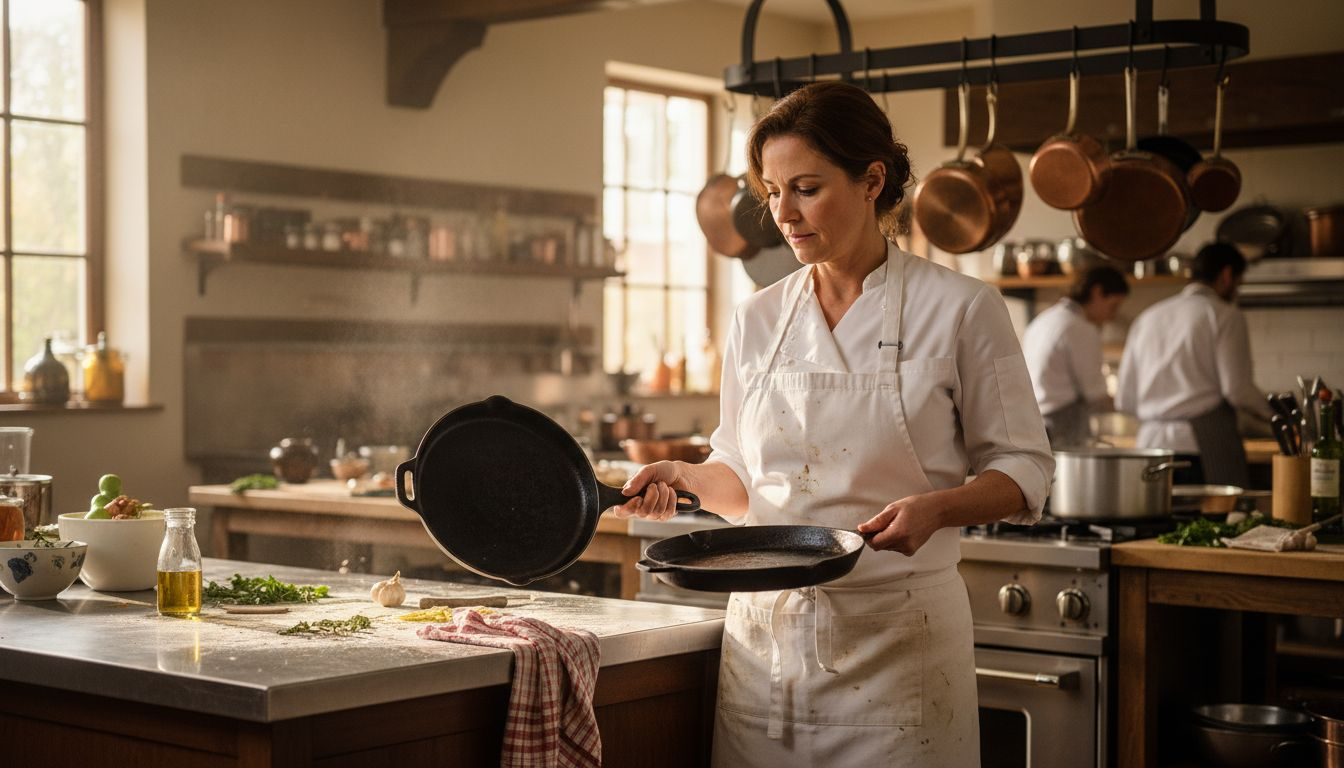
Selecting the right griddle can shape every stage of your culinary process, whether you are working in a high-pressure professional kitchen or perfecting dishes at home. The choice between carbon steel and cast iron griddles is more than just a preference—it impacts everything from heat responsiveness to day-to-day maintenance. Understanding how each material’s unique composition and manufacturing methods affect cooking versatility helps chefs across Europe achieve outstanding results tailored to their technique and kitchen demands.
Table of Contents
- Defining Carbon Steel And Cast Iron Griddles
- Manufacturing And Design Distinctions
- Heat Retention And Cooking Performance
- Seasoning, Maintenance, And Longevity
- Weight, Handling, And Cooktop Compatibility
- Comparing Pros, Cons, And Real-World Uses
Key Takeaways
| Point | Details |
|---|---|
| Material Differences | Carbon steel is lighter and heats up quickly, while cast iron is heavier with superior heat retention. |
| Maintenance Requirements | Carbon steel requires simpler seasoning and less frequent maintenance compared to cast iron. |
| Cooking Performance | Choose carbon steel for fast, high-heat cooking, and cast iron for consistent, slow cooking applications. |
| Longevity and Durability | Cast iron offers generational durability, whereas carbon steel can last decades with proper care. |
Defining carbon steel and cast iron griddles
Carbon steel and cast iron griddles represent two classic cookware materials with distinct metallurgical characteristics that dramatically influence their cooking performance. While often confused, these materials have crucial differences that impact heat distribution, durability, and culinary versatility. Carbon steel composition reveals an iron-carbon alloy with nuanced properties that set it apart from traditional cast iron.
Carbon steel griddles typically contain 0.05% to 2% carbon content, creating a material that balances strength and flexibility. These griddles are manufactured by rolling and shaping steel sheets, resulting in lighter, more responsive cooking surfaces. In contrast, cast iron griddles contain over 2% carbon, producing a heavier, more rigid material renowned for exceptional heat retention and durability.
Key differences between these griddle materials include:
- Weight: Carbon steel griddles are significantly lighter
- Heat Responsiveness: Carbon steel heats faster and more evenly
- Heat Retention: Cast iron maintains temperature more consistently
- Maintenance: Carbon steel requires less complex seasoning
- Flexibility: Carbon steel can be thinner and more adaptable to different cooking techniques
Cast iron griddles are created through a casting process where molten iron is poured into moulds, producing thick, robust cookware with remarkable thermal stability. Cast iron manufacturing involves high-temperature techniques that create extremely durable cooking surfaces capable of withstanding generations of use.
Pro tip: When selecting between carbon steel and cast iron griddles, consider your specific cooking style and maintenance preferences to choose the most suitable option.
Manufacturing and design distinctions
The manufacturing processes for carbon steel and cast iron griddles represent fundamental differences that profoundly impact their performance, durability, and culinary applications. Carbon steel manufacturing techniques involve precision rolling and stamping of steel sheets, creating cookware with remarkable structural integrity and adaptability.
Cast iron griddles emerge from a traditional casting process where molten iron is poured into carefully designed moulds, resulting in thick-walled, robust cookware with a distinctive crystalline structure. This manufacturing method produces a material characterised by exceptional thermal mass and remarkable heat retention capabilities. In contrast, carbon steel griddles are formed through a more dynamic shaping process that allows for thinner, more responsive cooking surfaces.
Key manufacturing distinctions include:
-
Production Technique:
- Cast iron: Molten metal poured into moulds
- Carbon steel: Rolled and stamped sheet metal
-
Surface Characteristics:
- Cast iron: Thick, porous, potentially rough texture
- Carbon steel: Smoother, more uniform surface
-
Wall Thickness:
- Cast iron: Typically thicker and heavier
- Carbon steel: Thinner and more lightweight
-
Structural Properties:
- Cast iron: Brittle and less ductile
- Carbon steel: More flexible and malleable
Structural Engineering plays a crucial role in differentiating these materials. Cast iron manufacturing process creates a material with inherent crystalline structures that contribute to its weight and thermal characteristics, while carbon steel’s manufacturing allows for more precise engineering and adaptable design.
Pro tip: Carefully examine the manufacturing process and intended cooking application when selecting between carbon steel and cast iron griddles to ensure optimal performance.
Heat retention and cooking performance
Heat performance represents a critical consideration when comparing carbon steel and cast iron griddles, with each material offering unique thermal characteristics that significantly impact cooking results. Griddle heat distribution reveals fascinating differences in how these materials manage temperature and respond during culinary preparation.
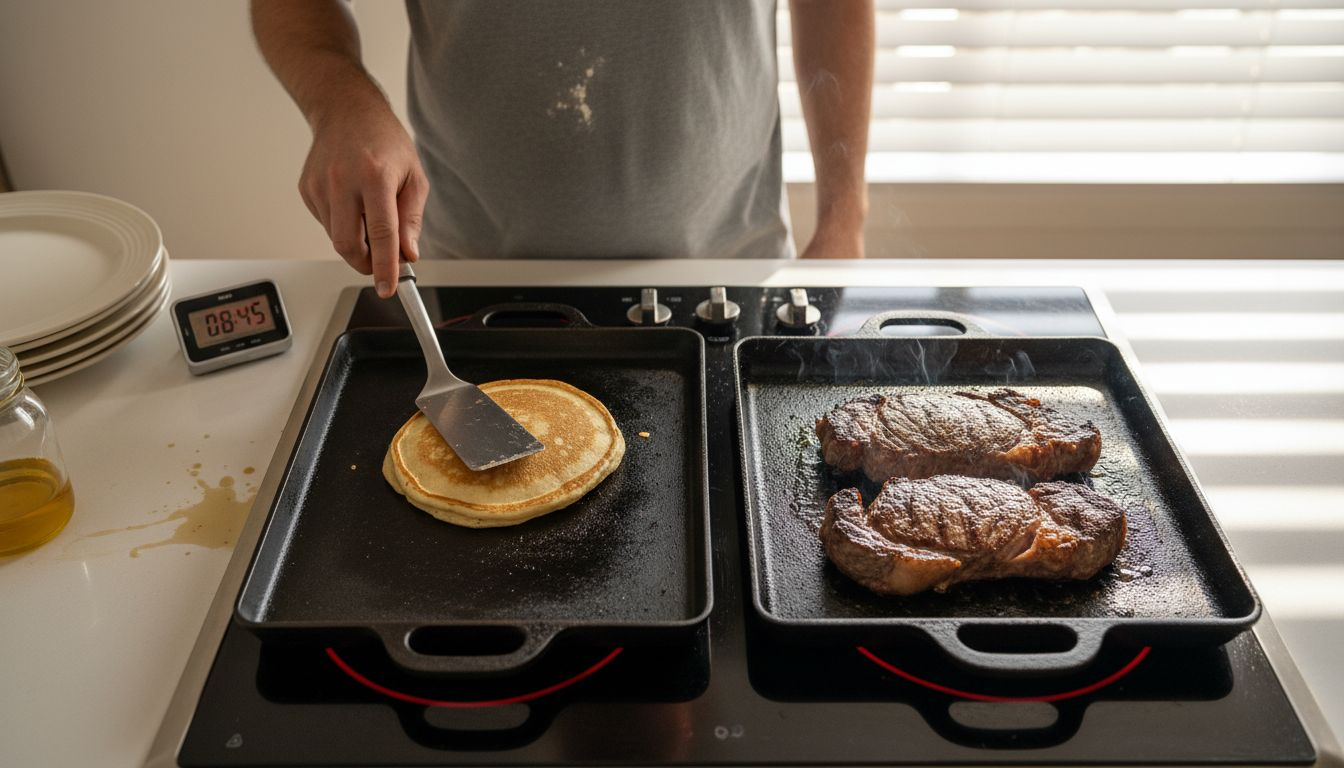
Cast iron griddles excel in heat retention, creating an extraordinary thermal environment that maintains consistent temperatures for prolonged periods. This remarkable characteristic makes them ideal for dishes requiring steady, uniform heat such as searing meats or preparing delicate pancakes. Carbon steel griddles, by contrast, demonstrate superior heat responsiveness, warming up rapidly and allowing more precise temperature control during cooking processes.
Key thermal performance characteristics include:
-
Heat-Up Speed:
- Carbon steel: Extremely quick heating
- Cast iron: Slower initial heating
-
Temperature Stability:
- Carbon steel: Moderate heat retention
- Cast iron: Exceptional heat retention
-
Cooking Versatility:
- Carbon steel: Better for rapid temperature changes
- Cast iron: Optimal for consistent, slow cooking
-
Thermal Conductivity:
- Carbon steel: More responsive to heat adjustments
- Cast iron: Slower to change temperature
Thermal Engineering plays a crucial role in understanding these griddle materials. Cookware heat performance demonstrates that while cast iron provides superior heat preservation, carbon steel offers unparalleled adaptability for chefs seeking precise cooking control.
Pro tip: Select your griddle based on your specific cooking technique: choose cast iron for steady, low-and-slow methods, and carbon steel for fast, high-heat applications.
Seasoning, maintenance, and longevity
Seasoning represents a critical maintenance process that transforms both carbon steel and cast iron griddles from raw metal surfaces into versatile, non-stick cooking tools. Griddle seasoning techniques reveal nuanced approaches that dramatically impact the cookware’s performance, durability, and cooking capabilities.
Cast iron griddles demand more intensive seasoning protocols, requiring thick, durable protective layers that prevent rust and create exceptional non-stick surfaces. Carbon steel griddles, by comparison, feature more straightforward seasoning requirements, allowing easier maintenance and quicker restoration of their protective patina. Both materials benefit from consistent care, but cast iron requires more meticulous attention to maintain its legendary durability.
Key seasoning and maintenance characteristics include:
-
Seasoning Complexity:
- Cast iron: More labour-intensive process
- Carbon steel: Simpler, faster seasoning
-
Rust Prevention:
- Cast iron: Requires careful drying and oiling
- Carbon steel: More resistant to immediate corrosion
-
Maintenance Frequency:
- Cast iron: Regular re-seasoning recommended
- Carbon steel: Less frequent maintenance needed
-
Cleaning Requirements:
- Cast iron: Avoid soap, use specific cleaning methods
- Carbon steel: Tolerates mild soap, easier cleaning
Cookware Longevity depends significantly on proper maintenance techniques. Cookware maintenance strategies demonstrate that while cast iron can last generations with proper care, carbon steel offers a more forgiving maintenance approach that still ensures remarkable durability.
Pro tip: Develop a consistent maintenance routine tailored to your griddle’s material, focusing on thorough drying, light oiling, and periodic re-seasoning to ensure maximum performance and longevity.
Weight, handling, and cooktop compatibility
The weight and handling characteristics of cookware dramatically influence a chef’s cooking experience, with carbon steel and cast iron griddles presenting distinctly different ergonomic profiles. Cookware handling techniques reveal nuanced differences that impact kitchen performance and user comfort.
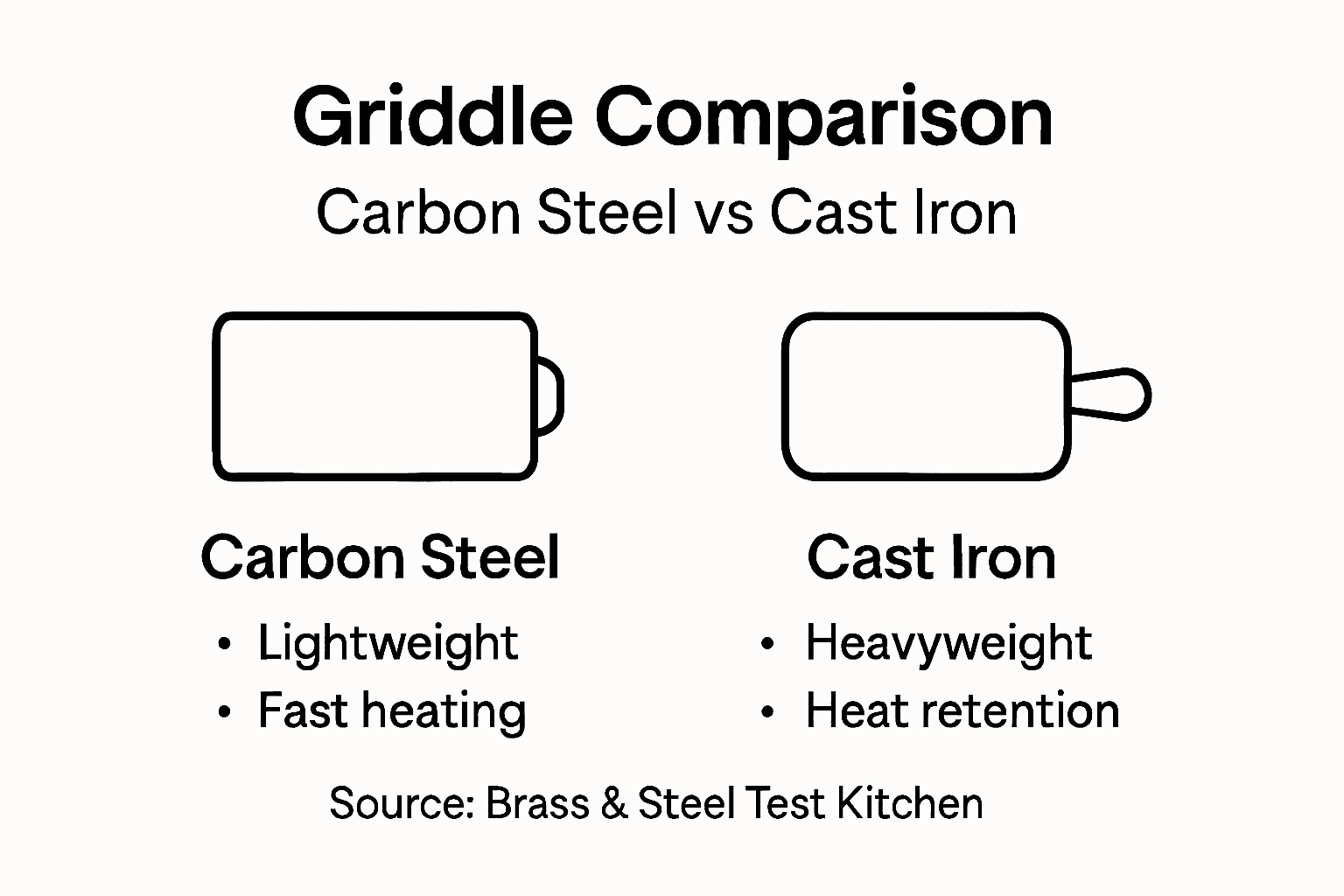
Carbon steel griddles distinguish themselves through remarkable lightweight construction, offering chefs enhanced manoeuvrability and reduced fatigue during extended cooking sessions. Cast iron griddles, conversely, provide substantial weight that contributes to exceptional heat retention but demands greater physical effort to manipulate. These fundamental differences affect not just handling but also the overall cooking technique and user experience in professional and home kitchen environments.
Key weight and compatibility characteristics include:
-
Weight Comparison:
- Carbon steel: Lightweight and agile
- Cast iron: Significantly heavier
-
Handle Design:
- Carbon steel: Typically attached handles
- Cast iron: Often integrated, thicker handles
-
Cooktop Compatibility:
- Carbon steel: Works on all cooktop types
- Cast iron: Compatible with most surfaces
-
Manageability:
- Carbon steel: Easy to lift and transfer
- Cast iron: Requires more strength to move
Cooktop Performance involves understanding each material’s interaction with different heating surfaces. The griddle’s composition directly influences its thermal conductivity and adaptability across gas, electric, and induction cooking platforms.
Pro tip: Consider your physical strength and kitchen workflow when selecting between carbon steel and cast iron griddles, prioritising comfort and ease of handling.
To clarify kitchen decisions, see how each griddle material aligns with different chef profiles:
| Chef Type | Best Fit | Reason |
|---|---|---|
| Professional chef | Carbon steel | Quick handling and heat adjustments |
| Home cook | Cast iron | Excellent for slow, hearty meals |
| Outdoor enthusiast | Carbon steel | Lighter for travel and easy cleaning |
| Traditionalist | Cast iron | Durability and heirloom potential |
Comparing pros, cons, and real-world uses
Ultimately, selecting between carbon steel and cast iron griddles requires understanding their distinct performance characteristics and culinary applications. Griddle performance analysis reveals nuanced differences that dramatically impact cooking outcomes across various kitchen scenarios.
Carbon steel griddles excel in professional and fast-paced cooking environments, offering remarkable heat responsiveness and lightweight manoeuvrability. These qualities make them ideal for high-heat searing, rapid temperature adjustments, and dynamic cooking techniques. Cast iron griddles, conversely, shine in situations demanding consistent, slow-maintained heat, providing unparalleled thermal stability for dishes requiring prolonged, steady cooking temperatures.
Key comparative characteristics include:
-
Professional Kitchen Performance:
- Carbon steel: Rapid heat response, lighter handling
- Cast iron: Consistent heat, superior for slow cooking
-
Cooking Versatility:
- Carbon steel: Better for searing, stir-frying
- Cast iron: Excellent for braising, oven-to-stovetop dishes
-
Maintenance Requirements:
- Carbon steel: Easier seasoning, quicker restoration
- Cast iron: More intensive seasoning protocol
-
Durability Factors:
- Carbon steel: Good longevity with proper care
- Cast iron: Generational durability, heirloom potential
Real-World Application fundamentally depends on individual cooking styles, kitchen workflow, and personal preference. The griddle material becomes an extension of the chef’s technique, requiring thoughtful selection based on specific culinary needs.
Here is a summary of long-term value aspects for each griddle type:
| Aspect | Carbon Steel | Cast Iron |
|---|---|---|
| Initial investment | Generally lower | Slightly higher |
| Lifespan | Decades with basic care | Generations with diligent care |
| Maintenance | Minimal and straightforward | Intensive and ongoing |
| Heritage appeal | Less common, more practical | Strong, popular in family kitchens |
Pro tip: Consider owning both griddle types to leverage their unique strengths across different cooking scenarios and expand your culinary versatility.
Discover the Best Carbon Steel Griddle to Elevate Your Cooking Performance
Choosing between carbon steel and cast iron griddles involves balancing heat responsiveness, weight, and maintenance. If you seek lightweight, highly responsive cookware that adapts quickly to temperature changes and is easier to maintain, our Carbon Steel Collection | Brass&Steel offers expertly forged pans that match these performance needs. Our single-piece construction ensures durability without rivets or welds, while a natural nonstick surface develops through simple seasoning for superior cooking results.
Explore premium carbon steel pans designed for chefs who value precision and versatility. Visit Brass & Steel now to experience heirloom-quality cookware that excels where cast iron may feel cumbersome. Choose your ideal carbon steel pan today and unlock cooking performance tailored to your style.
Frequently Asked Questions
What is the main difference between carbon steel and cast iron griddles?
Carbon steel griddles are lighter, heat up quickly, and are more responsive to temperature changes, while cast iron griddles excel in heat retention, are heavier, and maintain temperature more consistently.
How do I maintain a carbon steel griddle compared to a cast iron one?
Carbon steel griddles require simpler seasoning and less frequent maintenance, whereas cast iron griddles involve a more intensive seasoning process and regular re-seasoning to prevent rust and maintain their non-stick surface.
Which type of griddle is better for high-heat cooking?
Carbon steel is better suited for high-heat cooking due to its quick heating response and lightweight nature, making it ideal for techniques like searing and stir-frying.
Can I use both carbon steel and cast iron griddles on any cooktop?
Yes, both carbon steel and cast iron griddles are compatible with various cooktops, including gas, electric, and induction surfaces, though carbon steel tends to have better adaptability due to its lightweight design.
Recommended
- Carbon Steel vs Stainless Steel Griddle – Choosing for Performance – Brass & Steel
- Carbon Steel vs Cast Iron: Complete Guide for Cooks – Brass & Steel
- Cast Iron vs Carbon Steel: Choosing Durable Cookware – Brass & Steel
- Carbon Steel vs Cast Iron – Which Is Best for Cooking? – Brass & Steel
- Oval Cast Iron Grill Outdoor, Portable Charcoal Grill and Tabletop Cast Iron Ski