Carbon Steel vs Stainless Steel Griddle – Choosing for Performance

Most british restaurants prefer griddles made from either carbon steel or stainless steel, yet few realize how much these materials influence the taste and texture of every dish. With over 60 percent of professional kitchens in the United Kingdom investing in premium-grade griddles, choosing the right surface matters more than ever. By understanding what sets carbon steel and stainless steel griddles apart, you can cook smarter and get results that truly make a difference.
Table of Contents
- Defining Carbon Steel and Stainless Steel Griddles
- Material Differences and Cooking Performance
- Seasoning, Care, and Maintenance Requirements
- Health, Safety, and Induction Compatibility
- Comparing Costs and Common Pitfalls to Avoid
Key Takeaways
| Point | Details |
|---|---|
| Material Properties | Carbon steel griddles provide excellent heat conductivity and develop a natural non-stick surface, while stainless steel offers superior corrosion resistance and durability. |
| Maintenance Requirements | Carbon steel requires regular seasoning and careful cleaning to avoid rust, whereas stainless steel is easier to maintain but still needs attention to sustain performance. |
| Health and Safety | Both materials are compatible with induction cooking, but carbon steel is chemical-free and develops a natural seasoning layer for safer cooking. |
| Cost Considerations | While stainless steel has a higher initial cost, its longevity may provide better long-term value than the lower-priced, more maintenance-intensive carbon steel. |
Defining Carbon Steel and Stainless Steel Griddles
Griddles represent essential cooking surfaces with unique material characteristics that significantly impact performance. Carbon steel and stainless steel represent two prominent griddle materials, each offering distinct properties for culinary professionals and home cooks.
Carbon steel is an iron alloy containing between 0.06 to 1.5% carbon, which enhances its hardness and strength characteristics of metal alloys. These griddles provide exceptional heat conductivity and rapid temperature responsiveness, making them ideal for high-heat cooking techniques like searing and browning. Carbon steel griddles develop a natural seasoning over time, creating a progressively non-stick surface that improves with regular use.
Stainless steel griddles, characterised by containing at least 10.5% chromium, offer superior corrosion resistance and mechanical durability. Steel composition research indicates these griddles provide high strength even at low thickness, making them lightweight yet robust. Stainless steel griddles maintain a consistent cooking surface without developing seasoning, which can be advantageous for cooks preferring a more neutral cooking platform.
When selecting between carbon steel and stainless steel griddles, chefs and cooking enthusiasts should consider factors like heat management, maintenance requirements, and intended cooking techniques. Understanding carbon steel cookware can help make an informed decision about which griddle material best suits individual culinary needs.
Material Differences and Cooking Performance
The performance of griddles hinges critically on the underlying material characteristics, with carbon steel and stainless steel presenting unique thermal and durability profiles. Heat conductivity and surface properties play pivotal roles in determining cooking effectiveness across different culinary applications.
Carbon steel griddles demonstrate remarkable resilience, being highly resistant to corrosion, shock, and mechanical stress. These griddles excel in heat distribution, offering rapid temperature responsiveness that allows chefs to achieve precise searing and consistent browning. The natural seasoning development creates a progressively non-stick surface, enhancing cooking versatility and reducing the need for additional oil or fat.
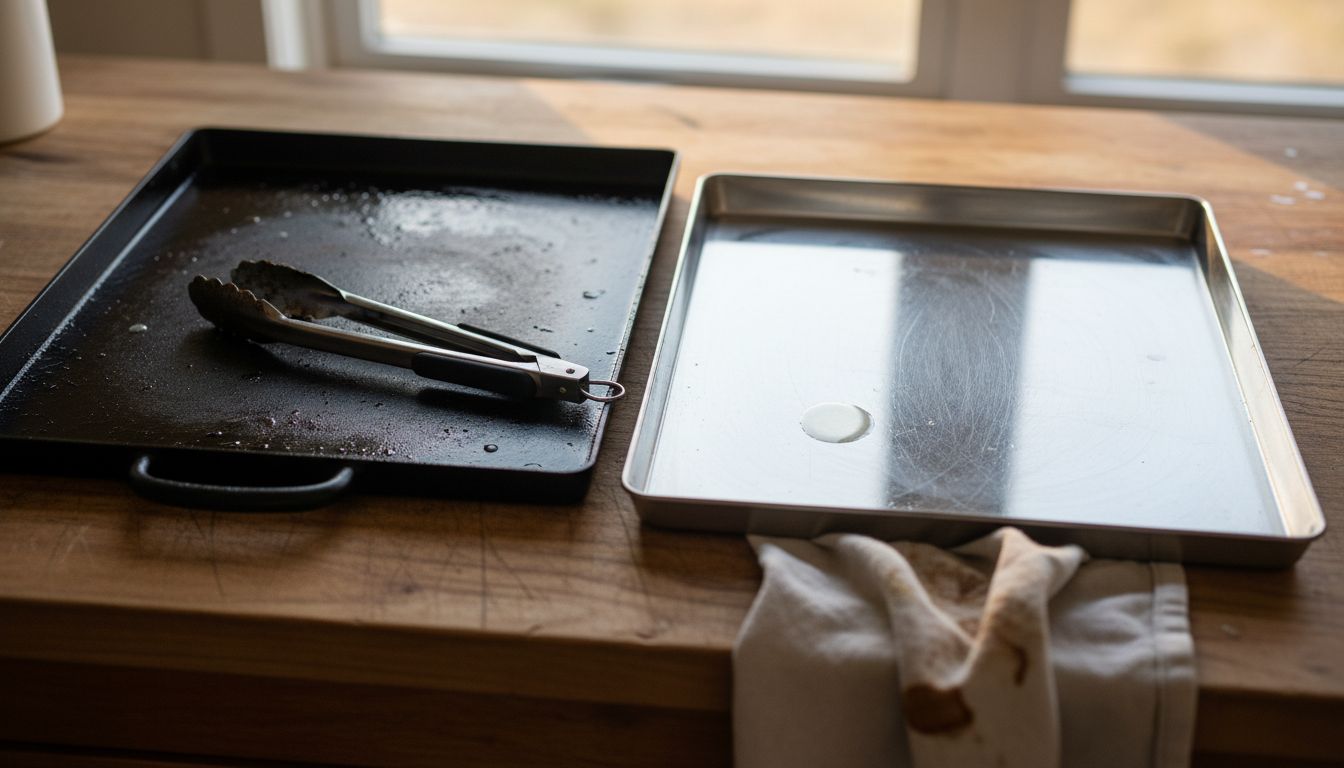
Stainless steel griddles provide a contrasting performance profile. Long-term cost analysis reveals that despite a higher initial investment, these griddles offer exceptional durability and longevity. Their consistent cooking surface remains neutral, making them ideal for recipes requiring minimal flavour transfer. Professional kitchens often prefer stainless steel for its easy maintenance, smooth cleaning, and resistance to reactive food interactions.

Ultimately, selecting between carbon steel and stainless steel griddles depends on individual cooking styles, maintenance preferences, and understanding cookware material nuances. Chefs must consider factors like heat responsiveness, seasoning potential, and long-term performance when making their choice.
Seasoning, Care, and Maintenance Requirements
Griddle maintenance varies dramatically between carbon steel and stainless steel, with each material demanding specific care strategies to ensure optimal performance and longevity. Seasoning and cleaning techniques represent critical aspects of griddle preservation that directly impact cooking quality and equipment durability.
Properly seasoning a griddle involves heating unsaturated fats to create a protective nonstick surface, which prevents rust and enhances cooking performance. Carbon steel griddles particularly benefit from this process, developing a natural patina that improves with repeated use. Chefs should apply a thin layer of high-smoke-point oil, heating the griddle until the oil polymerises, creating a durable protective coating that prevents food sticking and reduces potential corrosion.
Cleaning techniques require careful consideration to maintain griddle integrity. Avoid using soap or abrasive scrubbers that might damage the seasoning. Instead, clean with warm water while the griddle remains warm, gently removing food residue. Stainless steel griddles tolerate more aggressive cleaning methods compared to carbon steel, but both benefit from immediate drying and light oil application after washing to prevent moisture-related damage.
Professional chefs understand that maintaining carbon steel cookware requires consistent, mindful practices. Regular seasoning, gentle cleaning, and proper storage are essential for preserving griddle performance. By understanding the unique maintenance requirements of carbon steel and stainless steel, culinary professionals can ensure their griddles remain high-functioning cooking tools for years to come.
Health, Safety, and Induction Compatibility
Cooking equipment demands rigorous evaluation of health considerations, safety standards, and technological compatibility. Professional chefs and home cooks alike must understand the nuanced differences between carbon steel and stainless steel griddles to make informed purchasing decisions.
Carbon steel griddles offer significant health advantages, being naturally free from synthetic coatings and chemical treatments. These griddles develop a natural seasoning layer through repeated use, creating a nonstick surface without requiring artificial additives. The seasoning process involves polymerising cooking oils, which forms a protective barrier that prevents direct metal contact with food while enhancing flavour development. Unlike traditional nonstick surfaces containing potentially harmful chemicals, carbon steel provides a safe, organic cooking environment.
Regular maintenance of cooking surfaces involves strategic cleaning techniques that preserve both health standards and equipment performance. Stainless steel griddles typically feature superior corrosion resistance, allowing more robust cleaning methods. Both carbon steel and stainless steel griddles demonstrate excellent induction compatibility, making them versatile choices for modern kitchen environments.
Understanding carbon steel cookware performance reveals additional safety benefits. These griddles conduct heat evenly, reduce hot spots, and minimise potential burning risks. Professional kitchens increasingly recognise that material selection impacts not just cooking quality, but also overall kitchen safety and food preparation efficiency.
Comparing Costs and Common Pitfalls to Avoid
Investing in griddle cookware requires careful financial and performance considerations. Initial investment, long-term durability, and potential maintenance costs represent critical factors that significantly impact a chef’s purchasing decisions between carbon steel and stainless steel options.
Cost analyses demonstrate that stainless steel presents a higher upfront expense but offers superior long-term value. While carbon steel griddles typically have lower initial pricing, they demand more frequent seasoning and potentially more intensive maintenance. Professional chefs must consider not just the purchase price, but the total cost of ownership, including time invested in maintenance, potential replacement frequency, and cooking performance.
Common pitfalls when selecting griddle materials include neglecting proper seasoning techniques, using inappropriate cleaning methods, and failing to understand material-specific maintenance requirements. Carbon steel griddles are particularly vulnerable to improper care, with potential risks of rust development and seasoning breakdown. Stainless steel offers more forgiving maintenance, but still requires consistent attention to prevent surface degradation and maintain optimal cooking performance.
Understanding carbon steel cookware maintenance reveals critical nuances in griddle care. Chefs should avoid sudden temperature changes, use appropriate oils for seasoning, and develop a consistent cleaning routine. Budget-conscious professionals will find that investing time in proper griddle maintenance can significantly extend equipment lifespan, ultimately providing better long-term value regardless of the chosen material.
Discover the Perfect Carbon Steel Griddle for Your Culinary Needs
Choosing between carbon steel and stainless steel griddles often comes down to balancing heat performance, maintenance, and durability. If you seek a superior heat conductor that builds a natural, health-conscious nonstick patina over time you will appreciate the advantages of a carbon steel griddle. With excellent responsiveness to temperature changes and a seamless forged design, carbon steel cookware offers exceptional performance for serious cooks who value craftsmanship and longevity.
Explore our Carbon Steel Collection | Brass&Steel to find heirloom quality carbon steel sauté pans designed for professional heat management and effortless seasoning. Backed by precision forging and a commitment to PTFE-free health-conscious design, our pans meet the needs described in your article. Visit Brass & Steel today to elevate your cooking experience with cookware made for dedication and lasting performance. Discover new arrivals and find the pan that matches your cooking style at New arrivals – Brass & Steel. Take the next step towards mastering your kitchen with durable and naturally nonstick cookware from Brass & Steel.
Frequently Asked Questions
What are the main differences between carbon steel and stainless steel griddles?
Carbon steel griddles offer excellent heat conductivity and develop a natural non-stick seasoning over time, making them ideal for high-heat cooking. In contrast, stainless steel griddles are renowned for their corrosion resistance and durability, providing a neutral cooking surface without seasoning.
How do I maintain a carbon steel griddle compared to a stainless steel griddle?
Maintaining a carbon steel griddle involves regular seasoning with high-smoke-point oils and careful cleaning with warm water to preserve the seasoning layer. Stainless steel griddles are easier to clean and can tolerate more aggressive cleaning methods, but both should be dried immediately after washing to prevent damage.
Are carbon steel griddles healthier than stainless steel griddles?
Yes, carbon steel griddles are considered healthier as they do not require synthetic coatings or chemical treatments. The natural seasoning layer formed during cooking enhances flavour while preventing direct metal contact with food, unlike some non-stick surfaces that may have harmful chemicals.
Which griddle material is better for professional chefs?
The choice between carbon steel and stainless steel often depends on individual cooking styles. Carbon steel is preferred for its heat responsiveness and non-stick qualities, while stainless steel is appreciated for its durability, easy maintenance, and neutral cooking properties. Both materials offer unique advantages depending on the specific cooking techniques employed.
Recommended
- Understanding What is Carbon Steel Cookware Performance – Brass & Steel
- Carbon Steel vs Stainless Steel Pans, which one is best? – Brass & Steel
- Understanding Iron vs Carbon Steel for Culinary Use – Brass & Steel
- Complete Guide to Choosing Carbon Steel Cookware – Brass & Steel
- Sheet Metal Fabrication Materials | Custom Material Available
- Outdoor-Möbel - Pulverbeschichteter Edelstahl | Robust & Wartungsfrei - AFUERA – outdoor steel design