

Avoiding Rust on Pans: Step-by-Step Care for Carbon Steel
Most British kitchens that switch to carbon steel find nearly 40 percent of new pans show early signs of rust if not prepared properly. Whether you are a home cook in Paris or a professional chef in Berlin, making the jump to carbon steel brings vital performance and longevity benefits. Ready-to-use guidance on cleaning, seasoning, and ongoing maintenance will help you avoid common pitfalls and build a pan that lasts through countless European cooking adventures.
Table of Contents
- Step 1: Prepare Your New Pan For Seasoning
- Step 2: Apply And Bake The Initial Oil Coating
- Step 3: Maintain A Dry And Clean Cooking Surface
- Step 4: Reinforce Protection With Ongoing Seasoning
- Step 5: Check For Dullness Or Stickiness And Restore Finish
Quick Summary
| Main Insight | Explanation |
|---|---|
| 1. Clean the pan thoroughly | Wash the new carbon steel pan with hot water and mild soap to remove any residues before seasoning. |
| 2. Use a thin layer of oil | Apply an almost invisible film of high smoke point oil to prevent sticky residue during the seasoning. |
| 3. Dry and store properly | After cleaning, ensure the pan is completely dry and store in a well-ventilated area to prevent rust. |
| 4. Regularly maintain seasoning | After cooking, apply a light coat of oil to reinforce the pan’s protective layer and enhance nonstick properties. |
| 5. Restore a dull or sticky surface | If the pan feels sticky, scrub it gently, reapply oil, and season in the oven to restore its finish. |
Step 1: Prepare your new pan for seasoning
Getting your carbon steel pan ready for its first seasoning requires careful attention to detail. Before you begin, understand that removing manufacturing residues is crucial for optimal seasoning). This initial preparation ensures your pan will develop a perfect nonstick surface and resist rust effectively.
Start by thoroughly washing your new pan with hot water and mild dish soap. Use a soft sponge or cloth to remove any protective wax or shellac coating that manufacturers apply to prevent rust during shipping. Scrub gently but thoroughly to expose the bare metal surface. Once cleaned, dry the pan completely with a clean kitchen towel or paper towels. Make absolutely certain no moisture remains to prevent potential rust formation.
After cleaning, your pan is now ready for the initial seasoning process. The next steps will transform the bare metal surface into a naturally nonstick cooking platform. Ensuring the pan is completely dry and free from residues is your primary goal in this preparation stage.
Expert Recommendation: Always use a lint-free cloth when drying your pan to prevent any fabric fibres from interfering with the seasoning process.
Step 2: Apply and bake the initial oil coating
Now that your pan is perfectly clean and dry, you are ready to create its foundational seasoning layer. The key is applying a very thin layer of oil that will polymerise into a protective coating when heated at high temperatures. Choose an oil with a high smoke point such as grapeseed, canola, or vegetable oil to ensure optimal results.
Begin by pouring a small amount of oil onto a clean lint-free cloth. Rub the oil across the entire surface of the pan extremely sparingly. Your goal is to create an almost invisible film that looks almost dry. Too much oil will result in a sticky residue that prevents proper seasoning. Once applied, use a fresh clean cloth to wipe away any excess oil so that the pan appears almost bare.
Preheat your oven to 250 degrees Celsius and place the pan upside down on the centre rack. This positioning allows any remaining oil to drip away and prevents pooling. Bake the pan for approximately 30 minutes to allow the oil to polymerise and bond with the metal surface. After the time has elapsed, turn off the oven and allow the pan to cool completely inside.
Expert Recommendation: Always wear oven gloves when handling hot cookware and ensure your kitchen is well ventilated during the seasoning process.
Here is a quick comparison of oils suitable for seasoning carbon steel pans:
| Oil Type | Smoke Point | Seasoning Effectiveness | Common Usage Benefit |
|---|---|---|---|
| Grapeseed Oil | 215°C | Excellent, forms hard layer | Neutral flavour, suitable for repeated seasoning |
| Canola Oil | 205°C | Good, widely available | Inexpensive and easy to find |
| Vegetable Oil | 200°C | Reliable, basic protection | Accessible, versatile for general purpose |
| Sunflower Oil | 225°C | Strong, durable finish | Suitable for restoration tasks |
Step 3: Maintain a dry and clean cooking surface
Preventing rust in your carbon steel pan requires meticulous care and attention to cleaning and drying. Corrosion mechanisms are directly influenced by moisture and oxygen exposure, making thorough post-cooking maintenance essential for preserving your pan’s integrity.
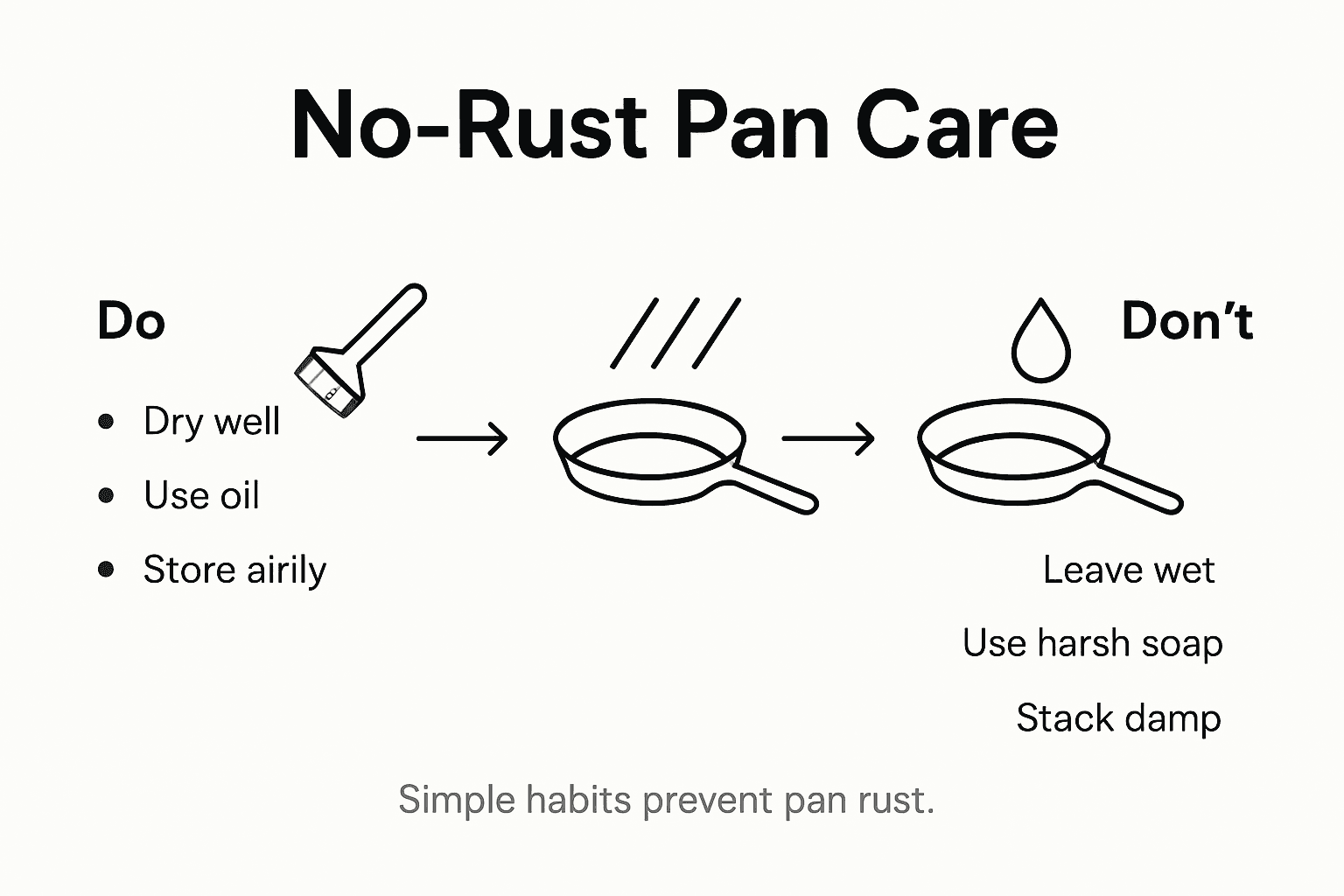
After each cooking session, clean your pan using warm water and a soft cloth or non abrasive sponge. Avoid using harsh soap or steel wool which can damage the seasoning. Immediately dry the pan completely using a clean kitchen towel or paper towel. For extra assurance, place the pan on a warm stove for a minute to evaporate any remaining moisture. When selecting utensils for cooking and cleaning, choose wooden or silicone tools that will not scratch the pan’s protective surface.

Store your carbon steel pan in a dry location with good air circulation. If possible, hang the pan or place it on a rack that allows air to circulate around it. This prevents moisture accumulation and reduces the risk of unexpected rust formation.
Expert Recommendation: Consider applying a light coat of cooking oil after each thorough drying to create an additional protective barrier against potential moisture.
Step 4: Reinforce protection with ongoing seasoning
Building a robust protective layer on your carbon steel pan requires consistent and thoughtful maintenance. Ongoing seasoning is crucial for creating a durable, corrosion resistant cooking surface), transforming your pan into a naturally nonstick culinary tool.
After each cooking session, while the pan is still warm, apply a very thin layer of high smoke point oil like grapeseed or canola. Use a clean cloth to spread the oil evenly across the entire surface, ensuring you create an almost invisible film. The warmth helps the oil penetrate and bond with the existing seasoning. Concentrate on areas that seem dull or have lost their protective sheen. Cooking fatty foods like bacon or using the pan for high fat recipes can also naturally enhance the seasoning process.
If you notice any areas where the seasoning appears patchy or starts to look dry, consider a quick refresh by heating the lightly oiled pan in the oven at 200 degrees Celsius for about 15 minutes. This process helps reinforce the protective layer and maintains the pan’s nonstick qualities. Remember that your pan’s seasoning is a living, evolving surface that improves with careful, consistent care.
Expert Recommendation: Pay close attention to your pan after cooking acidic foods, as these can temporarily weaken the seasoning and require immediate reapplication of a protective oil layer.
Step 5: Check for dullness or stickiness and restore finish
Surface condition is a critical indicator of your carbon steel pan’s health, revealing when the protective seasoning needs attention. Monitoring your pan for changes in texture and performance helps maintain its long term cooking quality.
If your pan starts feeling sticky or develops a patchy appearance, it is time for a thorough restoration. Begin by scrubbing the surface gently with coarse salt and a soft cloth to remove any loose seasoning. Use minimal water and dry the pan immediately afterwards. For more stubborn areas, a light scraping with a wooden spatula can help remove uneven seasoning without damaging the pan’s underlying surface.
Once cleaned, apply a thin layer of high smoke point oil like grapeseed or sunflower oil. Spread the oil evenly using a clean cloth, ensuring complete coverage. Place the pan in an oven preheated to 220 degrees Celsius for approximately 30 minutes. This process will polymerise the oil and rebuild the protective seasoning layer, restoring your pan’s nonstick properties and corrosion resistance.
Expert Recommendation: Always heat your pan slowly and evenly during restoration to prevent warping and ensure uniform seasoning coverage.
The table below summarises common carbon steel pan issues and recommended restoration actions:
| Issue | Usual Cause | Restoration Method | Preventive Tip |
|---|---|---|---|
| Sticky Surface | Excess oil or low temperature | Scrub with salt, reapply oil | Use thin oil layers, bake correctly |
| Patchy Seasoning | Uneven oil coverage | Light scraping, oven heating | Spread oil evenly, rotate pan in oven |
| Rust Formation | Moisture exposure | Remove rust, re-season | Always dry pan thoroughly |
| Loss of Nonstick Quality | Acidic food residues | Apply new oil layer, heat | Avoid acidic recipes or reoil promptly |
Protect Your Investment with Premium Carbon Steel Cookware from Brass & Steel
Avoiding rust and maintaining a resilient natural nonstick surface are key challenges for every owner of carbon steel pans. The step-by-step care described here highlights how vital regular seasoning and thorough drying are to preserve your pan’s performance and longevity. If you want cookware engineered from a single forged piece, designed for superior heat retention and induction compatibility, our Carbon Steel Collection | Brass&Steel offers a perfect solution.
Experience heirloom-quality craftsmanship from the heart of Poland with Brass & Steel. Our 27 cm and 30 cm carbon steel sauté pans combine minimalist design with durable construction and effortless maintenance. Start your journey towards mastering pan care and enjoy the benefits of corrosion resistance, safe PTFE-free cooking, and ever-improving seasoning. Explore the latest innovations in our New arrivals – Brass & Steel and discover the pan that fits your kitchen today. Visit https://brass-steel.com now to secure your ultimate carbon steel cooking companion.
Frequently Asked Questions
How do I prepare my new carbon steel pan before seasoning?
To prepare your new carbon steel pan, wash it thoroughly with hot water and mild dish soap to remove any protective coatings. Make sure to dry the pan completely with a lint-free cloth to prevent moisture from causing rust.
What type of oil should I use for seasoning my carbon steel pan?
Choose an oil with a high smoke point, such as grapeseed, canola, or vegetable oil, to apply a thin layer for seasoning. Apply this oil sparingly across the pan’s surface before baking it in the oven at 250 degrees Celsius for about 30 minutes.
How can I maintain my carbon steel pan to prevent rust?
To prevent rust, clean your pan with warm water and a soft cloth after each use, then dry it completely. Additionally, consider applying a light coat of oil after each thorough drying to create an extra barrier against moisture.
What should I do if my carbon steel pan feels sticky or looks patchy?
If your pan feels sticky or has a patchy appearance, scrub it gently with coarse salt and a soft cloth to remove any loose seasoning. Then, reapply a thin layer of oil and heat it in the oven at 220 degrees Celsius for about 30 minutes to restore its finish.
How often should I reinforce the seasoning of my carbon steel pan?
You should reinforce the seasoning of your carbon steel pan after each cooking session while it is still warm. Apply a very thin layer of high smoke point oil to ensure a consistent, nonstick surface and optimal corrosion resistance.
Can I store my carbon steel pan in a damp area?
No, you should avoid storing your carbon steel pan in a damp area as moisture can lead to rust formation. Instead, store it in a dry location with good air circulation, and consider hanging it or placing it on a rack.
Recommended
- How to Prevent Rust on a Carbon Steel Pan Easily – Brass & Steel
- Complete Guide to Rust Prevention for Pans – Brass & Steel
- How to Prevent Rust on Cookware: Step-by-Step for Carbon Steel – Brass & Steel
- Master the Art of How to Store Carbon Steel Pans – Brass & Steel
- 7 Essential Tips for Your Fabric Care Checklist - fabric fabric