How to Switch from Nonstick to Carbon Steel Cookware
Nonstick pans promise convenience, yet concerns about chemical coatings like polytetrafluoroethylene (PTFE) and per- and polyfluoroalkyl substances (PFAS) have many cooks rethinking what sits atop their stovetops. For both home cooks and professional chefs across Europe, finding safer, longer-lasting cookware is more than an upgrade—it is a move toward healthier meals and greater kitchen confidence. This simple guide lays out how to evaluate your nonstick pans and transition to carbon steel’s unmatched durability and natural cooking performance.
Table of Contents
- Step 1: Evaluate Your Current Nonstick Cookware
- Step 2: Select the Right Carbon Steel Pan for Your Needs
- Step 3: Prepare Your Carbon Steel Pan for Seasoning
- Step 4: Season Your Carbon Steel Pan Properly
- Step 5: Maintain and Verify Your Pan’s Nonstick Surface
Quick Summary
| Key Point | Explanation |
|---|---|
| 1. Evaluate nonstick cookware condition | Check for damage, age, and chemical risks before transitioning to carbon steel. |
| 2. Select the right carbon steel pan | Consider thickness, size, and cooking methods to match your needs for optimal performance. |
| 3. Prepare the pan for seasoning | Remove any factory coatings and ensure the pan is clean and dry before seasoning. |
| 4. Seasoning enhances nonstick properties | Use a high-smoke-point oil to create a protective layer, repeating the process for best results. |
| 5. Regular maintenance is essential | Clean, dry, and inspect the pan to maintain its nonstick surface and ensure longevity. |
Step 1: Evaluate Your Current Nonstick Cookware
Before transitioning to carbon steel cookware, it’s crucial to thoroughly assess your existing nonstick cookware’s condition and potential health risks. Modern nonstick pans often contain polytetrafluoroethylene (PTFE) coatings that may release harmful substances when overheated or deteriorating.
To effectively evaluate your cookware, consider these key factors:
- Age of the cookware
- Visible surface damage or scratches
- Coating integrity
- Potential chemical exposure risks
Inspect each pan carefully for signs of wear like peeling, chipping, or discolouration. Older nonstick pans with compromised surfaces can potentially leach chemicals into your food, making replacement advisable. Pay special attention to areas with significant scratching or where the coating has worn thin.
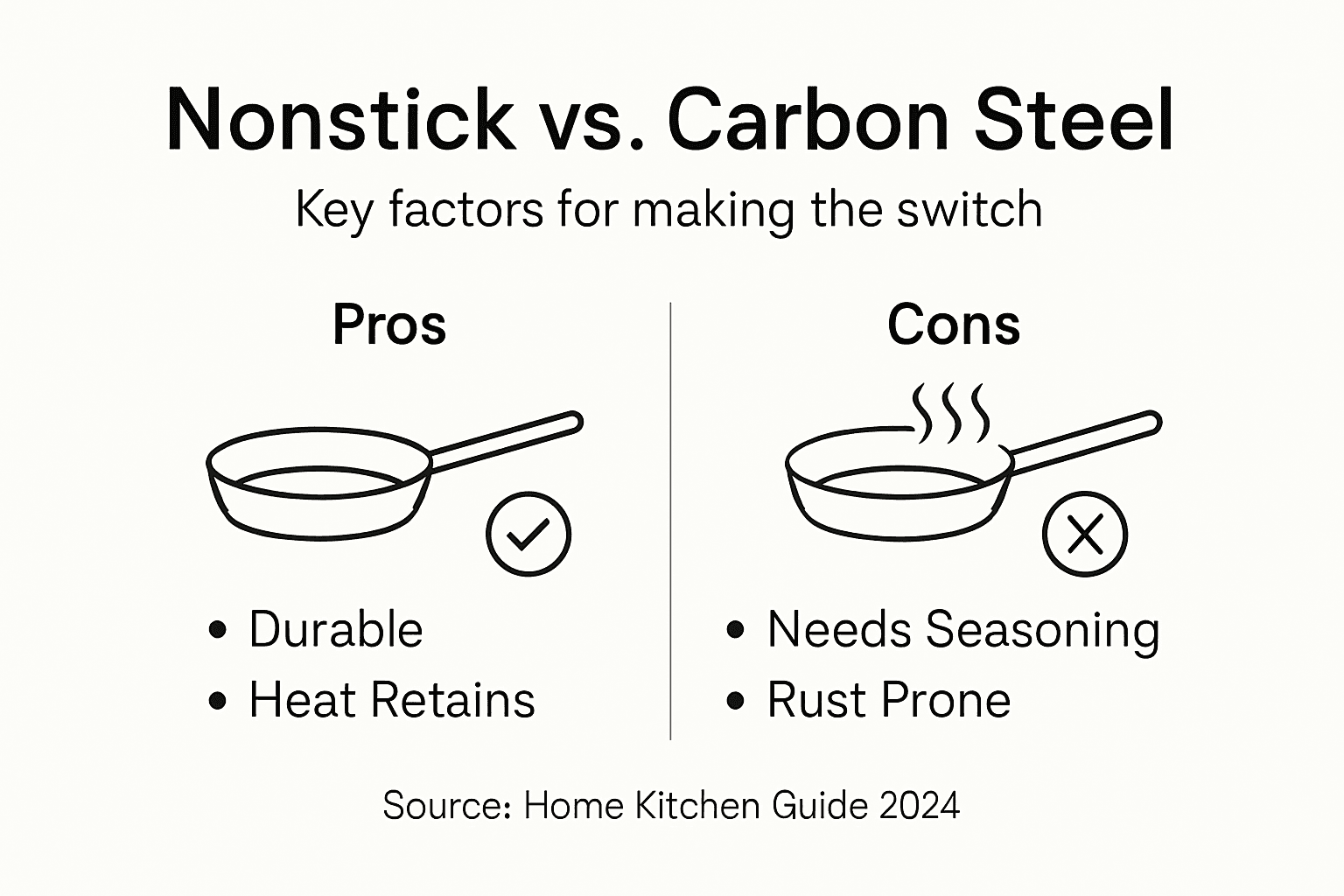
Here is a comparison of common nonstick cookware versus carbon steel pans to highlight their strengths and weaknesses:
| Aspect | Nonstick Cookware | Carbon Steel Pan |
|---|---|---|
| Heat tolerance | Can degrade at high heat | Safe for high-temperature use |
| Durability | Prone to scratches/chipping | Becomes more robust over time |
| Health considerations | Potential chemical leaching | No chemical coatings present |
| Maintenance required | Minimal, replace if damaged | Requires regular seasoning |
| Longevity | Often replaced every few years | Can last decades with care |
Replace cookware that shows multiple signs of deterioration, as safety concerns around nonstick materials continue to emerge in scientific research.
Practical Tip: When in doubt about a pan’s safety, trust your instincts and consider replacing it with a more durable, health-conscious alternative like carbon steel.
Step 2: Select the Right Carbon Steel Pan for Your Needs
Choosing the perfect carbon steel pan involves understanding its unique characteristics and matching them to your specific cooking requirements. Carbon steel grades vary significantly, affecting the pan’s performance and durability.
Consider these essential factors when selecting your carbon steel pan:
- Thickness of the pan (2-4mm recommended)
- Cooking surface size
- Weight and handle design
- Intended cooking techniques
- Heat responsiveness
The steel grade’s carbon content plays a crucial role in determining the pan’s characteristics. Medium to high carbon steel offers an excellent balance between strength and workability, making it ideal for serious home cooks and professional chefs. Pay attention to the pan’s thickness, as thicker pans provide better heat distribution and durability.
A well-chosen carbon steel pan can become your most versatile kitchen companion, improving with each cooking experience.
Look for pans with seamless construction and comfortable handles that provide good grip and heat resistance. Consider your typical cooking methods whether you frequently sear meats, sauté vegetables, or prepare delicate dishes that require precise temperature control.
Pro Tip: Invest in a carbon steel pan that matches your cooking style and skill level, understanding that proper seasoning will enhance its performance over time.
Step 3: Prepare Your Carbon Steel Pan for Seasoning
Preparing your carbon steel pan for seasoning is a critical first step that ensures optimal performance and longevity. Removing the factory protective coating requires careful attention to prevent potential rust and create the perfect surface for seasoning.
Follow these essential preparation steps:
- Wash the pan thoroughly with hot, soapy water
- Dry completely with a clean, lint-free cloth
- Inspect the pan for any remaining protective coating
- Ensure the surface is completely free of contaminants
Understanding the seasoning preparation process) involves removing any manufacturer-applied protective layers. These coatings, typically wax or oils designed to prevent rust during shipping, must be completely stripped before seasoning. Be thorough but gentle during cleaning to avoid damaging the pan’s surface.
A meticulously prepared carbon steel pan is the foundation of exceptional cooking performance.
Use warm water and a gentle scrubbing pad to remove any residual protective coating. Avoid using harsh chemicals or abrasive materials that might compromise the pan’s surface. Once cleaned, dry the pan immediately and completely to prevent any chance of rust formation.

Pro Tip: Work in a well-ventilated area during pan preparation and have your preferred high-smoke-point oil ready for the seasoning process.
Step 4: Season Your Carbon Steel Pan Properly
Seasoning transforms your carbon steel pan from a bare metal surface into a naturally nonstick cooking companion. Seasoning involves creating a protective layer) through careful oil application and heat polymerisation.
Follow these crucial seasoning steps:
- Select a high-smoke-point oil (canola, grapeseed, or sunflower)
- Apply an extremely thin, even oil layer across entire pan surface
- Heat pan to medium-high temperature
- Allow oil to smoke and create protective patina
- Repeat seasoning process multiple times
The seasoning process requires precision and patience to develop a durable, corrosion-resistant coating. Ensure your pan is completely dry and free from contaminants before beginning. Apply oil sparingly - too much will create a sticky surface instead of a smooth, protective layer.
A well-seasoned carbon steel pan becomes more nonstick with each cooking session.
Work in a well-ventilated kitchen and expect some smoke during the initial seasoning cycles. The pan will gradually develop a dark, smooth finish that improves cooking performance and prevents rust. Each subsequent use and cooking will continue to enhance the pan’s seasoning.
Pro Tip: Choose oils with high smoke points and avoid saturated fats to achieve the most durable and effective seasoning layer.
Step 5: Maintain and Verify Your Pan’s Nonstick Surface
Successfully maintaining your carbon steel pan’s nonstick surface requires consistent care and regular inspection. Monitoring pan performance carefully helps ensure ongoing cooking quality and safety.
Establish these maintenance practices:
- Clean pan after each use
- Dry thoroughly immediately after washing
- Apply light oil coating after cleaning
- Avoid using metal utensils
- Inspect surface regularly for changes
Food release performance is the primary indicator of your pan’s nonstick condition. Tracking cooking surface integrity helps prevent potential safety issues. Watch for signs like uneven cooking, increased sticking, or visible surface changes that might compromise your pan’s performance.
A well-maintained carbon steel pan improves with each careful use.
Pay attention to how foods interact with the pan surface. If eggs start sticking or delicate proteins tear during cooking, it might indicate your seasoning needs refreshing. Regular, gentle maintenance will help your carbon steel pan develop a robust, naturally nonstick surface over time.
This table summarises key tips for maintaining your carbon steel pan’s nonstick surface throughout its lifespan:
| Maintenance Practice | Purpose | Recommended Frequency |
|---|---|---|
| Clean gently after each use | Preserve seasoning layer | Every use |
| Dry immediately and thoroughly | Prevent rust formation | Every use |
| Apply thin oil layer | Maintain nonstick and prevent corrosion | After each cleaning |
| Inspect for surface changes | Identify issues early | Weekly |
| Re-season if needed | Restore food release performance | As soon as issues appear |
Pro Tip: Re-season your pan immediately if you notice any patches where food consistently sticks or the surface appears dull and uneven.
Make the Switch to Safe and Durable Carbon Steel Cookware Today
Switching from your ageing nonstick pans to a robust, naturally nonstick carbon steel pan can transform your kitchen experience. If you are concerned about the health risks posed by worn PTFE coatings or want cookware that improves with time rather than degrades, exploring our Carbon Steel Collection is the perfect place to start. Our pans are forged in one piece for unmatched durability and provide a non-toxic cooking surface that gets better with seasoning.
Upgrade now and embrace cookware that offers excellent heat performance, induction compatibility, and a lifetime of cooking pleasure. Shop our high-quality range at Brass & Steel and enjoy the confidence that comes from using heirloom-quality pans, designed for serious cooks who value health and performance. Check out our New Arrivals for the latest innovations and find your ideal pan today.
Frequently Asked Questions
How do I evaluate my current nonstick cookware before switching to carbon steel?
Before making the switch, carefully inspect your nonstick cookware for signs of wear such as peeling, chipping, or surface damage. Replace any pans that show significant deterioration to ensure safety and improve your cooking experience.
What should I consider when selecting a carbon steel pan?
When choosing a carbon steel pan, consider factors like thickness, surface size, weight, and the intended cooking techniques. Aim for a pan with a thickness of 2-4mm for optimal heat distribution and durability.
How do I prepare my carbon steel pan for seasoning?
To prepare your carbon steel pan for seasoning, wash it thoroughly with hot, soapy water and ensure it is completely dry. It’s crucial to remove any factory protective coating prior to seasoning to ensure the best performance.
What steps should I follow to properly season my carbon steel pan?
Properly season your carbon steel pan by applying a thin layer of high-smoke-point oil across its surface, then heating it to medium-high until the oil smokes and creates a protective layer. Repeat this process a few times to develop a durable, nonstick coating.
How can I maintain the nonstick surface of my carbon steel pan?
Maintain the nonstick surface by cleaning the pan after each use, drying it thoroughly, and applying a light coating of oil. Regularly inspect for signs of wear or sticking, and re-season the pan if needed to restore its nonstick properties.
How often should I clean and inspect my carbon steel pan?
Clean your carbon steel pan every time you use it, ensuring it is dried completely to prevent rust. Inspect the surface weekly for changes; if you notice food sticking or signs of deterioration, consider re-seasoning the pan promptly.