

Carbon steel vs cast iron: choose the best cookware
Many home cooks assume carbon steel and cast iron pans are interchangeable, but these materials differ dramatically in weight, heat responsiveness, and maintenance needs. Choosing the wrong type for your cooking style can lead to frustration, uneven results, and unnecessary effort. This guide clarifies the distinct properties of each cookware type, explains how they perform under heat, and helps you match the right pan to your kitchen habits. Whether you sear steaks daily or simmer sauces for hours, understanding these differences ensures you invest in cookware that truly suits your needs.
Table of Contents
- Key takeaways
- Understanding the materials: carbon steel and cast iron
- Cooking performance and heat management
- Maintenance, durability and care considerations
- Choosing the right cookware for your kitchen needs
- Explore quality carbon steel and cast iron cookware
- Frequently asked questions
Key Takeaways
| Point | Details |
|---|---|
| Material contrasts | Carbon steel is lightweight and heats rapidly, whereas cast iron is heavier and distributes warmth more slowly. |
| Heat performance | Carbon steel responds quickly to temperature changes, ideal for precision cooking, while cast iron heats slowly and keeps heat longer. |
| Maintenance implications | Carbon steel must be dried promptly after washing to prevent rust, whereas both materials develop a natural nonstick with proper seasoning. |
| Ideal uses | Carbon steel is ideal for quick searing and high heat control, whereas cast iron suits slow cooking and even oven to table finishing. |
Understanding the materials: carbon steel and cast iron
Carbon steel contains approximately 99% iron and 1% carbon, creating a lightweight alloy that heats quickly and cools rapidly. Cast iron mixes iron with 2-4% carbon, producing a thicker, heavier material that distributes warmth slowly but holds it exceptionally well. These compositional differences explain why carbon steel pans typically weigh around 2kg for a 27cm diameter, whilst comparable cast iron pieces often exceed 3kg. Manufacturers forge carbon steel in single sheets, eliminating rivets and creating seamless cooking surfaces. Cast iron arrives through moulding molten metal into shapes, resulting in thicker walls and bases.
Carbon steel offers lighter weight and quicker heating compared to thicker, heavier cast iron. This responsiveness makes carbon steel particularly suited to European cooking styles emphasising quick sears and frequent temperature adjustments. Cast iron’s mass provides thermal inertia, maintaining consistent warmth even when cold ingredients hit the surface. Both materials conduct heat efficiently, but their thickness and density create opposite behaviours under flame or induction.
Key advantages of each material include:
- Carbon steel: rapid preheating, easy flipping, responsive temperature control, lighter weight for one-handed use
- Cast iron: superior heat retention, even distribution across entire surface, excellent for oven-to-table serving, minimal warping over decades
- Both: natural nonstick when properly seasoned, induction compatible, free from synthetic coatings, heirloom durability
Pro Tip: Season both pan types immediately after purchase by applying thin oil layers and baking at 250°C. This initial seasoning prevents rust and begins building the nonstick patina essential for performance.
Manufacturing processes also affect durability. Carbon steel’s single-piece construction eliminates weak points where handles attach, whilst cast iron’s moulded design creates uniform thickness throughout. Neither material requires chemical coatings, making them safe for high-heat cooking and metal utensil use. Understanding these foundational differences helps you anticipate how each pan behaves during everyday cooking tasks.
Cooking performance and heat management
Cast iron retains heat longer, ideal for slow cooking and searing, whilst carbon steel heats up and cools down quicker, great for high-heat searing and stir-frying. This fundamental difference determines which techniques each pan handles best. Carbon steel reaches cooking temperature within two minutes on a gas hob, allowing you to start searing immediately. Cast iron requires five to seven minutes of preheating to achieve even surface warmth, but once hot, it maintains that temperature through multiple cooking cycles.
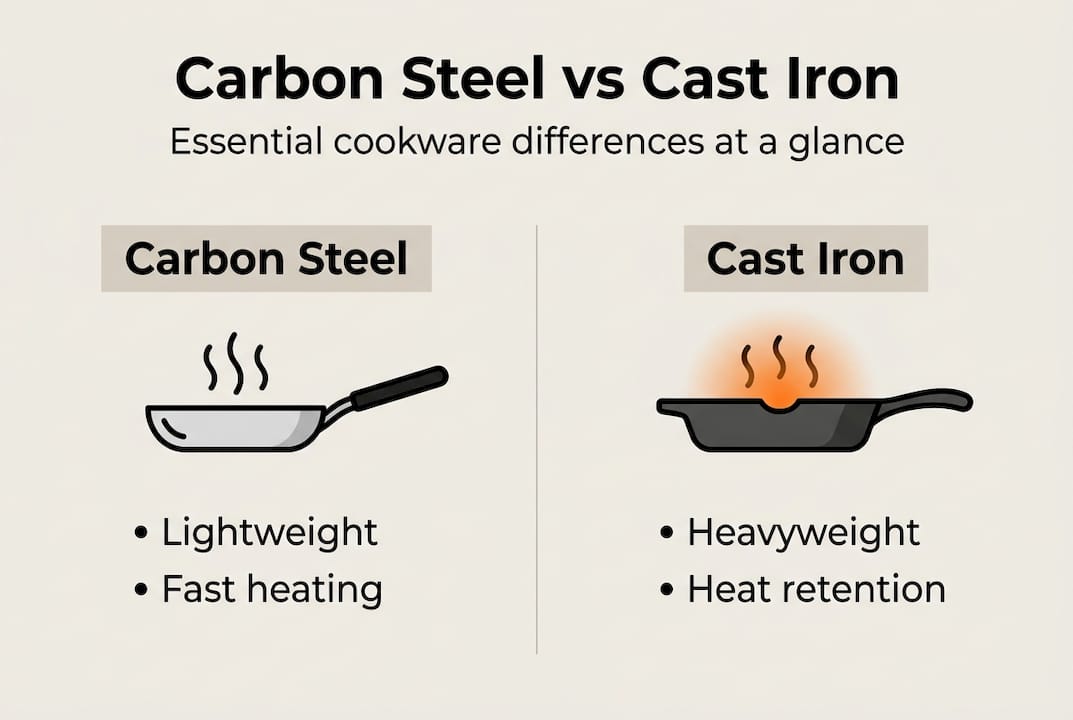
| Performance metric | Carbon steel | Cast iron |
|---|---|---|
| Preheat time | 2-3 minutes | 5-7 minutes |
| Temperature response | Immediate | Gradual |
| Heat evenness | Concentrated at flame | Uniform across surface |
| Cool-down speed | Rapid | Very slow |
Carbon steel excels in techniques requiring temperature precision. Stir-frying vegetables demands rapid heat adjustments to prevent burning whilst maintaining crispness. The pan’s thin walls respond instantly when you reduce flame or remove it from heat. Cast iron’s thermal mass works against quick changes but provides unmatched stability for braising, where consistent low heat over hours produces tender results. Baking cornbread or frittatas benefits from cast iron’s ability to brown evenly from all sides simultaneously.
Suitable cooking methods for each material:
- Carbon steel: searing steaks, stir-frying, sautéing delicate fish, making crêpes, flash-cooking greens, high-heat Asian techniques
- Cast iron: braising meats, baking breads, slow-simmering sauces, roasting vegetables, frying chicken, making Dutch baby pancakes
- Both: pan-roasting, searing then finishing in oven, building fond for pan sauces, cooking eggs once seasoned
Pro Tip: Preheat carbon steel over medium flame for two minutes, then increase to high for searing. Preheat cast iron over low flame for seven minutes to avoid hot spots that burn food before the entire surface reaches temperature.
Heat distribution patterns differ markedly. Carbon steel concentrates warmth directly above the flame, creating a hot centre ideal for searing single steaks or chops. Cast iron spreads heat laterally through its thick base, eliminating hot spots and cooking multiple items evenly. This makes cast iron superior for crowded pans where ingredients touch edges, whilst carbon steel suits centred, high-heat applications. Both materials work on induction, gas, electric, and in ovens, though carbon steel’s lighter weight makes it easier to transfer between cooktop and oven repeatedly.
Maintenance, durability and care considerations
Carbon steel requires regular seasoning and quicker drying to prevent rust but is generally easier to handle due to lighter weight. Both materials demand similar care routines, but carbon steel’s thinner construction makes it more vulnerable to moisture damage if left wet. Cast iron’s mass provides some rust resistance through sheer volume, though neither material tolerates prolonged water exposure. Proper maintenance ensures both pan types last generations, developing richer nonstick properties with each use.
Seasoning creates a polymerised oil layer that protects metal and provides nonstick performance. Carbon steel’s thinner profile means this layer builds faster but also strips more easily with aggressive scrubbing. Cast iron’s thicker walls retain seasoning longer, requiring less frequent re-application. Both benefit from cooking fatty foods like bacon or sausages, which naturally reinforce the patina. Acidic ingredients like tomatoes or wine temporarily strip seasoning, necessitating a quick stovetop re-seasoning after washing.
To season carbon steel properly:
- Wash the new pan with warm, soapy water to remove factory oils
- Dry completely using a towel, then place over low flame for two minutes
- Apply a thin layer of grapeseed or avocado oil using a paper towel
- Wipe away excess until the surface appears nearly dry
- Heat in a 250°C oven for 30 minutes, then cool completely
- Repeat this process two to three times for a durable base layer
- After each use, wash with water only, dry immediately, and apply a light oil coat
Cast iron care essentials:
- Clean with hot water and a stiff brush whilst still warm
- Avoid soaking, which promotes rust formation
- Dry thoroughly over low flame to evaporate all moisture
- Oil lightly after drying if the surface appears dull
- Strip and re-season annually if food begins sticking consistently
- Store in a dry location with good air circulation
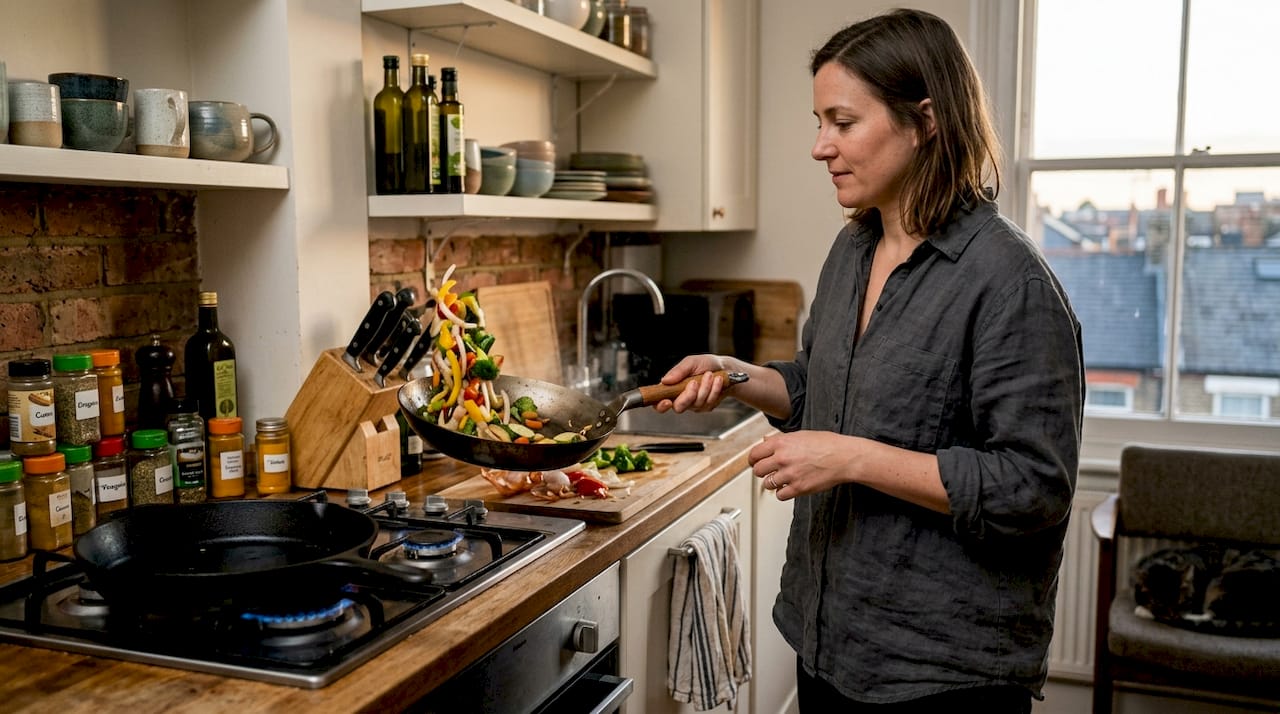
Weight impacts daily handling significantly. Carbon steel’s 2kg weight allows single-handed flipping and pouring, reducing wrist strain during extended cooking sessions. Cast iron’s 3-4kg mass requires two hands for safe manoeuvring, particularly when full of food. Professional kitchens often prefer carbon steel for this reason, as chefs flip pans repeatedly throughout service. Home cooks with limited upper body strength find carbon steel less fatiguing for everyday tasks.
Durability differences emerge over decades. Cast iron survives drops and impacts that would dent carbon steel, though neither material shatters like ceramic. Carbon steel can develop slight warping if heated empty at maximum temperature, whilst cast iron’s thickness resists such deformation. Both materials tolerate metal utensils, oven temperatures exceeding 260°C, and outdoor cooking over open flames. Rust appears on both if left wet, but removes easily with steel wool and immediate re-seasoning.
Choosing the right cookware for your kitchen needs
European home cooks and professionals often select cookware based on cooking technique frequency, cookware weight preferences, and ease of maintenance. Your decision should reflect how you actually cook, not idealised scenarios. If you sear fish twice weekly but braise meat monthly, carbon steel serves you better despite cast iron’s versatility. Conversely, if you bake cornbread regularly and rarely stir-fry, cast iron’s oven-to-table capability outweighs carbon steel’s responsiveness.
Consider your physical kitchen constraints. Small hobs struggle to heat cast iron’s large surface area evenly, creating hot spots that burn food. Carbon steel’s concentrated heat works better on compact burners. Storage space matters too: cast iron’s weight makes overhead cabinet storage impractical, whilst carbon steel hangs easily on wall racks. Induction users should know both materials work excellently, though carbon steel’s flat base makes better contact with induction surfaces initially.
Match cookware to your cooking patterns:
- Choose carbon steel if you: cook Asian cuisine frequently, value quick temperature control, prefer lighter pans, sear proteins often, have limited upper body strength, cook on small burners
- Choose cast iron if you: bake in your pans, braise meats regularly, want oven-to-table serving, cook for large groups, prioritise heat retention, don’t mind heavier weight, slow-cook often
- Consider owning both if you: cook diverse cuisines, have storage space, want specialised tools for different techniques, cook professionally, entertain frequently
Professional kitchens typically stock both types because each excels in specific applications. Restaurant chefs use carbon steel for sautéing and quick sears during service, then switch to cast iron for dishes requiring oven finishing or tableside presentation. Home cooks can replicate this approach by starting with one pan type matching their primary cooking style, then adding the other as budget and space allow.
Testing before committing helps avoid expensive mistakes. Borrow a friend’s cast iron for a week to assess whether the weight bothers you during daily use. Many cookware shops offer return policies allowing you to cook with carbon steel at home before finalising your purchase. Pay attention to how often you actually adjust temperatures whilst cooking, as this reveals whether carbon steel’s responsiveness provides practical benefits or remains theoretical.
Both materials reward patience and proper technique. Carbon steel develops its nonstick surface within weeks of regular use, whilst cast iron takes months to build a truly slick patina. Neither performs optimally straight from the box, requiring initial seasoning and break-in periods. Commit to the maintenance routine before purchasing, as neglected pans rust quickly and lose their cooking properties. Properly cared for, both types become kitchen heirlooms passing between generations.
Explore quality carbon steel and cast iron cookware
Now that you understand how carbon steel and cast iron differ in performance, maintenance, and ideal applications, you can make an informed choice for your kitchen. Whether you prioritise the quick responsiveness of carbon steel for daily sautéing or the enduring heat retention of cast iron for slow-cooked meals, selecting the right material transforms your cooking results.
Brass & Steel specialises in quality cookware selection crafted for serious home cooks and culinary professionals throughout Europe. Our carbon steel pans feature single-piece construction forged in Poland, eliminating rivets whilst providing the lightweight manoeuvrability and heat responsiveness detailed throughout this guide. Each pan arrives ready for seasoning, with detailed care instructions to help you build that essential nonstick patina. Explore our carbon steel vs cast iron guide for additional insights into choosing cookware that matches your specific cooking techniques and kitchen setup.
Frequently asked questions
What are the main differences between carbon steel and cast iron?
Carbon steel weighs approximately 30-40% less than cast iron of equivalent size, making it easier to handle with one hand during cooking. Carbon steel heats rapidly and responds immediately to temperature changes, whilst cast iron takes longer to preheat but maintains consistent warmth for extended periods. Both require seasoning to develop nonstick surfaces, though carbon steel needs more frequent oiling and quicker drying to prevent rust. Cast iron excels at slow cooking and baking, whilst carbon steel suits high-heat searing and stir-frying where temperature precision matters.
Is carbon steel or cast iron better for searing steaks?
Cast iron’s heat retention is ideal for sustained searing, but carbon steel offers quicker responsiveness for more precise control. Cast iron maintains surface temperature when cold steak hits the pan, ensuring consistent browning without temperature drops. Carbon steel allows you to adjust heat instantly if the crust develops too quickly, preventing burnt exteriors with raw centres. For thick steaks requiring oven finishing, cast iron transitions seamlessly from hob to oven. For thinner cuts needing rapid, high-heat sears, carbon steel’s lighter weight and quick heating provide better control.
How do I maintain and season carbon steel and cast iron pans?
Regular seasoning helps prevent rust and maintains nonstick surfaces; carbon steel needs quicker drying to avoid corrosion. Wash both materials with hot water immediately after cooking, avoiding soap unless food residue persists. Dry carbon steel over low flame for one minute to evaporate all moisture, then apply a thin oil layer whilst still warm. Cast iron tolerates slightly longer air-drying but benefits from the same stovetop drying method. Re-season both types by baking oiled pans at 250°C for 30 minutes whenever the surface appears dull or food begins sticking consistently.