What Do You Use a Skillet For? Cooking Versatility Explained
Finding cookware that delivers both durability and healthy cooking can feel confusing for many European home cooks. Skillets are much more than simple frying pans, providing remarkable flexibility for everything from searing meats to baking and making delicate sauces. With carbon steel favoured by chefs for its quick heating and lighter handling, understanding skillet materials and their unique qualities is the key to making the best choice for versatile, reliable cooking.
Table of Contents
- Skillet Cooking Basics And Common Misconceptions
- Types Of Skillets And Material Differences
- How Skillets Work: Shape And Heat Performance
- Key Cooking Techniques: Sautéing, Searing And Frying
- Comparing Skillets, Sauté Pans And Alternatives
- Mistakes To Avoid With Carbon Steel Skillets
Key Takeaways
| Point | Details |
|---|---|
| Skillet Versatility | Skillets can be used for various cooking methods, including sautéing, searing, and baking, beyond traditional frying. |
| Material Matters | The material of a skillet significantly impacts cooking performance, heat retention, and maintenance requirements. |
| Cooking Techniques | Mastering techniques like sautéing and searing enhances culinary outcomes through effective heat and fat management. |
| Proper Care | Maintaining skillets, especially carbon steel, requires specific seasoning and cleaning practices to ensure longevity and performance. |
Skillet Cooking Basics and Common Misconceptions
Skillets are versatile cooking tools that serve multiple culinary purposes, far beyond simple frying. Frying pans or skillets represent essential cookware with a rich history of adaptable cooking techniques. Unlike specialised kitchen equipment, skillets offer remarkable flexibility for home cooks and professional chefs alike.
Understanding skillet varieties is crucial for selecting the right tool. Different materials provide unique cooking characteristics:
- Cast Iron: Exceptional heat retention, develops natural non-stick surface
- Carbon Steel: Quick heat responsiveness, lightweight, develops seasoning over time
- Stainless Steel: Durable, excellent for browning foods
- Non-Stick: Easy food release, requires gentler cooking techniques
Many home cooks harbour misconceptions about skillet usage. Some believe skillets are limited to frying, but they excel at multiple cooking methods including:
- Searing meats at high temperatures
- Creating one-pan meals
- Baking in the oven
- Achieving perfect caramelisation
- Preparing delicate sauces
Professional chefs understand that skillet materials significantly impact cooking performance. Carbon steel, for instance, provides a balance between heat conductivity and durability that makes it a favourite among culinary professionals.
Pro tip: Season your skillet regularly to maintain its non-stick properties and prevent rust, regardless of the material.
Types of Skillets and Material Differences
Cookware materials dramatically influence cooking performance, with each type offering unique characteristics for home and professional kitchens. Frying pan materials have evolved significantly over centuries, reflecting culinary innovation and technological advancement.
Skillet materials can be categorised into several primary types:
-
Cast Iron: Renowned for exceptional heat retention
- Heavyweight and durable
- Requires seasoning for non-stick surface
- Excellent for high-temperature cooking
-
Carbon Steel: Preferred by professional chefs
- Lightweight compared to cast iron
- Rapid heat responsiveness
- Develops natural non-stick patina over time
-
Stainless Steel: Modern kitchen staple
- Highly durable
- Resistant to corrosion
- Easy to clean
- Less natural non-stick properties
-
Non-Stick: Convenient for delicate foods
- Ceramic or synthetic coating
- Minimal oil required
- Limited high-temperature performance
Each material brings distinct advantages to cooking techniques. Skillet material significantly impacts cooking performance and determines heat distribution, durability, and maintenance requirements. Professional chefs often select materials based on specific cooking needs, understanding that different foods and techniques demand unique thermal properties.
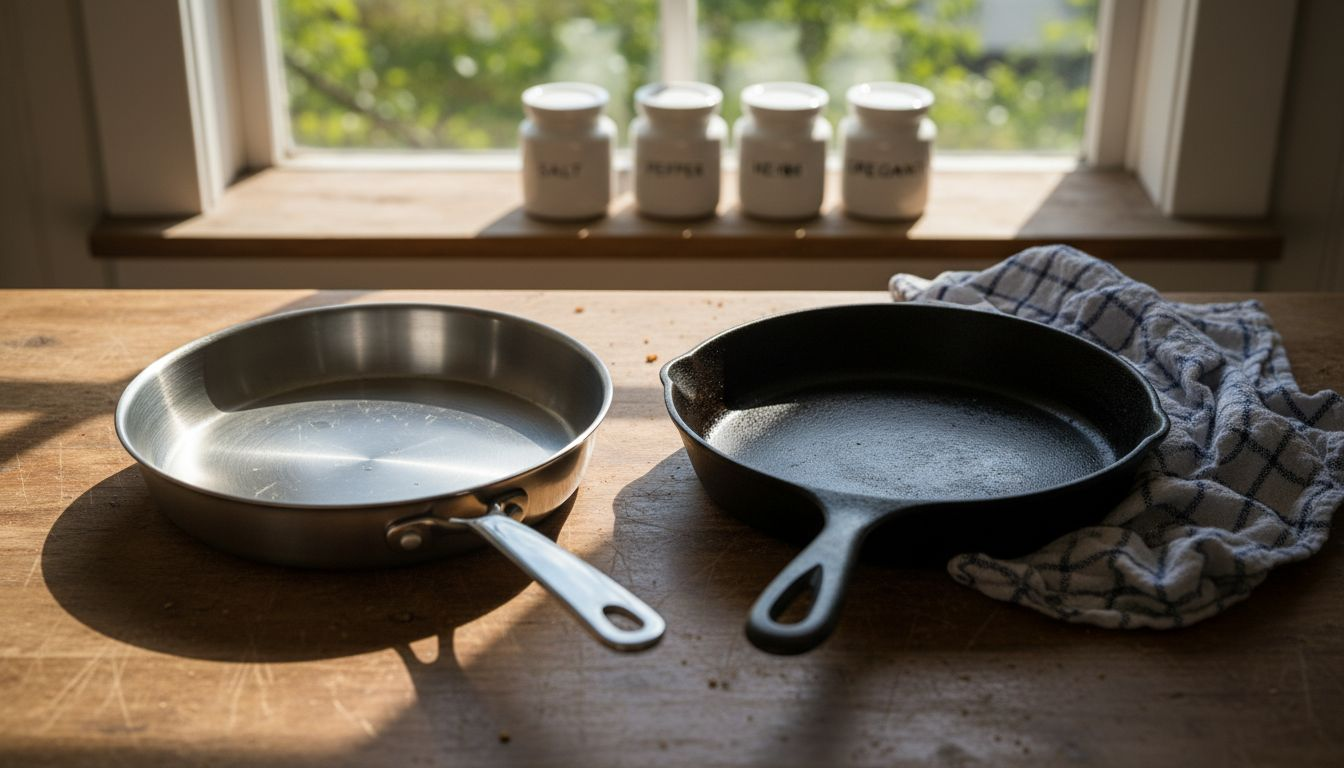
To help you choose the right skillet for your needs, here is a comparison of common skillet materials and their practical benefits:
| Material | Best For | Maintenance Required | Typical Drawback |
|---|---|---|---|
| Cast Iron | Searing meats, baking | Regular seasoning, careful drying | Heavy weight |
| Carbon Steel | Quick sautéing, searing | Frequent seasoning, gentle cleaning | Sensitive to acids |
| Stainless Steel | Browning, quick cooking | Minimal maintenance, dishwasher safe | Less non-stick naturally |
| Non-Stick | Delicate foods, eggs | Avoid metal utensils, gentle washing | Limited heat tolerance |
Pro tip: Match your skillet material to your primary cooking style for optimal culinary results.
How Skillets Work: Shape and Heat Performance
Skillets are engineered with precise design considerations to maximise cooking efficiency. Skillet shape influences heat transfer dramatically, with each geometric feature serving a specific culinary purpose. The flat bottom ensures maximum contact with the heat source, while low, flared sides facilitate quick and even cooking.
Heat transfer in skillets occurs through multiple mechanisms:
-
Conduction: Direct heat transfer through metal surface
- Metals conduct heat at different rates
- Copper and aluminum provide rapid heat distribution
- Cast iron offers slower, more consistent heating
-
Heat Retention: Ability to maintain temperature
- Thick-walled skillets store more thermal energy
- Important for searing and consistent cooking
- Prevents temperature fluctuations during cooking
-
Thermal Responsiveness: Speed of temperature change
- Thin metals heat quickly
- Thick metals maintain stable temperatures
- Professional chefs select based on cooking technique
Heat transfer principles fundamentally determine cooking performance/University_Physics_II_-Thermodynamics_Electricity_and_Magnetism(OpenStax)/01%3A_Temperature_and_Heat/1.05%3A__Heat_Transfer_Specific_Heat_and_Calorimetry), influencing everything from protein searing to delicate sauce preparation. Understanding these principles helps cooks select the most appropriate skillet for their specific culinary needs.
Pro tip: Select skillet thickness based on your primary cooking techniques to optimise heat management.
Key Cooking Techniques: Sautéing, Searing and Frying
Mastering skillet cooking techniques transforms home cooking from mundane to extraordinary. Cooking methods like sautéing represent fundamental skills that dramatically enhance culinary outcomes by manipulating heat, fat, and movement.
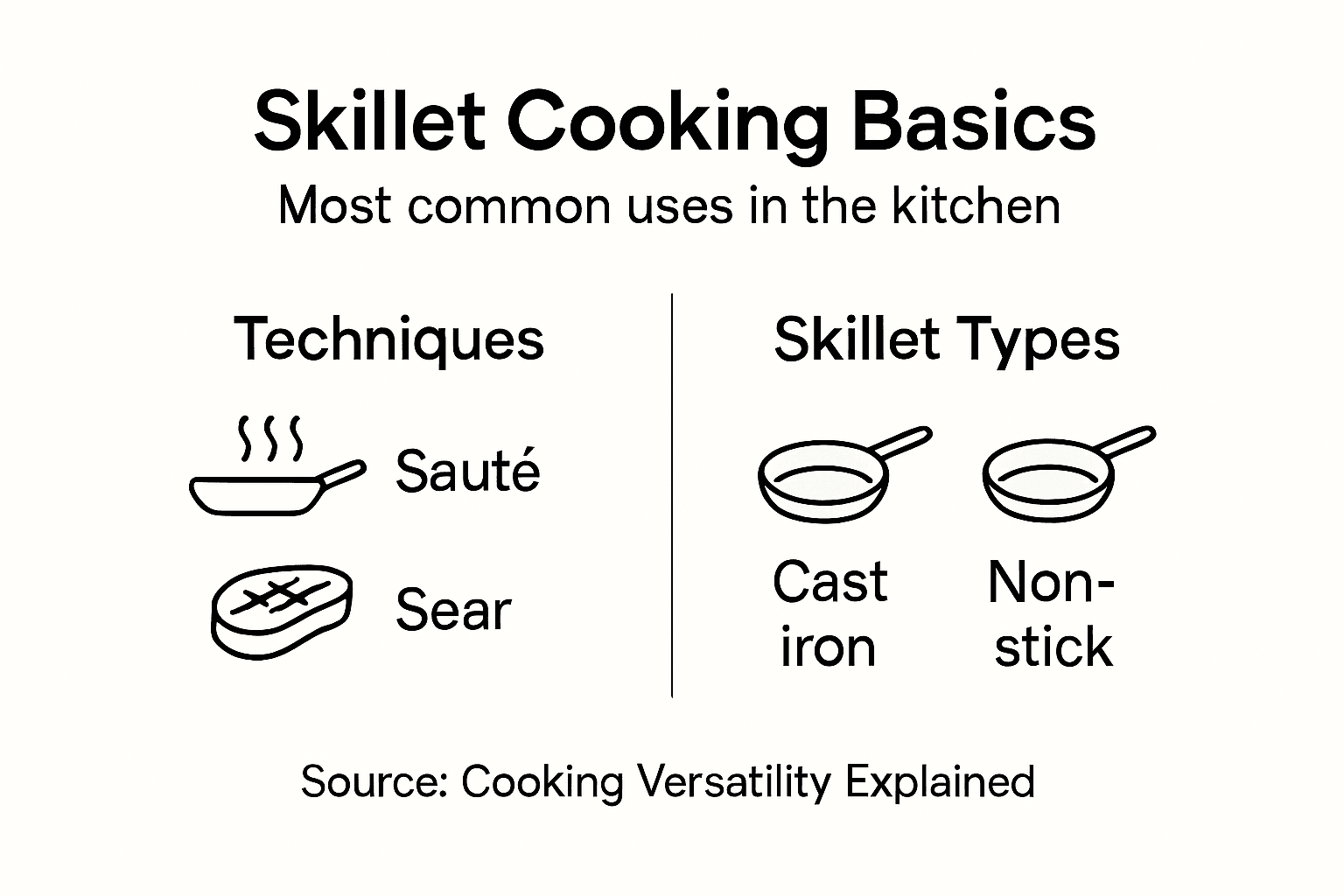
Three primary cooking techniques define skillet performance:
-
Sautéing: Quick, high-heat cooking method
- Small food pieces
- Minimal fat usage
- Constant ingredient movement
- Preserves moisture and texture
-
Searing: Surface browning technique
- Extremely high heat
- Creates caramelised exterior
- Locks in protein moisture
- Develops complex flavour profiles
-
Frying: Oil-based cooking method
- Varying oil depths
- Crisp exterior development
- Different techniques: shallow vs deep frying
- Transforms food texture
Dry heat cooking principles/11%3A_Appendices/11.03%3A_Basic_Cooking_Methods) fundamentally determine how ingredients transform during cooking. Professional chefs understand that each technique requires precise temperature control, fat management, and ingredient preparation.
Pro tip: Match your cooking technique to the specific ingredient for optimal flavour and texture.
Comparing Skillets, Sauté Pans and Alternatives
Cookware selection significantly impacts culinary performance, with each pan type designed for specific cooking techniques. Cookware shapes fundamentally influence cooking efficiency, determining how ingredients transform during preparation.
Key differences between cookware types include:
-
Skillets: Versatile cooking vessels
- Flared, low sides
- Ideal for frying and searing
- Easy food movement
- Quick heat transfer
-
Sauté Pans: Precision cooking tools
- Straight, higher sides
- Better liquid containment
- Suitable for simmering
- Often include lids
-
Alternative Cookware:
- Woks: Deep, curved sides for stir-frying
- Grill Pans: Ridged surface for marking foods
- Dutch Ovens: Deep, heavy vessels for slow cooking
Frying pan designs vary significantly based on specific culinary requirements. Professional chefs select cookware strategically, understanding that pan shape directly influences cooking technique, heat distribution, and final dish quality.
Pro tip: Select your cookware based on the primary cooking method you’ll be using most frequently.
Mistakes to Avoid with Carbon Steel Skillets
Carbon steel skillets offer exceptional cooking performance, but require careful handling to maintain their unique properties. Common carbon steel mistakes compromise pan performance, potentially damaging the valuable seasoning and reducing the skillet’s longevity.
Critical mistakes to avoid include:
-
Improper Initial Seasoning
- Insufficient oil application
- Uneven seasoning layer
- Skipping multiple seasoning rounds
- Using low smoke-point oils
-
Incorrect Cleaning Techniques
- Soaking in water
- Using harsh detergents
- Scrubbing with abrasive materials
- Failing to dry immediately
-
Temperature and Cooking Errors
- Excessive high-heat cooking
- Cooking acidic foods for extended periods
- Using metal utensils that scratch surface
- Sudden temperature changes
Carbon steel skillets require careful maintenance to preserve their natural non-stick properties and prevent rust. Understanding these nuanced care requirements transforms a potentially frustrating cookware experience into a delightful culinary journey.
Below is a summary of common skillet mistakes and their long-term impact:
| Mistake Type | Example Consequence | Longevity Impact |
|---|---|---|
| Poor seasoning | Sticking and uneven cooking | Weakens non-stick surface |
| Improper cleaning | Rust formation, dull surface | Shortens skillet lifespan |
| Heat misuse | Warping or surface damage | Reduces overall durability |
Pro tip: Create a dedicated maintenance routine for your carbon steel skillet to ensure decades of reliable cooking performance.
Discover the True Versatility of Your Skillet with Premium Carbon Steel Cookware
The article highlights how skillets can tackle a wide range of cooking methods from searing to sautéing and baking. Many home cooks struggle with choosing the right pan that delivers excellent heat responsiveness, durability, and a natural non-stick surface. If you want to elevate your culinary game with cookware designed to meet these exact challenges Brass & Steel offers a Carbon Steel Collection crafted for serious cooks. Our pans feature single-piece forged construction ensuring unmatched durability and a naturally developing non-stick patina that improves with every use.
Unlock your skillet’s full potential by selecting a high-quality carbon steel pan that is perfect for searing meats, sautéing vegetables, or even oven baking. Experience cookware that is induction compatible free from harmful coatings and designed for lasting performance. Explore our collection now at Brass & Steel and take your cooking versatility to a professional level with cookware engineered to perform and built to last.
Frequently Asked Questions
What cooking methods can I use with a skillet?
Skillets are versatile and can be used for various cooking methods, including searing meats, sautéing vegetables, baking, making one-pan meals, and preparing sauces.
How do skillet materials affect cooking performance?
Different skillet materials, such as cast iron, carbon steel, stainless steel, and non-stick, have unique properties that influence heat retention, responsiveness, and durability, impacting how well they perform for various cooking techniques.
Can I use a skillet in the oven?
Yes, many skillets, especially those made of cast iron and some stainless steel options, are oven-safe and can be used to bake dishes. However, always check the manufacturer’s guidelines for specific temperature limits.
What should I avoid when using a carbon steel skillet?
To maintain a carbon steel skillet, avoid using harsh cleaning methods, cooking acidic foods for extended periods, and sudden temperature changes. Following proper seasoning and maintenance routines is essential for optimal performance.
Recommended
- 7 Types of Skillets Every European Cook Should Know – Brass & Steel
- 7 Different Pan Names Every Cook Should Know – Brass & Steel
- 9 Creative 27 cm Pan Uses for Every Cooking Enthusiast – Brass & Steel
- 6 Types of Carbon Steel Pans Every Chef Should Know – Brass & Steel
- Cozee Bay - 7 Essential Tips for Your Kitchen Organization Checklist