History of Carbon Steel Cookware: Lasting Culinary Impact

Choosing the right pan can shape every dish’s outcome, whether you are a passionate home cook in Paris or a seasoned chef crafting meals in Berlin. The allure of carbon steel cookware comes from its remarkable balance of legacy craftsmanship and modern culinary demands. With its ability to deliver exceptional heat retention, quick heating, and a natural non-stick surface that develops over time, carbon steel stands apart as the tool of choice for those serious about cooking performance and longevity.
Table of Contents
- What Makes Carbon Steel Cookware Unique
- Major Historical Developments and Influences
- Design Evolution: Forms, Forging and Features
- Reasons for Enduring Popularity Among Chefs
- Comparing Carbon Steel With Other Cookware
Key Takeaways
| Point | Details |
|---|---|
| Unique Properties | Carbon steel cookware offers exceptional heat responsiveness, even heat distribution, and a natural non-stick surface, enhancing cooking performance. |
| Historical Significance | The evolution of carbon steel cookware showcases significant technological advancements, emphasising its importance in culinary history. |
| Chef Preference | Professionals favour carbon steel for its lightweight design and durability, essential for high-intensity cooking environments. |
| Comparative Advantages | Carbon steel strikes a balance between weight, heat conductibility, and maintenance, making it a versatile choice among different cookware materials. |
What Makes Carbon Steel Cookware Unique
Carbon steel cookware represents a remarkable blend of culinary tradition and modern engineering. Unlike other cookware materials, carbon steel offers exceptional performance through its unique metallurgical properties. Carbon steel’s remarkable heat conductivity enables professional and home chefs to achieve precise temperature control and consistent cooking results.
The distinctive characteristics of carbon steel set it apart from conventional cookware materials. Key features include:
- Exceptional Heat Retention: Maintains consistent cooking temperatures
- Natural Non-Stick Surface: Develops seasoning layer with repeated use
- High Heat Durability: Withstands extreme cooking temperatures
- Even Heat Distribution: Prevents hot spots and ensures uniform cooking
- Lightweight Compared to Cast Iron: Easier handling without compromising performance
Professional kitchens worldwide appreciate carbon steel for its versatility. The material’s ability to develop a natural non-stick surface through seasoning makes it a favourite among chefs who prioritise both performance and health. Unlike synthetic-coated pans, carbon steel improves with use, creating a patina that enhances cooking performance and provides a protective layer.
Thermal Properties make carbon steel particularly unique. The material rapidly responds to temperature changes, allowing chefs to quickly adjust heat levels during complex cooking techniques. This responsiveness is critical for techniques like searing meats, stir-frying vegetables, or preparing delicate sauces.
Pro tip: Season your carbon steel pan gradually by cooking fatty foods initially to build a robust, natural non-stick surface that improves with each use.
Major Historical Developments and Influences
The history of carbon steel cookware is deeply intertwined with human culinary evolution, tracing back to early metalworking civilisations. Ancient cultures in Europe and Asia recognised the remarkable properties of forged metal, developing techniques that would eventually lead to the sophisticated carbon steel cooking vessels we use today. Carbon steel’s metallurgical journey demonstrates humanity’s persistent quest for superior cooking technologies.
Key historical milestones in carbon steel cookware development include:
- Medieval European Blacksmithing: Initial refinement of metal forming techniques
- Industrial Revolution: Mass production of standardised cookware
- Late 19th Century: Emergence of precision metalworking methods
- Mid-20th Century: Introduction of industrial heat treatment processes
- Modern Era: Advanced metallurgical engineering and design innovations
The transition from traditional cast iron to carbon steel represented a significant technological leap. Manufacturers discovered that carbon steel offered superior heat responsiveness and lighter weight, making it increasingly attractive for professional and home kitchens. Professional chefs in France were among the first to widely adopt carbon steel cookware, recognising its exceptional performance in high-intensity cooking environments.
Metallurgical Innovations have continuously refined carbon steel’s composition and manufacturing processes. Modern carbon steel pans combine centuries of metalworking wisdom with cutting-edge engineering, creating cookware that is both functionally superior and aesthetically elegant.
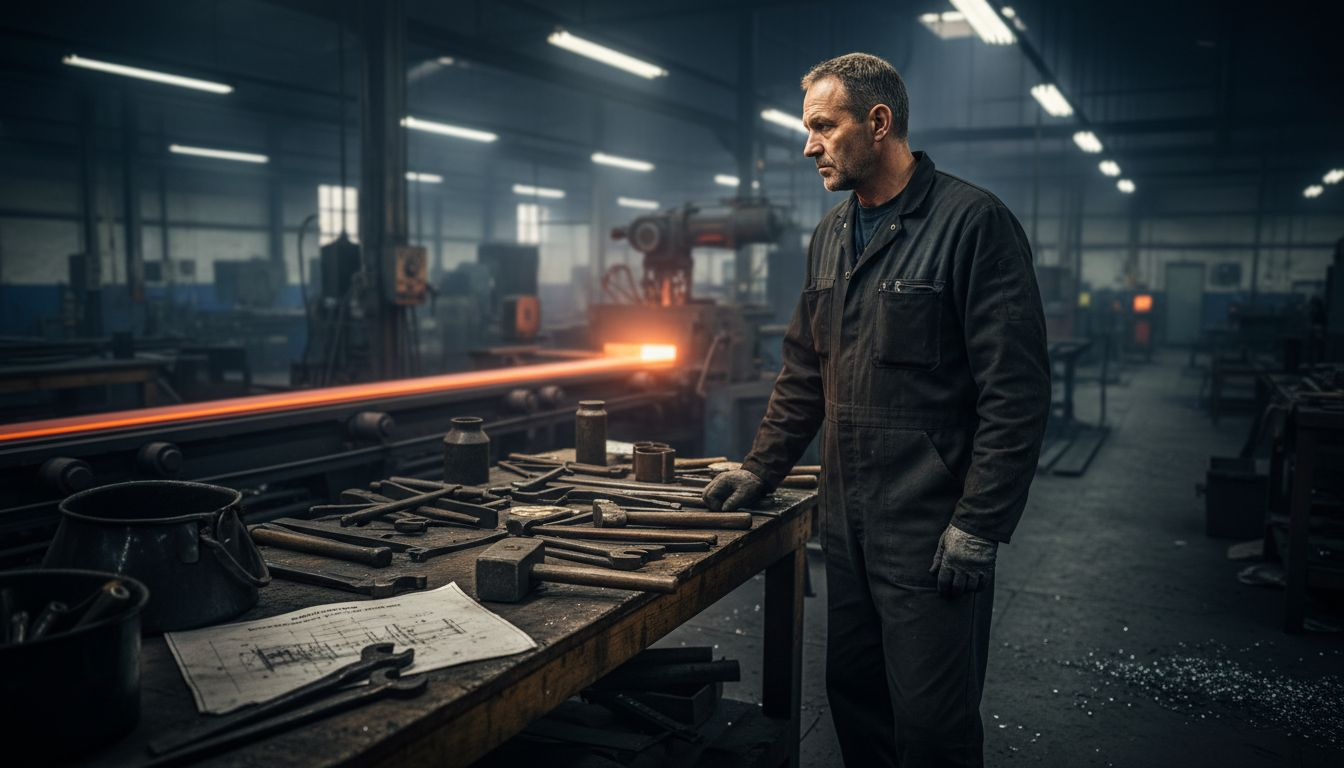
Key historical influences on carbon steel cookware evolution are summarised in this table:
| Era | Major Innovation | Impact on Cookware |
|---|---|---|
| Medieval Europe | Refinement of forging techniques | Stronger, more durable pans |
| Industrial Revolution | Mass production technologies | Wider availability |
| Late 19th Century | Precision metalwork advancements | Consistent pan quality |
| Mid-20th Century | Industrial heat treatment | Increased pan strength |
| Modern Era | Advanced engineering and design | Enhanced performance, style |
Pro tip: Research the specific carbon steel pan manufacturing techniques used by different regions to appreciate the nuanced metallurgical expertise behind your cookware.
Design Evolution: Forms, Forging and Features
Carbon steel cookware design represents a remarkable journey of metallurgical innovation and culinary craftsmanship. From rudimentary hand-forged vessels to precision-engineered modern pans, the evolution reflects humanity’s ongoing quest for perfect cooking tools. Forged cookware techniques have transformed dramatically over centuries, incorporating advanced manufacturing principles.
Key design characteristics in carbon steel cookware evolution include:
- Single-Piece Construction: Eliminating weak points like rivets and welds
- Ergonomic Handle Design: Improving balance and heat management
- Thickness Variations: Adapting pan weight for different cooking styles
- Surface Texture: Enhancing seasoning and non-stick properties
- Minimalist Aesthetic: Combining functional performance with visual elegance
Traditional European metalworking techniques played a crucial role in refining carbon steel cookware. Blacksmiths in regions like France and Germany developed sophisticated forging methods that allowed for increasingly complex pan geometries. These techniques prioritised not just functional performance but also aesthetic refinement, creating cookware that was both a practical tool and a culinary work of art.
Manufacturing Precision has been the hallmark of carbon steel cookware’s design evolution. Modern production techniques enable manufacturers to create pans with incredibly tight tolerances, ensuring consistent heat distribution, durability, and performance across entire product lines.
Pro tip: Examine the thickness and construction of your carbon steel pan to understand its potential cooking performance and heritage.
Reasons for Enduring Popularity Among Chefs
Professional chefs have long appreciated carbon steel cookware for its exceptional performance and versatility in high-intensity culinary environments. Professional chef preferences reveal a deep appreciation for the material’s unique cooking characteristics and practical advantages.
Key reasons carbon steel remains a favourite among professional chefs include:
- Rapid Heat Responsiveness: Quick temperature adjustments during cooking
- Lightweight Maneuverability: Easier handling compared to cast iron
- Natural Non-Stick Surface: Develops improved seasoning with use
- Exceptional Durability: Withstands intense professional kitchen conditions
- Versatile Cooking Performance: Suitable for multiple cooking techniques
Thermal Performance stands out as a critical factor in chefs’ preference for carbon steel. Unlike other cookware materials, carbon steel allows precise temperature control, enabling chefs to execute complex cooking techniques with remarkable accuracy. The pan’s ability to heat quickly and distribute temperature evenly makes it an indispensable tool in professional kitchens.
Professional Culinary Techniques demand cookware that can perform under pressure. Carbon steel’s unique properties allow chefs to sear, sauté, and manipulate ingredients with unprecedented control, making it an essential component of modern gastronomy.
Pro tip: Observe how professional chefs handle carbon steel pans to understand their nuanced cooking techniques and pan management.
Comparing Carbon Steel With Other Cookware
Cooking professionals and home chefs consistently seek the optimal balance between performance, durability, and ease of use when selecting cookware. Cookware material comparisons reveal carbon steel as a remarkable middle ground between traditional materials like cast iron and stainless steel.
Key comparative characteristics include:
-
Heat Responsiveness:
- Carbon Steel: Fastest heating, quick temperature adjustments
- Cast Iron: Slower heating, superior heat retention
- Stainless Steel: Moderate heating, less responsive
-
Weight and Maneuverability:
- Carbon Steel: Lightweight, easy handling
- Cast Iron: Heavy, more challenging to manage
- Stainless Steel: Moderate weight
-
Maintenance Requirements:
- Carbon Steel: Regular seasoning needed
- Cast Iron: Extensive seasoning and careful maintenance
- Stainless Steel: Minimal maintenance
Thermal Performance distinguishes carbon steel from its counterparts. Unlike cast iron’s sluggish heat distribution or stainless steel’s inconsistent conductivity, carbon steel offers chefs unprecedented temperature control and rapid adjustments during complex cooking techniques.
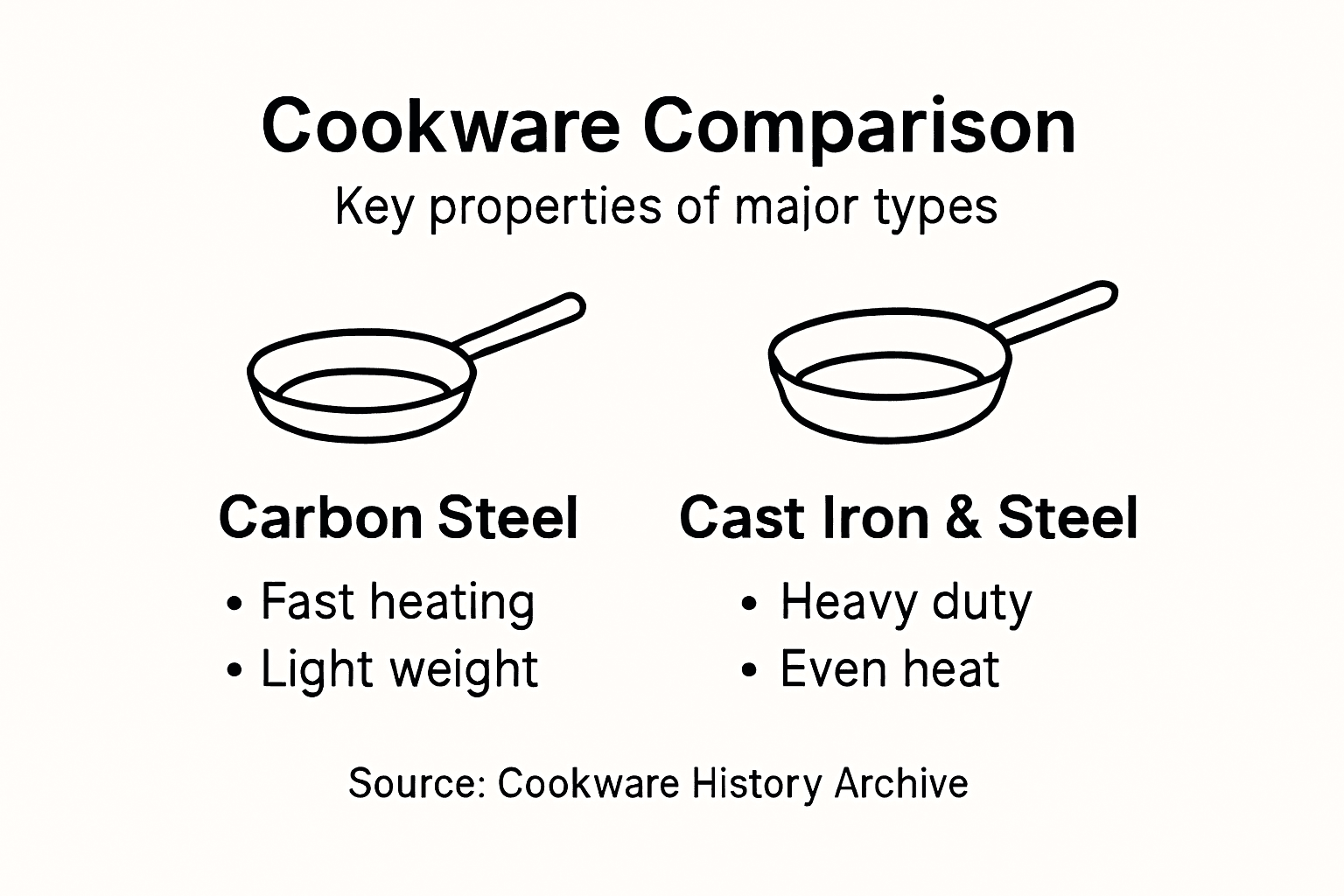
Professional kitchens value carbon steel for its unique combination of characteristics. It bridges the gap between cast iron’s robust heat retention and stainless steel’s sleek appearance, providing a versatile cooking surface that improves with consistent use.
To highlight the differences among popular cookware materials, see the comparison below:
| Attribute | Carbon Steel | Cast Iron | Stainless Steel |
|---|---|---|---|
| Heat Conductivity | Excellent | Moderate | Moderate |
| Weight | Easily portable | Very heavy | Medium weight |
| Non-Stick Development | Improves with use | Requires seasoning | Relies on surface/spray |
| Temperature Control | Highly responsive | Slow adjustments | Moderate responsiveness |
| Maintenance Level | Regular seasoning | Intensive upkeep | Low maintenance |
| Suitable Techniques | Searing, sautéing | Slow cooking, baking | Sauces, boiling |
Pro tip: Consider your specific cooking style and maintenance commitment when selecting between carbon steel, cast iron, and stainless steel cookware.
Experience the Legacy of Carbon Steel Cookware with Brass & Steel
The rich history and enduring culinary impact of carbon steel cookware reveal its unmatched performance, heat responsiveness, and natural non-stick qualities. If you seek cookware that honours centuries of metallurgical craftsmanship and delivers professional-level precision, discover the meticulous design and single-piece forged construction of our Carbon Steel Collection | Brass&Steel.
Embrace the perfect balance of tradition and innovation in your kitchen today. Visit https://brass-steel.com to explore heirloom-quality carbon steel pans crafted in Poland with Italian design roots. Find your ideal pan and unlock cooking potential that improves with every use. Don’t wait to elevate your culinary journey with our durable, natural nonstick, induction-compatible cookware crafted to last a lifetime.
Frequently Asked Questions
What are the main benefits of using carbon steel cookware?
Carbon steel cookware offers exceptional heat conductivity, rapid temperature responsiveness, natural non-stick properties, and durability, making it a favourite among professional chefs for various cooking techniques.
How does carbon steel cookware compare to cast iron?
Compared to cast iron, carbon steel is lighter and heats more quickly, providing faster temperature adjustments while still retaining heat well. It also develops a natural non-stick surface with proper seasoning over time.
What is the significance of seasoning in carbon steel cookware?
Seasoning is vital for carbon steel cookware as it creates a protective layer that enhances its non-stick properties and prevents rusting. This process improves over time with regular cooking, especially with fatty foods.
How has the design of carbon steel cookware evolved over time?
The design has evolved from traditional hand-forged vessels to precision-engineered pans, incorporating single-piece construction, ergonomic handles, and surface textures that enhance cooking performance and aesthetic appeal.