What Is a Carbon Steel Wok and Why It Matters

Most British kitchens still rely on cookware that fails to deliver restaurant-level results. Home cooks and chefs across Europe are discovering that carbon steel woks can transform everyday meals with professional precision. These traditional pans conduct heat up to 40 percent faster than stainless steel alternatives, helping you stir-fry, sauté, and steam with exceptional control. Explore how choosing carbon steel benefits your health and elevates your cooking whether you’re refining techniques or serving family favourites.
Table of Contents
- Carbon Steel Wok – Definition And History
- Different Types And Design Features
- Key Benefits For Cooking Performance
- Health And Safety Considerations
- Care, Seasoning, And Maintenance Tips
- Comparing Carbon Steel To Alternatives
Key Takeaways
| Point | Details |
|---|---|
| Versatility of Carbon Steel Woks | Carbon steel woks are highly versatile, excelling in various cooking methods such as stir-frying, deep-frying, and steaming due to their exceptional heat responsiveness. |
| Importance of Proper Seasoning | Developing and maintaining a good seasoning layer is crucial for enhancing the wok’s non-stick properties and ensuring long-term durability. |
| Health and Safety Benefits | Carbon steel woks provide a natural, non-toxic cooking surface, reducing the need for chemical coatings, but require specific maintenance to prevent rust and ensure safety. |
| Comparative Advantages Over Alternatives | Compared to cast iron, stainless steel, and non-stick options, carbon steel offers a superior balance of weight, heat conductivity, and the ability to develop a natural non-stick surface. |
Carbon steel wok – definition and history
A carbon steel wok is a traditional cooking vessel originating in China, distinguished by its distinctive round-bottomed shape and exceptional heat conductivity. These versatile pans have been fundamental to Asian culinary techniques for centuries, offering unparalleled performance in stir-frying, sautéing, and other high-temperature cooking methods.
Historically, carbon steel woks emerged during the Han Dynasty (206 BCE–220 CE), when metallurgy techniques advanced sufficiently to produce robust, lightweight cookware. The wok’s design evolved from practical needs: Chinese chefs required a cooking implement that could rapidly heat ingredients while using minimal fuel. Its curved sides allowed for efficient heat distribution and easy ingredient manipulation, making it revolutionary for its time.
Carbon steel’s unique properties make these woks exceptional cooking tools. Unlike other materials, carbon steel cookware develops a natural non-stick patina over time, improving with repeated use. This seasoning process creates a protective layer that enhances flavour, prevents rusting, and provides superior cooking performance across various heat levels.
Pro tip: When selecting a carbon steel wok, prioritise a single-piece construction with a thick base for optimal heat retention and durability.
Different types and design features
Woks come in a diverse range of designs and materials, each offering unique cooking characteristics. Different types of woks present varied advantages for home and professional chefs, with carbon steel remaining the most versatile and popular choice.
Traditional wok designs primarily differ in bottom configuration and material composition. Round-bottomed woks are classic in Asian kitchens, perfectly suited for gas stoves where the flame can directly contact the curved surface. Flat-bottomed variants have emerged to accommodate electric and induction cooktops, providing stability and broader heat distribution. Typical wok designs include:
- Carbon steel woks: Lightweight, rapid heat conductivity
- Cast iron woks: Exceptional heat retention, extremely durable
- Stainless steel woks: Rust-resistant, easy to clean
- Non-stick woks: Convenient for low-fat cooking
Material selection significantly impacts cooking performance. Carbon steel woks remain superior for high-temperature stir-frying due to their ability to develop a natural non-stick seasoning and respond quickly to temperature changes. The thickness of the wok’s base, typically ranging between 1.2 to 2 millimetres, also influences heat distribution and cooking efficiency.
Pro tip: Choose a wok with a handle that provides comfortable grip and heat resistance, ensuring safe and efficient cooking.
Key benefits for cooking performance
Carbon steel woks offer extraordinary cooking performance that sets them apart from other cookware materials. Remarkable heat conduction properties enable chefs to achieve precise temperature control, crucial for creating authentic stir-fried dishes with complex flavour profiles.
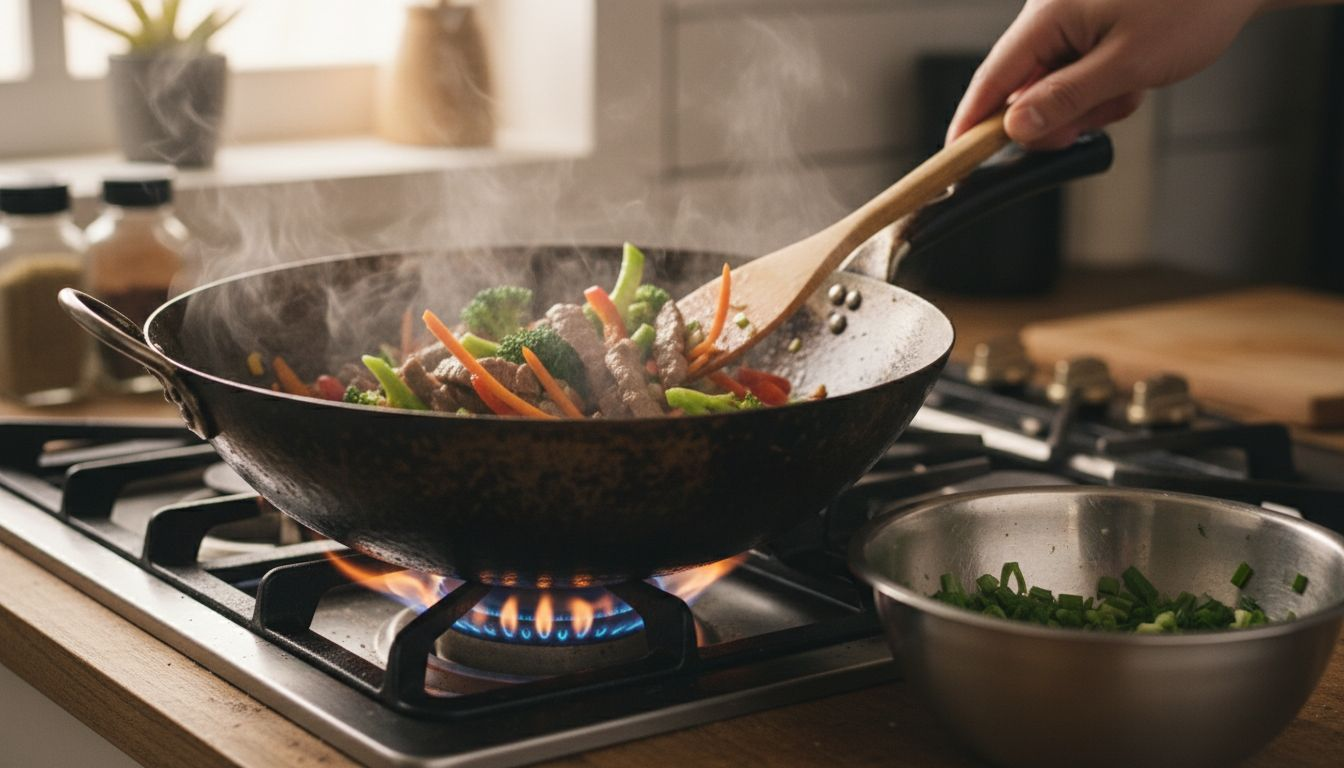
The exceptional thermal characteristics of carbon steel allow for rapid heating and cooling, which is fundamental to traditional Asian cooking techniques. Thin walls conduct heat evenly across the cooking surface, preventing hot spots and ensuring ingredients are cooked consistently. This responsiveness creates the perfect environment for developing the coveted Maillard reaction, transforming simple ingredients into deeply flavourful meals.
Beyond heat performance, carbon steel woks offer additional remarkable benefits:
- Lightweight design for effortless maneuvering
- Natural non-stick surface that improves with seasoning
- Remarkable durability for long-term kitchen use
- Versatility across multiple cooking methods including stir-frying, deep-frying, and steaming
Professional chefs appreciate carbon steel’s ability to respond quickly to temperature changes, allowing for nuanced cooking techniques that require split-second adjustments. The material’s inherent properties make it an indispensable tool for creating restaurant-quality dishes at home.
Pro tip: Invest time in properly seasoning your carbon steel wok to enhance its non-stick properties and develop a rich, flavourful cooking surface.
Health and safety considerations
Carbon steel woks offer exceptional health benefits when properly maintained, with key safety protocols ensuring optimal cooking performance and food safety. Unlike chemically coated cookware, carbon steel provides a natural, non-toxic cooking surface that improves with each use through careful seasoning and maintenance.
The seasoning process creates a protective patina that prevents rust and minimises food sticking without requiring additional chemical treatments. This natural coating develops through repeated cooking with oils, forming a barrier that actually enhances the wok’s non-stick properties while eliminating the need for excessive cooking oils. However, maintaining this protective layer requires specific care techniques to prevent surface degradation.
Key health and safety considerations for carbon steel woks include:
- Avoid prolonged exposure to acidic ingredients
- Clean immediately after use without soaking
- Dry thoroughly to prevent rust formation
- Re-season periodically to maintain the protective surface
- Use gentle cleaning methods that preserve the seasoning
Improper maintenance can compromise the wok’s safety, potentially leading to rust or uneven cooking surfaces. Chefs and home cooks must understand that the wok’s longevity and health benefits depend entirely on consistent, careful maintenance and appropriate cooking techniques.
Pro tip: Always inspect your wok’s seasoning before cooking and re-season if you notice any dull or patchy areas to maintain a smooth, protective cooking surface.
Care, seasoning, and maintenance tips
Seasoning a carbon steel wok is a crucial process that transforms an ordinary pan into a culinary masterpiece. Carbon steel wok seasoning requires careful attention to detail and a methodical approach to create a durable, non-stick cooking surface that improves with each use.
The initial seasoning process involves thoroughly cleaning the wok to remove any factory residues, then heating it to create a receptive surface for oil polymerisation. Chefs should apply a thin, even layer of high-smoke-point oil like grapeseed or avocado, carefully heating the wok to create a protective patina. This initial layer forms the foundation of the wok’s non-stick properties and rust resistance.
Ongoing maintenance involves several critical steps:
- Clean with hot water immediately after use
- Use a soft sponge to avoid scraping the seasoning
- Dry thoroughly to prevent rust formation
- Apply a light coat of oil after each cleaning
- Store in a dry place with good air circulation
- Avoid using soap or harsh detergents
Regular maintenance ensures the wok’s longevity and cooking performance. The seasoning develops and improves with each use, creating a natural non-stick surface that becomes more effective over time. Experienced cooks understand that a well-maintained carbon steel wok becomes a treasured kitchen tool that can last for generations.
For those considering a carbon steel wok, this summary highlights maintenance actions and their impact on health and cooking performance:
| Maintenance Action | Health Benefit | Cooking Benefit |
|---|---|---|
| Proper seasoning | Non-toxic surface | Enhanced non-stick |
| Thorough drying | Prevents rust | Consistent heating |
| Light oil application | Maintains protective layer | Smoother food release |
Pro tip: After cooking, while the wok is still warm, wipe it with a thin layer of oil to maintain and enhance its protective seasoning.
Comparing carbon steel to alternatives
When exploring cookware options, carbon steel stands out as a superior material for woks, particularly when compared to other popular alternatives. Wok material performance varies significantly, with each material presenting distinct advantages and limitations.
Cast iron woks, while renowned for their heat retention, are significantly heavier and less responsive compared to carbon steel. They require longer heating times and are challenging to manoeuvre, making them less ideal for the quick, dynamic cooking techniques essential in traditional Asian cuisine. Stainless steel woks, though durable, suffer from poor heat distribution and notorious food-sticking problems that compromise cooking quality.
Key comparative characteristics include:
-
Cast Iron Woks
- Excellent heat retention
- Very heavy
- Slow temperature adjustment
- Requires significant maintenance
-
Stainless Steel Woks
- Durable construction
- Poor heat conductivity
- High likelihood of food sticking
- Less versatile
-
Non-Stick Woks
- Convenient for low-heat cooking
- Coating degrades at high temperatures
- Limited longevity
- Restricted cooking techniques
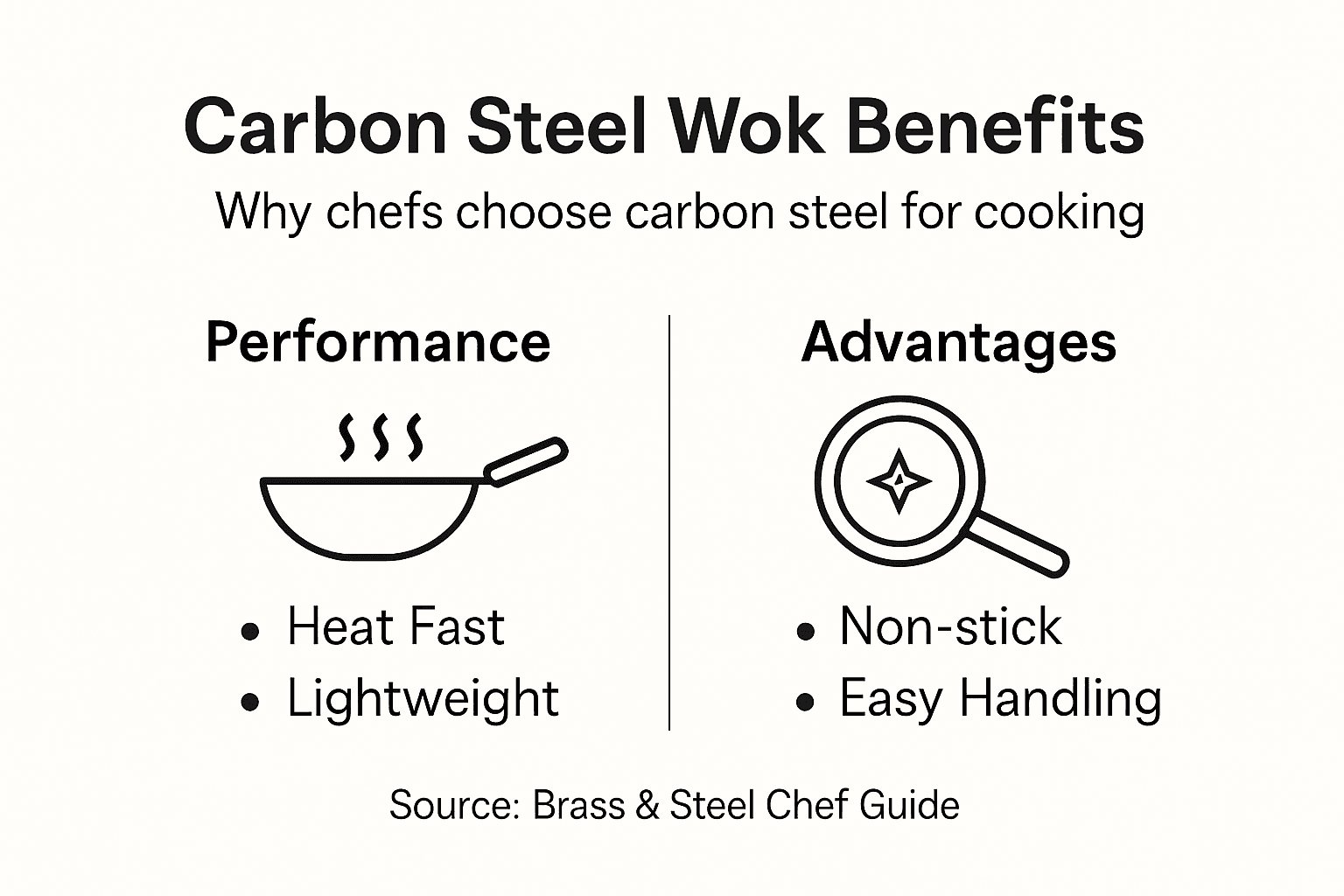
Carbon steel emerges as the optimal choice, offering a perfect balance of lightweight design, rapid heat responsiveness, and the ability to develop a natural non-stick surface through proper seasoning. Professional chefs consistently prefer carbon steel for its versatility, durability, and authentic cooking performance.
Here is a quick-reference comparison of the main wok materials and their typical kitchen suitability:
| Material | Weight & Handling | Heat Responsiveness | Best For |
|---|---|---|---|
| Carbon Steel | Lightweight, agile | Instant temperature shift | Stir-frying, sautéing |
| Cast Iron | Heavy, robust | Slow to adjust | Braising, heat retention |
| Stainless Steel | Moderate, sturdy | Uneven distribution | General use, easy cleaning |
| Non-Stick | Light, convenient | Poor at high temperatures | Low-fat, gentle cooking |
Pro tip: When selecting a wok, prioritise material performance over initial cost, considering long-term cooking quality and maintenance requirements.
Discover the Power of a Carbon Steel Wok with Brass & Steel
The article highlights the challenges of finding a wok that offers durability, natural non-stick performance, and responsive heat control for authentic cooking. If you want cookware that evolves with use and handles high-temperature cooking effortlessly then explore our Carbon Steel Collection | Brass&Steel. Our single-piece forged pans eliminate weak points like rivets giving you seamless strength and easy cleaning.
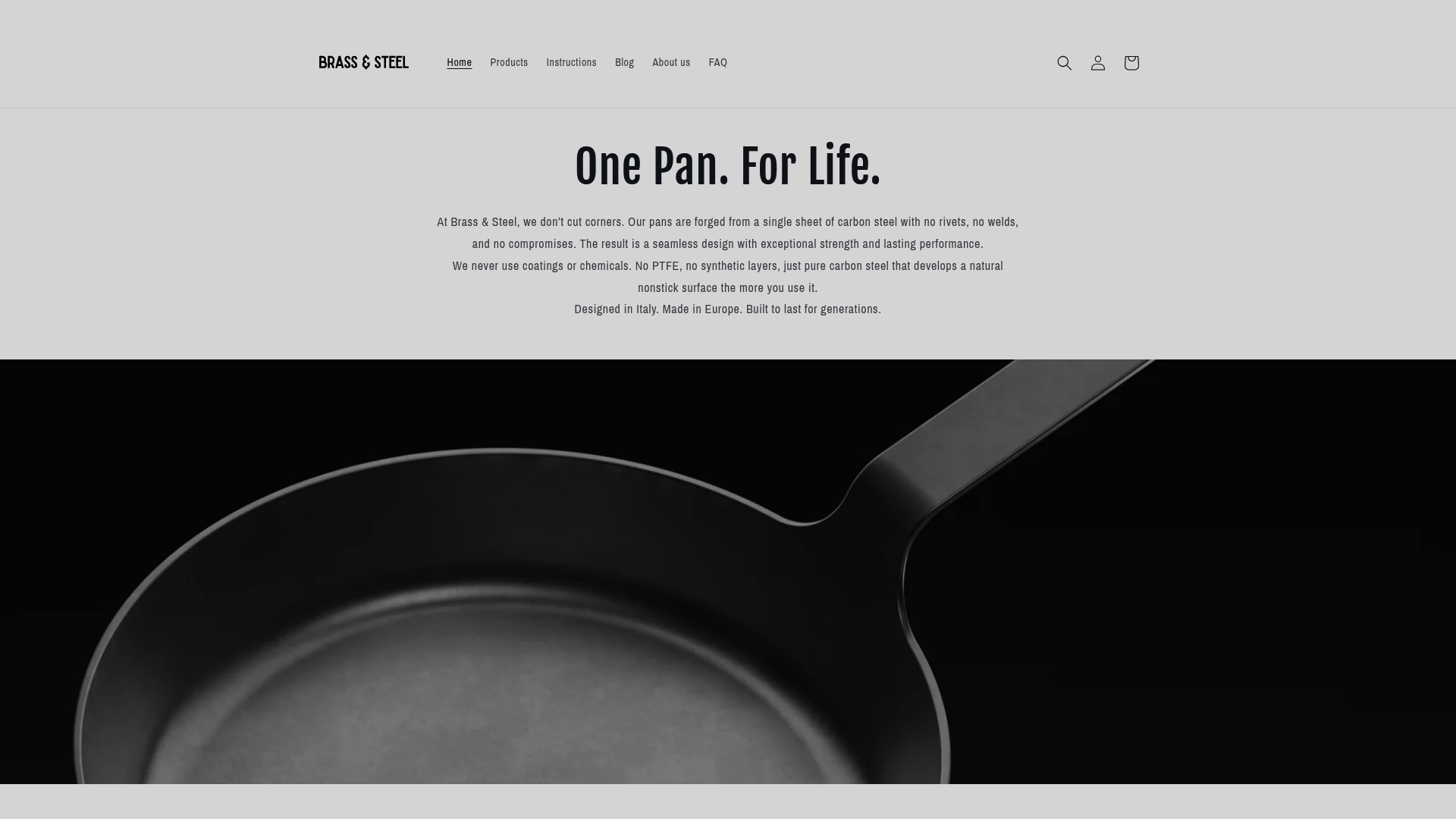
Embrace cookware engineered for passionate cooks who demand long-lasting performance and health-conscious design. Whether you want a 27 cm or 30 cm carbon steel pan for everyday stir-frying or family meals, our premium pans deliver excellent heat conduction and respond instantly to temperature changes. Visit Brass & Steel today to experience heirloom-quality carbon steel cookware crafted with precision and ready to transform your kitchen.
Frequently Asked Questions
What is a carbon steel wok?
A carbon steel wok is a versatile cooking vessel with a round-bottomed shape, known for its excellent heat conductivity. It is traditionally used in Asian cooking for stir-frying, sautéing, and high-temperature methods.
How do I maintain a carbon steel wok?
To maintain a carbon steel wok, clean it with hot water immediately after use, dry it thoroughly, and apply a light coat of oil. Regularly re-seasoning is essential to develop and preserve its non-stick properties and prevent rust.
How does carbon steel compare to cast iron or stainless steel woks?
Carbon steel woks are lightweight and heat up quickly, allowing for precise temperature control, whereas cast iron woks retain heat well but are heavier and slower to adjust. Stainless steel woks are durable but have poor heat distribution, often leading to food sticking.
Can a carbon steel wok be used on different types of cooktops?
Yes, carbon steel woks come in both round-bottomed and flat-bottomed designs to accommodate various cooktops, including gas, electric, and induction, making them versatile for different cooking environments.